Pinned
OpenAI
1,924 posts


OpenAI
@OpenAI
OpenAI’s mission is to ensure that artificial general intelligence benefits all of humanity. We’re hiring: openai.com/jobs
Joined December 2015
 As AI takes on longer, higher-stakes tasks, we want models to carry beneficial and safe behavior into new domains beyond their training—and maintain it under pressure. That’s the idea behind our new research on training models to be broadly and persistently beneficial.Replying to @OpenAIWe also tested whether alignment persisted under pressure. The model was harder to steer toward harmful behavior with adversarial prompts, while remaining responsive to helpful instructions. We saw preliminary evidence of greater resistance to harmful fine-tuning.
- GPT-5.5 Instant is now on par with our frontier Thinking models for health-related questions. Every week, more than 230 million people turn to ChatGPT with health and wellness questions, and GPT-5.5 Instant is better at recognizing when urgent care may be needed, asking for
 00:00Improving human health will be one of the most personal, tangible impacts of AGI. As our models continue to improve, our goal is to make ChatGPT more accurate, more useful, and more impactful in those moments — and to keep bringing that progress to more people.
 - Replying to @OpenAIRare disease diagnosis is challenging, as sequencing can surface millions of variants, and medical knowledge changes constantly. o3 Deep Research helped connect clinical features, inheritance patterns, variant evidence, and scientific literature into hypotheses for specialists
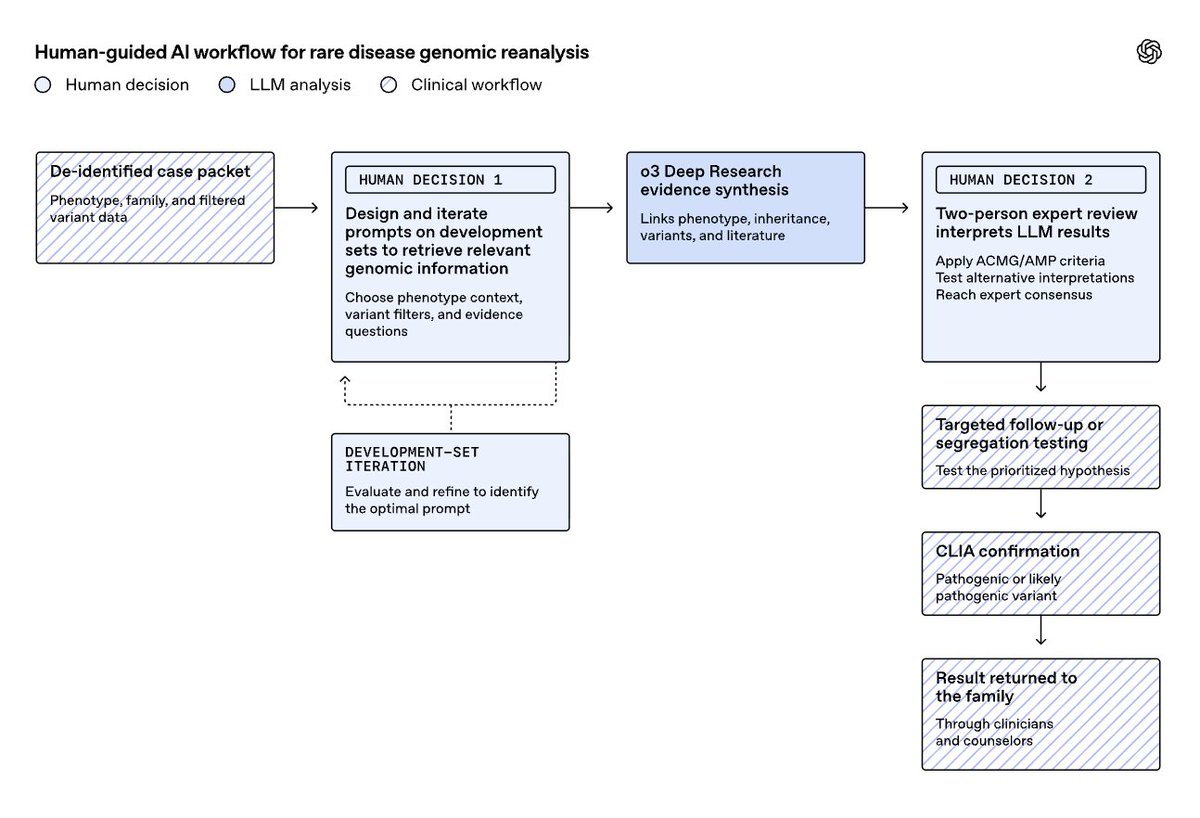 Many of these cases had evaded years of expert analysis. This study suggests AI could make expert-led periodic reanalysis more scalable, helping clinicians revisit old cases as medical knowledge advances, identify leads worth investigating, and potentially bring answers to more
 - Introducing LifeSciBench, a benchmark for measuring and improving how well AI supports real-world life science research. Developed with 173 scientists from biotechnology and pharmaceutical research, LifeSciBench includes 750 expert-authored tasks across seven biological research

- GPT-5.4 helped drive a medicinal chemistry project from literature review to a validated experimental result. Paired with Molecule.one’s Maria AI and specialized lab, the model proposed an unexpected way to improve a widely used reaction in drug discovery.
 00:00Replying to @OpenAIMaria tested the idea across 10,080 reactions, and human chemists later validated representative results by hand. Under the optimized conditions, yields improved for 88% of the boronic acids and 83% of the sulfonamides tested. Human chemists then repeated 14 representative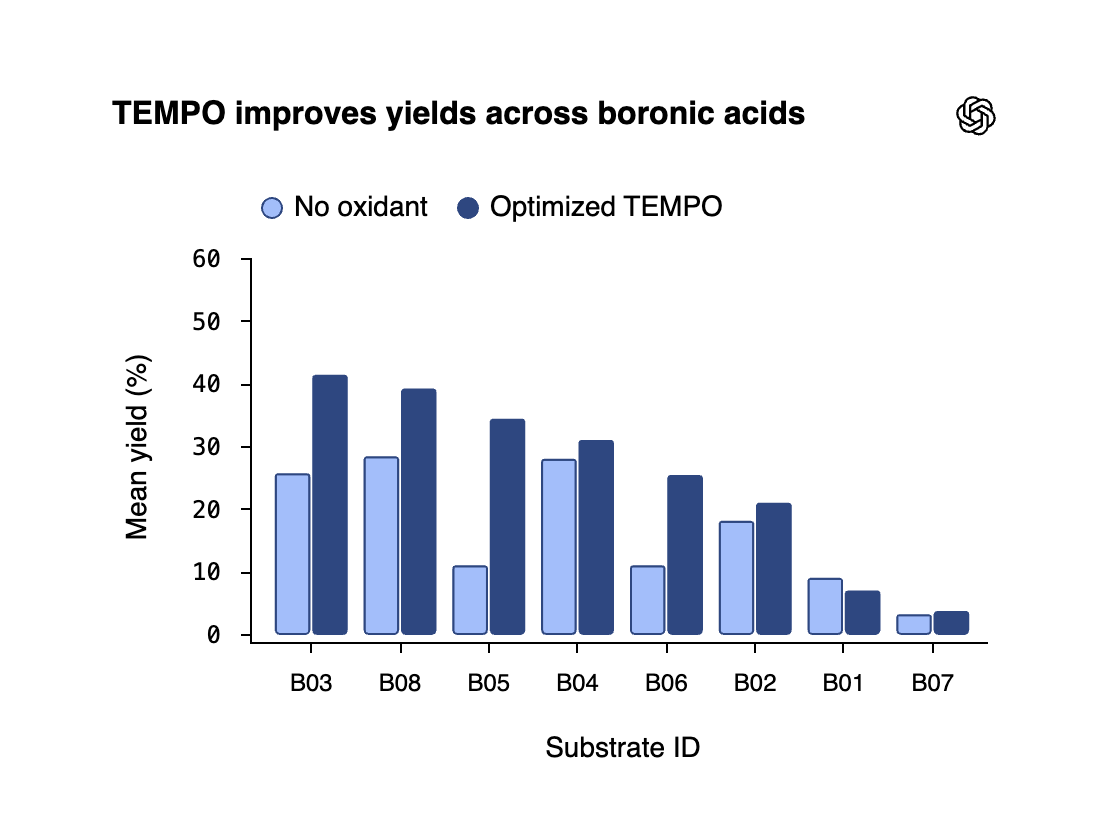
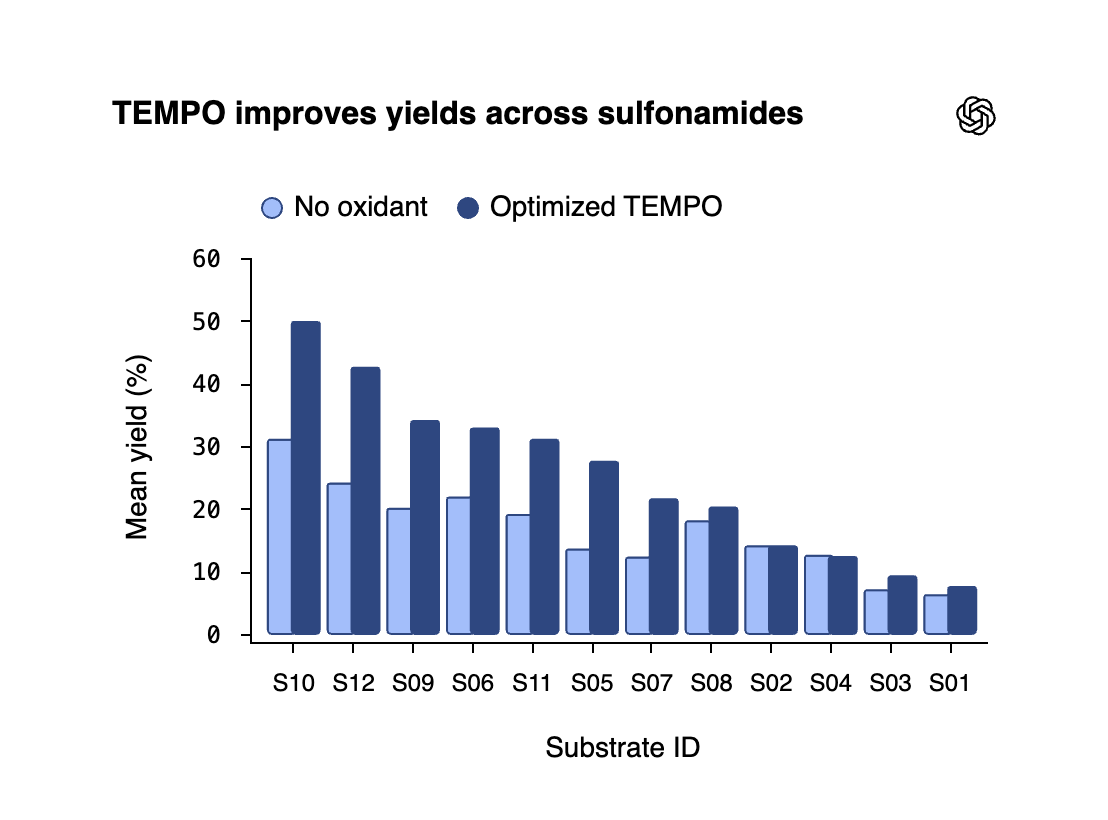 The full process took about 2.5 months, plus another half month for human chemists to write up the results. This is an early example of frontier models supporting more of the scientific research loop: reviewing studies, proposing hypotheses, designing experiments, interpreting


