
A URL (Uniform Resource Locator) is a unique web address used to identify and access resources available on the internet. It helps users locate web pages, files, and online services through a browser.
- URL stands for Uniform Resource Locator and acts as a web address.
- It contains parts such as protocol, domain name, and path.
- URLs can be accessed through the browser address bar or web links.
Example:
https://www.geeksforgeeks.org/Structure of a URL
A URL is structured using different parts that help identify and access resources on the internet. It begins with a protocol followed by the domain name and optional components like path, query parameters, and references.
- A URL starts with a protocol such as HTTP, HTTPS, FTP, or mailto.
- It contains the domain name or subdomain used to locate the resource.
- Optional parts include path, query parameters, port number, and page references.
Different Parts of a URL
A URL consists of multiple parts that can helps you to visit a particular page on the internet. Every part of a URL has its own importance. Let us discuss about the different parts of a URL.
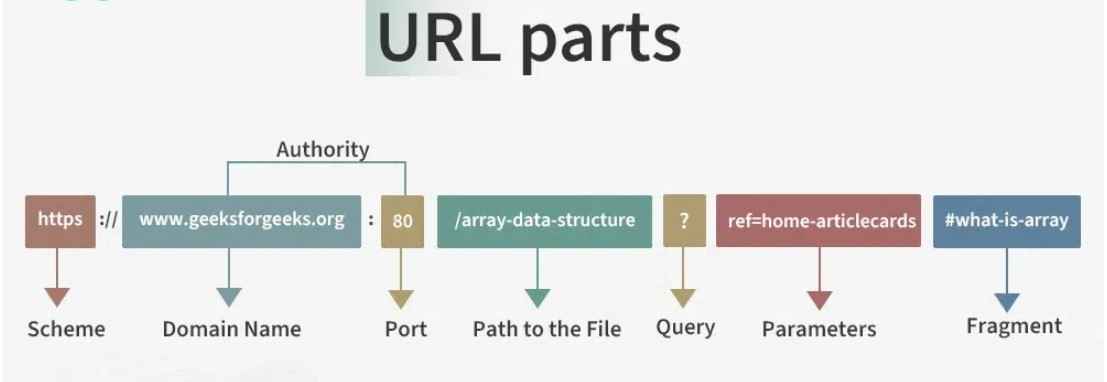
Reference URL:
https://www.geeksforgeeks.org/dsa/array-data-structure-guide/#what-is-array- Scheme (Protocol): Defines the communication protocol such as HTTP or HTTPS.
- Domain Name: Specifies the website address or server name.
- Port: Indicates the network port used for communication.
- Path to the File: Shows the location of a specific webpage or file.
- Query: Contains search data or additional request information.
- Parameters: Pass extra values and information to the webpage.
- Fragment: Refers to a specific section or element within a webpage.