
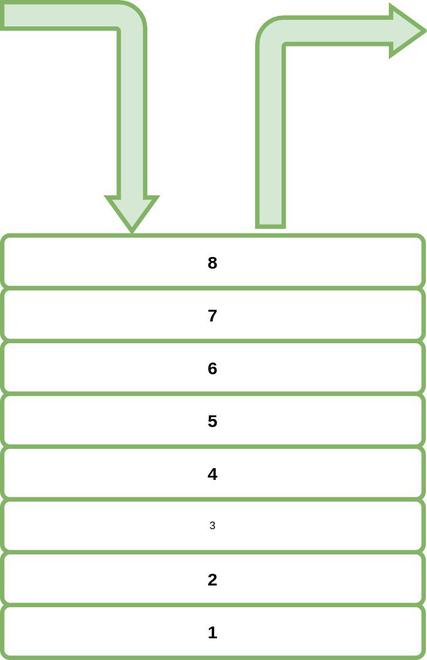
Stack is a linear data structure that works in a model of LIFO ( last in first out ). In which, the element pushed at last will be deleted at first.
Insertion and deletion will happen on the same end. A real-life example of a stack would be a stack of books, a stack of plates, etc. The Insertion deletion diagram will look like this :
Overload '==' operator to check equality of size:
Approach: The task for overloading '==' operator can be performed as shown below:
- Initialize two stacks stk1 and stk2 of size N and check if size is equal or not.
- Then Implement a friend method out of class because.
- In the overloaded function for the operator, check if the size of stack1 is equal to stack2 then return true else return false.
Below is the implementation of the above approach.
#include <bits/stdc++.h>
using namespace std;

class Stack {

    // Properties of stack
    int* stk;
    int length;
    int size;

public:
    // One argument constructor of stack .
    Stack(int size)
    {
        this->size = size;
        this->length = 0;
        this->stk = new int[size];
    }

    // Getter method of stack
    int getSize() { return this->size; }

    // Push method of stack which push data at end
    void push(int val)
    {
        if (length < size)
            stk[length++] = val;
        else
            cout << "\nstack is full\n";
    }

    // Friend method declaration for
    // == operator overloading
    friend bool operator==(Stack&, Stack&);
};

// As friend method is not the part of stack class,
// so we are implementing it outside.
bool operator==(Stack& stk1, Stack& stk2)
{
    // If size of stk1 is equal to size of stk2,
    // then return true else false;
    return (stk1.getSize() == stk2.getSize());
}

// Driver code
int main()
{
    Stack stk1(10), stk2(10);

    if (stk1 == stk2) {
        cout << "Both stk1 and stk2 are equal (size).\n";
    }
    else {
        cout << "stk1 and stk2 are not equal (size).\n";
    }

    return 0;
}
import java.util.*;

class Stack {

    // Properties of stack
    private int[] stk;
    private int length;
    private int size;

    // One argument constructor of stack .
    public Stack(int size) {
        this.size = size;
        this.length = 0;
        this.stk = new int[size];
    }

    // Getter method of stack
    public int getSize() {
        return this.size;
    }

    // Push method of stack which push data at end
    public void push(int val) {
        if (length < size)
            stk[length++] = val;
        else
            System.out.println("\nstack is full\n");
    }

    // Friend method declaration for
    // == operator overloading
    public static boolean equals(Stack stk1, Stack stk2) {
        // If size of stk1 is equal to size of stk2,
        // then return true else false;
        return (stk1.getSize() == stk2.getSize());
    }

}

// Driver code
public class Main {

    public static void main(String[] args) {

        Stack stk1 = new Stack(10);
        Stack stk2 = new Stack(10);

        if (Stack.equals(stk1, stk2)) {
            System.out.println("Both stk1 and stk2 are equal (size).");
        } else {
            System.out.println("stk1 and stk2 are not equal (size).");
        }
    }
}
class Stack:
    # Constructor
    def __init__(self, size):
        self.size = size
        self.length = 0
        self.stk = [0] * size

    # Getter method for size
    def getSize(self):
        return self.size

    # Method for pushing element to the stack
    def push(self, val):
        if self.length < self.size:
            self.stk[self.length] = val
            self.length += 1
        else:
            print("stack is full")

    # Overloading == operator
    def __eq__(self, other):
        # If size of self is equal to size of other, return True, else False
        return self.getSize() == other.getSize()

# Main function
def main():
    stk1 = Stack(10)
    stk2 = Stack(10)

    if stk1 == stk2:
        print("Both stk1 and stk2 are equal (size).")
    else:
        print("stk1 and stk2 are not equal (size).")

if __name__ == '__main__':
    main()

# This code is contributed by Vikram_Shirsat
using System;

public class Stack
{
    private int size;
    private int length;
    private int[] stk;

    // Constructor
    public Stack(int size)
    {
        this.size = size;
        this.length = 0;
        this.stk = new int[size];
    }

    // Getter method for size
    public int GetSize()
    {
        return size;
    }

    // Method for pushing element to the stack
    public void Push(int val)
    {
        if (length < size)
        {
            stk[length] = val;
            length++;
        }
        else
        {
            Console.WriteLine("stack is full");
        }
    }

    // Overloading == operator
    public static bool operator ==(Stack s1, Stack s2)
    {
        // If size of s1 is equal to size of s2, return True, else False
        return s1.GetSize() == s2.GetSize();
    }

    public static bool operator !=(Stack s1, Stack s2)
    {
        return !(s1 == s2);
    }
}

public class Program
{
    public static void Main()
    {
        Stack stk1 = new Stack(10);
        Stack stk2 = new Stack(10);

        if (stk1 == stk2)
        {
            Console.WriteLine("Both stk1 and stk2 are equal (size).");
        }
        else
        {
            Console.WriteLine("stk1 and stk2 are not equal (size).");
        }
    }
}
class Stack {
    constructor(size) {
        // Properties of stack
        this.stk = new Array(size);
        this.length = 0;
        this.size = size;
    }

    // Getter method of stack
    getSize() {
        return this.size;
    }

    // Push method of stack which push data at end
    push(val) {
        if (this.length < this.size) {
            this.stk[this.length++] = val;
        } else {
            console.log("\nstack is full\n");
        }
    }

    // Friend method declaration for
    // == operator overloading
    static isEqual(stk1, stk2) {
        // If size of stk1 is equal to size of stk2,
        // then return true else false;
        return stk1.getSize() === stk2.getSize();
    }
}

// Driver code
const stk1 = new Stack(10);
const stk2 = new Stack(10);

if (Stack.isEqual(stk1, stk2)) {
    console.log("Both stk1 and stk2 are equal (size).\n");
} else {
    console.log("stk1 and stk2 are not equal (size).\n");
}
Output
Both stk1 and stk2 are equal (size).
Time Complexity : O(1), because all the operations performed are basic stack operations that take a constant amount of time, regardless of the input size.
Auxiliary Space : O(N), where N is the maximum size of the stack.
Overload '==' operator for checking if elements of both stacks are equal:
- In this case in the overloaded function for == operator:
- If both stacks don't have the same size, then return false.
- Check each element of both stacks and if both the stacks have the same elements then it should return true else false.
- To check that, run a loop till both are empty and compare the top elements.
Below is the implementation of the above approach.
// C++ code to implement the approach

#include <bits/stdc++.h>
using namespace std;

class Stack {

    // Properties of stack
    int* stk;
    int length;
    int size;

public:
    // One argument constructor of stack
    Stack(int size)
    {
        this->size = size;
        this->length = 0;
        this->stk = new int[size];
    }

    // Getter method of stack
    int getSize() { return this->size; }

    // Return the number of element present in stack
    int getLength() { return this->length; }

    // Return the iterator of first element
    int* begin() { return this->stk; }

    // Push method of stack which push data at end
    void push(int val)
    {
        if (length < size)
            stk[length++] = val;
        else
            cout << "\nstack is full\n";
    }

    // Friend method declaration for
    // == operator overloading
    friend bool operator==(Stack&, Stack&);
};

// As friend method is not the part of stack class,
// so we are implementing it outside.
bool operator==(Stack& stk1, Stack& stk2)
{
    // If size of stk1 is equal to size of stk2,
    // then return true else false;
    int lenghtOfStack_1 = stk1.getLength();
    int lenghtOfStack_2 = stk2.getLength();

    // If length of stk1 is not equal to stk2
    // means both stacks have different number
    // of elements, for that return false;
    if (lenghtOfStack_1 != lenghtOfStack_2) {
        return false;
    }

    // As both the stack have same length,
    // then we can use any one of them
    for (int i = 0; i < lenghtOfStack_1; i++) {

        // Here, we are checking if any time stk1 value
        // is not  equal to stk2 value. return false.
        if (stk1.begin()[i] != stk2.begin()[i]) {
            return false;
        }
    }

    // If above loop does not return false value,
    // means, both the stacks have same elements
    // so, we are returning true here.
    return true;
}

// Driver code
int main()
{
    Stack stk1(10), stk2(10);

    // Pushing elements into the stacks
    for (int i = 0; i < 5; i++) {
        stk1.push(i);
        stk2.push(i);
    }

    // Checking if both stacks are equal are not.
    if (stk1 == stk2) {
        cout << "Both stk1 and stk2 are equal.\n";
    }
    else {
        cout << "stk1 and stk2 are not equal.\n";
    }

    return 0;
}
import java.util.Arrays;

class Stack {

    // Properties of stack
    private int[] stk;
    private int length;
    private int size;

    // One argument constructor of stack
    Stack(int size) {
        this.size = size;
        this.length = 0;
        this.stk = new int[size];
    }

    // Getter method of stack
    int getSize() {
        return this.size;
    }

    // Return the number of element present in stack
    int getLength() {
        return this.length;
    }

    // Return the iterator of first element
    int[] begin() {
        return this.stk;
    }

    // Push method of stack which push data at end
    void push(int val) {
        if (length < size)
            stk[length++] = val;
        else
            System.out.println("\nstack is full\n");
    }

    // Overriding the equals() method
    @Override
    public boolean equals(Object obj) {
        if (obj == this) {
            return true;
        }

        if (!(obj instanceof Stack)) {
            return false;
        }

        Stack otherStack = (Stack) obj;

        // If size of current stack is not equal to size of other stack,
        // then return false;
        if (this.length != otherStack.length) {
            return false;
        }

        // As both the stacks have same length,
        // then we can use any one of them
        for (int i = 0; i < this.length; i++) {

            // Here, we are checking if any time current stack value
            // is not equal to other stack value. return false.
            if (this.stk[i] != otherStack.stk[i]) {
                return false;
            }
        }

        // If above loop does not return false value,
        // means, both the stacks have same elements
        // so, we are returning true here.
        return true;
    }
}

// Driver code
public class Main {
    public static void main(String[] args) {
        Stack stk1 = new Stack(10);
        Stack stk2 = new Stack(10);

        // Pushing elements into the stacks
        for (int i = 0; i < 5; i++) {
            stk1.push(i);
            stk2.push(i);
        }

        // Checking if both stacks are equal are not.
        if (stk1.equals(stk2)) {
            System.out.println("Both stk1 and stk2 are equal.");
        } else {
            System.out.println("stk1 and stk2 are not equal.");
        }
    }
}
# Python equivalent of the given code

class Stack:
    # Properties of stack
    stk = []
    length = 0
    size = 0

    # One argument constructor of stack
    def __init__(self, size):
        self.size = size
        self.length = 0
        self.stk = [0] * size

    # Getter method of stack
    def getSize(self):
        return self.size

    # Return the number of element present in stack
    def getLength(self):
        return self.length

    # Push method of stack which push data at end
    def push(self, val):
        if self.length < self.size:
            self.stk[self.length] = val
            self.length += 1
        else:
            print("stack is full")

    # As friend method is not the part of stack class,
    # so we are implementing it outside.
    def __eq__(stk1, stk2):
        # If size of stk1 is equal to size of stk2,
        # then return true else false;
        lenghtOfStack_1 = stk1.getLength()
        lenghtOfStack_2 = stk2.getLength()

        # If length of stk1 is not equal to stk2
        # means both stacks have different number
        # of elements, for that return false;
        if lenghtOfStack_1 != lenghtOfStack_2:
            return False

        # As both the stack have same length,
        # then we can use any one of them
        for i in range(lenghtOfStack_1):

            # Here, we are checking if any time stk1 value
            # is not equal to stk2 value. return false.
            if stk1.stk[i] != stk2.stk[i]:
                return False

        # If above loop does not return false value,
        # means, both the stacks have same elements
        # so, we are returning true here.
        return True

# Driver code
if __name__ == "__main__":
    stk1 = Stack(10)
    stk2 = Stack(10)

    # Pushing elements into the stacks
    for i in range(5):
        stk1.push(i)
        stk2.push(i)

    # Checking if both stacks are equal are not.
    if stk1 == stk2:
        print("Both stk1 and stk2 are equal.")
    else:
        print("stk1 and stk2 are not equal.")

# This code is contributed by Vikram_Shirsat
// C# code to implement the approach

using System;

class Stack {
    // Properties of stack
    private int[] stk;
    private int length;
    private int size;

    // One argument constructor of stack
    public Stack(int size)
    {
        this.size = size;
        this.length = 0;
        this.stk = new int[size];
    }

    // Getter method of stack
    public int GetSize() { return this.size; }

    // Return the number of element present in stack
    public int GetLength() { return this.length; }

    // Return the iterator of first element
    public int[] Begin() { return this.stk; }

    // Push method of stack which push data at end
    public void Push(int val)
    {
        if (length < size) {
            stk[length++] = val;
        }
        else {
            Console.WriteLine("\nstack is full\n");
        }
    }

    // Friend method declaration for
    // == operator overloading
    public static bool operator == (Stack stk1, Stack stk2)
    {
        // If size of stk1 is equal to size of stk2,
        // then return true else false;
        int lengthOfStack_1 = stk1.GetLength();
        int lengthOfStack_2 = stk2.GetLength();

        // If length of stk1 is not equal to stk2
        // means both stacks have different number
        // of elements, for that return false;
        if (lengthOfStack_1 != lengthOfStack_2) {
            return false;
        }

        // As both the stack have same length,
        // then we can use any one of them
        for (int i = 0; i < lengthOfStack_1; i++) {
            // Here, we are checking if any time stk1 value
            // is not equal to stk2 value. return false.
            if (stk1.Begin()[i] != stk2.Begin()[i]) {
                return false;
            }
        }

        // If above loop does not return false value,
        // means, both the stacks have same elements
        // so, we are returning true here.
        return true;
    }

    public static bool operator != (Stack stk1, Stack stk2)
    {
        return !(stk1 == stk2);
    }
}
// Driver code

class Program {
    static void Main(string[] args)
    {
        Stack stk1 = new Stack(10);
        Stack stk2 = new Stack(10);

        // Pushing elements into the stacks
        for (int i = 0; i < 5; i++) {
            stk1.Push(i);
            stk2.Push(i);
        }

        // Checking if both stacks are equal are not.
        if (stk1 == stk2) {
            Console.WriteLine(
                "Both stk1 and stk2 are equal.");
        }
        else {
            Console.WriteLine(
                "stk1 and stk2 are not equal.");
        }
    }
}
// JavaScript code to implement the approach

class Stack {
// Properties of stack
constructor(size) {
this.stk = new Array(size);
this.length = 0;
this.size = size;
}

// Getter method of stack
getSize() {
return this.size;
}

// Return the number of element present in stack
getLength() {
return this.length;
}

// Return the iterator of first element
begin() {
return this.stk;
}

// Push method of stack which push data at end
push(val) {
if (this.length < this.size) {
this.stk[this.length++] = val;
} else {
console.log("\nstack is full\n");
}
}
}

// Friend method declaration for
// == operator overloading
function equals(stk1, stk2) {
// If size of stk1 is equal to size of stk2,
// then return true else false;
let lengthOfStack_1 = stk1.getLength();
let lengthOfStack_2 = stk2.getLength();

// If length of stk1 is not equal to stk2
// means both stacks have different number
// of elements, for that return false;
if (lengthOfStack_1 !== lengthOfStack_2) {
return false;
}

// As both the stack have same length,
// then we can use any one of them
for (let i = 0; i < lengthOfStack_1; i++) {
// Here, we are checking if any time stk1 value
// is not equal to stk2 value. return false.
if (stk1.begin()[i] !== stk2.begin()[i]) {
return false;
}
}

// If above loop does not return false value,
// means, both the stacks have same elements
// so, we are returning true here.
return true;
}

// Driver code
let stk1 = new Stack(10);
let stk2 = new Stack(10);

// Pushing elements into the stacks
for (let i = 0; i < 5; i++) {
stk1.push(i);
stk2.push(i);
}

// Checking if both stacks are equal are not.
if (equals(stk1, stk2)) {
console.log("Both stk1 and stk2 are equal.\n");
} else {
console.log("stk1 and stk2 are not equal.\n");
}
//  This code is contributed by rutikbhosale
Output
Both stk1 and stk2 are equal.
Related Articles: