
Supply Chain Analytics (SCA) is a key component of modern business environments to stay competitive and efficient in the fast-paced market. By using advanced data analysis techniques such as machine learning and predictive modeling, SCA helps organizations understand and improve every part of their supply chain, from sourcing materials and manufacturing products to delivering them to customers.
Types of Supply Chain Analytics
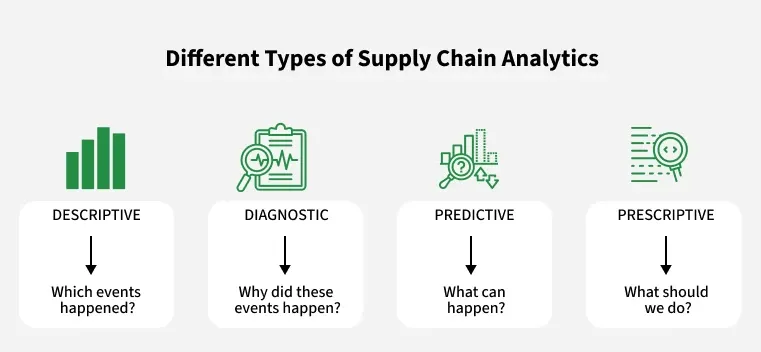
1. Descriptive Analytics
- Descriptive analytics describes past events by analyzing historical data.
- It helps in identifying trends such as demand patterns, product performance and time-based variations.
- Tools used: In descriptive analytics Pandas and NumPy are used for data manipulation, Matplotlib and Seaborn for data visualization.
- Example: Walmart uses historical data to predict demand and stock products accordingly.
2. Diagnostic Analytics
- Diagnostic analytics helps in identifying the reason behind certain trends or outcomes.
- Analyzes data from multiple sources to identify the root cause of problems, such as delays, inefficiencies or failures in the supply chain.
- Tools used: In Diagnostic analytics SQL and Python libraries are used for database queries and data analysis, Jupyter Notebooks for exploratory analysis.
- Example: Toyota uses diagnostic analytics to investigate why specific delays occur in its supply chain.
3. Predictive Analytics
- Predictive analytics uses historical data and statistical models to predict future trends, demands or events.
- It helps in demand forecasting, inventory management and logistics planning.
- Tools used: In Predictive analytics Scikit-learn, Statsmodels, TensorFlow etc. are used for statistical modeling.
- Example: Amazon uses predictive analytics to forecast customer demand for millions of products based on previous buying behavior, seasonality and trends.
4. Prescriptive Analytics
- Prescriptive analytics suggests actions or strategies to optimise processes and outcomes.
- It not only forecasts what might happen but also suggests actionable steps to improve performance.
- Tools used: Prescriptive analytics uses optimization algorithms such as SciPy for linear programming and Google OR-Tools which are used for logistics and route optimization.
- Example: UPS uses prescriptive analytics to optimize delivery routes for its trucks. The system evaluates multiple variables, such as traffic patterns, weather, delivery times and fuel efficiency, to suggest the best delivery routes for drivers.
Workflow of Supply Chain Analytics
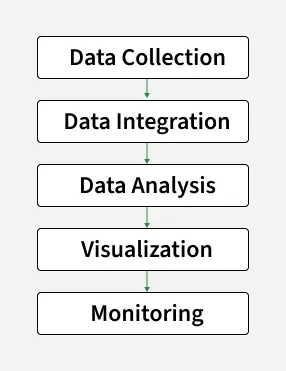
Supply Chain Analytics needs to follow a structural approach,
1. Data Collection
- Collect data from various internal and external sources. Real-time data collection tools like GPS tracking and RFID can also contribute to more precise insights.
- Tools used: IoT devices and RFID are commonly used for real-time tracking of products and assets within the supply chain, while APIs facilitate the collection of external data from suppliers, market trends, or weather conditions.
2. Data Integration
- Combine data from multiple sources into a unified system such as a data warehouse or a cloud-based analytics platform. This ensures that the data is clean, processed and normalized for accurate analysis.
- Tools used: Apache Kafka and Apache Spark are used for real-time data streaming and processing, while ETL tools like Talend or Alteryx help in transforming and consolidating data from various sources into a unified system, ensuring accurate and consistent analysis.
3. Data Analysis
- Apply advanced analytics tools like machine learning algorithms and artificial intelligence to extract valuable insights from the data. In this we perform regression analysis, time-series forecasting and other modeling techniques to generate predictive insights.
- Tools used: Python and R are often utilized for data processing and building analytical models, while Scikit-learn is commonly used for applying machine learning algorithms, Statsmodels for statistical analysis, and TensorFlow for developing more complex deep learning models.
4. Visualization and Reporting
- Use dashboards, graphs, and other visualization tools to present findings in a user-friendly format. This makes the results accessible to key stakeholders in the supply chain to facilitate informed decision-making.
- Tools used: Tableau and Power BI are popular for creating interactive dashboards and reports, while Matplotlib and Seaborn in Python are used to generate visual representations of data, making it easier to communicate insights effectively to stakeholders.
5. Monitoring and Optimization
- Continuous monitoring supply chain performance and adjust strategies as needed because SCA requires ongoing analysis and refinement.
- Tools used: Prometheus is used for monitoring system performance in real-time, while Google Cloud ML supports continuous updates and improvements to predictive models and tools like Optimizely enable experimentation and optimization to enhance supply chain efficiency.
Benefits of Supply Chain Analytics
Supply chain analytics are very useful for its various traits such as,
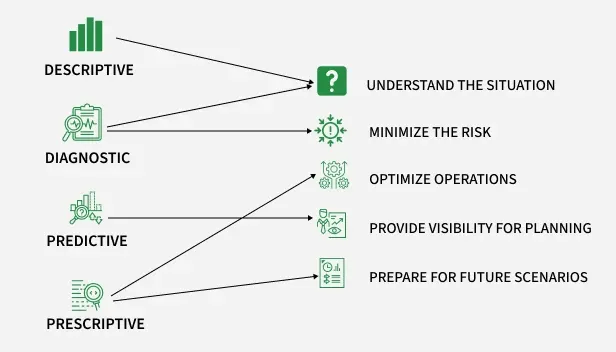
- Enhanced Visibility: SCA provides real-time insights into every part of the supply chain enabling quick responses to disruptions.
- Cost Reduction: SCA identifies inefficiencies like overstocking and delays, leading to lower operational costs.
- Risk Management: SCA helps anticipate risks and disruptions which allows businesses to develop strategies for mitigation.
- Scalability: SCA supports growth by providing insights into managing complex supply chains efficiently.
- Competitive Advantage: SCA enables businesses to operate more efficiently, offering better pricing, service and delivery times.
Challenges in Supply Chain Analytics
While SCA offers substantial benefits, there are also several challenges in its implementation:
- Data Quality and Consistency: Inaccurate or inconsistent data can lead to incorrect conclusions and decision-making.
- Integration Across Systems: Supply chains often involve multiple stakeholders using different systems. Integrating these systems and sharing data across platforms can be complex.
- Skilled Workforce: Leveraging SCA effectively requires skilled professionals in data analysis, machine learning and supply chain management.
- Technology Infrastructure: Implementing advanced analytics tools requires robust technology infrastructure.