
Mobile device forensics is the process of extracting, preserving, and analyzing data stored in mobile devices such as smartphones and tablets to investigate cybercrimes or legal cases. The process ensures that the collected evidence remains accurate, reliable, and legally acceptable in court.
- Involves collection of digital data from mobile devices.
- Includes preservation of data without altering original content.
- Uses specialized forensic tools and techniques.
- Maintains the integrity and authenticity of evidence.
Uses of Mobile Forensics
Mobile forensics is widely used in different fields to investigate digital activities and collect important evidence from mobile devices.
1. Military Applications
- Helps gather intelligence information.
- Assists in identifying potential threats.
- Supports planning of security operations.
- Helps analyze the communication data of suspects.
2. Corporate Investigations
- Helps organizations detect fraud or data theft.
- Protects intellectual property and confidential information.
- Identifies misuse of company devices or resources.
- Supports internal investigations of suspicious activities.
3. Law Enforcement
- Used to investigate cybercrimes and criminal activities.
- Helps collect digital evidence for legal cases.
- Supports investigation of crimes such as fraud or identity theft.
- Provides reliable evidence for court proceedings.
Process of Mobile Device Forensics
The process of mobile device forensics involves systematic steps to collect, preserve, analyze, and present digital evidence from mobile devices while maintaining its integrity and legal validity.
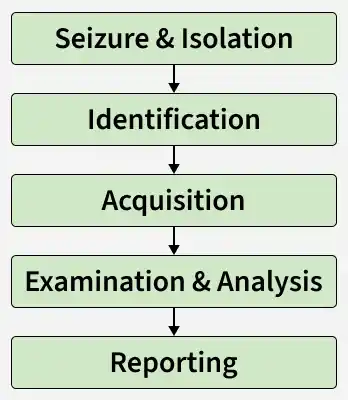
1. Seizure and Isolation
This involve securing the mobile device and preventing any changes to the stored data so that the evidence remains reliable for investigation and legal use.
- Device is collected carefully to avoid data alteration.
- Network connections such as Wi-Fi, Bluetooth, or mobile data are disabled.
- Prevents remote access or deletion of data.
- Device may be placed in airplane mode or Faraday bag.
2. Identification
Process of recognizing potential sources of useful information stored in the mobile device.
- Identifies relevant data stored in the device.
- Detects security protections such as PIN, password pattern lock and biometric lock
- Determines installed applications and data sources.
- Identifies possible encrypted or protected files.
3. Acquisition
Acquisition refers to collecting digital data from the mobile device without modifying the original content.
- Data is extracted using forensic tools.
- Data may be stored locally or in cloud services.
- Investigators check for synchronized data across devices.
- Possible sources include device memory, SIM card, memory card and cloud storage
4. Examination and Analysis
Involve studying the collected data to identify relevant information related to the investigation.
- Extracts useful information from collected data.
- Identifies communication patterns and activities.
- Detects deleted or hidden files.
- Analyzes application data and usage history.
5. Reporting
This is the process of documenting all steps and findings of the forensic investigation in a structured format.
- Records how evidence was collected and handled.
- Maintains chain of custody details.
- Includes tools and methods used in analysis.
- Presents findings clearly and accurately.
Tools Used
Forensic tools help investigators collect and analyze digital evidence from smartphones, tablets, and other mobile devices.
1. EnCase Mobile Investigator
- Used to extract and analyze digital evidence.
- Helps investigators examine stored data.
- Supports detailed forensic investigation.
2. Cellebrite UFED (Universal Forensic Extraction Device)
- Widely used mobile forensic tool.
- Supports data extraction from many mobile devices and applications.
- Helps recover deleted or hidden data.
3. X1 Social Discovery
- Specialized tool for extracting online communication data.
- Collects information from social media platforms.
- Helps analyze digital communication records.
Techniques Used
Different forensic techniques are used to extract data depending on the device condition and investigation requirements.
1. Physical Extraction
Creating a complete copy of the device storage, including hidden or deleted data.
- Creates sector-by-sector copy of device memory.
- Helps recover deleted files.
- Provides complete access to stored information.
- Useful for deep forensic analysis.
2. Logical Extraction
Retrieves data through the device operating system using standard access methods.
- Extracts accessible files and folders.
- Uses device operating system interface.
- Faster compared to physical extraction.
- Suitable for commonly available data.
3. File System Extraction
Collects data from the file structure of the device.
- Retrieves stored files and directory structure.
- Helps recover deleted or hidden files.
- Provides organized view of stored information.
- Useful for analyzing application data and system files.
Scope of Mobile Device Forensics
- Criminal Investigations: Helps law enforcement agencies collect digital evidence such as call logs, messages, images, and location data to solve crimes.
- Corporate Security: Assists organizations in investigating data breaches, insider threats, and misuse of company devices to protect confidential information.
- Legal Proceedings: Provides reliable digital evidence that can be presented in court to support legal cases and verify facts.
- Civil Litigation: Helps resolve disputes by retrieving digital records such as emails, messages, and documents relevant to the case.
- Regulatory Compliance: Supports organizations in meeting legal and industry regulations by ensuring proper handling and monitoring of digital data.
Advantages
- Helps in collecting important digital evidence from smartphones and tablets for investigations.
- Assists law enforcement agencies in solving cybercrimes, fraud, and other criminal activities.
- Supports organizations in detecting data breaches and protecting confidential information.
- Provides reliable evidence that can be presented in court for legal proceedings.
Disadvantages
- Data stored in mobile devices can be easily deleted, encrypted, or damaged.
- Rapid changes in mobile technology make forensic analysis more complex.
- Legal and privacy issues may arise while accessing personal device data.
- Extraction of data from locked or highly secured devices can be difficult and time-consuming