
Computer forensics techniques are methods used to collect, preserve, examine, and analyze digital evidence from computer systems in a way that maintains its integrity so that it can be used in legal investigations.
Types of Computer Forensics
Different types of computer forensics focus on specific sources of digital evidence. Each type uses specialized methods and tools to investigate cyber incidents and collect reliable information.
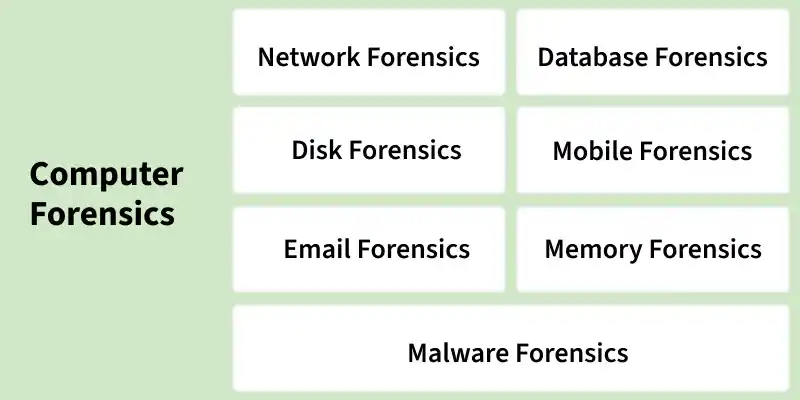
1. Network Forensics
It involves monitoring and analyzing network traffic to detect suspicious activities, security breaches, or unauthorized access within a network.
- Examines data packets transmitted over networks.
- Helps detect hacking attempts and cyber attacks.
- Identifies the source and destination of network communication.
- Useful in investigating data breaches.
2. Email Forensics
It focuses on examining email messages and related data to identify cybercrimes such as fraud, phishing, or unauthorized communication.
- Analyzes email headers and metadata.
- Helps trace sender and receiver information.
- Identifies phishing or spam emails.
- Recovers deleted email messages.
3. Malware Forensics
It deals with analyzing malicious software to understand its behavior, origin, and impact on the system.
- Identifies the type and function of malware.
- Helps determine how the system was infected.
- Analyzes damage caused by malicious programs.
- Supports prevention of future attacks.
4. Memory Forensics
It involves examining volatile memory (RAM) to collect temporary data related to system activities and running processes.
- Retrieves information about active programs.
- Detects hidden malware in memory.
- Helps analyze live system activity.
- Useful when data is not stored on disk.
5. Mobile Phone Forensics
It focuses on extracting and analyzing data stored in mobile devices such as smartphones and tablets.
- Recovers call logs, messages, and contacts.
- Extracts photos, videos, and application data.
- Helps investigate cyber and criminal cases.
- Supports evidence collection from mobile devices.
6. Database Forensics
It involves investigating databases to detect unauthorized access, data modification, or suspicious transactions.
- Examines stored data and database logs.
- Identifies changes made to records.
- Helps detect insider threats.
- Useful in financial investigations.
7. Disk Forensics
It deals with examining storage media such as hard drives and SSDs to recover and analyze digital evidence.
- Recovers deleted or hidden files.
- Creates disk images for investigation.
- Helps identify unauthorized activities.
- Supports analysis of stored system data.
Techniques Used
- Cross-drive analysis: Identifies and correlates information across multiple storage devices by searching common data such as email addresses, message IDs, or financial details.
- Live analysis: Examines a running system to collect volatile data such as active processes, open ports, logged-in users, and currently running services.
- Deleted files recovery: Recovers deleted or lost files using forensic tools to retrieve important digital evidence from storage devices.
- Stochastic forensics: Reconstructs digital activities by analyzing patterns and behavior when sufficient direct digital evidence is not available.
- Steganography analysis: Detects hidden information stored inside files such as images or documents by comparing hash values and identifying modifications.