
Cloud computing has become an essential part of modern business, offering unparalleled flexibility, scalability, and cost-effective solutions. However, to harness its full potential, selecting the most appropriate cloud deployment model is critical. Whether you are a small startup or a massive enterprise, your choice will directly dictate your organization's security, scalability, and operational efficiency
What is a Cloud Deployment Model?
A cloud deployment model defines where your cloud infrastructure lives, who owns and manages it, and how it is accessed. It establishes the boundaries of your cloud environment, dictating what you can customize, how resources are shared among users, and the overarching purpose of the setup.
Understanding these models is the crucial first step for any business migrating to the cloud, as each offers distinct trade-offs in governance, cost, security, and management.
Public Cloud
The public cloud delivers infrastructure and services over the internet to the general public or broad industry groups. The infrastructure is entirely owned, managed, and maintained by a third-party cloud service provider (e.g., Google Cloud, AWS, Microsoft Azure). Resources are shared among multiple tenants.
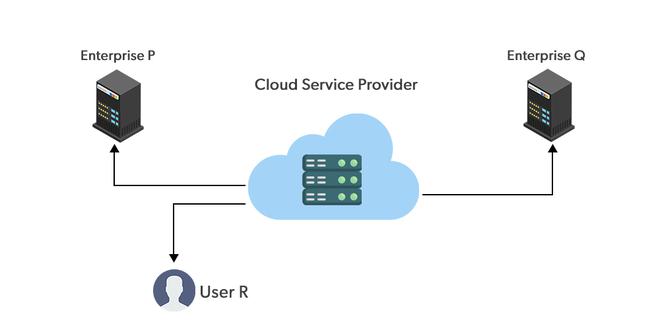
Advantages of the Public Cloud Model
- Minimal Investment: Operates on a pay-per-use model with no substantial upfront capital expenditure.
- Zero Setup & Maintenance: The provider subsidizes and manages all physical hardware setup and ongoing maintenance.
- Dynamic Scalability: On-demand resources are nearly limitless, scaling instantly to fulfill business needs.
Disadvantages of the Public Cloud Model
- Lower Security: Because resources are shared publicly, meeting strict, high-level compliance and security standards can be challenging.
- Low Customization: The standardized environment offers little room for bespoke hardware or infrastructure customizations.
Private Cloud
The private cloud deployment model is the exact opposite of the public cloud deployment model. It's a one-on-one environment for a single user (customer). There is no need to share your hardware with anyone else. The distinction between private and public clouds is in how you handle all of the hardware. It is also called the "internal cloud" & it refers to the ability to access systems and services within a given border or organization. The cloud platform is implemented in a cloud-based secure environment that is protected by powerful firewalls and under the supervision of an organization's IT department. The private cloud gives greater flexibility of control over cloud resources.

Advantages of the Private Cloud Model
- Total Control: You have complete command over IT operations, service integration, and user behavior.
- Elite Security and Privacy: Ideal for sensitive corporate data, allowing for strict access controls and physical isolation.
- Legacy System Support: Highly customizable, making it capable of supporting legacy applications that cannot migrate to a public environment.
Disadvantages of the Private Cloud Model
- High Cost: Personalized facilities, dedicated hardware, and internal IT management make this the most expensive option.
- Limited Scalability: Scaling is restricted by the physical capacity of the dedicated hardware purchased.
Hybrid Cloud
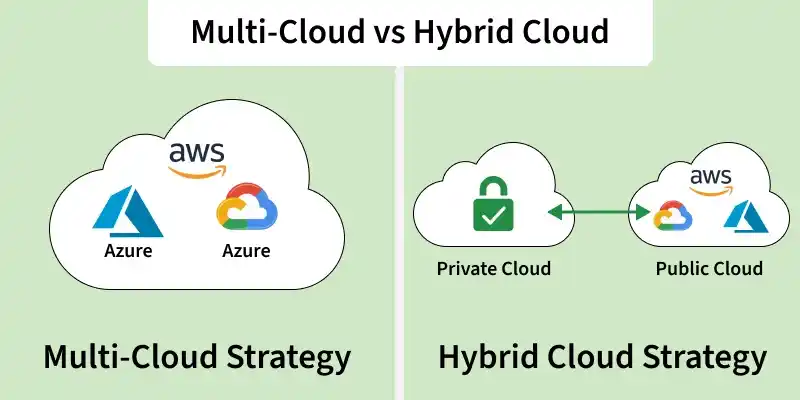
By bridging the public and private worlds with a layer of proprietary software, hybrid cloud computing gives the best of both worlds. With a hybrid solution, you may host the app in a safe environment while taking advantage of the public cloud's cost savings. Organizations can move data and applications between different clouds using a combination of two or more cloud deployment methods, depending on their needs.

Advantages of the Hybrid Cloud Model
- Ultimate Flexibility: Businesses can keep sensitive data secure on the private cloud while running heavy, non-sensitive applications on the public cloud.
- Cost Efficiency: You only pay for additional public cloud capacity when you experience traffic spikes that your private cloud cannot handle (known as "cloud bursting").
- Targeted Security: Data theft risks are reduced by keeping the most critical assets completely isolated.
Disadvantages of the Hybrid Cloud Model
- Difficult to manage: Hybrid clouds are difficult to manage as it is a combination of both public and private cloud. So, it is complex.
- Slow data transmission: Data transmission in the hybrid cloud takes place through the public cloud so latency occurs.
Community Cloud
A community cloud is a collaborative infrastructure shared by a specific group of organizations from a similar industry that have shared concerns (e.g., compliance, security requirements, or mission goals). It can be managed internally by the organizations or by a third party.

Advantages of the Community Cloud Model
- Cost Effective: It is cost-effective because the cloud is shared by multiple organizations or communities.
- Security: Community cloud provides better security.
- Shared resources: It allows you to share resources, infrastructure, etc. with multiple organizations.
- Collaboration and data sharing: It is suitable for both collaboration and data sharing.
Disadvantages of the Community Cloud Model
- Limited Scalability: Community cloud is relatively less scalable as many organizations share the same resources according to their collaborative interests.
- Rigid in customization: As the data and resources are shared among different organizations according to their mutual interests if an organization wants some changes according to their needs they cannot do so because it will have an impact on other organizations.
Multi-Cloud
While a hybrid cloud mixes private and public models, a multi-cloud strategy specifically involves using multiple public cloud providers at the same time (e.g., using AWS for storage, Google Cloud for machine learning, and Azure for active directory).
Advantages of the Multi-Cloud Model
- Best-of-Breed Features: You can mix and match the absolute best tools from different providers to suit specific workloads.
- Reduced Latency: You can route user traffic to the cloud provider that has a data center closest to that specific user.
- High Availability: It is incredibly rare for two different major cloud providers to experience outages simultaneously, creating exceptional disaster recovery.
Disadvantages of the Multi-Cloud Model
- Complex: The combination of many clouds makes the system complex and bottlenecks may occur.
- Security issue: Due to the complex structure, there may be loopholes to which a hacker can take advantage hence, makes the data insecure.
How to Choose the Right Deployment Model
There is no one-size-fits-all approach. The ideal choice depends entirely on your specific business requirements. Consider these five factors:
- Cost: Determine your budget for upfront capital expenses versus ongoing operational expenses.
- Scalability: Assess your current traffic and predict how rapidly you will need to scale resources in the future.
- Ease of Use: Evaluate the technical expertise of your internal IT staff and their ability to manage complex infrastructures.
- Compliance: Identify any legal or industry regulations (like HIPAA or GDPR) that dictate where and how your data must be stored.
- Privacy: Classify your data to determine what can be public and what requires strict, isolated confidentiality.
Cloud Deployment Models Comparison
The overall Analysis of these models with respect to different factors is described below.
| Factors | Public Cloud | Private Cloud | Community Cloud | Hybrid Cloud |
|---|---|---|---|---|
| Initial Setup | Easy | Complex, requires a professional team to setup | Complex, requires a professional team to setup | Complex, requires a professional team to setup |
| Scalability and Flexibility | High | High | Fixed | High |
| Cost-Comparison | Cost-Effective | Costly | Distributed cost among members | Between public and private cloud |
| Reliability | Low | Low | High | High |
| Data Security | Low | High | High | High |
| Data Privacy | Low | High | High | High |
Models of Cloud Computing
Cloud Computing helps in rendering several services according to roles, companies, etc. Cloud computing models are explained below.
- Infrastructure as a service (IaaS)
- Platform as a service (PaaS)
- Software as a service (SaaS)
1. Infrastructure as a service (IaaS)
Infrastructure as a Service (IaaS) helps in delivering computer infrastructure on an external basis for supporting operations. Generally, IaaS provides services to networking equipment, devices, databases, and web servers.
Infrastructure as a Service (IaaS) helps large organizations, and large enterprises in managing and building their IT platforms. This infrastructure is flexible according to the needs of the client.
Advantages of IaaS
- IaaS is cost-effective as it eliminates capital expenses.
- IaaS cloud provider provides better security than any other software.
- IaaS provides remote access.
Disadvantages of IaaS
- In IaaS, users have to secure their own data and applications.
- Cloud computing is not accessible in some regions of the World.
2. Platform as a service (PaaS)
Platform as a Service (PaaS) is a type of cloud computing that helps developers to build applications and services over the Internet by providing them with a platform.
PaaS helps in maintaining control over their business applications.
Advantages of PaaS
- PaaS is simple and very much convenient for the user as it can be accessed via a web browser.
- PaaS has the capabilities to efficiently manage the lifecycle.
Disadvantages of PaaS
- PaaS has limited control over infrastructure as they have less control over the environment and are not able to make some customizations.
- PaaS has a high dependence on the provider.
3. Software as a service (SaaS)
Software as a Service (SaaS) is a type of cloud computing model that is the work of delivering services and applications over the Internet. The SaaS applications are called Web-Based Software or Hosted Software.
SaaS has around 60 percent of cloud solutions and due to this, it is mostly preferred by companies.
Advantages of SaaS
- SaaS can access app data from anywhere on the Internet.
- SaaS provides easy access to features and services.
Disadvantages of SaaS
- SaaS solutions have limited customization, which means they have some restrictions within the platform.
- SaaS has little control over the data of the user.
- SaaS are generally cloud-based, they require a stable internet connection for proper working.
For more, you can refer to Cloud-Based Services.