
C strcat() function appends the string pointed to by src to the end of the string pointed to by dest. It will append a copy of the source string in the destination string. plus a terminating Null character. The initial character of the string(src) overwrites the Null-character present at the end of the string(dest).
It is a predefined string handling function under string library <string.h> in c and <cstring> in C++.
Syntax:
char *strcat(char *dest, const char *src);
Parameters: The method accepts the following parameters:
- dest: This is a pointer to the destination array, which should contain a C string, and should be large enough to contain the concatenated resulting string.
- src: This is the string to be appended. This should not overlap the destination.
Return value:
- The strcat() function returns dest, the pointer to the destination string.
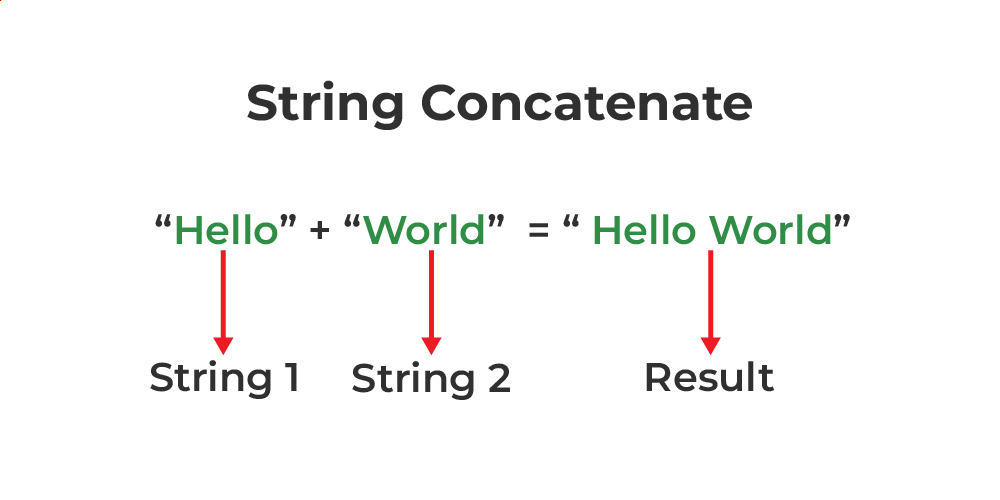
Examples:
Input: src = "ForGeeks"
       dest = "Geeks"
Output: "GeeksForGeeks"

Input: src = "World"
       dest = "Hello "
Output: "Hello World"
Below is the C/C++ program to implement the above approach:
// C program to implement
// the above approach
#include <stdio.h>
#include <string.h>

// Driver code
int main()
{
    // Define a temporary variable
    char example[100];

    // Copy the first string into
    // the variable
    strcpy(example, "Geeks");

    // Concatenate this string
    // to the end of the first one
    strcat(example, "ForGeeks");

    // Display the concatenated strings
    printf("%s\n", example);

    return 0;
}
Output
GeeksForGeeks
The behavior of strcat() is undefined if:
- the destination array is not large enough for the contents of both src and dest and the terminating null character
- if the string overlaps.
- if either dest or src is not a pointer to a null-terminated byte string.