
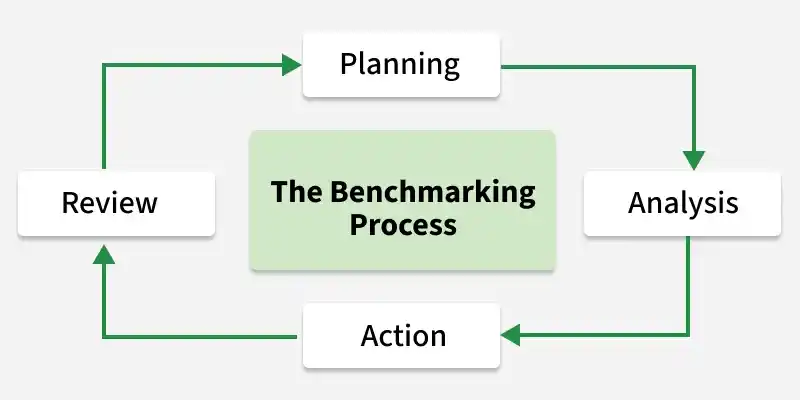
Strategic Management Benchmarking is a strategic management approach through which organisations improve their performance by comparing their practices, processes, and results with those of leading competitors or top-performing companies. It helps businesses identify strengths, weaknesses, and performance gaps while learning industry best practices that can be adopted to enhance efficiency and effectiveness. By analysing information gathered from benchmarking partners, organisations can set realistic yet challenging performance targets, develop action plans, and monitor progress continuously. This process encourages continuous learning, innovation, collaboration, and informed decision-making, enabling companies to improve productivity, streamline operations, strengthen competitiveness, and achieve long-term organisational success.
Advantages of Benchmarking
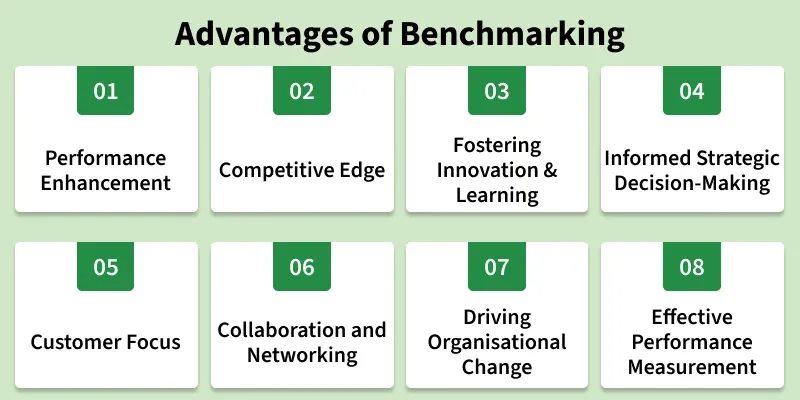
Benchmarking offers numerous advantages for organisations striving to improve their performance and gain a competitive edge. Some key benefits of benchmarking are:
Performance Enhancement: Benchmarking enables organisations to compare their practices, processes, and performance metrics against industry leaders or competitors. This analysis highlights areas for improvement, allowing organisations to implement best practices and enhance their operational efficiency, product quality, customer satisfaction, and overall performance.
Competitive Edge: By benchmarking, organisations can identify unique strategies and practices that provide a competitive advantage. Learning from the successes of others and incorporating industry-leading approaches enables organisations to differentiate themselves in the market and stay ahead of competitors.
Fostering Innovation and Learning: Benchmarking nurtures a culture of continuous improvement, learning, and Innovation within organisations. By studying best practices and emerging trends, businesses can generate fresh ideas, drive innovation, and improve their processes and products.
Informed Strategic Decision-Making: Benchmarking provides objective data and insights that inform strategic decision-making. It helps organisations allocate resources effectively, prioritize process improvement initiatives, and position themselves in the market based on industry best practices.
Customer Focus: Benchmarking allows organisations to understand customer expectations and evaluate their performance in delivering products or services. By benchmarking customer service practices and satisfaction levels, organisations can identify areas for improvement and enhance the overall customer experience, leading to increased loyalty.
Drawbacks of Benchmarking
While benchmarking can be a valuable tool for organisations, it's important to be aware of potential pitfalls and challenges that can arise. Here are some common pitfalls of benchmarking:
Inappropriate or Irrelevant Comparisons: One key pitfall is selecting benchmarking partners or metrics that are not directly applicable to the organisation's specific context. It's crucial to ensure that the comparisons being made are meaningful and aligned with the organisation's goals and industry.
Neglecting Organisational Culture: Benchmarking involves more than just replicating processes or practices. It's essential to consider and align benchmarking efforts with the Organisational Culture, values, and ways of operating. Failing to do so can lead to resistance, low adoption rates, and ineffective improvements.
Lack of Continual Improvement: Benchmarking is an ongoing process that requires a commitment to continuous improvement. Organisations should not view it as a one-time exercise. Sustaining benchmarking efforts over time, adapting to industry trends, and continually evolving is necessary to maximize the long-term benefits.
Excessive Competitor Focus: While understanding and learning from competitors is important, becoming overly fixated on them can limit the perspective. It's valuable to explore benchmarking partners from different industries or sectors who may offer innovative practices and insights.
Absence of Clear Action Plans: Benchmarking should not stop at identifying performance gaps or best practices. It's essential to develop clear and actionable plans for implementing improvements. Without a well-defined action plan, the benchmarking exercise may yield limited or no tangible results.