
Proteins are synthesized through a process called protein synthesis, which involves two main stages: transcription and translation.
Transcription
- Initiation: In the cell nucleus, the enzyme RNA polymerase binds to a specific region of DNA called the promoter, signaling the start of a gene.
- Elongation: RNA polymerase unwinds the DNA and synthesizes a single-stranded messenger RNA (mRNA) molecule by matching RNA nucleotides with complementary DNA bases.
- Termination: When RNA polymerase reaches a terminator sequence, transcription ends, and the mRNA strand is released.
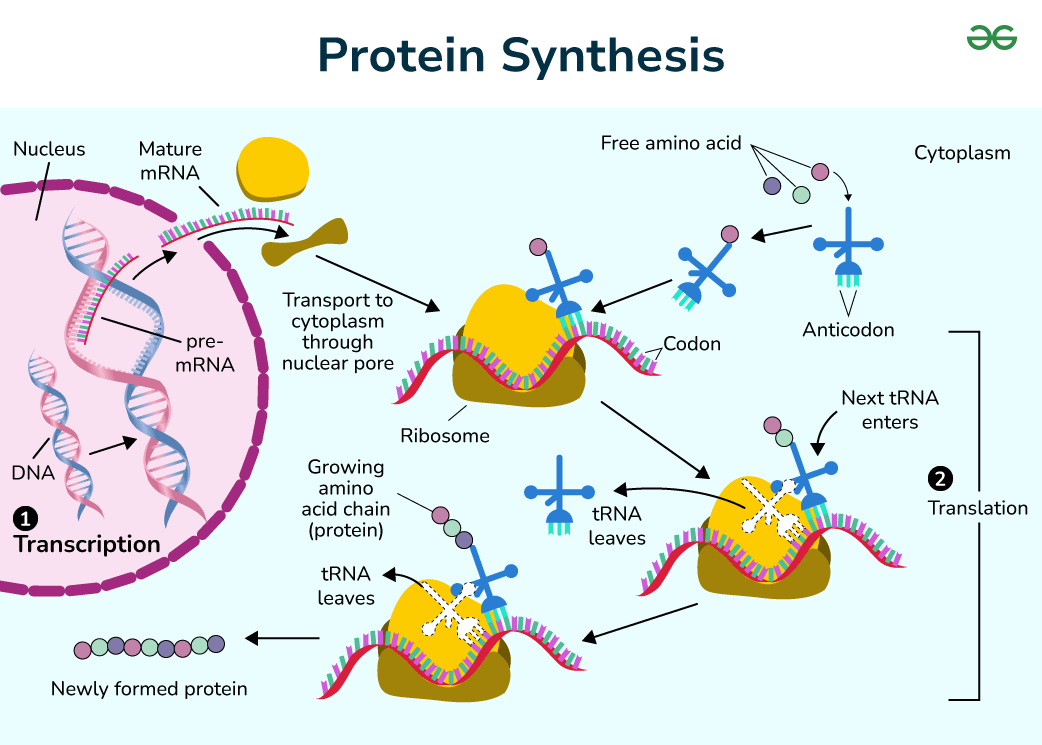
Translation
- mRNA Transport: The mRNA leaves the nucleus and travels to the ribosome in the cytoplasm.
- Initiation: The ribosome binds to the mRNA at the start codon (AUG), and a transfer RNA (tRNA) carrying the amino acid methionine binds to this codon.
- Elongation: tRNAs bring specific amino acids to the ribosome, matching their anticodons with codons on the mRNA. The ribosome links the amino acids together in the sequence specified by the mRNA.
- Termination: When a stop codon on the mRNA is reached, the ribosome releases the completed polypeptide chain.
The polypeptide chain folds into a specific three-dimensional shape to become a functional protein. This precise process ensures that proteins are accurately built to perform their various roles in the cell.
Relevant Links: