
Environmental issues happen due to disturbances in the normal functioning of the ecosystem. The various issues include climate change, environmental pollution, environmental degradation, and resource depletion. These types of environmental-related issues can occur either due to human causes or be natural. Environmental issues can be addressed by promoting green energy, recycling, conservation of water and electricity, and avoiding single-use plastic.
Several types of environmental issues impact the planet's ecosystems and natural resources. Different current environmental issues are as follows:
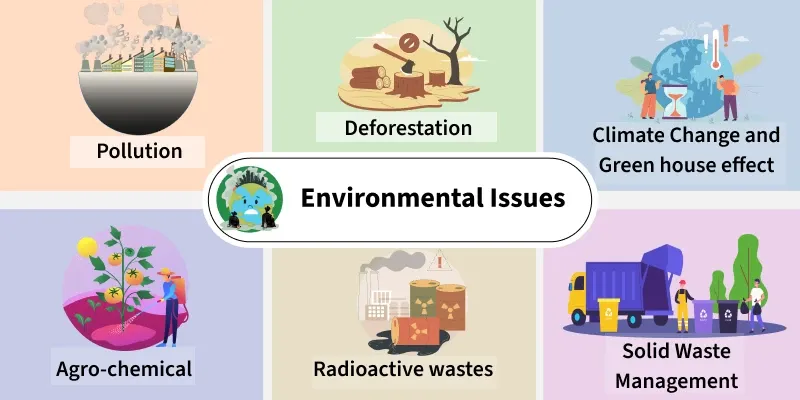
1. Pollution
Pollution is defined as any undesirable change in the physical, chemical, or biological characteristics of air, land, water, or soil. Agents that cause such undesirable changes are called pollutants.

Various types of pollution are:
- Air pollution: It is the contamination of the air with harmful gases, dust, and smoke. The major cause of air pollution is the burning of fossil fuels, automobiles, industries, smelters, etc. Air pollution has a deleterious effect on human health, reduces crop yield, and causes premature death of plants.
- Soil pollution: When soil is contaminated or degraded in such a manner that it changes its physical and chemical properties, making it barren and unsuitable for vegetation, it is called soil pollution. Soil pollution makes the soil devoid of the nutrients that are vital for plant and microbial growth.
- Noise pollution: When the intensity of sound increases over 85 decibels and is considered harmful to the living system, this is considered noise pollution. It causes imbalance and disruption to normal surroundings. Even loud music can be harmful if heard for a longer period of time.
- Water pollution: It is the contamination of water bodies, like lakes, rivers, and oceans, with harmful products. The factors responsible for water pollution are agricultural runoff, fertilisers, urbanisation, industrial waste, etc
2. Deforestation
Deforestation is the conversion of forested areas to non-forested ones. The growing human population has led to an increase in the conversion of forest land to agricultural land.
- It results in habitat loss, threatening countless species and biodiversity. Moreover, it contributes to climate change, as forests act as carbon sinks.
- Soil erosion and disruptions in water cycles are also consequences of deforestation, impacting local and global ecosystems.
- Sustainable forestry practices and reforestation efforts are essential to mitigate these environmental challenges and preserve the world's forests.
3. Climate Change and Greenhouse Effect
Global warming is defined as the rise in the surface temperature of the Earth. Climate change is one of the most concerning environmental issues that can affect the delicate balance of the planet.

Characteristics of the Greenhouse effect are given below:
- The main factor responsible for global warming is the increase in the level of greenhouse gases, which has led to considerable heating of the Earth. This phenomenon of heating of the Earth's surface and atmosphere is known as the greenhouse effect.
- The greenhouse gases are released from automobile emissions, industries, fossil fuels, etc.
- Climate change involves shifts in weather patterns, rising temperatures, and extreme weather events like storms and droughts. These changes disrupt ecosystems, endangering wildlife and impacting humans worldwide.
- The release of greenhouse gases is the major cause of climate change.
- By embracing sustainable practices like reducing carbon emissions, protecting forests, and investing in renewable energy, we can mitigate the effects of climate change and build a healthier, more resilient future for the next generation.
4. Agro-Chemicals
Agro-chemicals, including pesticides and fertilisers, pose significant environmental issues. Their runoff into water bodies can result in water pollution, impacting aquatic ecosystems and human health.
- Overuse of the chemicals can lead to nutrient imbalances, soil degradation and the loss of beneficial organisms.
- They disrupt the ecosystem and can harm non-target species.
- These chemicals can lead to greenhouse gas emissions, which lead to climate change.
- Addressing these concerns requires sustainable agricultural practices and reduced chemical use.
5. Radioactive Waste
Radioactive waste, generated by nuclear power plants and various industrial processes, forms a major environmental issue. It can lead to contamination of soil and groundwater, posing long-term health risks to both humans and ecosystems due to Improper storage and disposal.

Types of Radioactive wastes are given below:
- Low-level waste (LLW): This type of waste includes items that have come into contact with radioactive material, such as clothing and tools used in nuclear facilities.
- Intermediate-level waste (ILW): This type of waste includes items that have a higher level of radioactivity than LLW, such as spent fuel rods from nuclear reactors.
- High-level waste (HLW): This type of waste includes highly radioactive materials, such as the spent fuel from nuclear power plants.
- Transuranic waste (TRU): This type of waste includes materials that have been contaminated with elements heavier than uranium, such as plutonium.
- Uranium mill Tailings: These are the by-products of the milling of uranium ore and contain radioactive materials such as radium and thorium.
- Decommissioning waste: This type of waste is generated during the process of decommissioning a nuclear facility, including contaminated materials, debris, and equipment.
6. Solid Waste Management
Solid waste is known as trash or garbage. It includes waste from the home, offices, hospitals, stores, etc. It usually consists of paper, food waste, plastics, glass, metals, rubber, leather, textiles, etc. The waste is either burnt to reduce its volume or dumped in sanitary landfills.

Features of Solid waste management are given below:
- Solid waste management involves the collection, disposal, and recycling of various non-liquid materials, such as paper, plastics, and organic waste, to minimise environmental impacts and promote sustainability.
- Proper management reduces pollution, conserves resources, and mitigates health and environmental hazards.
- Incorrect disposal of solid waste can lead to soil, water, and air pollution, which can harm ecosystems and wildlife.
- Exposure to hazardous waste materials can result in severe health issues, including respiratory problems, skin disorders, and even cancer.
Strategies for Solving Environmental Issues
Various types of strategies made by the government for solving Environmental Issues are given below:
Strategies for solving Environmental Issues | Description |
|---|---|
1. Climate Change Solutions | Addressing climate change requires a multi-faceted approach that includes reducing greenhouse gas emissions, enhancing carbon sinks like forests, and transitioning to renewable energy sources. |
2. Pollution Reduction Strategies | Strategies to reduce pollution involve stringent emission controls, investing in pollution cleanup, promoting green technologies, and enforcing regulations that limit the release of harmful substances into the environment. |
3. Biodiversity Conservation | This can be achieved through protecting natural habitats, restoring degraded areas, enforcing wildlife protection laws, and supporting biodiversity-friendly practices in agriculture and urban planning |
4. Circular Economy Benefits | This approach encourages the reuse, repair, and recycling of products and materials, leading to reduced environmental impact, enhanced resource efficiency, and economic benefits from reduced resource costs. |
5. Green Technology Innovations | These include advancements in renewable energy technologies, sustainable manufacturing processes, and eco-friendly materials that reduce environmental footprints and promote the conservation of natural resources. |
6. Environmental Policy Changes | Changes in environmental policy can drive substantial improvements in sustainability. This involves implementing stricter regulations on emissions. |
Sustainable Solutions | Environmental sustainability practices include reducing resource consumption, enhancing energy efficiency, and using sustainable materials. |
Solutions to Environmental Issues
Environmental issues are a matter of concern these days. People are becoming aware of the implications of environmental degradation in our daily lives. The following are the possible solutions for the environmental issues:
- Avoid single-use plastic
- Promoting clean and affordable energy
- Go for sustainable agriculture
- Reduce food waste
- Plant more trees and go paperless
- Promote green innovations
- Conserve water and electricity
- Use reusable products instead of disposable ones
- Recycle the waste to conserve natural resources
- Support local and environment-friendly practices