Plantar fasciitis afflicts around one in 10 people at some point in their lives. It can be chronic or acute, and in either case, it’s painful and frustrating. And in serious cases, it can be “extremely debilitating,” according to foot and ankle surgeon Dr. Michelle Morse, DPM. Being a regular runner and hiker myself, I was keen to learn more about the condition and to find out how to treat plantar fasciitis. It’s caused by inflammation of the plantar fascia, a thick band of tissue that runs along the bottom of the foot from the toes to the heel. This band’s job is to support your arch and help absorb the shock as you walk, run, jump or stand. When the tissue becomes stressed from overuse, poor footwear, injury or increased activity, it can lead to intense heel pain.
As painful, limiting and aggravating as plantar fasciitis can be, it’s not a life sentence. “Statistically, 98% of patients will get better with conservative therapies,” says podiatrist Dr. Mikel Daniels. “I see this problem every single day,” he adds. “It is by far the most common problem walking into my door.” Fortunately, he and the other foot health experts with whom I spoke had several effective treatments to recommend.
Treatment 1: Stretching
Even while you’re suffering from plantar fasciitis, you can continue to engage in most of your regular activities as long as you also initiate treatment. And as long as you take it easy. “When we start treating plantar fasciitis, I usually come back to a few simple but powerful basics,” says Daniels.
First, he advises patients to dial back things that are clearly aggravating the problem—reducing high-impact activities and long periods of standing can be just enough to calm the irritation without shutting down activities, “but adding in stretching is non-negotiable.” In fact, a stretching regimen is what actually fixes the problem over time.
To ease the inflammation of the plantar fascia, there are two distinct areas you need to stretch: the plantar fascia tissue itself, and the lower leg, specifically the calf and Achilles tendon. “Regular calf and plantar fascia stretches, especially first thing in the morning and after you’ve been sitting, are the foundation of almost every successful treatment plan,” explains Daniels.
Plantar Fascia Stretch
While seated in a chair with your back upright, cross one foot over the opposite knee and gently pull your toes back toward your shin until you feel a stretch along the arch of your foot. Hold this position for 20 to 30 seconds, and repeat the motion a few times per session. This stretch directly targets the plantar fascia and helps reduce stiffness and pain.
Calf Wall Stretch
Stand facing a wall and place your hands flat against it, then slide the afflicted foot one step back. Keep that heel flat on the floor, and gently lean forward until you feel a stretch in your calf and Achilles tendon. Hold the stretch for about 30 seconds, and repeat it a few times on each side. This helps reduce tension on the plantar fascia, and can ease heel pain over time.
Treatment 2: Splints, Socks And Tape
Plantar fasciitis pain is often at its most intense first thing in the morning, but you can take steps to ameliorate morning pains. “Our physical therapy clinical practice guidelines recommend the use of… night splints to address stubborn morning pain,” says Abby Geary, DPT. And with properly-applied supportive tape and purpose-designed socks, you can further achieve relief from plantar fasciitis pain while also helping heal the underlying inflammation.
Plantar Fasciitis Splints
A splint worn while you sit or sleep keeps your foot gently flexed, which stretches the plantar fascia tissue and Achilles tendon. This helps prevent the tissue from tightening up, reducing heel pain. “The Procare Prowedge night splint is what most of my patients purchase as it is less expensive. I instruct them to use it between 30 to 60 minutes a day with a pillow under the heel so the knee can relax down,” says Morse. And for patients with extreme morning time pain, she recommends using the splint overnight “to keep all the tissue stretched out.”
Kinesiology Tape
Start with clean, dry skin and apply supportive strips of kinesiology tape along the bottom of your foot, working from the ball toward the heel to help lift and support the arch. Add more strips across your sole with slight upward pressure to shorten and support the plantar fascia, then secure the edges on the sides of the foot without wrapping the tape too tightly. You can wear this tape all day long (and even overnight) to help support your arch and reduce underfoot strain. KT Health PF Tape is a popular option.
Specialty Socks
Wearing compression socks (ideally plantar-fasciitis-specific socks) during activities or during long periods of standing improves circulation and reduces swelling around your arch and heel. The snug fit supports the foot’s arch and stabilizes the plantar fascia, which helps decrease stress on the tissue and eases pain. You can also wear compression socks at night for added relief. SB Sox Plantar Fasciitis Relief Socks are an affordable and effective choice to consider.
Treatment 3: Ice And Massage
According to Morse, the first massaging you do to help treat plantar fasciitis should actually begin before you even get out of bed in the morning. After sleeping, the tissues are cold and tight. A quick stretch and calf massage prior to getting out of bed can make the first steps of the day much less painful. And a more involved massage and ice treatment can reduce symptoms and promote healing.
Plantar Fascia Massage
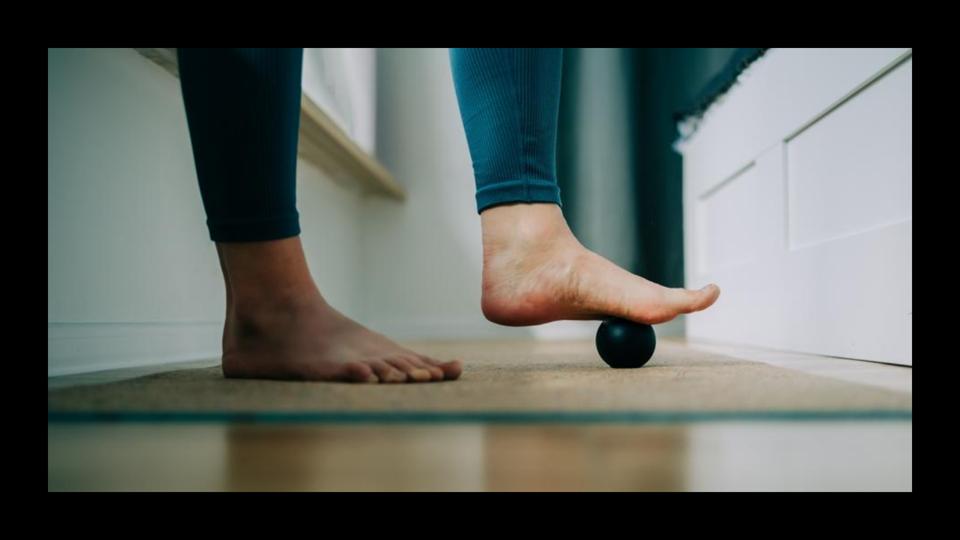
Sit comfortably upright in a chair and use your thumbs or knuckles to apply firm but tolerable pressure along the arch of the foot, starting at the heel and slowly moving toward the ball of the foot. Massage the foot bottom alternating between small circles and long strokes for a few minutes, focusing on tender spots while avoiding anything that causes sharp pain. Consider using a tennis ball, frozen water bottle or dedicated massage ball to roll under the foot for added relief. This practice helps increase blood flow, reduces tension in the fascia and eases stiffness, especially when done after activity or before the first steps in the morning.
Ice Treatment For Plantar Fasciitis
Applications of ice can reduce the painful symptoms of plantar fasciitis and reduce the underlying inflammation causing discomfort. Daniels advises patients to use ice on and around their heels as it helps to reduce pain and swelling. To use ice for treating plantar fasciitis, apply a cold pack, a plastic bag filled with crushed ice or a frozen water bottle to the bottom of the foot for about 15 to 20 minutes, especially after activity and/or at the end of the day. Gently rolling the foot over a frozen bottle adds light massage while reducing inflammation and numbing pain. Always place a thin cloth between the source of cold and your skin, and allow your foot to warm up fully between icing sessions.
Treatment 4: Surgical Intervention
“Surgery for plantar fasciitis is rare and reserved for cases where symptoms persist for many months despite comprehensive and structured non-surgical care having failed,” explains Daniels. Options for surgery to treat plantar fasciitis may include minimally invasive procedures like plantar fascia release, but any such interventions “carry risks such as arch changes and new areas of pain, so they’re truly a last resort after a thorough discussion with your podiatrist.” Recall that Daniels said some 98% of patients will recover without this level of intervention.
Why Trust Forbes Vetted
The gear team at Forbes Vetted consists of staff writers and editors who have extensive experience covering fitness, health and wellness topics. We have written about products well-suited to treating plantar fasciitis symptoms many times in the past, including articles on the best shoes for plantar fasciitis and the best insoles for plantar fasciitis.
- This article was written by Steven John, a Forbes Vetted staff writer who has covered footwear designed to help reduce inflammation of the plantar fascia tissue, like podiatrist-approved sandals for plantar fasciitis. John is a regular runner and hiker and does his best to maintain good foot health through the use of suitable footwear and proper stretching.
- Cam Vigliotta, lead gear editor for Forbes Vetted, edited this piece. In addition to being a runner, Vigliotta holds a degree in kinesiology, and has dealt with the discomfort of plantar fasciitis over the years.
- John spoke to several experts as he prepared this article, including: foot and ankle surgeon Dr. Michelle Morse with The Center for Morton’s Neuroma; podiatrist Dr. Mikel Daniels of WeTreatFeet & Ankles Podiatry; and Abby Geary, PT, DPT, and board-certified clinical specialist in orthopedic physical therapy with ATI Physical Therapy.
- As this article contains treatment advice and product recommendations that may be helpful in treating the pain associated with (and the underlying causes of) plantar fasciitis, we regularly revisit it to make sure information remains up-to-date. This version was published in February 2026.