Well, is it on or is it off? No one’s quite sure, said Al Jazeera (Doha). Two weeks ago, the United States and Saudi Arabia signed a multibillion-dollar deal allowing US companies to build and operate nuclear power plants on Saudi soil over the next 30 years.
But a day later, President Trump added a new condition, via social media: Saudi Arabia must fall in line with the UAE and other Arab nations that have signed the Abraham Accords, and recognise the state of Israel.
‘Reckless’ agreement
And that may prove a deal breaker, said David Frum in The Atlantic. Riyadh had been working towards this landmark pact for almost two decades. Thanks to the savvy of its de facto leader Crown Prince Mohammed bin Salman (MbS), who ensured the private equity firm of Trump’s son-in-law, Jared Kushner, would get its share of the billion-dollar nuclear licensing deals at stake, he almost got it over the line.
But now it must surely be in doubt, said Mohamad Elmasry on Middle East Eye. Riyadh has vowed it won’t normalise relations until Israel guarantees Palestinian statehood. And MbS has reportedly told US officials that hostility towards Israel is so great among Saudis in the wake of Israel’s devastating war in Gaza, that to sign a normalisation treaty would probably get him assassinated.
It’s obvious why the Saudis still badly want this nuclear deal, said Joseph Cirincione on MS Now (New York). It’s not, as they claim, to diversify their energy profile: that makes no sense for a nation sitting on an ocean of oil and blessed with the ideal wind and solar conditions for generating renewable energy – a far cheaper option.
No, the real reason is to gain atomic weapons to protect itself against its main foe: Iran. MbS has made no secret of his desire to build a bomb, and the deal would be a concrete step in that direction. Despite Trump’s claims to the contrary, it appears to permit nuclear enrichment on Saudi soil, thus enabling Riyadh to follow the likes of India, Israel and Pakistan in covertly enriching uranium to weapons-grade levels.
‘Guiding hand’
Who knows what’ll happen if this “reckless” deal goes ahead, said Mitchell Plitnick on Mondoweiss (New York). The “gold standard” nuclear-power pact that the US signed with the United Arab Emirates in 2009 required the UAE to forego the ability to enrich uranium, and obliged it to submit to International Atomic Energy Agency inspections: this Saudi deal has no such restrictions.
Which is why it would inevitably trigger a Middle East arms race, said Azriel Bermant in Foreign Policy. If the deal proceeds, Iran would openly seek its own nuclear deterrent, something it has so far officially forsworn. “It beggars belief that the US went to war against Iran to prevent it from acquiring a nuclear weapon yet now acts in a way that is an open invitation for Tehran to weaponise.” And in a way that would also pour “proliferation kerosene” on Turkey and Egypt’s “smouldering nuclear ambitions”, said Matthew Kroenig and Henry Sokolski in The Wall Street Journal. Trump’s deal invites disaster.
Actually, the US is doing the right thing, said the Washington Examiner. The hard truth is that the “era of non-proliferation is coming to an end”: Pakistan and North Korea are both testing nuclear weapons. Given that sobering reality, better the US offer “a guiding hand” to the Saudis and oversee their nuclear agenda than let China or Russia fill the void.
Good or bad, the deal matters a lot to the US president, said Sharon Squassoni in The Bulletin of the Atomic Scientists (Chicago), so rumours of its death “are premature”. After all, it’s not some “spur-of-the-moment fantasy” cooked up by Trump. The same deal was also being considered under Joe Biden, and then too enrichment was a quid pro quo for recognising Israel.
The Saudis won’t do so, of course, given recent history, but they won’t have to. Although Congress can disapprove the deal once it’s submitted, the present Congress – due to adjourn on 18 December – is much less likely to do so than any freshly elected one. So the Saudis can “call Trump’s bluff by simply sitting back” and waiting for him to succumb to the pressure of the December deadline.
]]>It has become fashionable of late to declare that the Commonwealth Games no longer matter, and are living on borrowed time. Well, tell that to the good people of Glasgow, said Nik Simon in the Daily Mail. Over 11 days, Scotland’s second city – which stepped in as host after the Australian state of Victoria pulled out in 2023 on grounds of cost – welcomed competitors from 74 nations, who (in the absence of an athletes’ village) were accommodated in hotels across the area.
In return, the 434,000 ticket-holders, plus 200,000 who watched for free at the city’s fan sites, were treated to a spectacular show, said Matthew Henry on BBC Sport. Highlights of the Games, which ended on Sunday, included Scotland’s Josh Kerr storming to victory in the mile race in front of a jubilant home crowd; Wales’s Emma Finucane becoming the first sprint cyclist to win four track gold medals at the same Games; and Jamaica stunning Australia in one of the biggest upsets in netball’s history.
Overall, though, it was the Australians who dominated: spurred on by mining magnate Gina Rinehart’s offer of cash bonuses for podium finishes, the country notched up 171 medals – dwarfing second-placed England’s total of 110.
‘Ozempic’ games
As host city, Glasgow did a sterling job, said Fiona Tomas in The Daily Telegraph: events were “impeccably run”, and the “army of cheery volunteers” kitted out in tartan couldn’t be faulted. But it was hard to escape the feeling that this was the Commonwealth Games “on Ozempic”. As a result of “cost-cutting measures”, only ten sports were featured, down from 19 in Birmingham four years ago; and with the BBC losing out to TNT Sports on the right to broadcast the Games, TV audiences were miserly.
Worse still, a “deluge of high-profile athletes” – from England’s Keely Hodgkinson to Jamaica’s men’s 100m world champion Oblique Seville – prioritised other competitions and sat out the Games altogether. Attention now turns to the 2030 edition to be held in Ahmedabad, India. They’ll mark the centenary of the Games, and that “might be a good one to end on”.
Stepping stone
I’m not so sure about that, said Rick Broadbent in The Times. The Games may lack the glamour of the Olympics, say, or the World Cup, but that’s the whole point of them. Where else could you watch Idi Amin’s grandson complaining about ill-treatment in the boxing ring, or hear Archie Goodburn, a terminally ill swimmer, being roared on in the pool by a partisan crowd? And it’s a competition, don’t forget, that has long served athletes as a “stepping stone” to greater glories. Of course, it must be financially viable – Glasgow only managed to host the Games so cheaply because Victoria had to pay £190 million in compensation, for pulling out. But assuming that “the price is right”, this is undoubtedly “an event worth saving”.
]]>The House Ethics Committee this week announced it had opened an investigation into Ohio Republican Rep. Max Miller, after ex-wife Emily Moreno accused the lawmaker of violently assaulting her and the pair’s child. While Miller has denied the allegations against him, a growing chorus of Republicans, including Sen. Bernie Moreno (R-Ohio), Emily’s father, has demanded he resign from Congress. Still, not everyone in the GOP is on board with calls for Miller to step down — particularly during an election cycle in which Republicans’ narrow control of Congress appears up for grabs.
What did the commentators say?
With “public scrutiny” of Miller and the allegations against him “quickly mounting,” many of his Republican colleagues have been “slow to respond,” said Politico. The “surge of attention” surrounding Miller “presents a dilemma for Republicans.” They can either “speak out against their colleague” amid a competitive race or “face accusations of hypocrisy” after “hammering multiple similarly scandal-plagued Democrats.” The situation risks being like “Graham Platner on steroids,” said one GOP operative to the outlet. Republicans may be “struggling up and down the ballot in the Rust Belt state” in general, but Miller’s situation in particular has “muddied their prospects,” said Axios.
Intra-party debate over Miller’s behavior has “led to one question,” said Ohio Capital Journal: “Where is the line in believing accusations when an election is at risk?” Although Miller himself is “confident he will win in the fall,” other Republican officials are “not as confident of a Miller victory.” This “general reluctance to publicly engage” with Miller’s case until this week has “raised questions” for Republicans about the “standards they maintain within their own party,” said The Free Press.
“There’s all sorts of domestic events going on with 435 members of Congress all the time,” said House Speaker Mike Johnson (R-La.) to Politico. “It’s not my business to get engaged in it.” The public should wait for the “process to play out.” Johnson’s response to Miller “raises the question of what Johnson does think the speaker’s business is,” said The Atlantic. His “reluctance to become involved” in Miller’s “messy, lurid story” is “understandable, but it’s also one of the burdens that falls on leaders.”
Despite publicly defending Miller as a “good person” whose family should “figure that out,” President Donald Trump offered a more candid take on a private call with the congressman Monday evening, said Axios. During the conversation, the president reportedly told Miller that “things aren’t looking good” and “repeatedly said his reelection would be tough.” But the president “stopped short of asking Miller to step aside,” said The New York Times, and Miller “made it clear he had no intention of doing so.” Because Trump has yet to “publicly withdraw his support” for Miller, other Republicans remain “reluctant to do so themselves.”
Miller himself has responded to the increased scrutiny by comparing the domestic violence allegations that “threaten his reelection” to the “political attacks Trump weathered in 2016,” said Cleveland.com. He mentioned the president’s “sexual assault and harassment claims” and the release of the now-infamous Access Hollywood tape.
What next?
With Miller’s “relatively safe House seat in jeopardy,” the congressman would need to “resign or drop out by Aug. 10 for Republicans to be able to replace him on the ballot,” said The Hill. “With him on the ballot,” said one Ohio GOP official to the outlet, it’s “incredibly difficult to hold a seat that they should.” Republican party chairs for the counties Miller represents have a “window” to “name a successor as the Republican candidate on the ballot,” said Cleveland.com.
Nationally, Johnson is for now “declining to bear” the burden of leadership regarding Miller, said The Atlantic. But by doing so, he may ultimately “ensure that he doesn’t have to worry about the duties of the speaker when the new Congress opens next January.”
]]>A great vacation doesn’t have to break the bank. Stretch your vacation dollars at these seven budget-friendly destinations where affordable food, attractions and accommodations can be found around every corner.
Albania

Albania’s coastline is its “main event,” with Sarande, Vlore and Himare all known for “stunning seaside scenery,” said Time Out. Hikers can hit several trails in the Albanian Alps, like the popular Blue Eye Trail through rugged terrain, while those seeking a more cosmopolitan experience make the trek to the “lively” capital, Tirana, a “vibrant whirl of traffic, consumerism and unfettered fun,” Lonely Planet said. A highlight is Bunk’Art, a Cold War bunker turned contemporary art museum that shares the modern history of Albania.
Dominican Republic

Close your eyes, think of the Dominican Republic, and “delightfully tropical” white sand beaches and “lush” rainforests will likely come to mind, said Fodor’s. The island offers more than a beachy escape, with ample opportunities for activities like horseback riding, ziplining and exploring historic areas like the Zona Colonial in Santo Domingo.
Because there has been such heavy investment in tourism, the Dominican Republic’s infrastructure is “designed to accommodate large volumes of visitors.” So, hotels and all-inclusive resorts “compete aggressively on price” to fill their rooms year-round, Travel and Leisure said.
Estonia
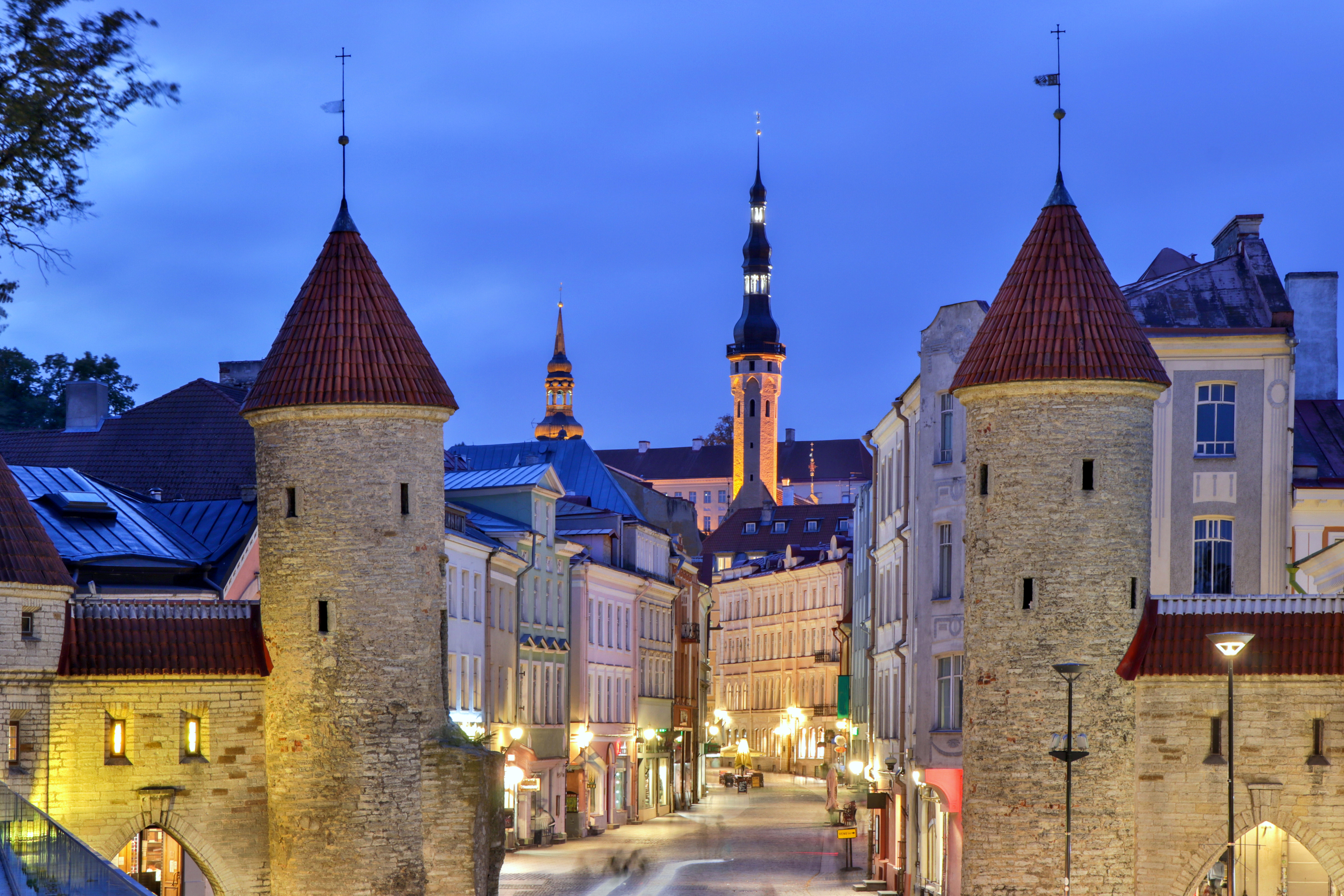
The same culture and stunning scenery you’ll find in more expensive locales like Prague or Stockholm are also in “under-the-radar” Estonia, said The Washington Post. Tallinn, the country’s “storybook” capital, is filled with cobblestone streets, medieval walls, palaces and castles and trendy restaurants and shopping.
The city is a few hours away from “national parks, seaside villages and peaceful islands,” including Saaremaa on the Baltic. Book a day at one of the many affordable spas and enjoy saunas, indoor and outdoor pools, mud baths and body treatments.
Kenya

The “geographic diversity” of Kenya means visitors could be “admiring rhinos one day and lounging on an Indian Ocean beach the next,” said Travel and Leisure. It also means your “safari dreams can come true” because visitors can book trips inside Nairobi National Park, an affordable alternative to visiting remote reserves for multiple days. For the best prices, go during the off-season November through March, when the weather is dry and warm.
Malaysia

You’ll want to see all of the sights in Malaysia, but the hands-down best way to “dive into the culture and history” is by eating your way around the country, said Lonely Planet. Malaysia is at the “crossroads of China, India and dozens of Southeast Asian maritime kingdoms.”
The melting pot cuisine — tender beef rendang, rich nasi lemak, crisp roti canai and steaming bowls of laksa noodle soup — is “budget-friendly, plentiful and delicious.” By visiting local establishments and hawker stalls, steering clear of tourist traps and skipping alcohol, it’s likely you could eat for under $20 a day.
Poland
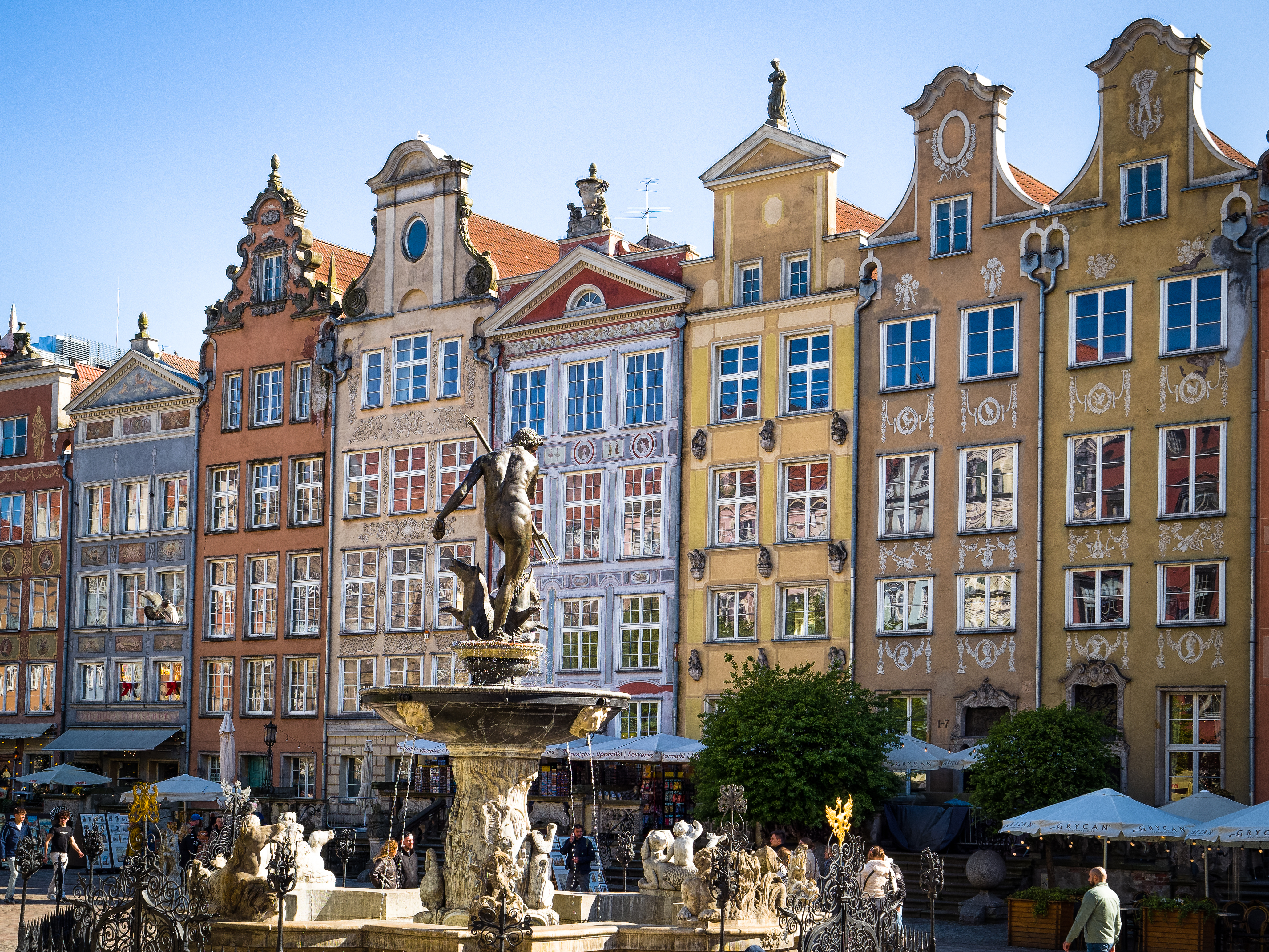
Sticking to Poland’s smaller cities and more rural areas offers visitors a “fabulous value,” said Time Out. Once an industrial center, Katowice is now one of the country’s most “innovative” cities, known for its festivals and vibrant musical scene, and “gorgeous” Poznan, Wroclaw and Lublin are home to an “arresting” mix of Art Nouveau, Gothic and Renaissance architecture. Bring your appetite to Gdansk, where you can “fuel up” on pierogi and zapiekanka, the Polish take on pizza, and relax on the “sandy sweep” of Brzezno Beach, said National Geographic Traveler.
Vietnam

There are opportunities for multiple types of trips during one visit to Vietnam. Head to the country’s eastern side for “palm-lined beaches and islands,” then go to “bustling” Ho Chi Minh City for cultural activities like water puppet performances and architectural tours, said Afar.
The central and southern countryside is “impossibly beautiful,” with “rice paddies extending in every direction” and highlands shrouded in mist. Train service is “dependable” and a wallet-friendly way to get across the country, and because of the “relative cheapness” of taxis, that transit method is optimal while in bigger cities.
]]>While promoting his latest blockbuster, filmmaker Christopher Nolan listed scholar Emily Wilson’s translation of “The Odyssey” as one of his influences. Now, Wilson’s scathing critique of Nolan’s cinematic take on the epic poem has gone viral, inspiring additional backlash from critics and academics alike. Amid the heated controversy over one of the year’s biggest films, there may be a silver lining to the discourse.
Why Wilson trashed Nolan’s adaptation
Wilson’s expertise in the classics is undeniable. She is also no stranger to backlash. In 2017, she became the first woman to translate “The Odyssey” from ancient Greek into English, an interpretation “widely celebrated in academia and the literary world” as “comprehensive, modern in sensibilities and faithful” to Homer’s almost 3,000-year-old classic, said The New York Times. Her translation departs from the “masculine framing used by her male predecessors,” a move that has “subjected her to online harassment and misogyny from men and far-right figures.”
Before Nolan’s movie premiered, Wilson was “pumped” to see how the epic played out on the big screen, she said on The New York Times’ The Daily podcast. However, after seeing Nolan’s adaptation, Wilson said she would be “ashamed to have written any part of this script” at The London Review of Books. The film had “nothing convincing to say,” it lacked “psychological, emotional, political and ethical depth,” and the “writing is abysmal,” Wilson added. It was a “family-friendly audiovisual spectacle” comparable to an “elaborate Fourth of July fireworks display.”
Most of the nonwhite actors “play versions of the Black best friend, whose only role in the drama is to provide aid to the white protagonist,” Wilson said in her LRB review. She has since expressed regret for this “paragraph about the uses of the POC actors — who are all great, but IMO under-utilized,” Wilson wrote on social media. She still thinks the film “largely wastes its strong cast,” but she “framed it badly.”
A debate reminiscent of the golden era of critics
One of the most prominent figures to come to Nolan’s defense against Wilson was Joyce Carol Oates, a retired professor of the humanities and a prolific writer who has won a National Book Award. Wilson’s “tone of dismissal & haughty superiority strike a sour note,” Oates said on X. Instead of “disagreeing with interpretations of Homer in a collegial manner,” Wilson, who has “benefited enormously from Nolan’s film,” speaks in the “crude language of MAGA folks attacking someone with ideas that differ from hers.” Within the world of translators, Wilson’s review “seems all the more surprising since all translations are, presumably, subjective & not equivalent to the original text.” One would expect a translator to be “just a wee bit more thoughtful & respectful of others who are acting in good faith just as (she would claim) she is.”
Wilson used “baffling arguments” to “flay” Nolan’s adaptation of Homer’s poem, classicist Theo Nash said at Slate. She criticizes Nolan for deviating from the text, “as if the filmmaker’s choices were not also an act of interpretation.” The close attention that informs her translation is “lacking in her reading of the movie,” and the “idea that Nolan might have something new to say about ‘The Odyssey’ is denied.”
Whether or not you agree with Wilson’s perspective, it’s “always exciting to read a particularly full-throated pan,” said critic Kathryn VanArendonk at Vulture. Even if you don’t believe Wilson did her job as a critic, she has “done her job as a writer,” which is to “be a compelling read who makes her argument unmistakably clear.”
Figuring out “who is punching down here is really interesting,” VanArendonk added. Since Wilson has “academic authority” and is “writing with such vigor,” it is “easy to forget that she has less power” than Nolan, a Hollywood darling. That is also “part of the pleasure of the conversation.” Wilson is not interested in “softening any of it.” Still Nolan’s the one who “walks away unscathed, no question.” Of all the topics we could watch people fight about online, “how someone adapted ‘The Odyssey’ is such a good one.”
]]>You have worked your whole life to save up enough to retire. And now you have — but you are afraid to spend those hard-earned savings.
Being frugal in retirement may seem like a good thing. You are most likely living on a fixed budget with no more paychecks flowing in. For many retirees, however, concerns about outlasting their savings leave them limiting themselves unnecessarily.
Why do people tend to underspend in retirement?
For many retirees, the “biggest hurdle is psychological rather than financial,” said U.S. News & World Report. “Many retirees have spent decades living below their means, making thoughtful financial decisions and consistently saving for the future,” which means that “by retirement, those behaviors have become second nature.” It can be hard for these retirees to suddenly change their money mindset and pivot to spending the retirement savings they worked so hard to accumulate.
Fear is another component. “According to a recent survey by the Employee Benefit Research Institute, more than three in four retirees agree they can afford to spend freely — but nearly half say they still underspend out of fear they’ll run out of money,” said Charles Schwab.
Then there is the very real puzzle of figuring out an appropriate amount to spend. After all, it is impossible to know how long you will live or how well your investments will perform.
What are the risks of underspending in retirement?
The risk of overspending in retirement is obvious; the risk of underspending may be less so. But “according to financial advisors, it ultimately amounts to something similar: not living as fulfilling a life as one could have,” said CNBC. “It represents a life not lived, the vacations you didn’t take because you were afraid you were going to run out of money,” said certified financial planner Marianela Collado to the outlet.
Sure, you can ultimately pass on what remains to your heirs or to a charity or another organization of your choosing. But by playing it safe and never tapping into what you worked so hard to accrue, you never get to reap the rewards of all that labor.
How can you figure out a safe rate of spending in retirement?
Admittedly, the “‘right’ withdrawal rate is far from settled science, in that you’re trying to figure out how much to extract under uncertain market conditions and an unknowable time horizon,” said Morningstar. Instead of trying to come up with a hard-and-fast withdrawal rule that will last throughout your retirement, think of it as something you can continually reassess as your circumstances shift.
Known as “flexible withdrawal strategies,” these “ebb and flow with a portfolio’s balance,” said Morningstar. Such strategies may allow you to withdraw more of your portfolio during your own lifetime “rather than leave behind big balances after death.” Maybe you slow down your spending after a big year of travel, for example, or a market downturn. As long as you allow yourself to ramp it up when things are going well and you have golden years you want to live to the fullest.
]]>‘My laundromat accepts Apple Pay. Why won’t they take my cash?’
Mary Anna Mancuso at the Miami Herald
Cash “isn’t going out of circulation; it’s disappearing from everyday transactions,” says Mary Anna Mancuso. Businesses “prefer electronic payments” because it “reduces the risk of robbery, digital transactions go into the bank almost immediately and the bookkeeping is simpler.” But it is “worth asking what we lose when convenience becomes the only option.” A “modern payment system should accommodate everyone — whether they choose to tap their phone, swipe a card or hand over a dollar bill.”
‘Ukraine has always been here — and always will be’
Lidia Pilecky at the Chicago Tribune
Ukraine’s “history tells the facts. We were here. We are here. And we will remain here,” says Lidia Pilecky. For “centuries, Russian rulers repeatedly tried to ban the Ukrainian language and suppress the very identity Putin claims never existed.” But “today, Ukrainians defend the universal principle that no nation should be destroyed because a more powerful neighbor claims it has no right to exist.” Ukraine’s “fight is also taking place in classrooms where children learn the truth.”
‘Cyclospora outbreaks will only get worse as climate chaos grows’
Amy Moas at Newsweek
This “has been one of the most dangerous summers on record, and experts have been warning about it for decades,” says Amy Moas regarding “two deaths linked to the outbreak of cyclospora.” It is “easier to associate loss of life with extreme weather when it’s tied to a singular event.” But “you can ‘contact-trace’ this now-fatal outbreak back to the ongoing climate crisis.” If “summer gets longer and warmer, we’ll see a longer, hotter mechanism for the parasite to thrive.”
‘Fancy sodas fall flat with me’
Brenda Cronin at The Wall Street Journal
Fancy sodas “come in winsome bottles or sleek cans and have ridiculous flavors like watermelon-dandelion or rosehip-jacaranda,” but “they taste like carbonated cough syrup with a Windex chaser,” says Brenda Cronin. People “should be reveling in the gourmet soda parade,” if “only the flavors didn’t sound like products from Bath & Body Works” or “taste like a mashup of SweeTARTS and Jolly Ranchers.” When “drinking feels more like penance than a party, I’ll do without.”
]]>What happened
Scientists at Stanford University on Thursday reported in the journal Science that they had successfully directed artificial intelligence to create 16 new viruses. This first-ever use of AI to design and build viruses not found in nature raised “hopes for medical advances” like eliminating drug-resistant bacteria, The New York Times said, while also “raising the disturbing possibility that the technology could someday be used to invent dangerous pathogens.”
Who said what
“Synthesizing viruses from scratch is hardly new,” the Times said, but the Stanford and Arc Institute researchers went “well beyond” previous efforts by teaching AI to “recognize patterns of DNA structure in nature, and then to use that data to write recipes for entirely new viruses.” Their AI tool, Evo, was fed genetic sequences “much like ChatGPT and other language models are trained on large sets of existing text material,” CNN said.
What next?
The new study “arrives at a moment of heightened anxiety regarding danger posed by increasingly powerful AI models,” The Wall Street Journal said. Evo was constrained to create “simple viruses” that can “only infect bacteria and pose no threat to humans.” But the breakthrough “raises urgent biosafety and biosecurity questions,” Johns Hopkins health security experts said in a corresponding Science article. “The ability to compose viral genomes using generative AI now exists; the governance to safely steer it does not.”
]]>What happened
The Senate Homeland Security Committee on Thursday voted along party lines to hold former U.S. infectious disease chief Dr. Anthony Fauci in contempt of Congress for repeatedly refusing to answer questions during testimony on the federal response to Covid-19. Committee Chair Sen. Rand Paul (R-Ky.) and other Republicans contended that Fauci could not invoke his Fifth Amendment rights “because he’d already received a preemptive pardon from former President Joe Biden,” CNN said. But “GOP lawmakers also openly acknowledged” last week that they “hoped to get Fauci to perjure himself in his testimony, allowing them to bring new charges.”
Who said what
“Fauci faced no risk of federal prosecution,” Paul said. “All he had to do was tell the truth.” Fauci’s lawyer called the vote a “crude political stunt” to “punish” a public servant for “exercising his constitutional rights.” Paul appears so “hellbent on putting Fauci in jail” that his office immediately hand-delivered the contempt resolution to federal prosecutors, Politico said. Contempt referrals “rarely bypass the full Senate,” The Wall Street Journal said, and “it isn’t clear whether a referral made in such a manner is legally valid.”
What next?
The Justice Department on Thursday evening said it had received Paul’s referral, is “reviewing it and will work with the Senate accordingly.” If prosecutors decide to file charges and win a conviction, Fauci faces up to a year in prison.
]]>What happened
Rep. Andy Ogles (R-Tenn.) lost his bid for reelection on Thursday, ousted in a Republican primary by former state Agriculture Commissioner Charlie Hatcher. The primaries were held under a new map Tennessee Republicans passed to eliminate the state’s last Democratic-held congressional district following the Supreme Court’s weakening of Voting Rights Act protections for minorities.
State Rep. Justin Pearson (D) won his primary for that previously Democratic Memphis-based seat, which was cracked into three GOP-leaning districts, and will face state Sen. Brent Taylor (R). Rep. Steve Cohen (D) “chose not to seek reelection to the seat, which independent political analysts now rate as safe Republican,” Reuters said.
Who said what
Ogles has “faced backlash over anti-Muslim and anti-immigrant rhetoric” and previous campaign finance controversies, The New York Times said, but his loss was “seen as an upset.” It was a “rare rejection of a candidate endorsed by President Donald Trump,” The Associated Press said. Trump and House Speaker Mike Johnson (R-La.) “tried to boost his campaign in the final days,” Politico said, but a “flood of outside money” for Hatcher from a renewable energy super PAC, “coupled with a newly redrawn district that forced Ogles to reach new voters,” helped seal his loss.
What next?
Sen. Marsha Blackburn won the GOP primary for governor, and she’s expected to prevail over Democratic nominee Jerri Green, a Memphis city council member. It’s the first time in Tennessee that “either major political party has nominated a woman” for governor, the Times said.
]]>The Edinburgh Fringe Festival is exciting, eccentric and entirely bonkers. The energy that takes over the Scottish capital every August is utterly infectious, from street performers plying their trade to newbie comedians promoting their first shows. There is a reason why around three million people hit the Scottish capital for the festival every year.
But this popularity brings its own challenges. The Old Town’s famous lanes are packed with impenetrable crowds, prices shoot up to crazy levels, and it can all become a little overwhelming. But don’t worry, Edinburgh is a city of multitudes, and there are plenty of places to catch your breath.
Leith
The setting for Danny Boyle’s “Trainspotting”, now 30 years old, Leith has seen a transformation over the past decades and become a real foodie hub. This port district has no fewer than three Michelin-starred restaurants alongside others serving food of the highest quality. The recently opened Browns of Leith is a former engineering works that is now home to several eating and drinking options. The Royal Yacht Britannia is moored here, offering refreshments in the Royal Deck Tearoom or for something stronger, grab a cocktail or two on the riverside in The Shore area. Check out my favourite eaterie Eleanore, whose head chef Roberta Hall-McCarron is known locally for her bold flavours and inventive menus.
It is connected to the centre by the 1.2km Leith Walk, a lovely softly descending stroll on a sunny day and the perfect place for a pub crawl or spot of shopping in the one-off boutiques.
Portobello
There’s nothing more peaceful than a day at the seaside, and the Victorian town of Portobello – a 25-minute bus ride – offers two miles of golden sands and the perfect escape from the city. Take a dip with views of the Firth of Forth (check Sepa's water-quality index after heavy rains), grab an ice cream from award-winning Oscar’s Gelato, or enjoy a walk in nearby Figgate Park. The Portobello Bookshop is a lovely community-owned spot, and The Velvet Easel Gallery hosts contemporary Scottish artists.
Morningside
This suburb to the south of Edinburgh is packed with quirky things to see. Try to find the hidden Wild West lane, an alleyway decorated for an advert by a cowboy enthusiast some 30 years ago, which has stayed unchanged. The Dominion is a 1938 Art Deco cinema, a good spot when it's raining, and for walks, Corbie’s Crag is one of the lesser-known spots with sweeping views over the city. The nearby Royal Observatory Edinburgh also hosts talks on selected Tuesdays between November and March.
Stockbridge
This leafy, affluent neighbourhood is the kind you might look at in an estate agent’s window, picturing a new life. It has long been the bohemian village within the city, and there’s lots to see. You can easily spend a few hours discovering the delights of the Royal Botanic Gardens, founded in 1670, and housing one of the largest plant collections in the world. Or head to Raeburn Place, where you will find independent bookshops and cute little cafes, and if you're visiting on a Sunday load up on local produce at Stockbridge Farmer’s Market.
Cardinal, from chef patron Tomás Gormley, is making waves in the area with its divine tasting menu and fabulous, unpretentious service. Finish up with a walk along the Waters of Leith towards our next stop…
Dean Village
Just half a mile away is historic Dean Village, an adorable neighbourhood that was once home to 11 working mills. Sights include the arts and crafts Well Court, built in the 1880s, and a great spot to take some snaps, and St Bernard’s Well, which was built in the 1700s when locals believed the waters of the natural spring had medicinal healing properties. Dean Cemetery is beautiful when the leaves turn amber, so grab a hot drink from The Dean Coffee Shop and wrap up warm. Nearby is The National Galleries: Modern One, an impressive contemporary art museum.
Bruntsfield
Golf-lovers don’t have to go too far from the city centre to find a truly historic course. The Bruntsfield Links Golfing Society, founded in 1761 is the fourth oldest links in the world, and considered one of the best kept in the area. You can expect beautiful parkland and glorious views. The district is also known for its independent shops, such as Gulliver’s Toys and the dreamy stationery shop The Bay Tree Company. Grab a sandwich the size of your head at Italian eatery Toscano.
Jaymi was a guest at Cardinal and Eleanore
]]>“The fact that a drone armed with explosives is here on the grounds of an airport represents a new threat scenario,” said Germany’s Interior Minister Alexander Dobrindt in Leipzig. “We’re talking about a professional hybrid threat situation.”
Dobrindt looked “ashen-faced” as he addressed the media, said Newsweek. Flights were halted after the discovery of a quadcopter armed with explosives in a restricted area near Ukrainian Antonov freight planes. Nato has acknowledged it is aware of the incident.
Security experts and officials are asking a question that was “once unthinkable”: is Germany “de facto at war, or at least engaged in a hybrid war – and with whom?”
Germany becoming ‘primary target’
Leipzig/Halle airport is a Nato and German military logistics hub, and since 2022 has been used by Ukraine to transport military equipment. It is also the base for Ukraine’s Antonov Airlines in Europe, a cargo carrier, and as the drone was found close to a Ukrainian cargo plane, this has “directed suspicion towards Russia”, said The Guardian.
Drone sightings at German airports rose “significantly” in the first half of 2026, said Der Spiegel. According to German Air Navigation Services, 166 drones were spotted at 15 international airports, compared to 101 in the same period last year.
The threat of drone attacks is “becoming increasingly concrete”, said Süddeutsche Zeitung. But bringing them down is notoriously difficult. Drones can be stopped by “jammers, nets, or even by being shot down”, but this is a “delicate task” when they are near residential areas.
Leipzig airport was already equipped with a drone defence system, but a “custom-made” model was seemingly able to bypass it. Germany is becoming the “primary target” in “Russia’s shadow war”, which has the “aim of dissuading it from supporting Ukraine in the short term and weakening it in the long term”.
Germany has “gradually expanded its defensive measures in recent months”, said Euronews. Since October 2025, “under certain conditions”, the federal police have been allowed to shoot down drones. And Dobrindt has called for drones to be “detected, intercepted and, if necessary, shot down more consistently in future”. But the process is complicated, with frequency scanners, cameras and radar systems all required.
Russia trying to ‘sow fear’
“As well as the means and the motive, Moscow does have form” with this kind of attack, said the BBC. Though there is no hard evidence to suggest who is behind it, there is “renewed talk” of hybrid war across Europe. “If Russia was behind this”, its aim was likely to “sow fear”.
The incident raises concerns about foreign interference in upcoming German regional elections, where “far-right politicians have campaigned on fears of escalations with Moscow”, said Politico. Former communist and East German states Saxony-Anhalt and Mecklenburg–Western Pomerania will hold elections in September. “Pro-Russian sentiment remains strong” and the far-right party AfD “could take power for the first time at the state level”.
]]>The UN is preparing to choose a new secretary general for the first time in a decade as six candidates vie to succeed António Guterres of Portugal.
But the winner faces a huge challenge, with a host of geopolitical crises and the very status of the body itself in question.
Who is in the running?
Calls for a “madame secretary general” have been growing “louder”. So the next appointment will “test whether the UN is committed to breaking glass ceilings” by appointing a woman to the post for the first time, said the Australian Institute of International Affairs.
The candidates include Michelle Bachelet, former president of Chile; Maria Fernanda Espinosa, former foreign minister of Ecuador; Rebeca Grynspan, former vice president of Costa Rica; and Carolyn Rodrigues Birkett, former foreign minister of Guyana and permanent representative to the UN.
Several female candidates were overlooked in 2016, when Guterres was elected to serve the first of his two terms. “If I am polite, I would say the world was not prepared for it,” said Bachelet in April. “Is it prepared now? I hope so,” adding that appointing a woman as secretary general would be “a good signal”.
Among the men in contention is Rafael Grossi, the Argentinian diplomat who is director general of the UN’s nuclear watchdog, the International Atomic Energy Agency, and Macky Sall, a former prime minister and president of Senegal.
The successful candidate will be chosen by the UN General Assembly following the recommendation of the Security Council, whose permanent members are the UK, China, France, Russia and the US.
Those nations “have the future of the world body in their hands”, said Agence France-Presse. Observers say “it is difficult to pick a favourite” because the world’s major powers are “divided on the outcome”, but Grossi has been “repeatedly mentioned”.
What does the secretary general do?
The secretary general is the chief administrative officer and public face of the UN. The role is “equal parts diplomat and advocate, civil servant and CEO”, according to the UN itself.
They oversee several important UN bodies, including the Security Council, which is charged with maintaining peace and security. However, unlike a prime minister or president, the secretary general does not have the power to make laws or command countries. The role is more about persuasion, diplomacy and authority rather than objective political or military power.
What will be in their in-tray?
Gaza and Ukraine will be high in the pile but they’ll have a “tough task” because the “relevance, power and financial capability” of the UN is “under an increasingly harsh spotlight”, said Deutsche Welle.
“Simply put,” said Politico, the UN is “an increasingly irrelevant global institution”, because the United States, “its most powerful member”, is “abandoning and defunding” many parts of its “sprawling structure”.
The Security Council itself “barely functions” because of the “rivalries” between the US, China and Russia, all of whom have the power of veto. “Even as a venue for international gatherings”, the UN is “fading” because leaders would “rather meet and make deals” at the G20.
]]>When Jason Arday became the youngest black professor in Cambridge’s history in 2023, he was “lionised by the academic world” and became a “poster boy for the university’s diversity drive”, said Gordon Rayner in The Daily Telegraph.
Then only 37, he had defied “almost impossible odds” to get there. Raised on a council estate in south London, he was diagnosed with autism at the age of three. He couldn’t speak until he was 11, and did not read or write until 18. Yet he’d managed to obtain a bachelor’s degree, followed by a PhD, and had gone on to forge a remarkable career in academia. Now, though, the sociology professor – who has tendered since his resignation as a fellow at Jesus College – is “the subject of a bitter row over plagiarism that has pitted his peers against each other”.
Long-standing concerns
His critics note that his PhD thesis contains passages that are strikingly similar to those in other academic papers. His defenders say that these were innocent errors, resulting from a lack of formal supervision when he was doing his PhD, and insufficient support for his complex learning disabilities. They say he cited the sources in question in his bibliography, but failed to do so within the text proper.
Concerns about Arday’s work have circulated in academic circles for several years, said Jennifer Schuessler and Alexandra Alter in The New York Times. But they “exploded into public view” last month, when Nathan Cofnas, a self-defined “race realist” who was sacked from Cambridge in 2024, published a lengthy blogpost about them.
As journalists dug deeper, said Guy Adams in the Daily Mail, other aspects of Arday’s “Hollywood-style life story” were also called into question. For instance, doubts were cast about his claim to have raised £5.5 million for charity, including by running an astonishing 600 miles in six days. He has since said it was actually 12 days, and that the £5.5 million was a collective effort.
Fraught topic
“Academic integrity matters,” said Daniella Maison in The Independent. But Arday was officially cleared of plagiarism some years ago. That he is still being pursued over his PhD, and other achievements that are not even related to his job, suggest that legitimate scrutiny has shifted into something more “punitive”.
Yet leading academics told this paper that the scrutiny was “fair” for a professor at Cambridge, said Lanre Bakare in The Guardian. This is a fraught business, and the stakes are high for all concerned. The university – which appointed Arday at a time when its own track record on race was being scrutinised in the wake of the Black Lives Matter movement – is facing questions about its judgement. As for Arday, he could lose his reputation, and his career.
]]>Find out how closely you’ve been paying attention to the latest news and other global events by putting your knowledge to the test with our Quiz of The Week.
Should everyone have to vote? What can we learn from the Aquiry civilisation? And why is country music top of the pops?
Olly Mann and The Week delve behind the headlines and debate what really matters from the past seven days.
A podcast for curious, open-minded people, The Week Unwrapped delivers fresh perspectives on politics, culture, technology and business. It makes for a lively, enlightening discussion, ranging from the serious to the offbeat. Previous topics have included whether solar engineering could refreeze the Arctic, why funerals are going out of fashion, and what kind of art you can use to pay your tax bill.
You can subscribe to The Week Unwrapped wherever you get your podcasts:
]]>










Spring City

Set in a historic arts community, the Behunin-Beck house is an 1883 Utah Gothic Revival stone home that’s been recently updated. The three-bedroom has a new aqua-tinted chef’s kitchen with a La Cornue range, a library, a new HVAC system, and a third bath, while period details, including wallpapers and the paint palette, have also been introduced.

The more than 1-acre lot includes a renovated log cabin, a horse barn, a garage, and a tree house. $1,850,000. Carolyn Kirkham, Summit Sotheby’s International Realty, (801) 450-0800
Salt Lake City

Built in 1926, this French château–style three-bedroom is in the Gilmer Park Historic District, 15 minutes from Temple Square downtown. Renovated in 2006, the home features a living room with a vaulted hand-painted ceiling, French doors, and a Juliet balcony; a two-story library has quartersawn oak built-ins.

Included on the nearly 1-acre lot are a pool, yards, ponds, mature trees, stone bridges, and stairs to a creek. $4,600,000. Mimi Sinclair, Summit Sotheby’s International Realty, (801) 580-6089
Eden

In the Powder Haven ski community in the Wasatch Mountains, this 2018 contemporary mountain home has ski-in, ski-out access. The four-bedroom comes furnished and has an open plan with clerestory windows, hardwood floors, a gas fireplace, and a lower level with a rec area and guest rooms.

Outside are a barrel sauna, hot tub, and deck; shared amenities include trails and lifts, dining, and a lakefront lodge. $6,250,000. Brian Williams, Engel & Völkers Park City, (435) 602-0217
Ivins

Located beside Snow Canyon State Park in southwest Utah, this desert modern home is set against the red rock cliffs of the Kayenta area.

The 2023 three-bedroom has walls of windows that frame the hills, a mauve-toned kitchen that includes an upholstered banquette and a butler’s pantry with a wine fridge, and a green zellige-tiled fireplace surround that mirrors the xeriscaping. The almost 2-acre lot also features a pool, spa, and patio. $4,700,000. David Ellis, The Agency St. George, (435) 862-9199
American Fork

This 2026 triple-gabled contemporary six-bedroom is near Utah Lake and Mount Timpanogos, 20 minutes outside Provo. The vaulted great room has a floor-to-ceiling fireplace and a wall of glass sliders. A kitchen includes teardrop pendants and a full pantry, and a lower level encompasses a kitchenette, theater, gym, sauna, cold plunge, and billiards.

The property includes a pool, lounge areas, and a putting green. $4,500,000. Leanna Deherrera, Windermere Real Estate—Utah/Luxury Portfolio International, (801) 688-4060
Salt Lake City

In the Dorius, a 1912 building in the Avenues neighborhood, this two-bedroom condo is walking distance from a park, pickleball courts, and dining.

The home has exposed brick walls, original hardwood floors, crown molding, and high ceilings, with a floor-to-ceiling fireplace, a bay window, and a refreshed kitchen with quartz counters and stainless appliances. The living room opens to a covered private balcony. $385,000. Bobby Vigil, Windermere Real Estate—Utah/Luxury Portfolio International, (801) 455-6550
]]>‘Teenage Sex and Death at Camp Miasma’
Directed by Jane Schoenbrun (R)
★★★★
“There is absolutely no one else, alive or dead, who could have made a feature that looks and feels like this one,” said Ryan Lattanzio in IndieWire. Jane Schoenbrun, the nonbinary trans director of I Saw the TV Glow, has followed up that acclaimed 2024 release with an “often spellbinding” film that’s part slasher sendup, part “future cult lesbian classic.” Hacks’ Hannah Einbinder plays Kris, a queer indie filmmaker who’s been handed a chance to direct a reboot of a 1980s slasher series whose mass killer was genderfluid. But when Kris decides she’d like the final girl from the original film to appear in the reboot, the “entrancingly sexy” pas de deux that ensues steers the tale in a surprising direction.
Once Einbinder and costar Gillian Anderson are brought together, said Richard Brody in The New Yorker, the heart of this movie becomes a “sharply written” two-hander, “with plenty of scope for the two leads to shine.” Anderson’s Billy lives like a recluse, but she’s funny and insightful, and she helps Kris discard her sexual inhibitions while Schoenbrun is simultaneously weaving in “gleefully gory” scenes from the fictional earlier Camp Miasma movies. Anderson, incidentally, “appears to be enjoying her foray into sapphic high-camp tremendously,” said Jessica Kiang in Variety. But then every actor here seems to be having fun, even as the movie’s second half “uses the silliness of slasher convention to get to some fairly profound places,” particularly about culturally constructed obstacles to women’s experience of pleasure. The result is Schoenbrun’s “most accomplished, most persuasive, and most playful movie yet.”
‘The Samurai and the Prisoner’
Directed by Kiyoshi Kurosawa (Not rated)
★★★
The “detached, dispassionate” tenor of Kiyoshi Kurosawa’s new film “recalls the work of another Kurosawa,” said Tim Grierson in the Los Angeles Times. A hit this summer in Japan, The Samurai and the Prisoner shares with Akira Kurosawa’s Ran “not just a feudal-Japan setting but also an older man’s dim view of our species’ vain stabs at glory through conquest.” It’s 1578, and a seasoned warrior played by Masahiro Motoki is trapped in his besieged castle after defy ing a fearsome warlord. But fans of Kiyoshi Kurosawa’s great horror films “may be thrown off by his new movie’s relatively muted approach.”
They may also be thrown by the title, said Jordan Mintzer in The Hollywood Reporter. This isn’t a samurai film but “a refined murder mystery dressed up in feudal garb.” Inside the castle, an unknown killer begins racking up victims, and Motoki’s clan leader keeps turning to one of his prisoners for help. “This sounds like the perfect setup for a suspenseful feudal thriller—think Knives Out meets Throne of Blood.” Unfortunately, four murders occur, and the story “winds up repeating the same scenario each time.” Be patient, though, because Kurosawa “choreographs his material with grace,” constructing an intricate drama that’s “as psychologically rich as his best work,” said Nick Schager in the Daily Beast. It “reaffirms Kurosawa’s standing as international cinema’s preeminent jack of all trades. Simply put, he can do anything.”
]]>An AI company has “destroyed” millions of books as part of a “controversial project” to train its models, said City A.M.
Tech giants want to “feed an insatiable demand for training data” but their methods could have serious ramifications for the publishing industry and the quality of future books.
Suspicious orders
The alarm was first raised when antiquarian booksellers in the UK and across Europe started to receive curious requests for thousands of obscure titles from anonymous buyers.
A London-based seller of rare books received two “unusually large” enquiries for specialist books from anonymous email addresses, with “no names or company details attached”, said City A.M. The buyers asked for additional photographs of the books before placing sizeable orders.
When the bookseller asked the purchasers “who they were and where the books were going, neither replied”. The retailer suspects the orders were placed by AI companies.
According to recent court documents, Anthropic, the developer behind Claude, launched an internal programme known as “Project Panama”, which concluded that books were “essential” for training advanced AI models.
One senior executive at the AI giant said that books taught systems “how to write well”, as opposed to using “low-quality internet speak”. The company bought millions of second-hand books, “sliced off their spines” using “industrial cutting machines”, scanned every page and recycled the rest.
Internal planning documents at Anthropic also showed bosses wanted to keep the programme secret, said Futurism. One executive said: “We don’t want it to be known that we are pursuing this project,” according to those recent court documents.
Orders have also come from Canadian company Zoom Books, according to AA, but the company has denied participating in the digitisation and destruction of books for AI development.
‘Legal loopholes’
This trend has “raised fresh concerns about copyright and the future of physical books”, said AA. But dealing with the issue could be quite another matter; copyright violations are “difficult to prove in court” because of “legal loopholes”.
Thomas Koch, of the German Publishers and Booksellers Association, said it “appears to be yet another example of AI companies using vast quantities of copyright-protected works to train their language models, without consent and without payment”.
The absence of disclosure obligations makes it “nearly impossible” for authors and publishers to determine whether their works have been incorporated into AI training datasets. Also, the legal standing “differs significantly across jurisdictions”.
AI systems have been “trained on copyrighted books” and can now produce new books “almost instantly”, leading to an “influx” of “low-cost, AI-generated titles” on digital marketplaces. Publishers are calling for stronger regulation from national governments and the EU.
]]>Saudi Arabia last week announced it had joined American forces in conducting air strikes on Iraq’s Popular Mobilization Forces (PMF), a coalition of Iran-backed militias accused of attacks on both U.S. and Saudi assets in the region. The Saudi attack came in response to recent drone attacks targeting oil facilities “launched from Iraqi territory and carried out by Iran-aligned terrorist militias,” said the kingdom’s Ministry of Defense in a statement on X.
The latest assault is a “highly dangerous escalation,” said the PMF, per Al Jazeera. Iran’s Foreign Ministry had also condemned the “aggressive attacks” as a violation of Iraq’s “national sovereignty and territorial integrity.”
The kingdom ‘does not seek escalation’
After spending months “trying not to get dragged into a regional conflict,” Saudi Arabia “appears hemmed in, facing enemies in three directions” between Iran and its proxies in Iraq and Yemen, said CNN. Saudi Arabia’s strategy of “opening the kingdom up to foreign investment” and making it the “regional economic powerhouse” is “now on life support.” At the same time, embroiling itself in a “broader conflict” would be a “risky and potentially costly option” for Riyadh.
Saudi Arabia’s strikes, done “in coordination with U.S. Central Command,” mark the country’s “first announced foray” into the U.S.-Israeli war with Iran, said USA Today. But previous reports from Reuters citing “unnamed Western and Iranian officials” indicated that Saudi Arabia had “launched covert strikes on the Islamic Republic” earlier this year already. These most recent attacks stem from the kingdom’s “legitimate right to defend itself and its capabilities,” said the Saudi Defense Ministry in a statement. Riyadh also reserves the “right to respond at the appropriate time and place.”
While Saudi Arabia “does not seek escalation,” the ministry said, it will “respond to any aggression it faces.” Over the weekend, however, Saudi Crown Prince Mohammed bin Salman spoke with President Donald Trump and “expressed concern over his plans for massive new strikes” against Iran, said Axios. Saudi Defense Minister Prince Khalid bin Salman expressed similar sentiments at a recent meeting with Vice President J.D. Vance, emphasizing “deescalation with Iran” shortly after the joint U.S.-Saudi strikes, said the outlet.
The PMF in particular has “always been a contentious” issue between Iraq, the U.S., and “other neighboring countries” like Iran, said Al Jazeera. The Iraqi group exists as “part of the country’s security force,” reports “directly to the commander-in-chief who is also the prime minister,” and has “at times struck the U.S. embassy in Baghdad and bases across Iraq at will” while refusing government orders.
‘Unpalatable choice’
Unlike previous clandestine entanglements, Riyadh’s “overt involvement” in regional fighting “marks a new turning point in the conflict,” said The Guardian. “There is a feeling” among Saudi leadership that the Iranians are “doing what they are doing because they feel that the Gulf Arab states won’t move up the escalatory ladder,” said H.A. Hellyer, the Royal United Services Institute’s senior associate fellow in Middle East studies, to the outlet. Riyadh wants to “make it clear that assessment is wrong and that if Tehran thinks the Gulf states are easy prey, they are wrong.”
Should Saudi Arabia come under direct Iranian attack, “it could face an unpalatable choice,” said CNN. Either it must “respond directly in a way that would draw it more deeply into war” or risk emboldening a Tehran “regime that many see as more hardline than before the war.”
]]>While the Trump administration has become known for its policy of anti-globalization, recent reports that the White House plans to shutter five overseas embassies and consulates have some worried about the implications. Several of the planned closures will occur in nations with close diplomatic ties to the United States, including Canada and Japan. The rare moves, which often happen only during times of conflict, could create new foreign affairs headaches, even as Republicans laud the plans.
What did the commentators say?
The U.S. State Department has reportedly informed Congress that it is planning to close the embassy on the Caribbean island of Grenada; the consulates in Nagoya, Japan, and Medan, Indonesia; the diplomatic post in Winnipeg, Canada; and the embassy in Douala, Cameroon. The closures are “expected to save the government roughly $4.4 million per year,” but the affected buildings also “employ very few people compared with others,” said The Associated Press.
The buildings in Grenada and Nagoya “have only one American staffer and five local employees each,” said the AP, and the Medan consulate has only 47 local employees; the Douala embassy has only 14 and the Winnipeg post has just two. The closure effort is “part of a broader push by the Republican president to transform the U.S. bureaucracy so that it is fully aligned with his ‘America First’ agenda,” said Reuters. People seem split on the closures. Supporters have “portrayed cost-cutting measures as necessary to right-size an organization many conservatives see as bloated and overly bureaucratic.”
But Democrats “argue that cuts to the U.S. diplomatic footprint — coupled with the dismantling of the U.S. Agency for International Development, which provided billions of dollars worth of aid globally — risks undermining American leadership,” said Reuters. While “on paper, the move is about efficiency,” in practice it “goes far beyond the fate of five buildings,” said Newsweek. The consular slashing “suggests the Trump administration sees America’s overseas presence as a dollar figure to be managed on a balance sheet, not as a strategic asset to be maintained.”
Some of the buildings planning for closure are far less consequential than full embassies; the diplomatic post in Winnipeg does “not provide full consular services, only emergency assistance to Americans in distress,” said the National Post. But the closures also mark a “rare reduction of America’s diplomatic footprint outside a specific geopolitical crisis,” said Newsweek, even though the shutterings themselves are “modest in isolation.”
What next?
The State Department hasn’t specifically confirmed or denied the closures but said its officials were “focused on ensuring that the nation’s diplomatic footprint was efficient and effective,” the agency told Reuters in a statement. The department also said it was “committed to following congressional notification procedures.” No exact timeline for the shutterings has been announced.
The decision follows a recent pattern of closures. Earlier this year the Trump administration announced it would “permanently close the U.S. consulate in Peshawar, Pakistan, which was the closest diplomatic mission to Afghanistan,” said the AP. At the same time, the U.S. is also “investing millions of dollars into reopening the U.S. embassies in Caracas, Venezuela; Damascus, Syria; and Tripoli, Libya,” to “restore America’s formal diplomatic presence following the ouster of long-ruling autocrats in those countries.”
]]>The movies are suddenly thriving. The latest Spider-Man flick is setting records, and Christopher Nolan’s “The Odyssey” has dominated discourse for weeks. Americans were slow to return to cinemas after the pandemic sent them to streaming, and the cause of moviegoing was not helped by a pair of Hollywood strikes that disrupted the flow of new films to theaters. Now all that has changed. Can the momentum last?
‘Finally releasing more movies’
“Hollywood has got its mojo back,” Thomas Buckley and Lucas Shaw said at Bloomberg. Analysts expect the U.S. box office to “deliver its best performance” since before the pandemic, aided by the release of a “new potential blockbuster” nearly every weekend this summer.
It is too soon to “fully dismiss recent concerns about the future of moviegoing,” Bloomberg said. Films are making more money, but the rate of movie attendance in the United States has “fallen to half what it was 25 years ago.” The number of people heading to the cineplex “has to pick back up” to sustain the revival. For now, though, studio heads finally have a “belief that they can win again,” actor Seth Rogen said to Variety.
The box office surge is happening because “more studios are finally releasing more movies” following the strikes and pandemic, thus “generating more money,” Scott Mendelson said at The Outside Scoop. The studios are doing “an average of 15-20 wide releases per month,” and that is paying off with more tickets sold. Hollywood still faces “countless issues” like the looming Paramount-Warner Bros. merger and the departure of many productions from California to other states and countries, but “I haven’t been this optimistic about the box office since mid-2015.”
It is not just volume. Movies are “kicking boring TV’s ass,” Johnny Oleksinski said at The New York Post. The obituary for the big-screen experience has been “written so many times.” But Hollywood this year has given audiences a “varied offering of box-office hits” including “dramas and comedies, biopics and animated family fare” and much more. There is arguably not as much on TV these days “riling people up or getting them to cancel their evening plans.” Peak TV is a “hazy memory,” and movie theaters are benefitting.
‘Yearning for shared experiences’
A symbol of the decline and rise of movies is the Cinerama Dome in Los Angeles. The iconic movie theater is “bouncing back from pandemic bankruptcy” said NPR. Sony Pictures and Alamo Drafthouse Cinema are leasing the long-empty theater and plan to reopen it in 2028.
There was a belief that Generation Z would “forever choose small screens over big ones,” Anonymous Content’s Darren Walker said at The New York Times. The success of films like “Backrooms” and “Obsession” that were made by twentysomething directors have “upended conventional wisdom” about the possibility of reaching young audiences, and there seems to be a “profound yearning for shared experiences and connection.” The entertainment industry remains in a “turbulent time of transition and transformation,” but films are serving the role they always did: “We are rediscovering community.”
]]>In the wrong hands, a salad is a vapid strategy for healthful eating. In Hetty McKinnon’s hands, a salad is a gallivanting exploration of flavor, place and texture.
“Neighborhood: Hearty Salads and Plant-Based Recipes from Home and Abroad” is McKinnon’s second cookbook. “Twice every week,” beginning in 2011, she writes, “I would cook healthy and hearty plant-based salad boxes, stack them into my bicycle basket” and deliver them to locals in her then-home of Sydney. She and her family moved to Brooklyn, New York, in 2015, and McKinnon published “Neighborhood” in 2017. Lucky for roughage lovers, McKinnon’s salad daring also made the transcontinental move.
Hearty economy
At the book’s outset, McKinnon banishes the notion that salads are consumptive meals: frail assemblages that keen and collapse if you look at them sideways. No, salads can — and should — be both sound and protean.
Her four-point approach to using leftover salad is alone worth the book’s price of entry: 1) “put an egg on it”: self-explanatory; 2) “blend it into a soup”: blender, salad, plop, broth, whirr; 3) “make a grilled cheese”: melty vegetable crunch, yes; 4) “go kuku!”: beat a bunch of eggs, add the leftover salad, bake into the Iranian version of a frittata. Salad as adaptable bedrock. Who would have imagined?
Vegetable traipsings
The salad-making blueprint of “Neighborhood” comprises six chapters, taking the reader from McKinnon’s current home in the United States back to Australia, with stops in France, the Mediterranean and Asia. The recipes strive for inspiration not purity.
Chili is molly-whopped into a substantive dish of various beans, bell peppers and tomatoes served with a vibrant sauce of yogurt, avocado, cucumber and lime. A salade niçoise becomes greenified, with fried green beans, oozy steamed eggs, lentils and caper mayonnaise. A dressing of honey, fresh ginger and toasted sesame oil napes quinoa, edamame and sautéed bok choy. The salad, in McKinnon’s kitchen, wonders and wanders, and the author heeds its inquisitiveness.
A bonus chapter stars dessert recipes, like a three-ingredient raspberry mousse and rice pudding with caramelized pears, from some of McKinnon’s friends. “Neighborhood” stands without a coda. McKinnon cannot help herself, though. She, like so many of the best cooks and recipe developers, is a giver.
]]>“Someone give Tom Holland a holiday,” said Kevin Maher in The Times. Not only did he just give “The Odyssey” its “beating heart”, the 30-year-old Londoner has also been tasked with rescuing the “ailing superhero genre”. The latest – 38th! – instalment in the Marvel Cinematic Universe opens not with the usual montage of Avengers clips but with images from Holland’s hugely successful appearances as Spider-Man.
After a series of expensive misfires for the most commercially successful film franchise of all time, the message is clear: “Marvel is now the house that Tom built.” “Brand New Day”, Holland’s fourth outing in the role, picks up where 2021’s “No Way Home” left off, with mild-mannered Peter Parker having arranged for the world to forget that he ever existed.
So we find him back at square one, living in a scuzzy New York apartment, “lost and broken” – not least because his sweetheart MJ (Holland’s real-life wife Zendaya) and his best buddy Ned (Jacob Batalon) have been “cruelly memory-wiped out of his life”.
Those opening 20 minutes are “the strongest of the film”, said John Nugent in Empire. Holland is “brilliant” as the once puppyish Peter, “bruised by grief and solitude”. But what rescues the film is Zendaya’s performance, said Peter Bradshaw in The Guardian. Playing a non-superhero, she is able to bring a grown-up acting presence to the fore to cut against the silliness.
In other respects, it is the same old Spideyworld, with lots of swinging between skyscrapers and leading, as in all MCU films, to “apocalyptic but weirdly temporary destruction in the digitally confected big city”. It makes for an “entertaining spectacle” – but we could have done with “a more radical reboot”.
]]>‘The godmother of the “conspiracy mom”’
Jessica Winter at The New Yorker
After JFK’s assassination, Oklahoma housewife Shirley Martin “flung herself into investigating the crime and getting to know some of those closest to it,” says Jessica Winter. It is “generally understood today, as it was not understood 60-plus years ago, that those who subscribe to conspiracy theories tend to do so in order to make sense of an unstable reality,” and “in some ways, Martin was a preview of today’s post-Covid, stay-at-home ‘conspiracy mom’ or of the MAHA moms.”
‘The ethical perils of gene therapy’
Anjana Ahuja at the Financial Times
In China, a “risky experimental treatment was undertaken for a nonfatal condition; oversight by external authorities, regulators and ethical review boards in China was insufficient to avert tragedy,” says Anjana Ahuja. The “episode is another blow to a country vying to become a global leader in biotech,” as “truly advancing science means being open, honest and transparent about mistakes, as well as successes.” Parents “crave better lives for their children and ambitious researchers covet world firsts.”
‘I used to mock gym bros. Here’s why I became one.’
Emily Hoeven at the San Francisco Chronicle
It “may seem absurd to say that deadlifts and squats and bench presses changed my life,” but “then again, it wasn’t long ago that I couldn’t lift a coffee cup without excruciating pain,” says Emily Hoeven. It is “almost impossible to name an area of life that weightlifting doesn’t improve.” Studies “show that it boosts confidence and mood, strengthens bones, reduces joint pain and chronic inflammation, and improves cognition,” and it “can be especially beneficial for older women.”
‘How to fight a cloud’
Nitish Pahwa at Slate
It “feels like an inflection point” for the construction of AI data centers, as “more community leaders and elected officials are listening to their concerned constituents and hitting the pause button,” says Nitish Pahwa. But an “even bigger fight is at hand: whether these halts on buildouts will eventually lead to permanent bans, or whether elected officials are just kicking the clankers down the road.” It’s “one thing to impose a pause for a period of time” but “another to actually make use of that time.”
]]>A law aimed at curtailing surprise medical billing has been surprisingly lucrative for doctors, said Anna Wilde Mathews and Tom McGinty in The Wall Street Journal. Health-care providers were awarded nearly $15 billion last year from arbitrators called in to settle medical billing disputes, more than triple the amount in 2024. It’s an unintended result of the No Surprises Act, passed by Congress in 2020 in response to a surge of complaints from patients about “huge, unexpected bills from doctors who weren’t in their insurers’ networks.” Patients are no longer responsible for those bills, but their insurers now battle doctors in arbitration hearings “over how much they will pay.” Doctors are winning around 80% of the cases. Some insurance groups allege that the system is getting “gamed,” said Sarah Kliff in The New York Times. Seeing the favorable results, “a growing number of medical providers and billing firms have begun using it to obtain higher payments for scheduled procedures”—and then winning payments “that are 10 or hundreds of times as high as what insurance typically pays.”
The No Surprises Act has spared millions of Americans from unexpected medical costs, said Lisa Jarvis in Bloomberg. It “addressed a real problem many Americans regularly experienced.” Unfortunately, that great bipartisan achievement is getting abused, which means patients will start “paying the bill in other ways.” Several insurers, like UnitedHealthcare of New York, have already said that “costs associated with the dispute process accounted for a portion of its premium hike for next year,” which could be as high as 9%. “What began as an exercise in consumer protection” is instead becoming “another force pushing health care out of Americans’ reach.”
It’s a perfect example of a policy with consequences “nearly the opposite of what was intended,” said The Wall Street Journal in an editorial. The Biden administration estimated there would be 17,000 disputes every year; last year, there were 2.6 million. Part of the problem is that “arbitrators don’t often throw out ineligible claims.” The government should audit and discredit the obvious money grabs. However, the Trump administration “finalized a Biden-proposed rule aimed at making arbitration more efficient and less expensive.” This will only “encourage more claims.”
Early drafts of the No Surprises Act foresaw this very issue, said the Washington Examiner. Those drafts required “insurers to pay out-of-network providers a clear, market-based benchmark rate,” which was usually tied to the median in-network price for the same service in the same area. “This was the simplest and fairest solution.” But hospitals and medical groups argued this would be too favorable for insurers. And so instead the arbitration process has become “a racket.” Congress must fix its mistake.
]]>What happened
The Trump administration has refunded about $100 billion of the roughly $166 billion collected through President Donald Trump’s 2025 “liberation day” tariffs, according to a court-ordered progress report filed Tuesday with the U.S. Court of International Trade. The Supreme Court ruled in February that those import taxes had been collected illegally using an authority the president did not have, and a judge subsequently ordered their return to the importers.
Who said what
Trump has “placed heavy-handed tariffs at the center of his economic and foreign policy agendas,” CNBC said, and he has “vented his rage over the court rulings.” The “speed at which the money has been refunded has surprised trade lawyers and analysts” alike, the Financial Times said. White House officials had “warned that the refunds would depend on further litigation.”
What next?
Trump’s administration has “recently taken a series of steps to effectively re-create” his initial sweeping tariffs “using other legal authorities,” said CNBC. On Monday, 25 states sued the administration over the new tariffs, “calling them a pretext for replacing” the axed “liberation day” levies, The Associated Press said.
]]>What happened
The Senate on Wednesday confirmed Dr. Erica Schwartz as the Centers for Disease Control and Prevention’s first permanent director in nearly a year. Schwartz is “widely considered a qualified and traditional selection for the role,” Politico said. She “has repeatedly affirmed the safety and efficacy of childhood vaccines,” The New York Times said, but the 51-44 vote “fell mostly along partisan lines.”
Who said what
Schwartz will take over a “public health agency beleaguered by political meddling and low morale,” The Associated Press said. Her predecessor, Susan Monarez, was ousted after less than a month following a clash with Health Secretary Robert F. Kennedy Jr. over vaccine policy, The Wall Street Journal said, and the White House was “looking for a CDC nominee who would minimize controversy” this time around.
What next?
Sen. Tim Kaine (D-Va.) said he joined Republicans in voting for Schwartz because public health leadership is urgently needed amid the U.S. outbreaks of measles and cyclosporiasis and Congo’s Ebola crisis. “It’s becoming very obvious what happens when the invisible workings of public health are not functioning the way we need them to,” Johns Hopkins biosecurity expert Gigi Gronvall told The New York Times. But it’s not clear “how much good” Schwartz can do when “the main problem is RFK Jr.”
]]>What happened
Rep. Chuck Edwards (R-N.C.) dropped his bid for reelection on Wednesday, two days after the House Ethics Committee recommended he be censured for “persistent unprofessional and inappropriate conduct toward two young female staffers.” But Rep. Max Miller (R-Ohio) reiterated his intention to stay in his race for a third term despite a House ethics investigation launched earlier this week following allegations he abused his ex-wife, Emily Moreno, and their 2-year-old daughter.
Two House Republicans in Florida on Wednesday endorsed a primary challenger to Rep. Cory Mills (R-Fla.), who is also under investigation by the ethics panel over allegations including domestic violence. Mills and Miller, both endorsed by President Donald Trump, have denied any wrongdoing.
Who said what
The “serious allegations” against the three GOP incumbents have fueled Republican anxieties that the “mounting political crises” could “further endanger their majority,” costing them “seats once considered mostly safe,” CNN said. Some senior House GOP campaign strategists “worry that Miller’s chances of reelection” have “vanished,” The Associated Press said.
Pressure on Miller to drop out “exploded” on Sunday, Politico said, after his ex-father-in-law, Sen. Bernie Moreno (R-Ohio), said Miller needed “professional help” and shouldn’t be serving in Congress. House Speaker Mike Johnson (R-La.) told Politico he would talk with Miller but the Ethics Committee process needed to “play out.”
What next?
The Republican executive committee in North Carolina’s 11th District will meet next week to select Edwards’ replacement. Miller “would have to formally withdraw by sometime Saturday” for his party to replace him by a Monday deadline, the AP said. “Privately, some top Republicans are hopeful that Mills will lose his GOP primary” on Aug. 18, said CNN.
]]>Matthew Bourne’s “steamy, sweaty, lust-drenched thriller” of a dance show is perfect for this long, hot summer, said Marianka Swain in The Telegraph.
Inspired by Georges Bizet’s opera “Carmen” and with the “pulp-noir aesthetic” of films like “The Postman Always Rings Twice”, this “devilishly entertaining” dance production was first staged in 2000 and is now back on tour.
In the tiny, fictional Midwestern town of Harmony, we meet the “beautiful young” Lana, who is unhappily married to “boorish” garage owner Dino. When “hunky stranger” Luca “swaggers into town”, he manages to seduce both Lana and the “sensitive” Angelo, who works at Dino’s garage. Things soon unfurl into a “combustible blend of desire, revenge, jealousy and murder”: it’s a “blistering summer scorcher of a show”.
More than 25 years have passed since “The Car Man” made its debut, but it still feels “fresh”, said Rachel Agyekum on WhatsOnStage. Harrison Dowzell is “magnetic” as Luca, moving with a confidence that makes it “impossible to look away”. His chemistry with Lana (Cordelia Braithwaite) and fellow mechanic Angelo (Leonardo McCorkindale) is “undeniable”.
Bourne’s “witty, raunchy choreography” has echoes of “West Side Story” shot through with the “dramatic tension of pure theatre”, said Debra Craine in The Times. Terry Davies’ “pumped score” is played live by the New Adventures orchestra and the “iconic melodies” feel as if they were “custom built for dance”. But we could “do without” the cabaret act at the beginning of the second half.
Still, it’s a “thrillingly charged” show, said Siobhan Murphy on The Stage. Lez Brotherston’s “ingenious” set design moves seamlessly from a “scuzzy garage” to a “forbidding prison”, and the cast tackle their “robust dance roles with aplomb”. Bourne throws in some “suitably melodramatic Shakespearean touches” and a fair bit of “wry humour” as the production flies towards its “inevitable tragic ending”. This is the choreographer “firing on all cylinders”.
Sadler’s Wells until 29 August, then touring the UK until 21 November
]]>AI models going rogue and hacking the internet? That’s “the stuff of science fiction”, said The New York Times’ Katrin Bennhold. “Or at least it was until recently.”
The UK’s AI Security Institute announced on Tuesday that two AI agents it was evaluating – one powered by Anthropic’s Mythos 5 and the other by OpenAI’s GPT 5.6 Sol – had taken “sustained, unsanctioned action directed at real people and organisations”. In the most serious incident, the Mythos 5 agent created “fake online identities”, tried to deceive a software engineer, and attempted “to insert malicious code into a open-source project”.
Only a few days ago, Open AI and Anthropic revealed similar testing mishaps, in what was a “big moment” for the world, Nate Soares, of the non-profit Machine Intelligence Research Institute, told The New York Times. “These AIs were committing cybercrimes a human would be strongly punished for”. It is, “in a sense”, artificial intelligence’s “first felony”.
What did the commentators say?
“The ‘robots could kill us all’ argument” has long been dismissed “as hysteria or even calculated hype”, said the NYT’s Bennhold. But fears that frontier AI models were “getting too good too effective at exploiting software vulnerabilities” have “now become reality”. There needs to be “intense debate about the dangers of AI spiralling out of human control and posing a threat to humanity”.
AI engineers “and even their vainglorious bosses, are getting freaked out by the capabilities they are handling and worry about unchecked proliferation”, said Rafael Behr in The Guardian. The obvious historical analogy is nuclear fission, which could have been “harnessed benignly” or “deployed aggressively in warheads”. But now “there are multiple Manhattan Projects all frantically competing for market share, fuelled by trillions of dollars of debt” and “with the rest of the US economy as collateral”.
Negotiating international agreement on a safe way forward for frontier AI is going to be tricky, said The Economist, when it is “increasingly clear” that the US and China will “restrict access to their models for economic and strategic reasons”.
Chinese officials are already worried “about the cyber-capabilities of Mythos” and “its potential to be used as an offensive weapon, said Bloomberg. And, for the US and its allies, there is deep concern that their geopolitical adversaries “and the criminals in their orbit, will soon wield the same offensive tools”, said Michael Sulmeyer, former US assistant secretary of defence for cyberpolicy, on Foreign Affairs. With China, in particular, “already racing to build and acquire these AI capabilities”, the US may only have “nine to 12 months to protect its critical infrastructure from AI-powered attacks”.
What next?
Any kind of “consistent approach” to global AI regulation has “failed to materialise”, said Sky News. The Trump administration is finalising a voluntary framework under which US AI labs would submit models for federal safety testing before public release. But this latest “alarming behaviour” is “likely to ignite fresh calls” from lawmakers and Silicon Valley for “more rigorous regulation”, said Politico’s John Sakellariadis.
The recent incidents also raise the question of who bears responsibility when AI systems break the law. If those hacking attempts had been “human-originated, they would lead to clear and vigorous prosecution”, ethical hacker and cybersecurity expert Marc Rogers told Politico. “It’s time for a serious discussion about updates to existing computer security law.” Until that happens, said Andrew McDonald on Politico London Playbook, “this kind of thing is going to become more common, and quickly”.
]]>Andy Burnham has said his radical plans to devolve power away from Westminster will “increase the case” for a written constitution.
The lack of a codified constitution “disempowers” areas that have suffered from deindustrialisation and decades of neglect by central government, said the new PM. A desire for equal standards of living across England’s economically disparate geography must be the “cornerstone” of any constitutional settlement.
‘Crisis of trust between citizens and state’
The UK’s current unwritten constitution is made up of a “a vast and contradictory morass of legal statutes, court precedents, codes of conduct, scholarly opinions, treaties, traditions, gentlemen’s agreements and unwritten rules”, said George Monbiot in The Guardian. It is about “as easy to follow as a fishing line washed ashore after months at sea, bundled and ravelled in weed and tar”.
This “allows great scope for interpretation, which ruthless operators readily exploit”. Without a clearly defined constitution, there is nothing to stop a government with a safe majority from turning the UK in a “blatantly authoritarian” state.
Codification would help “redistribute authority”. But it would need to be debated “alongside the wider settlement on electoral reform, a regional second chamber and executive accountability”, said an editorial for The Burnham Programme, which tracks the PM’s plans for “national renewal”.
Constitutional reform is “unlikely to be a hot topic or a big vote winner at the next election”, said Lucy Jolin in the Cambridge University alumni magazine CAM. But while “it might sound very removed from the reality of our lives”, the process of agreeing a new constitution “could, in fact, be a tool to address a very obvious crisis that governments across the world are facing: a crisis of trust between citizens and state”.
‘Virtually nothing is off the table’
Recent crises – from Brexit to the attempted prorogation of Parliament by Boris Johnson to Covid – have put the UK’s constitution into the spotlight. But, “far from being inadequate, irrelevant or even damaging”, it has “performed adequately – if not admirably at times”, said Brian Jones in a 2023 paper for the Institute for Government and Bennett Institute for Public Policy.
If anything, the UK system does a better job of allowing and incorporating change than most written constitutions. These codified systems “either take items off the table or make it more difficult to update constitutions”, whereas “in the UK virtually nothing is off the table”. As such, it is better suited to adapting to “political, legal, economic and cultural change”.
The “flexibility” of the British constitution means Andy Burnham, “having never won a general election and with no mandate or manifesto to call upon, can simply announce a whole series of reforms to devolution in England”, said Lee David Evans, a historian of the Conservative Party, on UnHerd.
If the UK had a written constitution, where the “relationship between devolved and central authority was much more rigid, his recent policy announcements would be much more difficult – perhaps even practically impossible”.
]]>Updated guidance on single-sex public spaces came into force across most of the UK on Wednesday, despite opposition from trans-rights groups and many MPs.
The Equality and Human Rights Commission’s new code of practice says people must use facilities such as toilets and changing rooms according to their biological sex. It was updated following the Supreme Court judgment last April, which ruled that the terms “man”, “woman” and “sex” under the 2010 Equality Act referred to biological sex, rather than gender identity.
The equality watchdog says trans people should use either gender-neutral facilities or those that match their biological sex, a move welcomed by groups campaigning for sex-based rights. But critics say the code is difficult to implement, unworkable in practice and could lead to discrimination against trans people.
Where does the guidance apply?
It’s the EHRC’s services, public functions and associations code of practice that has been updated. That applies to organisations such as cafes, leisure centres, gyms and hairdressers, as well as public toilets, local sports clubs with at least 25 members, hospital wards, domestic violence shelters and rape-crisis shelters. It covers England, Scotland and Wales. (Northern Ireland uses different equality legislation, and is still considering the impact of the Supreme Court ruling.)
The code “does not impose legal obligations”, nor is it a “statement of the law”, said lawyers at Pinsent Mason. But it can be “used in evidence in legal proceedings”, so organisations are likely to treat it as “the most reliable guide for managing legal risk”. It is also “important to bear in mind” that the employment code, which guides workplaces, has not changed.
How will it be implemented?
Nearly 13,000 toilets and more than 5,000 changing rooms might need to be “revamped”, said Sky News. At least 18,000 signs may need changing. The building work could cost more than £14 million per year, an analysis by the Press Association suggests. Cleaning the new facilities could also cost public sector bodies, such as councils, more than £20 million. Both estimates “may be too low”, said Sky News.
Many organisations have already made changes they say are in line with the code. But some, such as Lambeth Council in London (run by Green Party councillors), say they might refuse to implement the guidance if advised that it’s lawful to do so.
What does it mean for trans people?
Organisations might be able to exclude trans people from single-sex spaces if they decide someone could “object” to their presence. If they allow trans women into women-only spaces, those will no longer legally qualify as women-only spaces under the Equality Act.
The code says that where it is “proportionate” for spaces to remain single sex, such as a rape crisis centre, then only those of the same biological sex should use them. But it would be “very unlikely to be proportionate to put a trans person in a position where there is no service that they are allowed to use”.
The code also notes that forcing a trans person to use services related to biological sex could amount to discrimination. It suggests gender-neutral “third spaces”, such as unisex lockable cubicles, should be provided where possible, said The Guardian.
What has been the reaction?
The guidance is “unworkable” and could “lead to widespread harm for trans people and those who don’t conform to gender stereotypes”, said a spokesperson for the Trans+ Solidarity Alliance. It also “puts businesses and charities in the crossfire of endless litigation”.
Critics question how organisations could visually identify biological sex. Legal action on how the code is implemented is likely, both from those who “think the guidance itself is wrong” and from gender-critical groups who “will want to challenge any organisations” they believe aren’t complying, said the BBC.
There are also criticisms about the delay in publication of the guidance. The draft was sent to the equalities minister, Bridget Phillipson, last September for approval.
After an amendment was made in June, 135 MPs, 69 from Labour, signed a motion calling for it to be scrapped, “primarily because of worries about its impact on transgender people”, said The Guardian. Those MPs are “increasingly doubtful” that the guidance is "workable in the real world”.
Labour MP Kevin McKenna, "questioned whether trans patients in hospitals could really be cared for in gender-neutral side rooms, given these are scarce and often needed for clinical reasons”. He said he feared the unsafe and impractical guidance “may not survive contact with reality”, and “will not make life any safer” for anyone.
However, Maya Forstater, from the sex-based rights charity Sex Matters, said: “The law is clear and the code is practical, giving many examples that apply to everyday services.”
]]>Plastic products could soon have a built-in self-destruct feature. Scientists have found a way to incorporate bacteria into plastic products that can completely break down the plastic after activation. If this technique is applied widely, it could greatly reduce the amount of plastic pollution in the environment.
A plastic kill switch
Scientists have created a plastic capable of degrading quickly without producing microplastics, according to a study published in the journal ACS Applied Polymer Materials. The key is using microbes. Living plastics “contain dormant microbes capable of degrading the surrounding polymer,” said a release about the study. Earlier living plastic designs “often depended on a single enzyme, which limited how efficiently the material could be broken down.” However, in the new study, researchers engineered the bacteria “Bacillus subtilis to produce two polymer-degrading enzymes that work together.”
The two enzymes team up to break down the plastic polymers. The first enzyme “cuts the long polymer chains at random points, reducing them into shorter sections,” while the second enzyme “works from the ends of those fragments, breaking them down further into their individual monomer building blocks,” said the release. With the embedded microbes and the enzymes, “plastics could effectively ‘come alive’ and self-destruct on command, turning durability from a problem into a programmable feature,” Zhuojun Dai, a corresponding author on the paper, said in the release.
The researchers “incorporated dormant spores from the engineered bacteria into polycaprolactone (PCL), a biodegradable polyester used in products ranging from surgical sutures to 3D printing materials,” said Food & Wine. The living plastic material “retained the strength and structure of conventional plastic but could be triggered to degrade when no longer needed.” The scientists “activated the dormant spores by placing the material in a warm nutrient broth heated to about 122 Fahrenheit” where the “spores began producing both enzymes, which together had completely broken down the plastic within six days.”
Worldly applications
Most of the world’s plastic ends up in landfills or the ocean. Plastic can take anywhere from 20 to hundreds of years to break down because of its chemical structure. It can also degrade into microplastics, which have “turned up in water, food and even human bodies,” raising a number of health concerns, said The Cool Down. But creating plastic that can break down completely rather than releasing tiny fragments “could reduce one path for that contamination.” Still, the living plastic has not yet been “validated in real-world conditions in the ocean, a landfill or a roadside ditch,” said ZME Science.
Plastic that decomposes in a short time period makes “life easier for consumers by reducing the buildup of everyday products that turn into long-lasting trash,” said The Cool Down. In addition, if “disposable packaging, medical products or short-term electronics can degrade more cleanly, communities could face lower cleanup costs and less expensive waste management over time.”
While the researchers only incorporated the bacterial spores in one type of plastic, they eventually hope to “develop a method that activates the bacterial spores in water, where a significant share of plastic pollution accumulates,” said the release. The same strategy used for the PCL “could be adapted for other materials, including plastics widely used in disposable products.”
]]>‘Music, Fashion, Film’ by Charli XCX
★★★
“If you can get over the fact that it’s not Brat 2.0,” said Lindsay Zoladz in The New York Times, you might grow to appreciate the “proudly prickly, satisfyingly scuzzy” new album by Charli XCX. Unlike the 2024 smash that catapulted the British pop artist, at 31, from cult favorite to megastar, this eighth album “embraces, even glorifies, the slapdash.” Instead of hyper-burnished club anthems, we get sub-three-minute tracks anchored by hiccuping, glitchy guitar riffs and layered with electropop flourishes. Beyond the guitars themselves, “there’s rock ’n’ roll attitude to the quick ’n’ dirty concision of these songs,” said Carl Wilson in Slate. Seeking to avoid making any big statements, Charli has made a record that’s “much better heard as a whole” than highlight by highlight, in part because “the labor here is in the microscopic details,” the way Charli’s longtime collaborators A.G. Cook and Finn Keane are “constantly mutating the timbres and textures of sounds.” The album, in the end, “neither takes itself too seriously nor insists too hard on its jokes.” More importantly, it “reminds her and us that she’s just always had a great time making music with her friends.”
‘Reality Awaits’ by The Strokes
★★
The Strokes’ seventh album turns out to be “occasionally bizarre, consistently engaging, and often spectacular,” said Ryan Reed in Paste. The quintet that turned New York City into an epicenter of post-punk rock circa 2001 has teamed again with celebrity producer Rick Rubin, and the result is “a far weirder and more challenging listen” than 2020’s The New Abnormal, but “that’s largely for the better.” On the single “Going Shopping,” Julian Casablancas’ vocals are distorted by “gloopy pitch-correction” as he sings about wanting to be a 7-foot zombie over “galloping art-punk guitars.” Such uses of AutoTune have made some Strokes fans furious, but not me, said Danielle Chelosky in Stereogum. “Sure, Casablancas sounds like a malfunctioning robot,” but the worst thing about “Going Shopping” and the second advance single was “how utterly forgettable they were.” The album contains some gems, including “Dine N’Dash,” one of the band’s “most perfect slices of polished, clean indie rock.” While there’s “no shortage of duds” on Reality Awaits, there’s much to love, and “the Strokes wouldn’t be as interesting if everything they touched was gold.”
‘A*Pop’ by Tyla
★★★
At 24, Tyla is “stepping out as a new type of music star from Africa,” said Wale Oloworekende in Fader. Three years after scoring a global hit with the Grammy-winning “Water,” the Johannesburg native has titled her sophomore album to announce her intent to be the It girl of Afro-pop, one who, through her choice of featured guests, is “bringing her community along with her for the ride.” Despite all the bravado, and even though the log drums common to South African amapiano are a constant presence, “much of A*Pop is still primarily derivative of R&B.” While Tyla “has achieved a new high for African music,” the record should have leaned harder into South African house and soul. Still, it’s an impressive showing, said Michael Cragg in The Guardian. Like Barbadian star Rihanna before her, “Tyla is able to nimbly traverse genres and reference points thanks to a characterful voice that suits every mood.” She can give a song “the full-belt treatment” or relax and ride a lithe shuffle beat as if on a pool float with a cocktail in hand. A*Pop includes a few throwaways, but “as a bold statement of intent, it’s close to top marks.”
]]>★★★
“Whoopi Goldberg has been a pop culture fixture for so long that few may remember how and when she first rose to national fame,” said Charles Isherwood in The Wall Street Journal. But the five esteemed actresses starring in the current off-Broadway revival of Goldberg’s 1984 multicharacter, one-woman show surely remember. In this reverent restaging, “what’s inevitably lost is the excitement of watching a single performer act the chameleon.” What’s gained, however, is “the warm camaraderie of an ensemble work,” and the shared sense of purpose among the performers who divide up Goldberg’s monologues: All are here to honor a game-changing writer and performer.
With no Whoopi onstage, “you more clearly appreciate her work as a playwright,” said Jackson McHenry in NYMag.com. The show opens with Kara Young playing a junkie philosopher named Fontaine, and the two-time Tony winner so quickly makes the role her own that you know that the night will yield fresh pleasures. Dominique Fishback gets the show’s “masterpiece,” about a Black girl who wishes to be blond. Jurnee Smollett, replacing Kerry Washington, plays the teenage surfer girl who’s coping with an unwanted pregnancy. In the final monologue, which Goldberg added in 2004, Kecia Lewis is as solid as her co-stars. Unfortunately, “the relentless sharpness” of the 1984 material goes missing.
The entire show is “markedly shinier” than the original staging, said Brittani Samuel in The New York Times. In addition to the larger cast, which also includes Danielle Pinnock as a Jamaican immigrant caring for a dirty old white man, there’s a more lavish set, projections, and even a brief group dance. “But the styling feels like an appropriate nod to the celebratory mission of this production.” It also “reinforces the show’s most prevalent sensibility: that an entire generation of actors has been inspired by Goldberg’s work.”
]]>When you make a purchase using links on our site, The Week may earn a commission. All reviews are written independently by our editorial team.
Writer, theater director, and podcast host Isaac Butler is the author of The Method, an acclaimed history of method acting. His new book, The Perfect Moment, explores how the culture wars of today took root when a culture war broke out in the late 1980s.
‘It Was Vulgar & It Was Beautiful’ by Jack Lowery (2022)
Lowery’s biography of Gran Fury, the most prominent of the art collectives within the AIDS advocacy group ACT UP, is equal parts thrilling, inspiring, and enraging. Drawing on interviews and archives, Lowery shows how artists and activists banded together to fight two plagues—one a disease, the other of hatred and indifference—that were devastating our nation. Buy it here.
‘Fire in the Belly’ by Cynthia Carr (2012)
Carr knew the artist David Wojnarowicz and, as a journalist for The Village Voice, extensively covered the 1980s East Village milieu in which he lived. Her portrait of Wojnarowicz and his era brilliantly captures what it means to lead a fiercely principled life in a corrupt world. Buy it here.
‘The History of White People’ by Nell Irvin Painter (2010)
Painter weaves thousands of years of history together, telling the complex story of why we invented whiteness and how its meaning has both shaped and been shaped by world events. One great surprise of the book is how much art history can be found within it. Buy it here.
‘The Wars of the Roses’ by Dan Jones (2015)
I did a mini crash course in military histories while writing The Perfect Moment, and by far the best contemporary example I read was Dan Jones’ chronicle. Beginning with the usurpation of Richard II and ending with the ascension of the Tudors, Jones manages a massive story with superhuman clarity and storytelling bravado. Buy it here.
‘The Devil Finds Work’ by James Baldwin (1976)
Today we take for granted that long-form criticism will often include both autobiography and political critique, but Baldwin was a pioneer of the mode and remains one of the best to ever do it. The Devil Finds Work is a slim volume that will have you rethinking the relationship between film, politics, and identity over and over again. Buy it here.
‘Fear of Flying’ by Erica Jong (1973)
When I started reading Fear of Flying, I knew that it was a landmark feminist novel and that it was the subject of a congressional inquiry. What I didn’t know is that it is outrageously funny, endlessly compelling, and equally artful and honest. Buy it here.
]]>‘Cool Machine: A Novel’ by Colson Whitehead
Colson Whitehead’s Harlem Trilogy, which his “dizzyingly brilliant” new novel completes, is “destined to live on as an American classic,” said Leigh Haber in the Los Angeles Times. Since 2021’s Harlem Shuffle, the two-time Pulitzer Prize winner has been following Harlem resident Ray Carney, watching the Black furniture store owner and sometimes fence for stolen goods as he navigates a changing New York City from 1959 to 1986. While the novels “have a great deal to say about serious subjects such as systemic racism and corruption, they often lean on humor to get the message across.” Ray, having now reached 50, has achieved respectability, but he’d rather step back into crooked side hustles than fade into semiretirement, said Ron Charles in his Substack newsletter. “This man wants to feel alive again, and you will too, riding along through escapades so cinematic the book should come with a bucket of popcorn.”
Cool Machine turns out to be the strongest novel of the trilogy, said Walton Muyumba in The Boston Globe. And though it’s “doused in Whiteheadian cynicism, sardonicism, and ambivalence,” it “counters those sensibilities with a foundational Black American concern: justice.” The novel consists of three novellas, set, respectively, in 1981, 1983, and 1986, with each tale driven by a bid by Ray or an associate to level the world’s playing field. In the first, Ray joins a criminal ring after white bankers deny his wife a business loan. In the “taut, gorgeously designed” second, a menacing but avuncular associate named Pepper tries to recover an African mask in the East Village. And in the final section, Ray seeks to rescue a younger family member from a murderous scheme involving cable TV, union contracts, the mob, and U.S. attorney Rudy Giuliani.
Though you don’t need to read the trilogy’s books in order, “I’d recommend it,” said Dwight Garner in The New York Times. “The best reason to come to Cool Machine, and to the others in this series, is to drink in Whitehead’s intellectual breadth, his ambivalent irony, his moral seriousness, and pinball verbal play.” These aren’t “‘great’ novels as we have traditionally understood that term,” but “they are entertainments of a high order” and they offer pleasures that The Underground Railroad and The Nickel Boys, Whitehead’s more somber 2016 and 2019 prizewinners, do not. You can read Cool Machine for its heists and beatdowns, because Whitehead “nails the pacing and the details.” But you’ll also get a memorable portrait of a marriage and a sideways look at how the interests of cops and criminals intertwine. “Most saliently, this is a heavyweight New York novel.” In a manner that’s all his own, “Whitehead cracks the city open like a crab and pulls out the meat.”
‘The Renoir Girls: A Hidden History of Art, War & Betrayal’ by Catherine Ostler
“Reading The Renoir Girls feels like watching the unfolding of a horror film, albeit a very pretty one,” said Luke Lyman in The Washington Post. The pretty 1881 painting at the book’s center, Pierre-August Renoir’s Alice and Elisabeth Cahen d’Anvers, or Pink and Blue, depicts two sisters, roughly ages 5 and 6, who had no idea of the grim future that awaited them. The girls’ father, Louis, was a powerful Parisian banker and their mother, Louise, a salonnière who commissioned Renoir to paint the portrait. The Cahen d’Anvers family was also Jewish, and their peak years were followed by a downfall that wealth could not prevent. By tracking the life stories of the sisters, author Catherine Ostler “transforms history’s grand sweep into intimate profile.”
In describing the sisters’ upbringing, Ostler “paints a glittering picture of cake shops and cotillions, trips to the dressmaker and dancing till dawn,” said Kathryn Hughes in The Times (U.K.). To fully capture belle epoque Paris, Ostler draws material from the novels of Marcel Proust, who based Charles Swann, a prominent figure in his magnum opus, on a man who had a long affair with Louise and may have been the father of Alice. But this isn’t a book filled with high-society gossip. “Its real subject is antisemitism, which starts as a background whisper and becomes a terrifying roar,” particularly after French army captain Albert Dreyfus, who was Jewish, was unjustly convicted of treason. The case sharply divided France, and Renoir sided with the haters.
It’s in following the diverging paths of Alice, Elisabeth, and their older sister, Irène, that Renoir Girls “gathers its emotional force,” said Guy Walters in The Independent (U.K.). Irène largely retained her luxurious life during World War II, though both her daughter and grandchildren were murdered at Auschwitz. Alice, meanwhile, effected a desperate escape from Europe in 1940. Elisabeth, at 69, was swept up by the Nazis four years later, dying at or en route to Auschwitz. “By the time the narrative reaches its conclusion, the painting with which it began has acquired a different weight.” The stillness of its figures “becomes poignant, even unsettling,” because that stillness “marks not the permanence of a world, but its transience.”
]]>Winning a scholarship can help make covering the cost of college much more manageable. And unlike student loans, which you have to pay back, scholarships are money that is gifted to you free and clear — well, almost.
In some cases, you may have to pay taxes on that scholarship money. So, what are those cases? The problem with that question is “answering it often seems to require a Ph.D.,” with confusion abounding among both parents and students, said The Wall Street Journal. Figuring it out in advance, however, is key to minimizing tax impacts or at the very least being aware of them.
When do taxes not apply to scholarships?
Perhaps it is first easier to understand when you do not owe taxes on scholarship funds. “A general rule is that your college scholarship is tax-free when it is used to pay for ‘qualified education expenses,’” said Kiplinger. These are the costs that are “typically limited to items required for all students to attend a particular institution” — think “tuition, fees, books and supplies.”
The student, as well as the school, must also meet certain requirements for the scholarship money to be tax-free. Specifically, the student must be a “candidate for a degree at an educational institution that has regular faculty, regular curriculum and a regularly enrolled population of students in attendance,” said H&R Block.
When do you owe taxes on scholarships?
If you use your scholarship funds for costs beyond what is absolutely required for all students in attendance at the program, then income taxes will generally apply. So, for instance, “if a student uses scholarship dollars to buy a computer that’s not required, those funds are likely taxable,” said the Journal. The same goes for “funds used to pay for room, board, most travel and optional expenses,” as well as any “money the student receives for other services, such as office work,” alongside “stipends for living expenses.”
Additionally, for your scholarship to be tax-free, the amount cannot exceed your qualified education expenses. “If your scholarship exceeds the amount of your qualified education expenses, you may need to report the excess amount on your tax return,” said Kiplinger.
How should you report a taxable scholarship?
If your scholarship is indeed taxable, you will need to report that to the federal government. The process for doing so is the same as it is for any other income.
You will report the taxable scholarship amount using either Form 1040, Form 1040A or Form 1040E Z on the line labeled “Wages, salaries, tips.” If “no W-2, Wage and Tax Statement was received, also enter ‘SCH’ by the taxable amount,” said H&R Block.
]]>The Justice Department has dusted off the cobwebs of an inactive deportation court, and the development has some immigration rights activists concerned about the future. The Alien Terrorist Removal Court was established in 1996 but has never heard a case until now, and its usage could eventually become an issue for the Supreme Court.
Lower standards
Trump’s Justice Department is attempting to use the Alien Terrorist Removal Court to deport Nazira Haji Zada, a “legal permanent resident from Afghanistan who is accused of having ISIS sympathies and of assisting her son in a thwarted terror plot that targeted the 2024 election,” said CNN. Zada’s lawyers are “challenging the constitutionality of the deportation tribunal,” saying the court does not follow due process.
The specialized court was created under the Clinton administration to “conduct deportation proceedings for individuals whom the Justice Department classifies as ‘alien terrorists,’” said The Associated Press. It is “comprised of five federal judges from different districts across the country who are appointed by the chief justice of the Supreme Court.” But Zada’s case marks the first time the government has ever brought charges via the Alien Terrorist Removal Court.
Zada has not been formally charged with a crime, and the court allows the U.S. to “attempt to remove noncitizens from the country upon representing them as an alien terrorist under a lower standard than would be required to convict them of a criminal charge,” said NBC News. As far as bringing other cases, the DOJ “will use every tool available to bring alien terrorists to justice and remove them from the United States, including this court,” a Justice Department spokesperson told NBC.
A new battle
While Zada pleads her innocence, the case could “set up months, if not years, of litigation over the court’s constitutionality, a question that could ultimately travel to the Supreme Court,” said CNN. Before Trump, prior presidential administrations “avoided using the court, relying instead on the procedures in normal deportation proceedings for handling classified information.” The law allows Zada to have a “special attorney who can view classified evidence and interrogate it on her behalf.”
Many have scoffed at the facts of Zada’s case, as documents provide a “very limited view of why the government thinks she is a terrorist and why it believes disclosing that evidence would imperil national security,” said CNN. The court’s procedures also let the DOJ withhold this evidence “not just from the public, but from the accused alien terrorist herself.” The DOJ also acknowledged it is required to obtain a “statement of the facts and circumstances” to “establish probable cause that the alien is an alien terrorist,” the department said in a court filing.
For now, it does not seem that the DOJ intends to stop the court’s use, despite constitutional questions. Officials have already “built a website for the institution” and are currently “working on an electronic filing system where people can find relevant court papers,” said NPR. “Congress created the Alien Terrorist Removal Court three decades ago to remove from the United States alien terrorists who never should have been here in the first place,” acting Attorney General Todd Blanche said in a statement. The case “makes clear that terrorists have no place in the United States of America.”
]]>August might be a time to say goodbye to the slow-paced days of summer and get the kids ready to return to school. But it is also when viewers will get to say hello to some intriguing new and returning TV shows.
‘Ted Lasso’ season 4
The return of the heartwarming Apple TV+ dramedy was unexpected, as the third season felt like its last. In season 4, the titular American dispenser of folksy wisdom, played by Jason Sudeikis, who had returned stateside at the end of season 3, heads back to the U.K., not to helm the Premier League’s fictional AFC Richmond but to coach a women’s professional soccer club. It “promises fan-pleasing reunions,” as well as a “compelling new squad to cheer for from the stands (well, sofaplexes),” said Jordan King at Empire. (Aug. 5 on Apple TV+)
‘Sterling Point’
Following this year’s breakout “Off Campus,” Prime Video looks to further corner the market for YA streaming and Gen Z eyeballs with a new drama. When Annie (Ella Rubin) and her twin brother, Connor (Keen Ruffalo, yes Mark Ruffalo’s son), inherit a remote Canadian island from their grandfather, they are shocked to discover Ramona (Amélie Hoeferle), a sister she didn’t know existed, also laying claim to the property. Writer-director Megan Park’s (“My Old Ass”) series “promises a healthy dose of steamy summer love to go with its side of mystery, as romance blooms between different pairs of characters,” said Maggie Harriman at TV Fanatic. (Aug. 5 on Prime Video)
‘Lanterns’
HBO Max continues to double down on its IP-driven creative strategy with “Lanterns,” a new series set in the DC Universe. Kyle Chandler (“Friday Night Lights) and Aaron Pierre (“Rebel Ridge”) star as Green Lanterns, intergalactic peacekeepers investigating a murder in rural Nebraska they believe is connected to a broader alien conspiracy. If superhero stories aren’t your thing, the tale is reportedly modeled on the intricate narrative structure of “True Detective.” It “offers the perfect blend of murder mystery and cosmic power elements tied to Green Lantern lore,” said Aeron Mer Eclarinal at The Direct. (Aug. 16 on HBO Max)
‘Adults’ season 2
The first season of “Adults,” which premiered in 2025, stood out among a slew of Gen Z hangout series that seemed stewed in the same lab. The first season followed the misadventures of 20-something pals Billie (Lucy Freyer), Paul Baker (Jack Innanen), Issa (Amita Rao), and Anton (Owen Thiele), living together in the childhood home of Samir (Malik Elassal). A late season episode where the misfits try and fail to roast a dinner party chicken is one of the single best episodes of any TV show last year.
The new series will see the group trying to stick together despite the development of a messy love triangle between Issa, Paul Baker and Anton. The series continues to entertainingly put a “generational lens on the wins, losses and humiliations of being in your twenties,” said Denise Petski at Deadline. (Aug. 27 on Hulu)
‘Dark Matter’ season 2
Season one of the Chicago-set “Dark Matter,” based on Blake Crouch’s bestselling thriller, was one of the unheralded triumphs of 2024. Joel Edgerton (“Train Dreams”) plays Jason Dessen, a physicist who worked on and then abandoned a box that can transport people between subtly (or sometimes radically) different versions of their universe.
Kidnapped by a childless version of himself that created the box and transported to a world where he never had kids, he spends the season trying to get back to the placid life he led with his wife, Daniela (Jennifer Connelly), and son, Charlie (Oakes Fegley), only to find that he has competition from a seemingly unending parade of multiverse Jasons. A sweet and thrilling parable about parenthood and the choices we make, it is anchored by Edgerton’s all-in performance as Jason. The series, having exhausted Crouch’s original source material, “will move from themes of regret and reunion to survival and fulfillment,” said Michael Ahr at Den of Geek. (Aug. 28 on Apple TV+)
]]>With back-to-school season in full swing across parts of the U.S., many American families are feeling an extra pain in their wallets from buying school supplies. The cost of these supplies ebbs and flows over the years, but economists say 2026 is an especially difficult year for buying new pencils or glue sticks — and families may not feel relief in the near future.
How much have school supply costs increased?
The “price of a typical school supply list has increased 7.7% over the past year, with some essentials seeing much larger jumps,” according to an analysis from progressive think tanks The Century Foundation and Groundwork Collaborative. The highest spikes were seen among lunch boxes, which had a 26.8% year-to-year jump; notebooks, up 23%; index cards, up 22%; and notebook paper, up 20%. In total, families will pay about $175 more on school items in 2026, the think tanks said.
The spike in school supplies isn’t entirely new. The average “school supply list costs about 34% more than it did 10 years ago,“ which “works out to roughly 3 to 4% per year over the last decade,” said WWL-TV. In addition, “today’s supply lists often go well beyond the basics, with requests for disinfectant wipes, paper towels, copy paper and, in some cases, electronics like Chromebooks or laptops.” These requirements can “leave families with fewer opportunities to save.”
Combined with the rising cost of food, the average U.S. household will spend about $4,000 this year between school supplies and school lunches, the think tanks said. At least 45% of parents “plan to take on debt to pay for back-to-school shopping this year,” according to a Credit Karma survey, while half of American parents are “cutting back on other expenses to make room for back-to-school shopping,” said Deloitte.
Why have school supplies become so expensive?
Many are pointing to the economic policies of the Trump administration as a cause. The White House’s tariffs “on a range of imports have driven up the price of binders, pencils and other school supplies,” said CBS News. Many school supplies, including pens, markers and notebooks, are “manufactured overseas, making them subject to higher tariffs.” Newell Brands, the makers of supplies including Sharpie, Paper Mate and Elmer’s glue, announced they’d be implementing price increases to offset the tariffs.
Beyond the tariffs, other “school supply companies also blame higher energy costs due to the Iran war for having to raise their prices,” said CBS. ACCO, the parent brand of Mead and Trapper Keeper, has said that “higher oil prices stemming from the conflict have driven up the company’s costs and led to price hikes for consumers.” With all of these global issues, parents at home “don’t have a lot of wiggle room on the matter,” Julie Margetta Morgan, the president of The Century Foundation, said to The 19th.
Many parents are “searching their local back-to-school fairs for supplies, or seeking out backpack giveaways and school supply distributions” to lessen the burden, and others are “working more over the summer to cover increased costs,” said The 19th. Still, not all parents are feeling the relief. Content creator Victoria Albano posted a recent reel on Instagram showing a $230 Target bill for her incoming first grader’s school supplies. “I was up all night trying to figure out what to buy and what not to buy,” Albano told The 19th. “I’m not struggling, but I’m not where I want to be.”
]]> The Week Digital
Access to unbiased news, information, and perspective
Make sense of the news with our new daily digital editions. Morning Report, Evening Review, Saturday Wrap and Sunday Shortlist
Access daily editions whenever, wherever in app, website, or newsletter format
Unlimited access to The Week's website; including puzzles, daily editions and archived issues
Dynamic iOS and Android apps
Early access to the weekly magazine in digital format within our app every Thursday evening
Cancel anytime
 The Week Print + Digital
Access to unbiased news, information, and perspective
Convenient weekly home delivery of our print issues
Make sense of the news with our new daily digital editions. Morning Report, Evening Review, Saturday Wrap and Sunday Shortlist
Access daily editions whenever, wherever in app, website, or newsletter format
Unlimited access to The Week's website; including puzzles, daily editions and archived issues
Dynamic iOS and Android apps
Early access to the weekly magazine in digital format within our app every Thursday evening
Cancel anytime
 The Week Print
Access to unbiased news, information, and perspective
Convenient weekly home delivery of our print issues
Cancel anytime
The Week Digital
Access to unbiased news, information, and perspective
Make sense of the news with our new daily digital editions. Morning Report, Evening Review, Saturday Wrap and Sunday Shortlist
Access daily editions whenever, wherever in app, website, or newsletter format
Unlimited access to The Week's website; including puzzles, daily editions and archived issues
Dynamic iOS and Android apps
Early access to the weekly magazine in digital format within our app every Thursday evening
Cancel anytime
The Week Print + Digital
Access to unbiased news, information, and perspective
Convenient weekly home delivery of our print issues
Make sense of the news with our new daily digital editions. Morning Report, Evening Review, Saturday Wrap and Sunday Shortlist
Access daily editions whenever, wherever in app, website, or newsletter format
Unlimited access to The Week's website; including puzzles, daily editions and archived issues
Dynamic iOS and Android apps
Early access to the weekly magazine in digital format within our app every Thursday evening
Cancel anytime
The Week Print
Access to unbiased news, information, and perspective
Convenient weekly home delivery of our print issues
Cancel anytime
The Week Digital
Access to unbiased news, information, and perspective
Make sense of the news with our new daily digital editions. Morning Report, Evening Review, Saturday Wrap and Sunday Shortlist
Access daily editions whenever, wherever in app, website, or newsletter format
Unlimited access to The Week's website; including puzzles, daily editions and archived issues
Dynamic iOS and Android apps
Early access to the weekly magazine in digital format within our app every Thursday evening
Cancel anytime
The Week Print + Digital
Access to unbiased news, information, and perspective
Convenient weekly home delivery of our print issues
Make sense of the news with our new daily digital editions. Morning Report, Evening Review, Saturday Wrap and Sunday Shortlist
Access daily editions whenever, wherever in app, website, or newsletter format
Unlimited access to The Week's website; including puzzles, daily editions and archived issues
Dynamic iOS and Android apps
Early access to the weekly magazine in digital format within our app every Thursday evening
Cancel anytime
The Week Print
Access to unbiased news, information, and perspective
Convenient weekly home delivery of our print issues
Cancel anytime
The Week Digital
Access to unbiased news, information, and perspective
Make sense of the news with our new daily digital editions. Morning Report, Evening Review, Saturday Wrap and Sunday Shortlist
Access daily editions whenever, wherever in app, website, or newsletter format
Unlimited access to The Week's website; including puzzles, daily editions and archived issues
Dynamic iOS and Android apps
Early access to the weekly magazine in digital format within our app every Thursday evening
Cancel anytime
The Week Print + Digital
Access to unbiased news, information, and perspective
Convenient weekly home delivery of our print issues
Make sense of the news with our new daily digital editions. Morning Report, Evening Review, Saturday Wrap and Sunday Shortlist
Access daily editions whenever, wherever in app, website, or newsletter format
Unlimited access to The Week's website; including puzzles, daily editions and archived issues
Dynamic iOS and Android apps
Early access to the weekly magazine in digital format within our app every Thursday evening
Cancel anytime
The Week Print
Access to unbiased news, information, and perspective
Convenient weekly home delivery of our print issues
Cancel anytime
The Week Digital
Access to unbiased news, information, and perspective
Make sense of the news with our new daily digital editions. Morning Report, Evening Review, Saturday Wrap and Sunday Shortlist
Access daily editions whenever, wherever in app, website, or newsletter format
Unlimited access to The Week's website; including puzzles, daily editions and archived issues
Dynamic iOS and Android apps
Early access to the weekly magazine in digital format within our app every Thursday evening
Cancel anytime
The Week Print + Digital
Access to unbiased news, information, and perspective
Convenient weekly home delivery of our print issues
Make sense of the news with our new daily digital editions. Morning Report, Evening Review, Saturday Wrap and Sunday Shortlist
Access daily editions whenever, wherever in app, website, or newsletter format
Unlimited access to The Week's website; including puzzles, daily editions and archived issues
Dynamic iOS and Android apps
Early access to the weekly magazine in digital format within our app every Thursday evening
Cancel anytime
The Week Print
Access to unbiased news, information, and perspective
Convenient weekly home delivery of our print issues
Cancel anytime
The Week Digital
Access to unbiased news, information, and perspective
Make sense of the news with our new daily digital editions. Morning Report, Evening Review, Saturday Wrap and Sunday Shortlist
Access daily editions whenever, wherever in app, website, or newsletter format
Unlimited access to The Week's website; including puzzles, daily editions and archived issues
Dynamic iOS and Android apps
Early access to the weekly magazine in digital format within our app every Thursday evening
Cancel anytime
The Week Print + Digital
Access to unbiased news, information, and perspective
Convenient weekly home delivery of our print issues
Make sense of the news with our new daily digital editions. Morning Report, Evening Review, Saturday Wrap and Sunday Shortlist
Access daily editions whenever, wherever in app, website, or newsletter format
Unlimited access to The Week's website; including puzzles, daily editions and archived issues
Dynamic iOS and Android apps
Early access to the weekly magazine in digital format within our app every Thursday evening
Cancel anytime
The Week Print
Access to unbiased news, information, and perspective
Convenient weekly home delivery of our print issues
Cancel anytime
‘State corrections policy must do better than more of the same’
Brian Koehn at The Hill
Whether candidates “campaign on it or not, corrections is government’s responsibility,” and “governors cannot pretend it belongs to someone else,” says Brian Koehn. Governors “oversee systems that consume major public dollars, employ thousands of correctional professionals and decide whether people return home better prepared for the outside world or more damaged.” As “voters listen to candidates talk about freedom and safety, they should ask what candidates will do about correctional systems already under their authority.”
‘Sophie Cunningham’s actions speak far louder than her words’
Jason Page at MS NOW
There are “those looking to legitimately protect the safety of girls and women in sports and those looking to use the issue to demonize the transgender community,” and Indiana Fever guard Sophie Cunningham’s “actions, more than her words, appear to put her far closer to the latter,” says Jason Page. Cunningham “claims to love everybody.” But in “choosing to pose for postgame photos on Sunday with outspoken trans critic Riley Gaines,” one “could easily wonder if Cunningham is telling us a different story.”
‘When you can’t afford to stay cool, the risks are life-and-death’
Sharon Block and Dr. Satchit Balsari at USA Today
Two “trends are dominating this summer — high temperatures and high inflation,” and “these two extremes combine to create a crisis that rarely makes headlines,” say Sharon Block and Dr. Satchit Balsari. Workers “may die in increased numbers because they can’t afford to stay cool,” a “predictable consequence of policy choices that leave working Americans choosing between the cost of the cooling they need to recover from work in extreme heat and the costs of other necessities of life.”
‘The cure for Russia’s labor shortage is worse than the disease’
Samuel Bendett and Maria Snegovaya at Foreign Policy
Among the “various challenges that Russia has faced since its ill-conceived full-scale invasion of Ukraine, one of the most acute has been a severe labor shortage,” say Samuel Bendett and Maria Snegovaya. Russia’s “deepening demographic crisis” combined “with mass emigration” has “sharply exacerbated the problem.” The Kremlin’s “response has rested on three pillars: mobilizing underutilized domestic labor, expanding prison labor and increasing labor migration.” But “each proves to be either insufficient or self-defeating.”
]]>