News from IT Conversations
Do you use Twitter? Follow IT Conversations to get information on shows and more in your tweetstream.
One of the great benefits of the ability to use mobile devices to accomplish many tasks is the ability to take control of your home. Author and developer Mike Riley discusses his book Programming Your Home. He reviews how one can interact with lighting, remotely monitor home security, and many other actions. He reviews the technical aspects of setting up both the sensors and mobile devices to take advantage of the technology. He also reviews specific examples and reviews how he used the Android in particular for his work.
Presenting ten key features of the Android in less than ten minutes, Square Inc.'s Bob Lee discusses key innovations that Android has had since the beginning. With themes from individual multi-tasking to global corporate use, as well as some background into the creation of the platform, Bob Lee quickly and clearly summarizes the best of what Android has to offer.
The number of calling minutes in the world is growing since it was created in 2003, but their shift towards Skype is growing faster. Sten Tamkivi, chief spokesperson for Skype, looks behind this trend, sharing what Skype has learned about simultaneously serving both the most and less developed markets in the world and why this is important. Skype handles one-third of all call minutes, is the only quality video conversation provider with a global footprint and sees increased growth due to video cameras on mobile phones and notebook computers.
Dr. Moira Gunn talks with David Agus from the University of Southern California about how his engineering training makes him a better doctor and then chats with CSIRO scientist, David Topping about the truth behind the phrase, you are what you eat.
Dr. Moira Gunn talks about nano-capsules, 100 times smaller than a blood cell, and their uses in a unique drug delivery system for cancer with the CEO of Epitarget, Esben Nilssen.
In the day and age of "fast", every online entity seeks to make their user experience faster. Michael Kuperman and Ronni Zehavi announce a few bits of news for Cotendo before presenting their subject. They have developed a program suite for both desktop and mobile websites and applications to accelerate performance and thus foster a positive user experience.
The fundamental problem of knowing how to apply knowledge is the focus, as Prof. Subramanian Ramamoorthy studies how agents transfer skills from one situation to another. Ramamoorthy constrains each agent's environment, limiting interaction to a handful of other agents, so that agents can act with greater autonomy. Host Per Sjöborg enjoys a freewheeling discussion of Ramamoorthy's career and his groundbreaking work with abstract learning in modular robotic agents.
Dr. Moira Gunn talks about the death of the five-year plan and performance indicators now being used to chart a course for successful businesses with John Hagel, Co-Director from the Deloitte Center for the Edge.
Dr. Moira Gunn discusses everything from a new approach to producing ethanol for our cars to an innovative approach to treating Mesothelioma with CEO Geoff Bell from MicroBioGen and David Lloyd, Dean of Research at Trinity College in Dublin.
Paul Querna gives a quick summary of an ongoing open source project called Cast written in Node.js. It is a framework for deploying applications. Cast provides tools for system administrators and developers to create, deploy, maintain, and monitor distributed services written in any language. The internals are structured around building RESTful APIs for all operations, so all tasks can be scripted and more powerful tools built on top. Web locations are provided and collaborators encouraged to visit.
Speech technology expert and noted author Moshe Yudkowsky laments, " ...the models and information required by speech technology is simply too great for today's open source collaborations." Yudkowsky discusses the practical edge of speech technology, covering solutions for both large and small businesses.
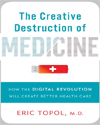
Dr. Moira Gunn learns about how the landscape of medicine is being changed by new discoveries in biology and genetics from Eric Topol, author of The Creative Destruction of Medicine: How the Digital Revolution Will Create Better Healthcare.
Dr. Moira Gunn talks about how intellectual property rights in the age of personalized medicine with head of the Life Sciences Practice at Baker Botts, Jen Gordon.
Skills that were thought to be old fashioned relics of the 20 century, such as sewing, stitching, or needle point are still relevant in the 21st century thanks to the Arduino LilyPad. Massimo Banzi, co-founder of Arduino, talks about and displays some of their fascinating developments, which include the LilyPad, an electronic component made to be sewn into fabric with needle and thread, rather than soldered, to facilitate the embedding of circuits.
Did you know California's entire research network of educational institutions, kindergarten through college, now empties directly into Amazon's cloud storage system? From data generated by thousands of Web 2.0 companies every second to terabytes of data generated by government at every level; this may be the golden age of data set collection. In this presentation Werner Vogels defines Big Data, examines the challenges that big data creates, and invites everyone to consider the types of innovation necessary to handle them.
Does pizza taste better than broccoli? If you're like most people, you're going to answer pizza. It should come as no surprise then, that many health experts point to our preference for unhealthy food as a leading cause for the obesity problem in the United States. Clay Johnson suggests that a similar trend is happening in the way we consume content. In this keynote, Clay illustrates how our web preferences are impacting the type of content media companies produce and what we can do to combat our information over-consumption.
John Resig, Dean of open source and head of JavaScript development at Khan Academy, looks at how performance is treated in jQuery projects. He explains the need to consider the varied components that make up a project and ensure that they are balanced to provide the most effective outcome for users of different browsers. He calls this a holistic approach and emphasizes the need for quality control as well as team member support to produce the best product and cleanest code.
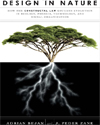
Dr. Moira Gunn learns more about the perspective of flows from Duke professor Adrian Bejan, author of Design in Nature.
Dr. Moira Gunn discusses generic drugs in the biotech space called biosimilars with Group Commercial Director for Eden BioDesign, Roger Lias.
If Moore's Law is the basis of your religion, Johnny Lee of Google warns that you might find what he has to say heresy: Convergence won't happen in consumer electronics. In fact, he says the darwinism of free-market competition drives diversification among device species. The mouse and keyboard remain the stalwarts of the productive machine, while computer capacity increases the function of devices large and small.


 Register (It's Free!) |
Log In
Register (It's Free!) |
Log In
















 Play
Play