The post Listen to Wedding Day Doubts appeared first on Gary Thomas.
]]>I recently read some very bad and very dangerous advice given to a soon-to-be bride: “Everybody has doubts on their wedding day.” This was after she articulated some reasonable objections to the marriage she was about to enter. It inspired me to re-read a study that says we should pay attention to wedding-day doubts. Not everybody has them. Nerves are one thing; marriage is a big commitment. Doubts are something else entirely. If you or someone you know is going through this, please pass this on to them.
What I’ve long suspected appears to be true: people should pay more, not less, attention to wedding day doubts.
It’s so easy to get caught up in a major infatuation, make a hasty commitment, get lost in planning a special day and then, as the day creeps closer and reality settles in, you start asking yourself: what am I getting myself into?
A study posted in the online Journal of Family Psychology warns that significant doubts are worth heeding. Wedding day doubts often signal a less satisfying marriage is ahead and a much higher likelihood of divorce. Among women, more doubts on the wedding day signaled a divorce rate 2.5 times higher than those who married without doubts. Keep in mind, the study focused on just four years, yet it already shows a disturbing trajectory. Who knows what the numbers would be if the researchers had followed them for ten years?
Sadly, I’ve seen too many people “go through†with a wedding because calling it off would be “embarrassing.†Ask yourself (or the person getting married coming to you for counsel): would you rather be embarrassed for a few weeks, or poorly matched in marriage for fifty to sixty years? When people refuse to call off a wedding due to embarrassment, they’ve lost all sense of proportion.
Being “nervous†is different than having doubts. If you’re nervous due to the large commitment involved, that just means you have a firm grasp of the awesome step you’re about to take. If you’ve properly prepared and are marrying this person for all the right reasons, you can mentally go through the list of why this marriage makes sense, and proceed with confidence because it will still make sense. If, however, mentally going through that list makes you become even more nervous, then that may reveal there could be good reasons not to go through with the wedding. Your head may have finally caught up with your heart and might be warning you not to do what you’re about to do.
If this is you, find a friend or mentor to pray through your concerns. You need a person strong enough to tell you the truth and who knows you well enough to discern if you’re just the nervous type needing reassurance, or if God is graciously warning you away from making a less-than-wise lifetime commitment.
Continue reading this free blog on Substack HERE.
The post Listen to Wedding Day Doubts appeared first on Gary Thomas.
]]>The post Let’s Talk About Lust appeared first on Gary Thomas.
]]>When Jesus compared lust to adultery (Matthew 5:28), porn as we know it didn’t exist. Which means, even if you’re not looking at porn, that doesn’t mean you’re in the clear. On the other hand, it’s also important to know what lusting is and what it isn’t. In this video, I use some of the material from my sermon series at Cherry Hills, but add a good bit that focuses particularly on the problem of lust–how serious it is, some suggestions to deal with it, and how the glorious truth of Colossians can help us live a life of Coram Deo, before the face of God.
Watch this video on Substack HERE.
The post Let’s Talk About Lust appeared first on Gary Thomas.
]]>The post What Makes God Happy? The First Goal of Our Marriage Should Be to Please God appeared first on Gary Thomas.
]]>What’s more important–your happiness, or God’s? That may sound like a bizarre question, but it’s a crucial one to ask when your marriage reaches a place where it’s just not…fun, anymore. In the course of a long marriage, there will be many different seasons of cherishing, happiness, struggle, delight, and disappointment. In the best of both worlds, our happiness and God’s happiness will perfectly align. But that’s not always the case, is it?
Our emotions will go up and down, but our resolve, our commitment, should be to keep our focus on what is most pleasing to God. I’ve slightly edited a section from my book, Sacred Marriage,to remind us of our high calling to seek to please God in all things, including in our marriage.
Paul answers a lot of questions for us when he writes, “So we make it our goal to please him†(2 Corinthians 5:9). Ask ten people on the street what their goal in life is, and you’ll get an amazing variety of answers.
For the Christian, Paul couldn’t be clearer: his “consuming ambition, the motive force behind all he does,â€[i] is to please God. But Paul doesn’t just say pleasing God is his “consuming ambitionâ€; he assumes it will be ours as well: “We make it our goal to please him.â€
When something is the motive force behind all we do, it drives every decision we make. And Paul is crystal clear: The first question we should ask ourselves is, “Will this be pleasing to Jesus Christ?â€
The first purpose in marriage — beyond happiness, sexual expression, the bearing of children, companionship, mutual care and provision, or anything else — is to please God. The challenge, of course, is that it is utterly selfless living; rather than asking, “What will make me happy?†we are told that we must ask, “What will make God happy?†And just in case we don’t grasp it immediately, Paul underscores it a few verses later: “Those who live should no longer live for themselves but for him who died for them and was raised again†(2 Corinthians 5:15).
I have no other choice as a Christian. I owe it to Jesus Christ to live for Him, to make Him my consuming passion and the driving force in my life. To do this, I have to die to my own desires daily. I have to crucify the urge that measures every action and decision around what is best for me. Paul is eloquent about this fact: “We always carry around in our body the death of Jesus, so that the life of Jesus may also be revealed in our body†(2 Corinthians 4:10).
Just as Jesus went to the cross, so I must go to the cross, always considering myself as carrying around “the death of Jesus†so that His new life — His motivations, His purposes, His favor — might dominate in everything I do.
Continue reading this free blog on Substack HERE.
The post What Makes God Happy? The First Goal of Our Marriage Should Be to Please God appeared first on Gary Thomas.
]]>The post Set Yourself Free From Unenforceable Rules appeared first on Gary Thomas.
]]>We bring much angst into our lives when we feel like something must happen that we can’t make happen. This is true of married life and it’s true of parenting. Dr. Fred Luskin writes about the wisdom of replacing “unenforceable rules†with “enforceable ones.†I’ve found the mindshift extremely helpful when it comes to loving others and focusing on what I can do rather than what I want others to do or even think they should do. If you’re in a frustrating or disappointing relationship of any kind, this will be a very helpful, sanity-preserving mindshift.
I initially wrote this to be a chapter in When Christian Parents Hurt. Alas, in my fervent attempt to cut word count, I had to turn this chapter into a small section–but here, you can read the entire thing. I hope you find it as helpful as I did.
Dr. Fred Luskin is the Director of the Stanford University Forgiveness Project. His concept of “unenforceable rules†will be helpful to many parents of adult children who want to practice relinquishment.
Dr. Luskin states, “By unenforceable rules, I mean the desires we have that we are simply powerless to turn into realities.â€[i]
An unenforceable rule erupts when a wish becomes a demand. When you think that something you want to be true must become true, but you have no power over making it true, you are bringing much angst, vulnerability, and frustration into your life. It’s fine to “wish†for things. It can even be healthy to name your wishes. But we must be strong enough to discipline those wishes so that they do not become demands, especially with adult children. And we are fools if we ever stake our happiness on something beyond our control.
“What causes fights and quarrels among you? Don’t they come from your desires that battle within you? You desire but do not have, so you kill. You covet but you cannot get what you want, so you quarrel and fight. You do not have because you do not ask God.†(James 4:1-2).
Some examples of unenforceable rules for parents of adult children are:
· My adult children should call me every other day to check in on me.
· My daughter should seek my advice on how to raise her children.
· My adult children should bring their families to my house for the holidays.
· My children should repay my sacrifice in raising them by avoiding drugs, staying out of jail, and providing me with many grandchildren.
· My adult children should attend church every weekend, just as we do.
· Mother’s and Father’s Day should be as important to my children as they are to me.
Some parents are impaling themselves on these unenforceable rules. These rules are common and fine as “wish lists†but cruel and debilitating when they become demands. If you hold onto them, you risk getting caught in repetitive cycles of blame, offense, and suffering.
Continue reading this blog on Substack HERE.
The post Set Yourself Free From Unenforceable Rules appeared first on Gary Thomas.
]]>The post Finding Freedom appeared first on Gary Thomas.
]]>Cherry Hills is in the midst of a sermon series that looks at AA’s 12 steps through the prism of the Gospel. If tears are any indication that people feel moved, challenged and convicted, it’s been a successful series so far. I began the series in the first week by laying out the history of the 12 steps and showing the biblical contexts, and last weekend preached on steps 6 and 7. We’re listing the links to both sermons here if you’d care to see what we’re up to.
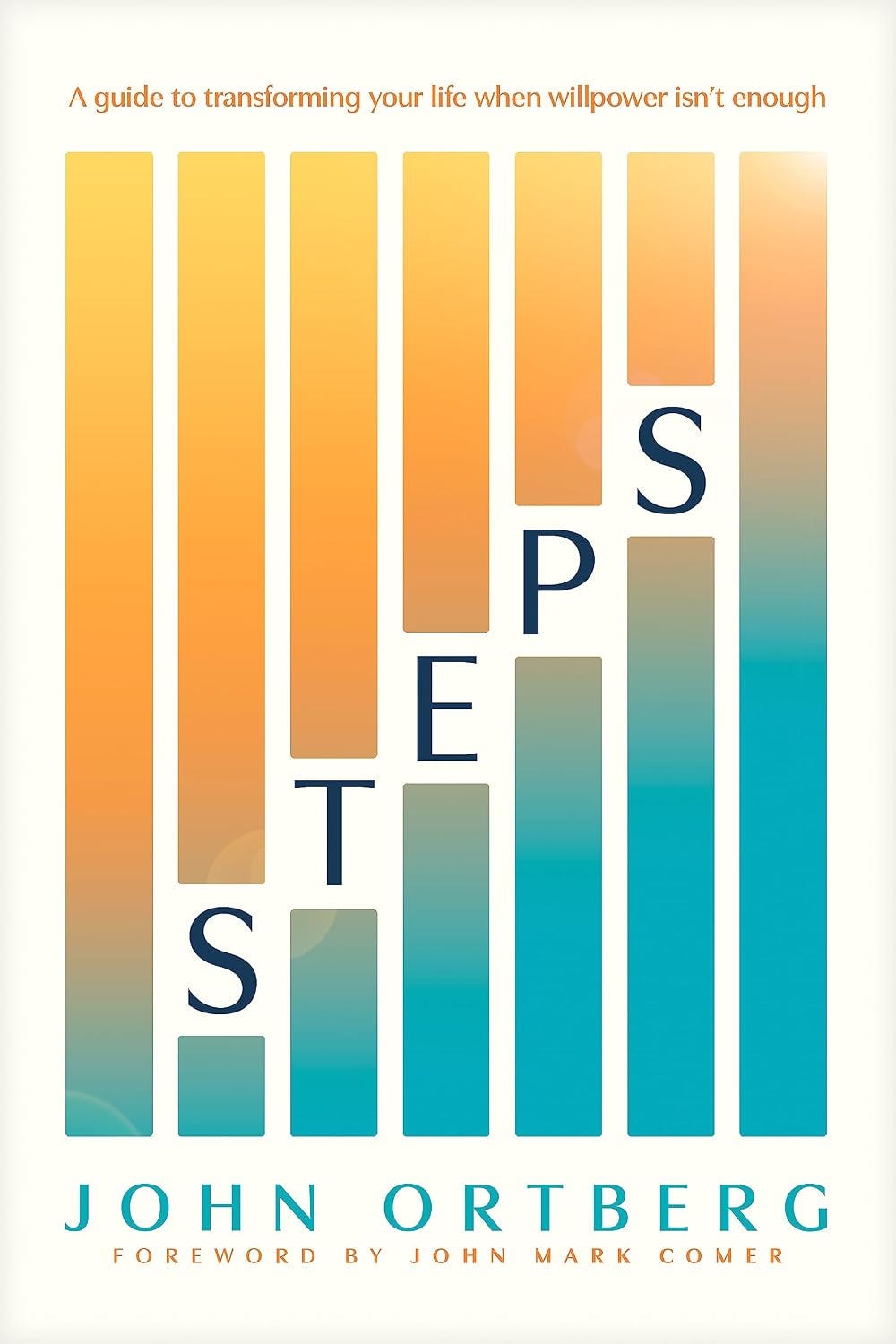
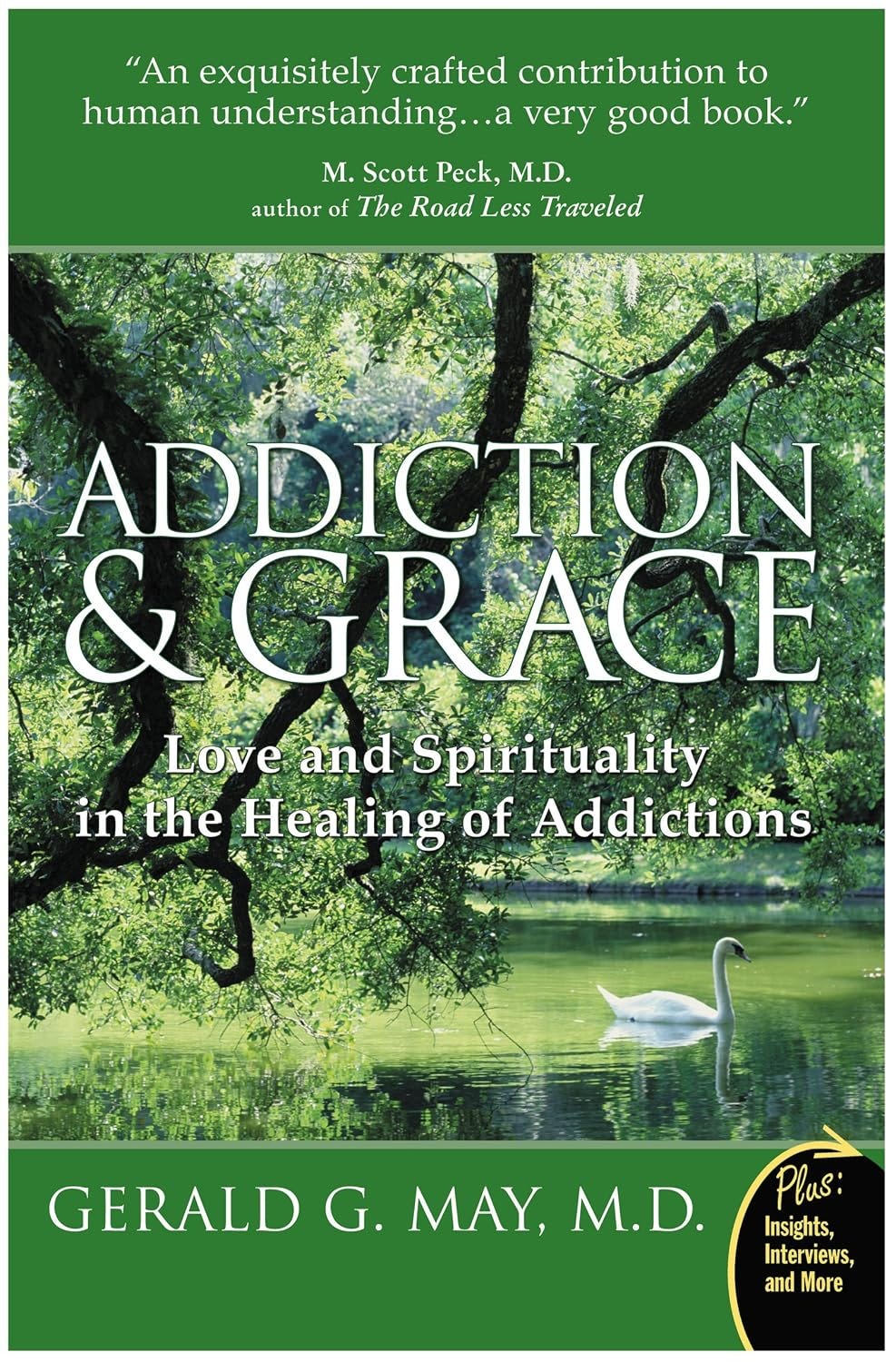
I’ve been encouraging everyone to get a copy of John Ortberg’s book Steps. I’ve been a long-time fan of Ortberg’s work, and Steps is right up there with his very best. Last weekend, I also mentioned Gerald May’s now classic work Addiction and Grace.
We’re in the middle of summer–what better time to leave some bad habits, dependencies, or even addictions behind through the power of the Gospel?
Go to Substack HERE.
The post Finding Freedom appeared first on Gary Thomas.
]]>The post One of the Most Precious Jewels in the Christian Life appeared first on Gary Thomas.
]]>I am so enjoying Thomas Watson’s classic writings. This short video showcases an early book of his. I explain a jewel of the Christian life, and how it can sustain us through life’s most difficult challenges–including losing a loved one or being married to a difficult spouse. I provide a few choice quotes to encourage you, but even more, I hope to get you to order his book for yourself.

*Due to weather there is a glitch in the video in the middle of the following quote:
“The world is an unequal judge; as it is full of change—as of partiality…It is better to deserve respect—and not have it; than have it—and not deserve it. It does not matter how I am looked upon in the world—if God thinks well of me. It is better that God approves—than man applauds. If you are a child of God, you must expect disrespect from the ungodly.†Thomas Watson
Watch this video on Substack HERE.
The post One of the Most Precious Jewels in the Christian Life appeared first on Gary Thomas.
]]>The post Did I Marry the Right Person? appeared first on Gary Thomas.
]]>I am just two weeks away from my deadline for my next book, and I’m preaching the next three weekends here in Colorado, so this week I’m running an excerpt from Sacred Marriage. It addresses one of the most common questions I hear individuals asking when their marriages hit a rough patch. As I explain in the excerpt, I think that’s entirely the wrong question to ask.
The Question that Can Destroy Your Marriage:
“Did I Marry the Right Person?â€
One of the least productive, and indeed most destructive mental exercises in marriage is to spend any time asking ourselves a spiritually dangerous question: “Did I marry the right person?â€
This question saps energy from something that can be done—focusing on taking a less than ideal situation to a better place—at the cost of solving a “problem†that can’t be solved: rewriting history.
Once we have exchanged our vows, little is gained and much harm can be done by asking this question. A far better alternative to questioning one’s choice is to learn how to live with one’s choice. A character in the Anne Tyler novel A Patchwork Planet comes to realize this too late. The book’s thirty-year-old narrator had gone through a divorce and now works at an occupation that has him relating almost exclusively with elderly people. As he observes their long-standing marriages, he comes to a profound understanding:
“I was beginning to suspect that it made no difference whether they’d married the right person. Finally, you’re just with who you’re with. You’ve signed on with her, put in half a century with her, grown to know her as well as you know yourself or even better, and she’s become the right person. Or the only person, might be more to the point. I wish someone had told me that earlier. I’d have hung on then; I swear I would. I never would have driven Natalie to leave me.â€
People dwelling on rewriting history usually do so selectively, ignoring even obvious benefits that have arisen from their first choice and naturally assume that virtually any other choice would have been easier or better. I’ve talked to too many people in second marriages to believe that this is always true. Second, it ignores a rather huge issue: if you had married someone else, your children wouldn’t exist. I’d put up with a lot of disappointments in marriage if that was the price I had to pay for my kids to be alive.
Instead of wishing you could do something that can’t be done—rewriting history—why not put all that energy and focus into trying to make tomorrow’s history a little better? That’s achievable, at least.
Continue reading this free blog on Substack HERE.
The post Did I Marry the Right Person? appeared first on Gary Thomas.
]]>The post Avoiding a Marriage Fracture, Part 2 appeared first on Gary Thomas.
]]>If you missed last week’s post, part 1, you can read it here first: Avoiding a Marriage Fracture. This is more advice about how to keep your marriage not just connected but growing stronger, even when hurt over adult children threaten to tear you apart or steal your focus.
And as I said last week, the final manuscript isn’t due to the publisher until the end of this month (July). So if you’d care to offer some constructive criticism, please do so in the comments.
Encourage Each Other
When an adult child is attacking your spouse, double down on encouraging your spouse. He or she is likely hearing all kinds of accusations—maybe you’re both hearing nothing but accusations and condemnations—so be the dissenting voice in your spouse’s life.
One of the most shocking things about Jesus is that, amid His agony while carrying the cross, He had empathy for those watching Him suffer. “Daughters of Jerusalem, do not weep for me, but weep for yourselves and your children. Look, the days are coming when they will say, ‘Blessed are the women without children, the wombs that never bore, and the breasts that never nursed!’ Then they will begin to say to the mountains, ‘Fall on us!’ and to the hills, ‘Cover us!’ (Luke 23:28-30)
I know you’re hurting yourself, but can you, during your pain, have empathy for your spouse’s pain, just as Jesus empathized with these women in the midst of His pain? That’s a very Christian thing to learn how to do.
Apart from encouraging each other being a biblical command (“Therefore encourage one another and build each other up†1 Thessalonians 5:11), it’s a loving thing for you to do for your spouse. If all your spouse hears is about how they failed, remind your spouse of the things they did right. Tell your spouse what you’re proud of.
Your spouse doesn’t have to be perfect to be praised. He or she didn’t have to get everything right for you to compliment them for the one or two things they did get right. If they’re not hearing appreciation from their children, let them hear it from you, often and loudly.
Some of you should stop reading right now and write a note for your spouse. Share a favorite parenting memory and list a couple of things that were your spouse’s strong points. Call your spouse on the phone or go over to where they are and talk to them. Don’t wait.
Remember, encouragement is a process. Encouragement today won’t last for a month and certainly not for a year. Find a way to remind yourself that when an adult child is tearing down your spouse, it’s your call to help build your spouse back up. I nursed Lisa through a tumor removal and a hip surgery; she took care of me when I had knee surgery. If your spouse is sick, that’s what you do—nurse them back to health. Let’s apply this emotionally as well as physically.
Continue reading this blog on Substack HERE.
The post Avoiding a Marriage Fracture, Part 2 appeared first on Gary Thomas.
]]>The post Nana and Papo Camp, Business Buddy Marriage, and a Wider View of What Builds a Strong Marriage appeared first on Gary Thomas.
]]>Lisa and I just wrapped up a weeklong “Nana and Papo Camp” with our two grandchildren. We share very briefly some of what we did, but even more, how watching each other serve our grandchildren builds respect and appreciation for each other. A marriage can’t survive for over forty years on romantic idealism alone. We talk a bit about the concept of “business buddies” (from my book The Sacred Search), and how to grow a marriage by focusing on many aspects of intimacy building at the same time.
Watch this free video HERE on Substack.
The post Nana and Papo Camp, Business Buddy Marriage, and a Wider View of What Builds a Strong Marriage appeared first on Gary Thomas.
]]>The post Avoiding a Marriage Fracture, Part 1 appeared first on Gary Thomas.
]]>If you’re married with an adult child who is breaking your heart, a subtle spiritual trap–and a very dangerous one–is to think that’s the biggest issue in your life. If you’re not careful, the tension with your child can bleed into your marriage and poison it. And then your marriage will become an even bigger issue than your parenting. This week and next week, we’re running two excerpts from my book in progress, When Christian Parents Hurt. This chapter is relevant for every married couple, however–these are basic marital issues to be aware of, even if all of your children bring you nothing but joy, sunshine, and happy days!Â
By the way, the final manuscript isn’t due to the publisher until the end of this month (July). So if you’d care to offer some constructive criticism, please do so in the comments.
Jared was adamant. He was not going to call his son “Alicia.â€
“He’s William. He will always be William.â€
His wife Jennifer grieved over the choices their son was making but preferred to take the longer view. “Is his name really an issue? What if he wanted to be called Willy?â€
“You know there’s a difference, honey. That’s not the same. And I’m not going to participate in this craziness.â€
This chapter isn’t about providing the “right†answer for Jared and Jennifer, but rather about how Jared and Jennifer can maintain their marriage even if they disagree about the most appropriate way to love and relate to their son.
If you could get Jared and Jennifer to take a deep breath, they would both agree that if William’s actions succeeded in causing severe alienation in their marriage, their younger children—still at home—would suffer greatly. They must discern what is best for William, but sacrificing their marriage in the process shouldn’t be an option. If the younger kids grow up in a home where their parents are constantly fighting, the whole family will suffer due to one child’s confusion. Regardless of what the issue is with the child who is breaking your heart, you must not let him or her fracture your marriage.
While frustration with hurting children can be a big attack on your marriage, it’s also an opportunity. Facing this challenge together may draw you closer, but I’ve also seen it become a fatal rift. Particularly when moral issues are involved, and spouses land on different “sides,†it’s possible that the sin of one fractures the entire family.
“Parents with broken hearts can go either way. Marriages under this kind of stress become stronger or weaker, but they never remain the same. There are entirely too many explosions, too many arguments, and too many sleepless nights for relationships to stay unaffected.â€[i]
If you’re married with a child who is dealing with some difficult issues, it’s natural to make that child’s spiritual health your primary focus. I’m asking you to do something different. At the start of the trial, join hands and say, “Whatever happens, we resolve that this trial will draw us closer together, like teammates facing a difficult contest, or soldiers fighting a brutal battle side by side. Rather than this tearing us apart and making us enemies, we will emerge closer together, with a new understanding of each other’s strengths, and a new appreciation that we didn’t have to face this challenge alone.â€
Your child’s welfare isn’t your first battle. Your marriage is. Please don’t lose sight of that.
Continue reading this blog on Substack HERE.
The post Avoiding a Marriage Fracture, Part 1 appeared first on Gary Thomas.
]]>