VCU’s retreat on inclusive excellence carries risks | Guest Commentary
ALVIN J. SCHEXNIDER
Aug 8, 2026
Since 1956, when my parents bought our first television, I have been an avid student of politics and world affairs. The term did not yet exist, but I must have been a nerd: my favorite program was “Meet the Press,” moderated by Lawrence Spivak. Then, as now, I was especially interested in those who claim the mantle of leadership. In higher education, as in every field, many hold the title, but few are willing to do the hard work it requires. Sadly, most seem content to go along to get along. That is not leadership. I spent 14 years of my career at VCU, and my views are shaped by that experience and by my commitment to seeing VCU realize its potential.
Accordingly, I am at once amazed and amused by the warp speed at which President Michael Rao reversed course on VCU’s commitment to “inclusive excellence.” In an act of anticipatory compliance, Rao went even further than the law or threats from Washington called for, summarily ending initiatives across the university that took decades to build. Until it blinked, VCU had a diversity office led by a vice president. Since its elimination, does anyone at the highest levels of university administration have a voice on diversity issues? Are diversity, equity and inclusion no longer relevant? And if they are not, what does this say about the mission and values of an institution whose reputation and achievements benefited from the heterogeneity and diversity of the women and men who helped shape it?
As a board governance consultant, I often remind clients that presidents come and go. Still, boards have a fiduciary duty to take the long view and ensure that the university’s mission and core values are upheld. This is an awesome responsibility that should never be taken for granted.
VCU once proudly claimed recognition as a “Diversity Champion.” In fact, VCU received the Higher Education Excellence in Diversity Award for six consecutive years. Senior administrators Murry DePillars and Grace Harris, among others, played key roles in building that reputation. Under DePillars’ leadership, VCU’s School of the Arts became one of the university’s most respected academic units and earned international acclaim. Harris, dean of the School of Social Work, later became VCU’s first African American provost. In the past decade, under former dean Susan Gooden’s leadership, the L. Douglas Wilder School of Government and Public Affairs has risen to the top of national rankings.
Fundraising is a constant in higher education, and VCU is now in a capital campaign scheduled to conclude in 2030. The president and Board of Visitors should remember that VCU’s stakeholders include alums and prospective donors who value diversity. Lonnie Bunch surprised the philanthropic community by raising substantial support from wealthy African Americans to turn the National Museum of African American
History and Culture from an idea into a reality. Washington took notice. Bunch was later named secretary of the Smithsonian Institution, where he has upheld its mission and core values while successfully resisting efforts to remove him.
Similarly, the National Ovation tribute to Gov. L. Douglas Wilder in 2024 raised over $1 million, among the highest sums in the university’s history. VCU’s African American alumni and friends are painfully aware of the school’s backtracking across a wide array of activities. To my knowledge, VCU has not indicated how it intends to address diversity, equity and inclusion, if at all, in the future.
Anyone involved in any aspect of fundraising at VCU should be concerned. If VCU has plans for corrective action, they should be made public.
The University of North Carolina System’s retreat from diversity, equity and inclusion policies may carry financial consequences. Thirty years ago, the family of Dr. Leroy Upperman, a prominent African American physician in Wilmington, North Carolina, established a scholarship endowment at UNC Wilmington that now distributes approximately $40,000 annually. After UNC Wilmington determined that scholarship language referencing a commitment to the African American community would need to be revised to comply with updated UNC System policies, the family declined to make the changes and began exploring transferring the endowment to another institution. Howard University, where Dr. Upperman received his medical degree, has been identified as a potential destination. The episode serves as a reminder that alumni and donors pay close attention to how institutions respond to changes affecting diversity-related programs and values.
Just as students vote with their feet when a college or university fails to meet their expectations, so may diverse donors withhold support when boards and presidents lack the fortitude to uphold the institution’s mission and core values.
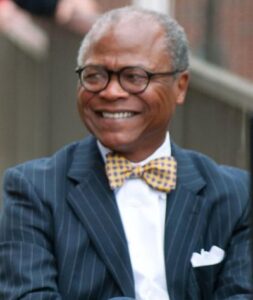
Alvin J. Schexnider is a former vice president of the Virginia Board of Education and a former member of the State Council for Higher Education in Virginia. His most recent book, Reimagining the Academic Presidency: A Leadership Guide Amidst Uncertainty and Upheaval, coauthored with two former presidents, is scheduled for release in September 2026. He can be reached at alvin@schexniderllc.com.
Stay tuned.
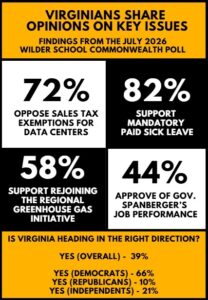
]]>The findings of the latest Commonwealth Poll present a clear message from the people of Virginia. While public opinion may differ on individual issues, the results reflect broad concern about the direction of the Commonwealth and the economic pressures confronting Virginia families. Nearly half of registered voters, 47%, believe the Commonwealth is headed in the wrong direction, while 30% identify inflation and the rising cost of living as the Commonwealth’s most pressing challenge, followed by political extremism or threats to democracy (12%), housing affordability (11%), government spending and taxes (8%), and the quality of K-12 education (7%).
On the issue of data centers, 72% oppose granting sales tax exemptions as an incentive for their development, and 81% support requiring data centers to help offset the demands they place on Virginia’s electric infrastructure. Together, these findings show that the public expects economic growth to be balanced with fiscal responsibility and prudent stewardship of taxpayer dollars.
Governor Spanberger’s job approval ratings are equally significant, with 44% approving and 47% disapproving of her performance. It is uncommon for a new administration to receive such negative public assessment so early in its tenure. These findings suggest that Virginians are paying attention to the issues that matter most in their daily lives. The message from the people is unmistakable: public trust is earned through leadership that listens, governance that delivers, and results that improve the lives of all Virginians.
View the full release and methodology here
Stay tuned.
]]>General Austin’s life is a testament to what is possible in America. Coming from humble beginnings, he rose through the ranks of military service to become the nation’s highest-ranking military leader and later the first African American to serve as Secretary of Defense. His journey reminds us that achievement is not determined by where one begins, but by character, discipline, perseverance, and an unwavering commitment to excellence.
Our conversation naturally turned to the challenges facing the world today. We discussed the ongoing conflicts involving Iran and Israel, Russia and Ukraine, and the broader implications for global security and American leadership. While these issues are complex, they underscore the importance of thoughtful decision-making, experienced leadership, and a commitment to pursuing peace whenever possible while remaining prepared to defend our nation’s interests.
As our discussion continued, we reflected on how far our country has come. America has made remarkable progress over the decades, expanding opportunities that once seemed beyond reach for many. The lives and careers of people like General Austin stand as evidence of that progress.
Yet neither of us viewed that progress as a reason for complacency. Every generation inherits both the accomplishments and the unfinished work of those who came before. The responsibility now rests with today’s leaders, and especially with our young people, to continue striving toward a nation that fulfills its highest ideals. The future will belong to those who are willing to prepare themselves, embrace public service, respect differing viewpoints, and lead with courage and integrity.
As we embark on our country’s 250th anniversary, our greatest celebration will not simply be recognizing our rich and diverse history; it will be ensuring that the next 250 years are defined by leadership, service, and an unwavering commitment to a more perfect Union.
Stay tuned
]]>Under our Constitution, the General Assembly and the Governor share the responsibility of ensuring that Virginia has a budget in place by June 30. This obligation is neither ceremonial nor optional. It is among the most fundamental duties entrusted to those elected to serve the people.
This year, that duty has proven more elusive than usual. The Governor and the General Assembly have not resolved their differences thereto relating, and no agreement has been reached. As often happens in such circumstances, attention has turned to assigning blame. People may differ as to where responsibility for the current impasse resides, with the Governor, the House of Delegates, the Senate, or some combination thereof. The more pressing question, however, is who will provide the leadership necessary to resolve it.
It is not my intention to direct any entity as to what it should do, nor to take sides in the debate. Yet, I feel a responsibility, as a citizen, to speak candidly about where we are presently situated and what the circumstances require of us. Throughout my years in public service, I learned that leadership is measured not by the ability to identify obstacles, but by the willingness to overcome them. Leadership is rarely a matter of unanimity. It requires judgment, patience, cooperation, and an unwavering commitment to the public good.
Upon assuming the governorship, I was confronted with an unrevealed $250 million shortfall in our revenue. Many insisted that tax increases were necessary. I disagreed. We fulfilled our responsibilities without raising taxes, demonstrating that effective leadership requires finding solutions, not simply asking taxpayers to pay more.
I learned firsthand that leadership and cooperation are not optional; they are indispensable to effective governance. The challenge was significant, but the responsibility was clear. We confronted the problem not as partisans, but as stewards of the Commonwealth. We understood that the people expected solutions, not excuses. That approach helped us lead Virginia to earn recognition from Financial World magazine as the best-managed state in the nation for two consecutive years.
That expectation from the citizens has not changed.
The strength of Virginia’s government has long rested upon a tradition of fiscal prudence and responsible leadership. Regardless of political affiliation, those entrusted with public office share a common obligation to preserve that tradition. Differences in philosophy and policy are natural in a democratic society; paralysis is not.
Whatever the origins of this present imbroglio, the responsibility for resolving it rests with those entrusted to lead. The people of Virginia expect their government to function. They expect their elected officials to work through differences and arrive at decisions that advance the interests of the Commonwealth. Most importantly, they expect leadership.
A budget is more than a financial document. It is a statement of priorities and a reflection of our collective commitment to the future. Its timely adoption provides certainty to local governments, schools, public safety agencies, businesses, and families throughout Virginia.
This year’s deadline is near; the responsibility is unmistakable.
History will not remember who prevailed in a particular dispute. It will remember whether those entrusted with authority fulfilled their duty.
The people of Virginia have every right to expect that they will.
Now is the time for leadership to assert itself and get the job done.
Stay tuned.
]]>It is important that we learn from history and not assume that progress simply occurred on its own. Every advance in the cause of justice, equality, and representative government required determination, perseverance, and the willingness of individuals to challenge existing barriers. Those who have benefited from these efforts bear a responsibility to understand that history and to share it with future generations.
Frederick Douglass wisely observed that “Power concedes nothing without a demand. It never did and it never will.” History likewise teaches that liberty and opportunity require constant vigilance and active participation by an informed citizenry. These principles are not meant merely for observation during Black History Month or other commemorations. They should be guideposts for those who have been fortunate enough to be elected to lead. They serve as torchlights for the cause of liberty and as enduring reminders of the responsibilities that accompany both citizenship and public service.
Stay tuned.
]]>This commencement also marked the final ceremony led by Dean Susan T. Gooden in her role as dean of the Wilder School. Her exemplary leadership, integrity, and steadfast commitment to academic excellence have helped elevate the School to national prominence. Her contributions, alongside those of our distinguished faculty and dedicated staff, have strengthened the School’s reputation as a leading institution in public affairs, governance, leadership, and public service. Her impact will endure for generations to come.
To the graduates of the Class of 2026, I offer this reminder: public service is not confined to elected or appointed office. Leadership is not determined by title or position. Rather, it is measured by one’s willingness to participate in the civic life of our democracy and to contribute meaningfully to the advancement of society.
You must remain engaged in the “polity,” the decision-making process that shapes our communities, our commonwealth, and our nation. Make your voice heard. Make your presence matter. And let your contributions reflect both purpose and principle.
The American Dream has never been sustained by complacency. It has always depended upon those willing to persevere, to challenge injustice, and to expand opportunity for others. While our nation has made significant progress, the work remains unfinished, and the responsibility now passes to you.
Continue striving until your good is better and your better is best.
And to those who seek to diminish the value of Diversity, Inclusion, and Equity, let me state unequivocally: WE AIN’T GOING NOWHERE!
The future will be shaped by those who are prepared to lead with courage, serve with humility, and remain steadfast in their convictions. Do not permit doubt, fear, or adversity to deter you from your purpose. With discipline, determination, and faith in yourselves, there are no limits to what you may achieve.
Congratulations to the Wilder School Class of 2026. Your charge is clear, and your journey is just beginning.
Stay tuned.
]]>After citizens successfully advanced a change to the City Charter, I was persuaded to run for mayor under a system designed to ensure accountability and direct leadership. Prior to that, the City Council had chosen a ceremonial mayor, with real authority vested in an appointed Chief Administrative Officer (CAO). That structure distanced leadership from the people it was meant to serve.
But the Charter also provided a remedy. If a sufficient number of citizens petitioned, Richmond could adopt a Strong Mayor form of government. My longtime associate, Paul Goldman, led that effort with determination, and together with the will of the people, we succeeded.
I agreed to run and to serve one term.
The results speak for themselves. We instituted community policing, and crime declined. The City’s bond rating improved, allowing investments in housing and health facilities. Public education and social services were strengthened. Richmond became a more desirable place to live, work, and raise a family.
That progress was not accidental. It was the result of clear authority, direct accountability, and leadership grounded in the needs of the people.
Today, we find ourselves in sharp contrast to that period of progress.
What is emerging now is not the product of citizen driven reform, but rather decisions that raise serious questions about judgment and experience in public administration. The current mayor has publicly stated his intention to bring in someone who has never lived in Richmond to handle the administrative duties of the city. That individual has now been hired as Chief Administrative Officer, despite having no prior residence in Richmond and who reportedly travels out of the city and state on a regular basis.
At the same time, the mayor grants a salary for the CAO more than twice that of the Governor of Virginia. Additionally, there are provisions for severance packages guaranteeing a full year’s salary,regardless of tenure or separation status, for those ending service in the administration.
These are not minor concerns. They go to the heart of governance, stewardship, and respect for the taxpayers of Richmond.
I could say more, and in time I will, but for now I pause to call for something “simple” and essential – transparency and accountability.
When I served as Mayor of Richmond, and previously as Governor of Virginia, I interacted and met with the public regularly. I answered questions, I stood before the people and explained decisions that affected their lives. That is not extraordinary. That is to be expected of those who have the responsibility of public office.
The citizens of Richmond deserve NO less today. They should continue to demand what is right and criticize what is wrong.
They deserve answers. They deserve transparency. They deserve leadership that meets them openly and honestly.
We should not be forced to wait until the next election to bring about the necessary change.
Stay tuned.
]]>The progress of judicial representation in Virginia reflects a long and deliberate arc toward inclusion and fairness. A defining milestone came on January 30, 1974, when the Virginia General Assembly elected Willard H. Douglas Jr. as judge of the Richmond Juvenile and Domestic Relations Court, making him the first officially elected, full-time African American judge in Virginia. His service marked a turning point in the Commonwealth’s judicial history and was later distinguished by his appointment as the first African American to serve on the Ethics Committee of the Supreme Court of Virginia. That progress has continued over time, reflecting a broader commitment to ensuring that the judiciary more fully embodies the principles of fairness and equal justice under the law.
Today, that progress is reflected in the historic leadership of Chief Justice Cleo E. Powell, the first African American woman to lead the Supreme Court of Virginia, a milestone that speaks to both how far the Commonwealth has come and the responsibility it continues to bear.
Yesterday, I had the opportunity to discuss these matters in an interview with Jeff Katz on WRVA. Our conversation reflected not only on how far Virginia has come, but also on the continued importance of nonpartisan political and public confidence in a judiciary that is both fair and representative. The strength of our courts rests not only in their rulings, but in the trust they inspire.
Yet, even as these advancements were taking shape at the state level, Virginia once remained without representation on the federal bench. That absence underscored the work still to be done.
One day, while in my office, I received a call from Senator Chuck Robb. He spoke of a vacancy on the United States Court of Appeals for the Fourth Circuit and indicated his intention to nominate me. He expressed confidence that confirmation would be secured without difficulty. While deeply appreciative of his confidence, I respectfully suggested that he instead consider my former law partner, Roger Gregory.
I had come to know Roger first as a student in my constitutional law course at Virginia State (College) University, and later as a trusted colleague in our firm, Wilder, Gregory and Associates. I believed then, as I do now, that he possessed the intellect, temperament, and integrity required for such a distinguished role. After giving the matter consideration, Senator Robb agreed to explore the nomination.
I immediately contacted Roger, who received the idea with humility and a willingness to serve.
Through a determined and collaborative effort, Roger Gregory was ultimately nominated and confirmed with bipartisan support, including that of President Bill Clinton, President George W. Bush, and Senator George Allen. This achievement did not occur by chance. It required the steadfast support of my friend Elaine Jones, Director of the NAACP Legal Defense Fund, as well as Deputy Director Leslie Proll, and many others who committed their time and energy to the rigorous preparation required for confirmation.
Judge Gregory’s service on the court, next senior the United States Supreme Court, has been exemplary. As Chief Judge of the Fourth Circuit, he has contributed meaningfully to the advancement of justice in our nation. He has served as a mentor to countless young clerks and as a principled voice for fairness and equality under the law.
His journey reminds us of the enduring truth captured in the words of an old spiritual: “I never told you the road would be easy.” Yet through perseverance and purpose, he has helped to make that road more just for others.
Stay tuned.
]]>Rev. Jackson belonged to that cadre of leaders who understood that history does not move forward on its own. From his early work in the modern civil rights movement to his national advocacy for political inclusion and economic justice, he insisted that the nation confront the distance between its promises and its practice.
I witnessed firsthand the barriers that defined an earlier era of public life. He challenged those barriers on a national stage, calling attention to the responsibilities of leadership and the necessity of ensuring that opportunity and justice remain accessible to all.
He understood a simple but enduring truth that progress is neither accidental nor self-executing. It requires vigilance, discipline, and moral clarity, and he embraced that calling with resolve and purpose.
As we reflect upon his life, we are reminded that the work of democratic society is ongoing. It demands engagement from each generation and accountability from those entrusted with leadership. His legacy stands as both record and reminder of what sustained commitment can achieve.
]]>The exhibition represented far more than a personal collection of paintings. It reflected the strength of community and the shared belief in creativity as a bridge to education and opportunity. The careful selection, planning, and public presentation of the artwork reflected the vision and leadership of my longstanding partner and collaborator, Ameta Cartwright, Director of the Wilder Collection, whose dedication ensured that this celebration was carried out with care and purpose. I am deeply appreciative of her leadership, as well as the efforts of the museum staff, volunteers, sponsors, and supporters.
Though my career has been defined by public service, art has long been a quiet source of enjoyment and fulfillment. As a young man, I drew cartoons for my high school newspaper and painted windows and doors for neighborhood businesses. While I did not formally pursue art, I often sketched images from newspapers, particularly those associated with educational opportunities and scholarships. In furtherance of my interest in art, some years ago I took a six-week course in watercolor painting at VCU, which allowed me to further explore this creative outlet.
My daughter Lynn, an accredited artist living in Morocco, has exhibited her work internationally. Several of her pieces are displayed in my home and serve as daily reminders of the importance of artistic expression.
The kind words and thoughtful reflections shared by those in attendance have been deeply heartening. It is a privilege to know that my artwork resonated with so many and encouraged reflection on the enduring relationship between creativity, leadership, and legacy.
Photos from the Brushstrokes exhibition and celebration may be viewed here.
The ongoing Brushstrokes auction features five original works from the collection. Proceeds from the auction will benefit expanding access to education and helping cultivate the next generation of public service leaders. Bidding remains open through February 28.
The exhibition itself continues to be on view at the Black History Museum and Cultural Center of Virginia through February 28, inviting the public to experience the artwork firsthand.
Above all, the lasting impact of Brushstrokes lies in its purpose. Through the National Ovation Scholarship Fund, this celebration will continue to open doors for students, an investment in educational opportunities that reflects the values that have guided my life’s work.
To all who gave and participated, I extend my deepest appreciation. Your generosity and commitment exemplify the shared responsibility that uplifts us all.
As I mark this milestone, I am reminded that legacy is measured not by personal recognition, but by the opportunities we create for others and the lives we touch along the way.
Stay tuned.
]]>