Chavurat Derekh HaMashiach

Living the Journey, Sharing the WORD

  • Israel’s story has always been bigger than Israel. From the moment HaShem called them out of Egypt and spoke their identity at Sinai — “a kingdom of priests and a holy nation” — their purpose was outward-facing.

    Priests exist for someone else. Teachers exist for students. Light exists for darkness.Israel was meant to be a nation of teachers to the nations, a living university of truth, wisdom, and covenant.

    But over the centuries, through exile, persecution, and survival, they turned inward. They protected the light instead of sharing it. They became, in a sense, a university full of professors… with no students showing up. The calling remained, but the classroom stayed empty.

    Yet the prophets never let that calling fade. Isaiah spoke of Israel as a light to the nations. Jeremiah promised a renewed covenant with Israel and Judah — not replacing them, but restoring them. And Paul, in Romans 11, saw a future moment when Israel’s awakening would mean “riches for the world” and “life from the dead.”

    Living here in the Pacific Northwest, surrounded by wildfires every summer, I can’t help but think of Israel’s calling in terms of fire.

    Right now, what we’re seeing in Israel — spiritually, culturally, and in identity — feels like a spark. Small, bright, undeniable. A spark isn’t the whole fire, but it’s the beginning of one. And anyone who lives up here knows what a spark can do. Under the right conditions, it becomes something unstoppable.

    Firefighters can slow it, redirect it, or contain it for a moment — but when the wind is behind it, when the fuel is ready, when the spark catches, the fire will run its course until it has accomplished its purpose.

    That’s how I picture Israel’s calling today. A spark forming.
    A revival beginning.
    A light flickering back to life.
    Some will try to contain it, just like firefighters try to hold back the flames.

    But when HaShem is the One igniting the fire, it won’t be stopped until His purpose is complete.Israel’s calling was never about isolation. It was always about illumination. A nation of priests.
    A university meant to teach the world.
    A spark meant to become a wildfire of blessing.
    And maybe — just maybe — we’re watching the first embers glow.


  • When you live on the road with a three‑legged German Shepherd who thinks every squirrel is a divine appointment, you learn real quick that loose ends matter. Ki Tetze hits that same nerve: dozens of mitzvot that look scattered at first glance, but together form a blueprint for a life where nothing important gets left flapping in the wind.

    Ki Tetze calls me to integrity in the small things, compassion toward the vulnerable, responsibility in relationships, and honesty in daily life; Isaiah reminds me that even when I feel scattered or stretched thin, God’s covenant kindness doesn’t shake; Yeshua’s teachings on marriage and commitment sharpen the call to faithfulness; Paul’s letters reinforce generosity, fairness, and living under grace rather than the curse of self‑reliance.

    Rolling into a new town with Kenny, I’m always aware of how fragile the balance is: one frayed strap, one forgotten latch, one gust of desert wind, and suddenly my whole home is sideways. 

    Ki Tetze feels like God walking around my van with me, pointing at the little things that keep life upright—returning lost items, building guardrails, treating workers fairly, protecting the vulnerable, keeping promises. Isaiah steps in like a warm sunrise over the lake, reminding me that even when I feel stretched thin or uncertain about the next stop, God’s covenant kindness is more stable than the ground under my wheels. Yeshua’s words in Matthew about commitment hit hard in a world where everything feels temporary—He calls me to be someone whose word doesn’t drift like sand. Paul’s reminders in Corinthians and Timothy about generosity and integrity echo the same theme: don’t exploit, don’t cut corners, don’t live like life is a hustle. And Galatians ties it all together—blessing comes not from frantic self‑effort but from trusting the One who steadies the board beneath my feet.

    Out here, every choice is magnified. If I don’t secure the paddle, I lose it. If I don’t check the weather, Kenny and I end up fighting chop we didn’t need to be in. Ki Tetze reminds me that holiness isn’t mystical—it’s practical. It’s tying down the cooler so Kenny doesn’t knock it over. It’s returning a wallet I find at a trailhead. It’s paying attention to the people who are overlooked, because I know what it feels like to be the one living on the margins. 

    Isaiah’s comfort hits me when I’m parked alone under a wide sky: God hasn’t forgotten me, even when the road feels long. Yeshua’s teachings challenge me to be faithful in relationships, even when my lifestyle is transient. Paul’s words remind me that generosity isn’t about wealth—it’s about heart. And Galatians keeps me grounded: I’m not earning God’s favor by surviving vanlife; I’m living in grace, one paddle stroke at a time.

    If you’re rolling through life with loose ends—relationships, responsibilities, habits—take Ki Tetze as your tune‑up. Walk around your “van,” tighten what’s rattling, return what’s lost, protect what’s fragile, and choose faithfulness even when the road is unpredictable. And when you feel stretched thin, remember Isaiah’s promise: God’s kindness doesn’t shake. 

    Take a moment today to secure one loose end—physical, emotional, or spiritual—and watch how much smoother the ride becomes.

  • The question of predestination versus free will has stirred believers, rabbis, pastors, and philosophers for thousands of years.

    Some imagine a universe where every detail is already scripted, leaving humans as actors reading lines they never chose.

    Others insist that life is an open field of possibility, shaped moment by moment by human decisions. But Scripture, Jewish wisdom, and even secular philosophy point to a more profound truth: we choose freely, and God already knows the choice, yet His knowing does not force our choosing.

    God’s sovereignty and human responsibility are not enemies; they are partners in the story of redemption.

    Biblically, God’s omniscience is unmistakable. Psalm 139:4 declares, “Before a word is on my tongue, You know it completely,” revealing a God who sees not only actions but intentions. Isaiah 46:10 describes Him as “declaring the end from the beginning,” meaning He stands outside time and sees the entire timeline at once. Yet Scripture also affirms human choice with equal force. Deuteronomy 30:19 says, “I have set before you life and death… therefore choose life,” and Revelation 22:17 proclaims, “Whosoever will may come.” These passages make it clear that human decisions are real, meaningful, and consequential. Jewish wisdom literature captures this tension perfectly: “Everything is foreseen, yet freedom of choice is given” (Pirkei Avot 3:15). God knows the house you will build, but you still swing the hammer. Even Paul’s language supports this model. In Romans 8:29 he speaks of those “whom He foreknew,” emphasizing God’s knowledge rather than divine coercion.
    God knows the future because He is outside time, not because He forces it.

    Philosophers have wrestled with the same tension. Aristotle taught that humans possess multiple potentials, and choice determines which potential becomes real. Boethius, writing in The Consolation of Philosophy, argued that God exists outside time and therefore sees all moments simultaneously; His knowledge does not cause human actions. Thomas Aquinas reinforced this idea by insisting that knowledge does not cause events, just as watching a recording does not change the game. Modern compatibilist philosophers echo this by arguing that an ordered universe can still contain genuine human freedom. These secular perspectives align surprisingly well with the biblical model, showing that the tension between divine foreknowledge and human choice is not only theological but deeply human.The key insight is simple: knowledge does not equal control. If someone watches a video of you choosing pancakes over waffles, their knowledge of your choice does not force your choice. They simply know it because they have seen it. God’s foreknowledge works the same way, except He sees the “video” before you live it. You are still choosing, and He is still knowing. Neither cancels the other. This means your choices genuinely shape your destiny. Your calling, growth, and character are real decisions, not predetermined illusions. God’s plan includes your freedom, weaving redemption into your choices rather than around them. Responsibility remains intact; if everything were predestined, sin would not be your fault and righteousness would not be meaningful. Prayer, repentance, obedience, and discipleship make sense only if your choices matter.The most coherent view—biblically, philosophically, and experientially—is this: God knows the whole map, and you choose the path. His knowledge does not force your steps, and your freedom does not threaten His sovereignty. This is the tension where faith becomes meaningful and relationship becomes real. God’s foreknowledge is not a cage; it is a comfort. He already sees the redemption He will weave from your choices, the healing He will bring from your wounds, and the purpose He will draw from your journey. You are not trapped in a script. You are invited into a partnership.

  • I’m just sitting there, minding my three‑legged business, trying to figure out if the fork someone dropped is now legally mine, and suddenly all the humans start acting funny. One person gets irritated at the guy fumbling with his fork. Another scrunches their nose at the construction worker who smells like he actually worked today. Then there’s the lady whose nose is so high she might drown if it rains. And outside, the kids are making noise — which I personally love — but the grownups act like joy is a misdemeanor.

    Humans say they love God. They say they walk in His grace. But then they look at each other like they’re sniffing spoiled leftovers. I don’t get it. I’m a dog. I love everybody. Even the mailman. Even the guy who smells like sadness. Even the lady who thinks she’s too fancy to pet me. Even the kids who scream too loud. Even the people who confuse me because they say “love your neighbor” but act like “tolerate your neighbor until they leave.”

    Dad tells me Yeshua said something big — something even I, a dog with a brain mostly dedicated to food and belly rubs, can understand. He said, “Whatever you did for one of the least of these brothers and sisters of mine, you did for Me.” (Matthew 25:40). So when you ignore someone, judge someone, roll your eyes at someone, or think bad thoughts about someone… you’re doing that to Yeshua. And trust me, you don’t want to be the person who gave Yeshua the side‑eye.

    And don’t forget — your thought life counts too. You humans think your thoughts are private. They’re not. God sees them. I see some of them too, honestly. You smell different when you’re judging people. It’s weird. Yeshua said, “Anyone who is angry with his brother will be subject to judgment.” (Matthew 5:22). So even if you never bark it out loud, bitterness still stinks.

    Different denominations don’t change this calling either. Yeshua didn’t say, “Love your enemies… unless they worship differently.” He didn’t say, “Love your neighbor… unless they annoy you.” He said, “Love your enemies and pray for those who persecute you.” (Matthew 5:44). That means love them. Period. Even the ones who confuse you. Even the ones who make you fantasize about them tripping on a curb. Don’t do that. That’s not love. Love is a verb. “if you love me, keep my comments” (John 15:14) It’s action. It’s obedience. It’s choosing kindness even when your feelings are being dramatic.

    I’m just a dog, but I know this: every human is made in God’s image. Even the messy ones. Even the loud ones. Even the proud ones. Even the ones who smell funny. Even the ones who don’t like dogs (still don’t understand that). 

    Scripture says, “So God created mankind in His own image.” (Genesis 1:27). If you reject them, you reject the image of God. If you despise them, you despise the work of His hands. If you withhold compassion, you withhold it from Him.

    So here’s my prayer — yes, dogs can pray:

    “Lord, help my humans see Your image in every person. Help them stop judging each other. Help them stop fantasizing about bad things happening to people. Help them love the least of these, because when they do, they’re loving You.

    ”Now if you’ll excuse me, I need to go bark at a leaf. It looked suspicious.

    If Kenny’s little sermon hit home, share it, live it, and let someone feel God’s love through you today. 

    And if you want more Kenny‑style Torah reflections, stories, or spiritual mischief, stick around — we’re just getting warmed up.

    #faithwalk, #loveyourneighbor, #messianiclife, #kennytheologian, #dogsperspective, #yeshua, #leastofthese, #christianliving, #heartcheck, #blogministry, #graceinmotion,

  • So there I was… sitting very, very close to Dad.

    Closer than usual.

    Closer than “I’m hoping for a treat.”

    This was “I’m praying to HaShem because that meat smells like heaven” close.Dad put the chuck eye on the grill, and I swear the smoke went straight up like a pillar in the wilderness. I looked at it and whispered:“Adonai… if You are listening… Your servant Kenny humbly requests… maybe just a tiny piece? A righteous portion? A holy sliver? I am but a simple dog.”Dad didn’t hear me.

    But HaShem did. I know He did.Because right then — a hawk swooped in low.

    Not a normal swoop.

    A “I have seen the meat and I desire it” swoop.I locked eyes with that bird.

    Dad stood guard like a soldier.

    I sat there thinking:“Adonai… if You give me even one bite, I promise to be grateful. Also please tell the hawk to back off. He looks hungry and I only have three legs.”The hawk circled again.

    Dad muttered something about tactical airspace.

    I stayed seated, tail thumping, praying harder.And then…

    Dad finished the steak.

    He cut off the leftover fat.

    And a little piece of meat that separated from the main chunk.He handed it to me.I looked up at the sky and said:“Todah, Adonai. You are good. You are faithful. And You have defeated the hawk.”I ate my blessing.

    The hawk flew away.

    Dad laughed.

    And I resumed my post as Senior Grill Security Officer, watching the trees in case the bird tried a third pass.

  • Dad, I’ve been thinking again—you know, the way I do when the van hums down the road and my ears flap in the breeze. You said discipleship isn’t just believing certain things. It’s learning to walk. And if anybody knows about walking, it’s me. Three legs, one mission: keep moving forward.

    Turns out the whole Bible talks about walking with Adonai like it’s the core of the journey.In the Torah, it starts early. “Noach walked with Elohim” (Genesis 6:9). Not ran. Not jumped. Walked. Slow. Steady. Faithful. Kind of like me trotting beside you on morning trails.

    Then Adonai tells Avraham, “Walk before Me and be blameless” (Genesis 17:1). That wasn’t a one‑time moment. That was a lifetime of dusty steps, each one shaping him into who he was becoming.The Prophets keep the rhythm going. “What does Adonai require of you but to do justice, love mercy, and walk humbly with your God?” (Micah 6:8). Walk humbly. Not strut. Not drag your paws. Walk.

    The Writings echo it too. “Blessed is the one who does not walk in the counsel of the wicked…” (Psalm 1:1). Walking determines your direction—and your company.

    And then the B’rit Chadashah picks up the same melody. Sha’ul says, “Walk by the Ruach, and you will not fulfill the desires of the flesh” (Galatians 5:16). Yochanan says, “Walk in the light as He is in the light” (1 John 1:7). And Yeshua? He simply says, “Follow Me” (Matthew 4:19). That’s walking language. Movement language. Journey language.So here’s what I’ve learned, Dad, padding beside you through forests, campgrounds, and city sidewalks:Walking with Adonai isn’t about having perfect beliefs.

    It’s about having forward motion.It’s not about knowing everything.

    It’s about trusting the One who knows the path.It’s not about sprinting.
    It’s about staying beside Him—even if you limp.I’m a three‑legged dog, but I still walk with you. You’re a human with your own scars, but you walk with Him. That’s discipleship. That’s the life of faith. That’s the journey.

    Every morning when you clip my leash and we head out, I’m reminded:
    Walking changes you.
    Walking shapes you.
    Walking becomes you.So before asking what modern Christianity says about walking with God…
    Ask what Scripture says.
    Because that question really can change everything.

    If this reflection stirred something, drop a comment, share your thoughts, and subscribe so you don’t miss the next vanlife Torah post from me—Kenny, your three‑legged theologian on wheels.

  • Sometimes people come out of Christianity and don’t actually enter Torah — they enter reaction. They swing from one extreme to another, rejecting Messiah, rejecting the B’rit Chadashah, and even rejecting the plain meaning of the Tanakh. My friend recently walked into a group like that, and her experience highlights a growing confusion in the Torah‑pursuant world.

    This reflection is meant to bring clarity, grounding, and shalom.

    Exodus 12:43–49

    This passage lays out the Passover regulations — and HaShem makes something unmistakably clear:“One Torah shall be for the native and for the stranger who dwells among you.”The ger toshav — the Gentile who attaches himself to HaShem — is not told to abandon Torah. He is invited into it. Torah was never meant to be a “Jew‑only” covenant. It was meant to be HaShem’s instruction for His people, native and grafted alike.This is why telling Gentiles they “don’t have to keep Torah” is not biblical. It is cultural Judaism, not Scripture.

    Isaiah 56:1–8

    Isaiah prophesies that HaShem’s house will be:“A house of prayer for all nations.”And He says the foreigner who joins himself to HaShem, who keeps His Sabbaths and His covenant, will be gathered in and blessed. Notice: HaShem never says, “Foreigners don’t need My commandments.” He says the opposite — they are welcome to walk in them.This destroys the idea that Gentiles should abandon Torah or live a “Noahide‑only” life. HaShem honors those who cling to Him, regardless of ethnicity.

    John 1:29 • 1 Corinthians 5:7

    Yeshua is called the Lamb of God who takes away the sin of the world. Paul directly connects Messiah to Pesach, saying:“Messiah, our Passover, has been sacrificed for us.”

    Groups that deny Yeshua as the Passover Lamb must also deny the prophetic patterns in Exodus, the suffering servant in Isaiah 53, and the entire sacrificial system that points forward to Messiah.

    Rejecting Yeshua is not Torah.
    It is not Tanakh.
    It is simply Judaism’s traditional stance — and tradition is not the same as Scripture.

    Many who leave Christianity don’t enter Torah — they enter anti‑Christianity. Their identity becomes built on what they reject, not on what HaShem reveals.

    Here are the four main reasons:

    Identity trauma — they run from hurt, not toward truth.

    Authority replacement — they swap pastors for rabbis.

    Fear of being wrong — they overcorrect and throw out Messiah.Social acceptance — they want to “look Jewish” instead of be obedient.

    None of these are Torah motivations.

    Grounding in

    Here is the clarity HaShem gives us:

    Torah is for all who attach themselves to HaShem. Yeshua is the Passover Lamb HaShem has appeared in human form (Avraham, Yaakov)

    The B’rit Chadashah is Scripture

    Gentiles are not commanded to convert to Judaism. Groups built on reaction will always produce instability.
    Groups built on Torah will always produce shalom.

    If this teaching blessed you, encouraged you, or brought clarity, make sure you subscribe, follow, and share so others can walk in HaShem’s truth with confidence and peace.

    Shalom shalom,

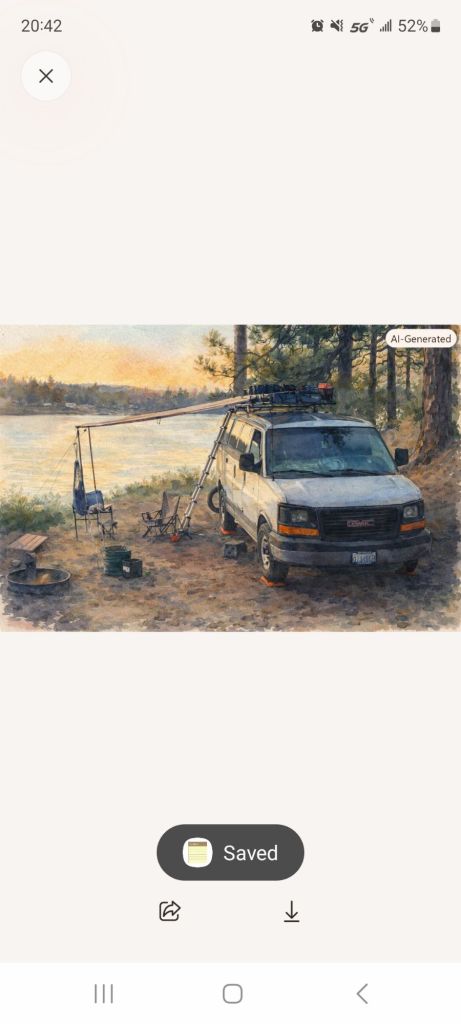
  • Re’eh always hits me differently when I’m out here on the road. “See, I set before you today a blessing and a curse.” I read those words in the quiet of the van this morning while Kenny snored in his bed on the passenger seat, and it struck me how seeing is the first command. Not doing. Not obeying. Not sacrificing. Just seeing. Out here in vanlife, seeing becomes a spiritual discipline—watching the sky shift over Clear Lake, noticing how Kenny perks up at every new trail, paying attention to the subtle ways God guides me mile by mile. Re’eh reminds me that blessing isn’t abstract; it’s directional. It’s a path. A way of life. A way of choosing.Isaiah steps in next, speaking to the battered, weather‑worn soul: “Afflicted city, storm‑tossed and not comforted…” I know that feeling. I’ve lived that feeling. And yet Isaiah promises foundations of sapphires, gates of jewels, and peace taught directly by God. When I read that in the van, I imagine my life—my ministry, my wandering, my rebuilding—being set on something solid even while I’m mobile. Isaiah’s promise is that God doesn’t just restore; He beautifies. He takes the storm‑tossed and makes them radiant. Even out here, where my home has wheels and my dog has three legs, I feel that restoration happening in real time.Then the B’rit Chadashah pulls the lens tight. Paul warns me not to blur the lines between fellowship and compromise. Out here, traveling from town to town, meeting people at campgrounds, Cracker Barrels, lakesides, it’s easy to let boundaries soften. But Paul reminds me that love doesn’t mean blending with darkness. It means clarity. Discernment. Choosing blessing over curse with my relationships as much as my actions. And John adds the final layer: “Test the spirits.” Out here, solitude can make every voice sound louder—my doubts, my hopes, my old wounds. John reminds me that not every voice is from God, and the Spirit of truth always leads toward love, courage, and obedience—not fear, confusion, or ego.When I blend these portions together, I hear one unified message for vanlife today: See clearly. Discern wisely. Walk intentionally. Trust restoration. God sets paths before me every day—some blessed, some cursed—and the road I choose shapes my character. Isaiah tells me that even when I feel storm‑tossed, God is rebuilding me with beauty. Paul and John remind me to guard my spiritual environment, even when my physical environment changes every few days. And Kenny, in his own dog‑logic way, teaches me to stay present, stay curious, and stay loyal to the One who leads us both.

    In a world full of noise—digital, political, emotional—Re’eh calls me to slow down and see again. Isaiah calls me to hope again. Paul calls me to choose holiness again. John calls me to test what I allow into my heart again. Vanlife strips away the clutter so I can actually do that. Every sunrise becomes a reminder that blessing is a path I choose. Every quiet night with Kenny curled beside me becomes proof that God restores the storm‑tossed. Every conversation with strangers becomes an opportunity to walk in discernment. And every mile becomes a chance to see God more clearly.

    If you’re reading this from your own journey—whether on wheels, in a house, or somewhere in between—take a moment today to see what God has set before you. Blessing isn’t accidental. It’s chosen. Look at your path, your relationships, your influences, your hopes. Choose the road that leads to life. And if you want to follow along as Kenny and I keep exploring Scripture from the road, stick around—there’s more to come, and the next mile always brings a new revelation.


  • In Ekev, Moshe reminds me that blessing flows from steady obedience—step by step, mile by mile, not in dramatic leaps. The Haftorah answers the ache of feeling forgotten: Zion cries out, “Has Adonai abandoned me?” and the response is a fierce, tender no. The B’rit Chadashah shows Yeshua in the wilderness resisting temptation with Scripture alone, and James calls me to patient endurance like a farmer waiting for rain. All three sections braid into one thread: faithfulness in the long, quiet stretches of the journey.

    Rolling through the backroads of the Northwest, I feel Ekev in my bones. Vanlife isn’t glamorous most days—it’s dust, fuel stops, and figuring out where Kenny can stretch his three legs without slipping on gravel. It’s choosing trust when the weather shifts, when the battery bank dips low, when the next safe overnight spot is still an hour away.
    Isaiah’s promise hits me hardest out here: the Holy One hasn’t forgotten me, even when the road feels empty. The wilderness scenes in Matthew and Luke feel familiar too—Yeshua facing hunger, isolation, and the whisper of shortcuts. I know that whisper. It shows up when I’m tired, when the van rattles, when I’m tempted to cut corners on the spiritual disciplines that keep me grounded.
    James’ call to endurance feels like the rhythm of the road: slow, steady, patient. Like waiting for the right sunrise to break over the Cascades. Like waiting for Kenny to finish sniffing the same patch of grass for the fifth time. Like trusting that obedience today shapes blessing tomorrow.
    Together, these readings remind me that the wilderness isn’t punishment—it’s preparation. It’s where I learn to listen. It’s where I learn to trust. It’s where I learn that provision often shows up one mile at a time.

    In a world obsessed with instant results, Ekev teaches me that transformation comes through small, repeated acts of faithfulness. Isaiah reminds me that God’s memory is stronger than my insecurity. The Gospels show me that temptation often comes disguised as convenience. James teaches me that endurance is not passive—it’s active trust.
    For anyone navigating uncertainty—whether on the road, in a job, in a relationship, or in a spiritual dry season—these passages say: Stay steady. Stay rooted. Stay faithful. The blessing grows in the slow places.

    If this reflection resonates, join me on the road. I’m building a community of travelers, seekers, and everyday disciples who want to explore Scripture through real life—not theory. Subscribe to the vanlife Torah series, share this post, and let’s walk (and drive) this journey together. Kenny insists you bring snacks.


  • Privacy