Latest Posts

Waistcoat, 1733–34, probably French, silk, metallic thread, Metropolitan Museum of Art, 1991.220

18th Century Pinks – the 1730s

My cheeks are very pink and rosy with flu, so it’s time to return to 18th century pinks with the 1730s!

Previous posts in this series:

As usual, I’ll try to post a painting or print of the time and then an extant item or two from the same time range in a similar shade of pink.

1730s Pinks

Polyxena of Hesse isn’t afraid to mix colours, with a bold combination of deep rose and scarlet red:
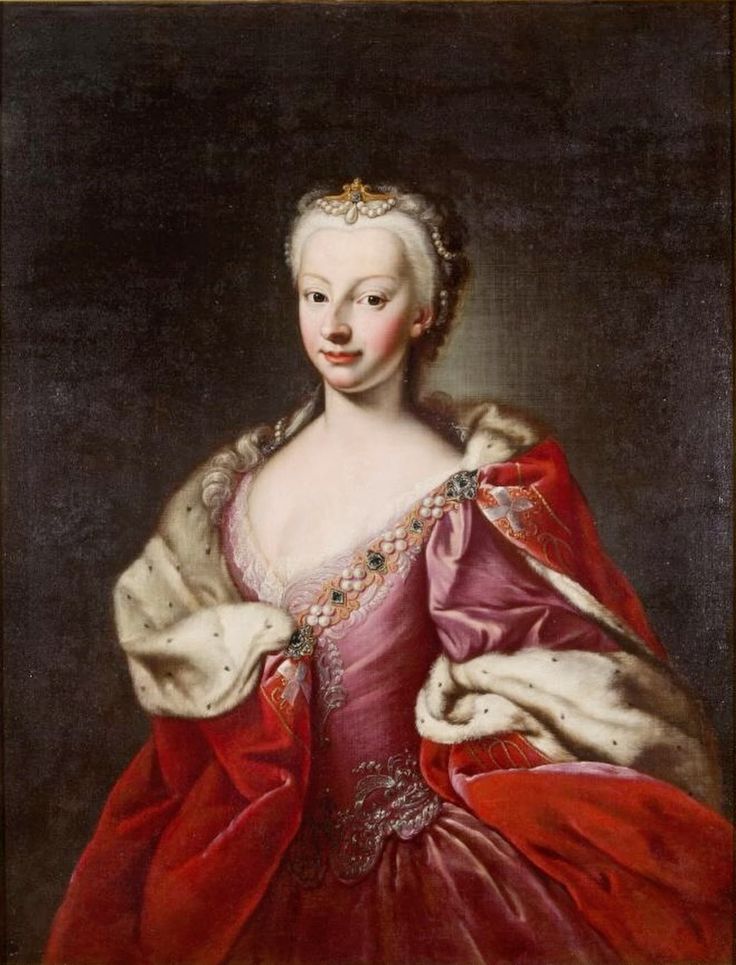
Polixena of Hesse-Rotenburg by Maria Giovanna Clementi, 1730-35

Polyxena of Hesse-Rotenburg by Maria Giovanna Clementi, 1730-35, Madrid, Museum Cerralbo.

Deep rose shoes to match:
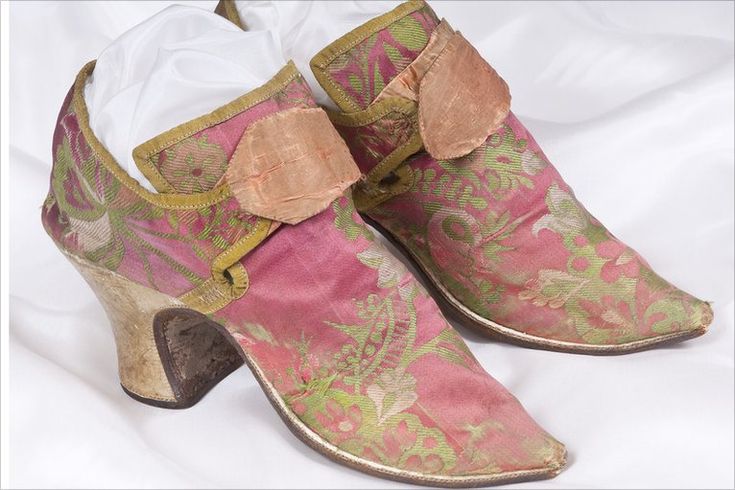
Shoes, 1720s-30s

Shoes, 1720s-30s

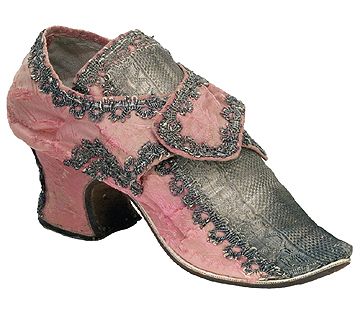
A softer rose features on Carlo’s breeches and jacket lining, and another fetching pair of shoes:.
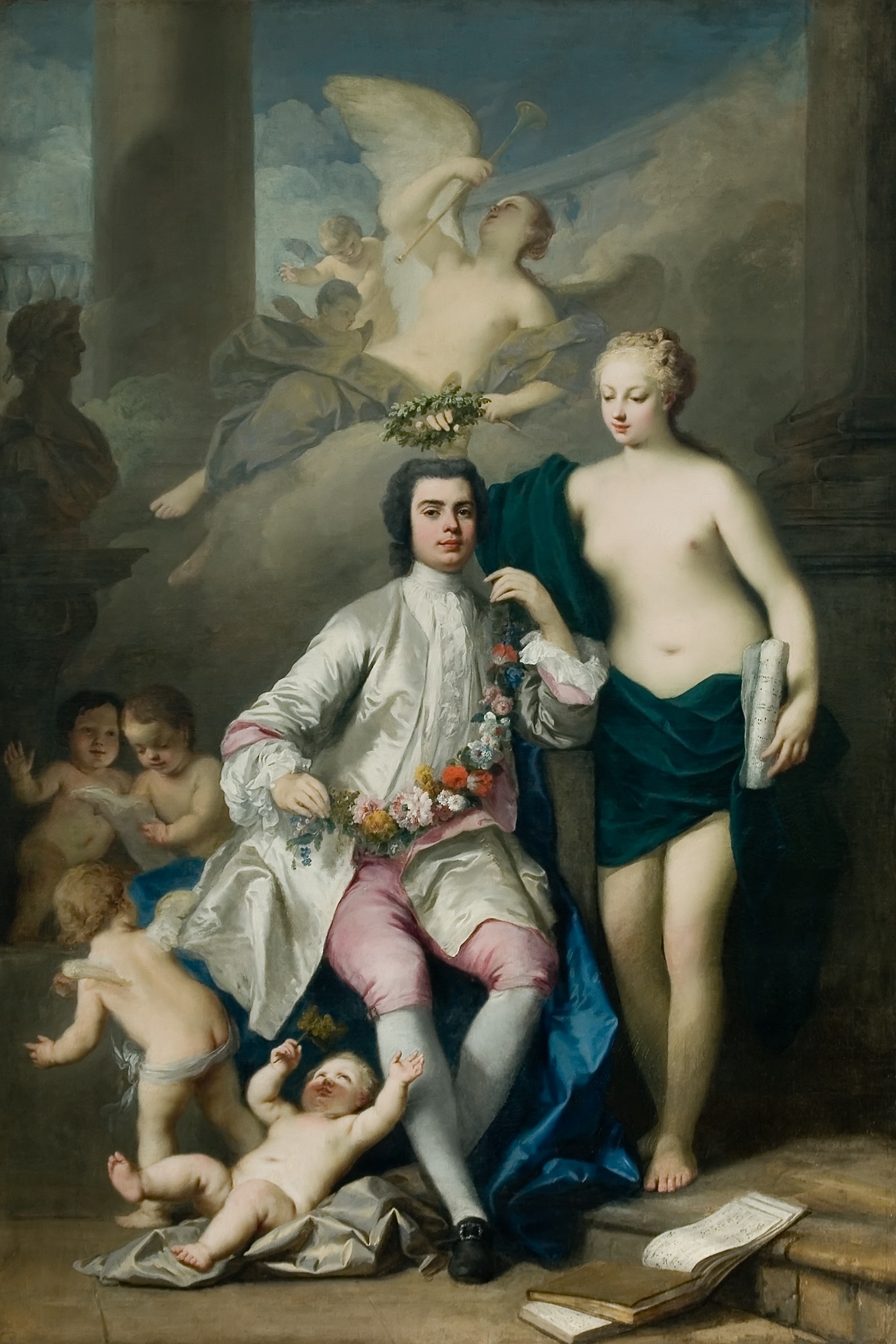
Jacopo Amigoni- English- Portrait of the singer Carlo Broschi named Farinelli 1734-35
Jacopo Amigoni, Portrait of the singer Carlo Broschi named Farinelli 1734-35

Pink silk shoes, English, c.1735-1750 Bata Shoe Museum

Pink silk shoes, English, c.1735-1750 Bata Shoe Museum

Here’s an equally vivacious waistcoat:
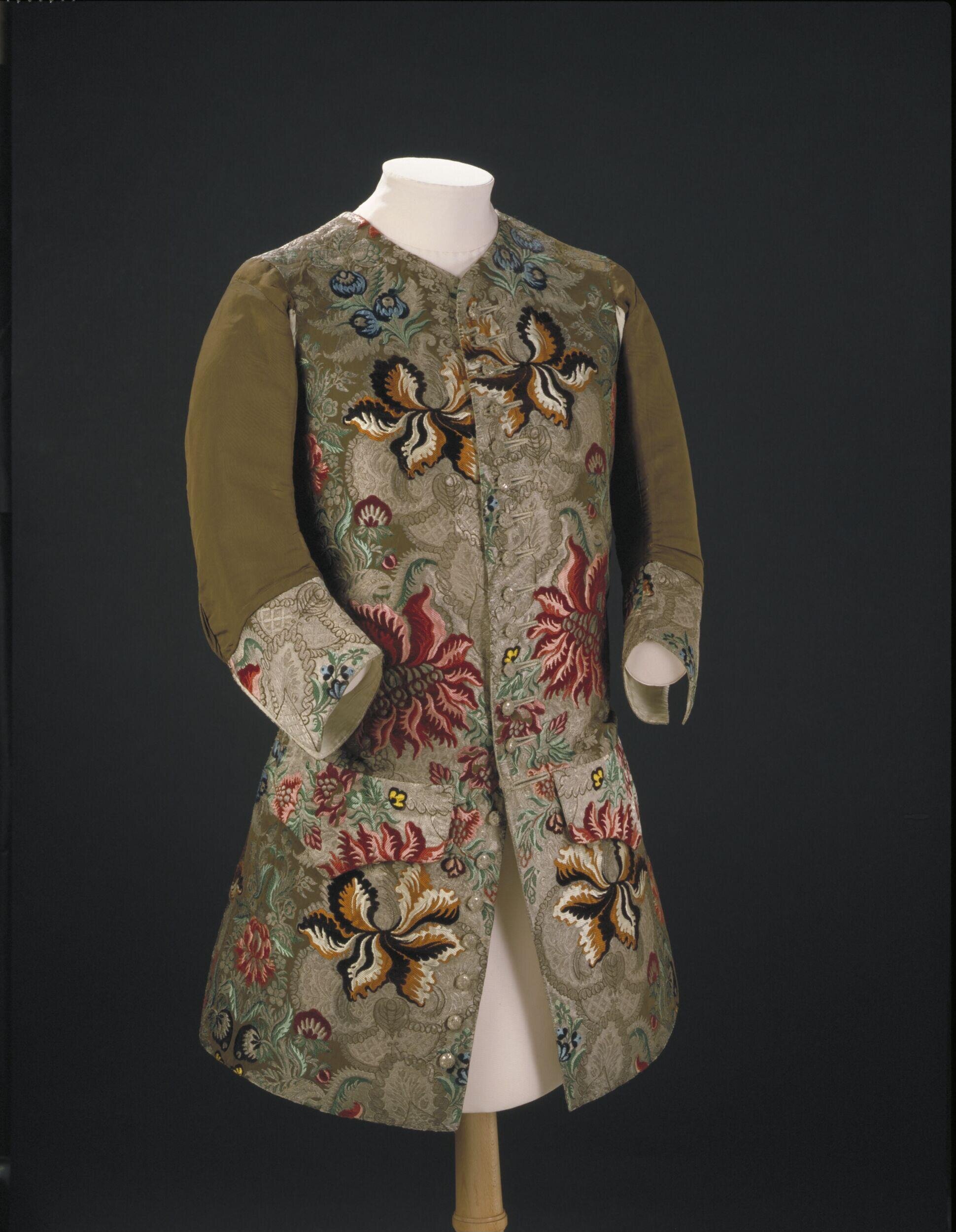
Man's waistcoat, silk brocaded with coloured silk, woven in Spitalfields, ca. 1734, VAM T72.1951

Man’s waistcoat, silk brocaded with coloured silk, woven in Spitalfields, ca. 1734, VAM T72.1951

This portrait of Jane Clarke is a wonderful example of shot silks in the early 18th century.  I wish I’d been able to find an extant item in a similar fabric!
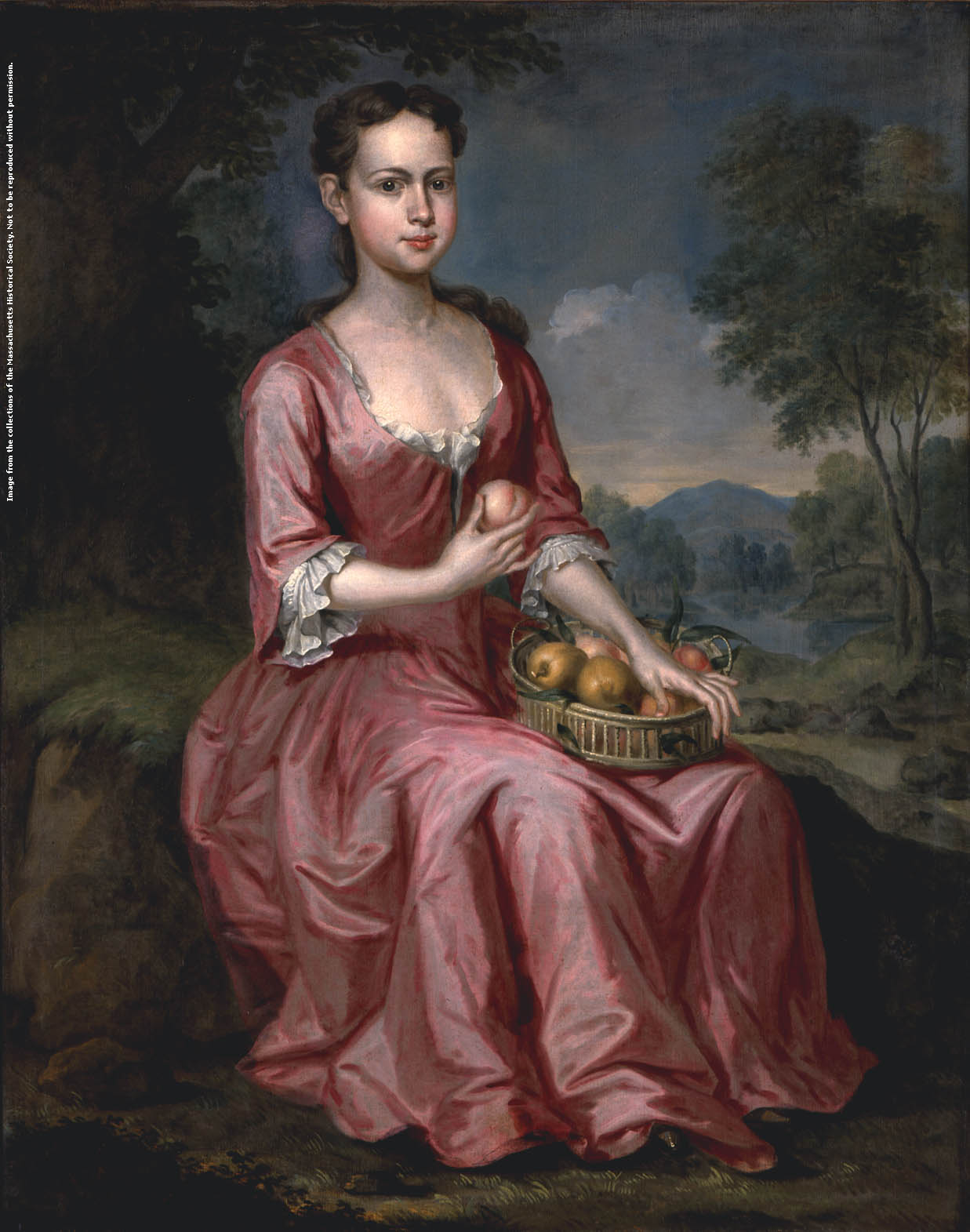
Jane Clark (Mrs. Ezekiel Lewis), John Smibert 1732

Jane Clark (Mrs. Ezekiel Lewis), John Smibert, 1732

Interestingly a very similar fabric is shown in another American portrait:

Danvers Osborn (1715-1753), Governor of New York, 1736

Danvers Osborn (1715-1753), Governor of New York, 1736

And on the lower tunic of the Ottoman Empire’s ambassador to Sweden, while two other members of his retinue are attired in salmon:
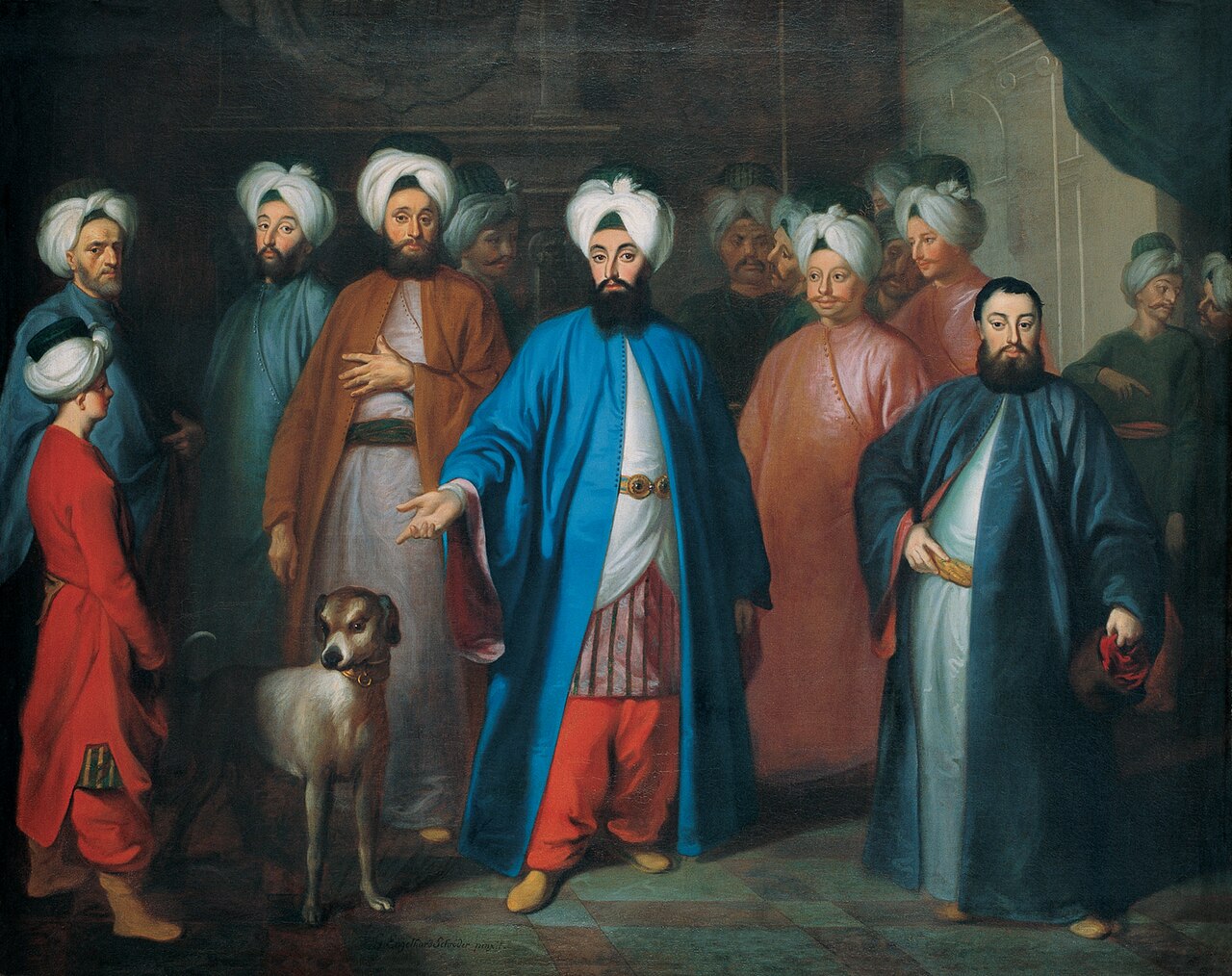
Georg Engelhard Schröder: Mehmed Said Efendi and his Retinue

Georg Engelhard Schröder: Mehmed Said Efendi and his Retinue, 1735

The closest match I could find to those three portraits is this glorious casaquin.  Just add in a dark blue cross thread for that shot effect:
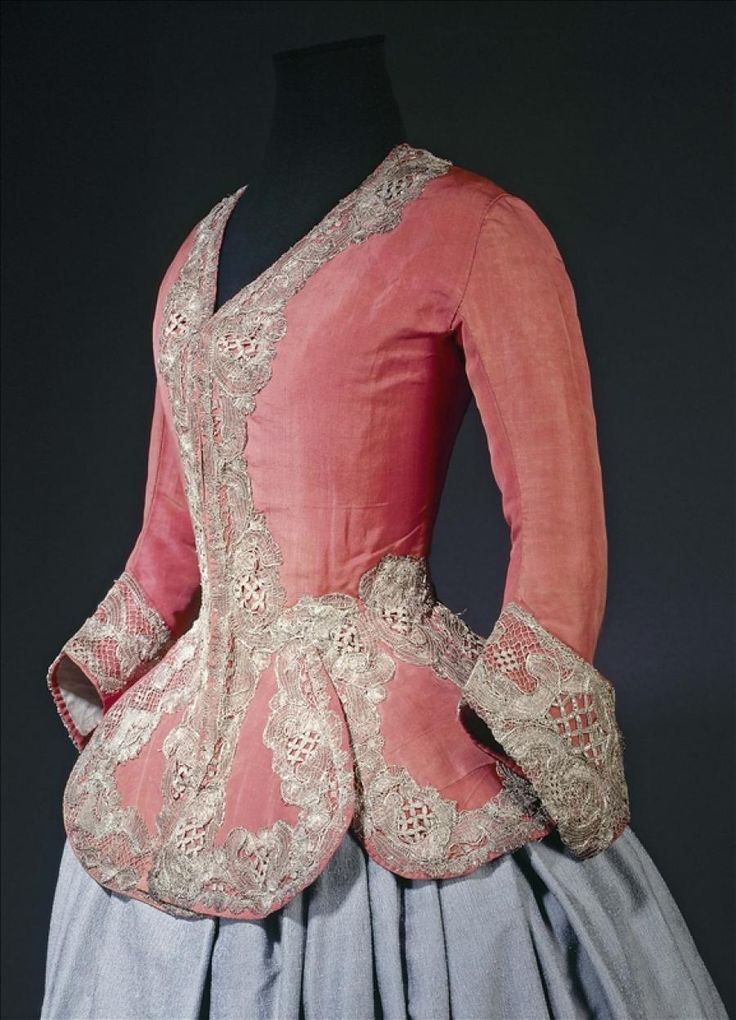
Casaquin. Date- ca. 1730 - 1740 Medium- Gros de Tours, orange silk, blue glazed linen lining, gilded silver lace, palaisgalliera.paris.fr

Casaquin. Date- ca. 1730 – 1740 Medium- Gros de Tours, orange silk, blue glazed linen lining, gilded silver lace, palaisgalliera.paris.fr

And this mantua has a whole range of pinks:

Mantua, England, 1733-1734 (woven) 1735-1740 (made), Brocaded silk, hand-sewn with spun silk and spun threads, lined with linen, brown paper lining for cuffs, brass, canvas and pleated silk, V&A

Mantua, England, 1733-1734 (woven) 1735-1740 (made), Brocaded silk, hand-sewn with spun silk and spun threads, lined with linen, brown paper lining for cuffs, brass, canvas and pleated silk, V&A
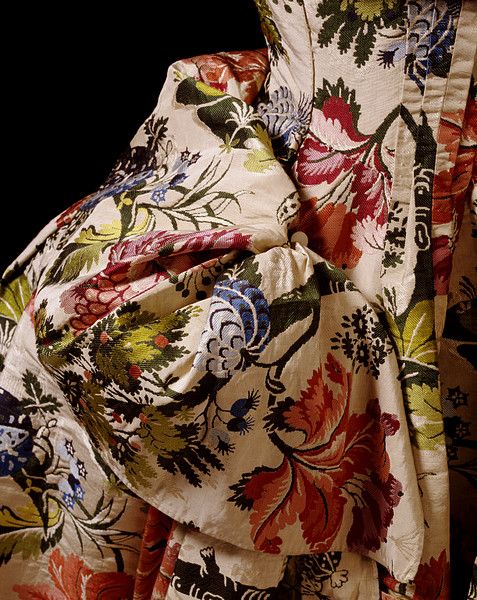
Mantua, England, 1733-1734 (woven) 1735-1740 (made), Brocaded silk, hand-sewn with spun silk and spun threads, lined with linen, brown paper lining for cuffs, brass, canvas and pleated silk, V&A

Mantua, England, 1733-1734 (woven) 1735-1740 (made), Brocaded silk, hand-sewn with spun silk and spun threads, lined with linen, brown paper lining for cuffs, brass, canvas and pleated silk, V&A

Mantua, England, 1733-1734 (woven) 1735-1740 (made), Brocaded silk, hand-sewn with spun silk and spun threads, lined with linen, brown paper lining for cuffs, brass, canvas and pleated silk detail, V&A

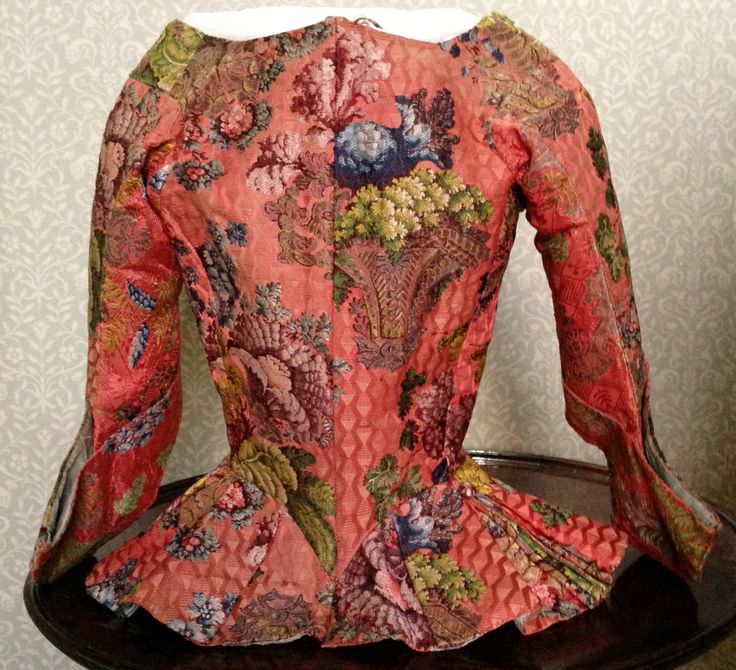
This unknown woman sports a very vivid coral jacket and skirt set, and as the waistcoat and jacket below show, the hue is not an exaggeration.
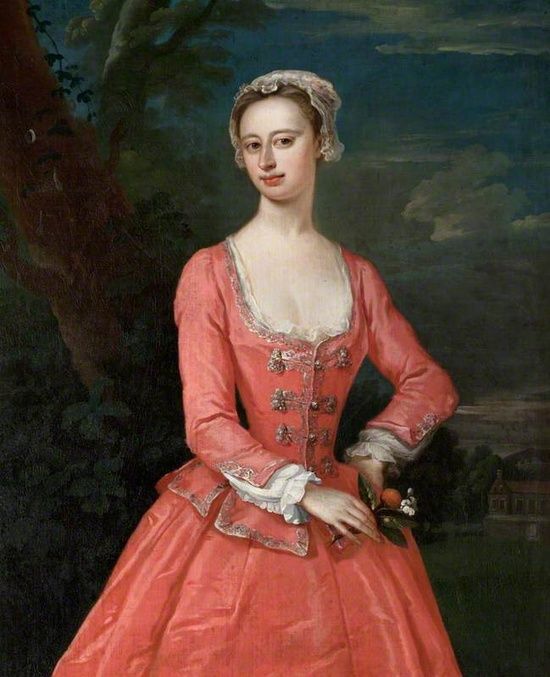
Portrait of a Lady, attr. to Jonathan Richardson the elder, c. 1730

Portrait of a Lady, attr. to Jonathan Richardson the elder, c. 1730


Jacket, 1736-40, Gorgeous Georgians at Berrington Hall 2014. From the Charles Paget Wade Collection stored at Berrington Hall

Jacket, 1736-40, exhibited in Gorgeous Georgians at Berrington Hall 2014. From the Charles Paget Wade Collection stored at Berrington Hall

Adélaïde’s sister has soft pink stripes in her beautiful gown, a match to the soft pink shoes below:

Claude Arnulphy (1697–1786), Adélaïde de Gueidan and her sister, 1735-40

Claude Arnulphy (1697–1786), Adélaïde de Gueidan and her sister, 1735-4

Shoes, 1710–49, British, Silk, metallic, Metropolitan Museum of Art, 2009.300.4131a, b

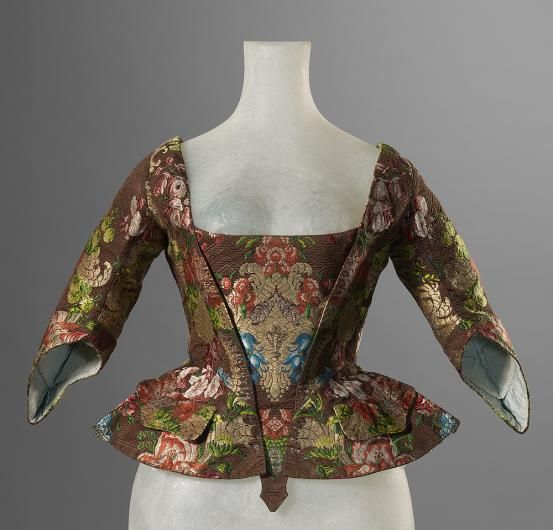
I love historical examples of self portraits by women artists, and here’s a delightful one featuring pink trimmings.     Some of the same tints are picked up in the brocade jacket below.

Elisabeth Christine of Brunswick-Wolfenbüttel-Bevern (1715–1797), Self-portrait as belle jardinière, 1739
Elisabeth Christine of Brunswick-Wolfenbüttel-Bevern (1715–1797), Self-portrait as belle jardinière, 1739

Jacket (Casaquin), c. 1730-1750; (fabric c. 1720- 1730, FRANCE silk and gilt brocade, National Gallery of Victoria, Melbourne, 1331-D4

She must have liked pink because the same colour show up in her ribbon bows in this Pesne portrait of her:
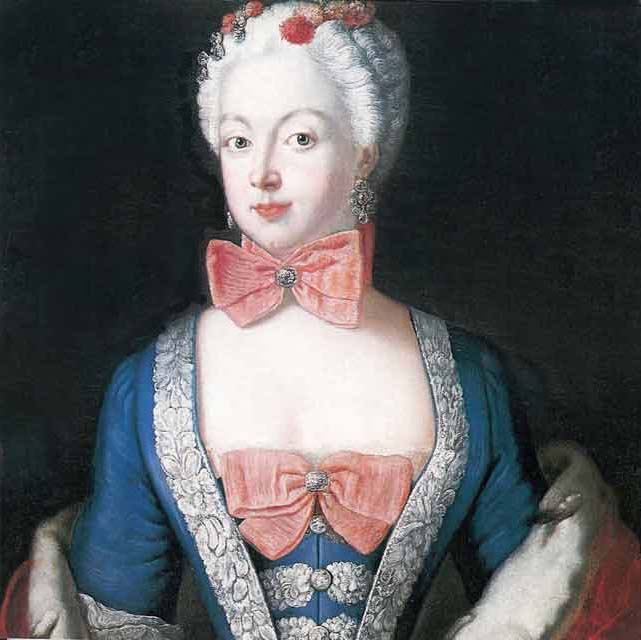
Antoine Pesne- Portrait of Elisabeth Christine von Braunschweig-Bevern, Prussian queen, 1739
Antoine Pesne, Portrait of Elisabeth Christine von Braunschweig-Bevern, Prussian queen, 1739

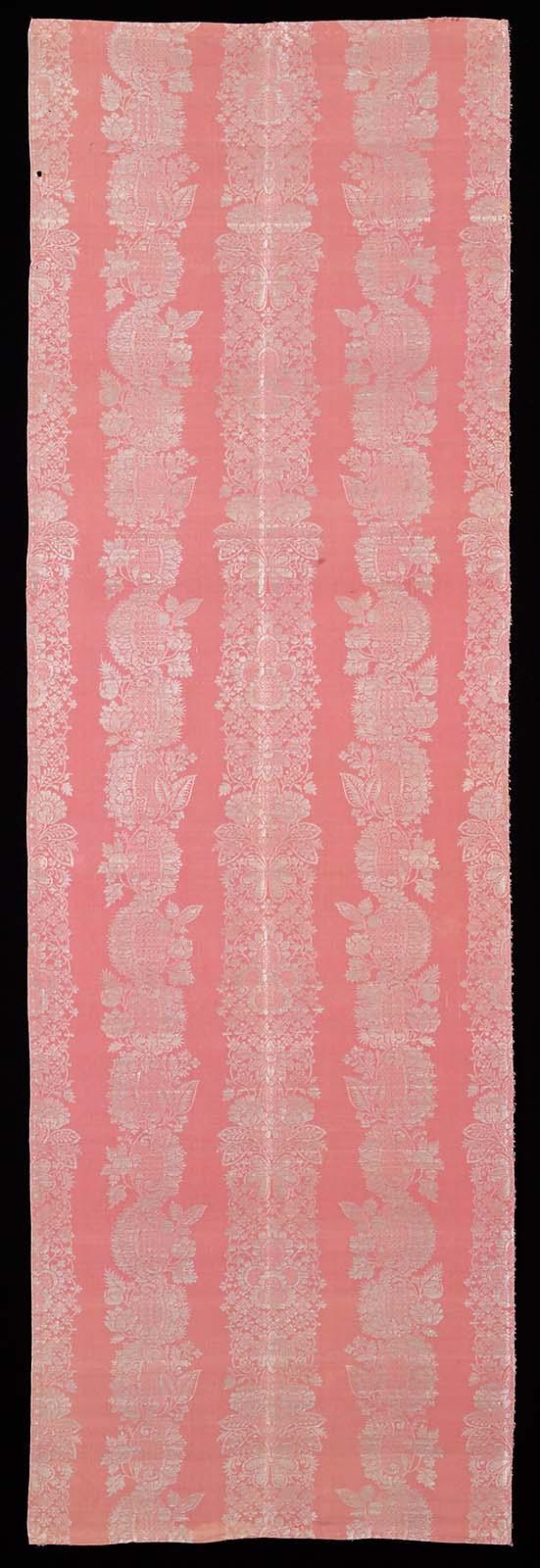
Length of Silk, ca 1730, England or the Netherlands, MFA Boston 2005.463

Length of Silk, ca 1730, England or the Netherlands, MFA Boston 2005.463

on the other end of the pink spectrum, here’s a very fetching robe volante in a lilac pink:

Jean-Baptiste Pater (1695–1736), Concert Champêtre, circa 1734, Metropolitan Museum of Art , 37.27

Jean-Baptiste Pater (1695–1736), Concert Champêtre, circa 1734, Metropolitan Museum of Art , 37.27

Perhaps she wore it with shoes like these, with lilac and cyclamen pink florals;
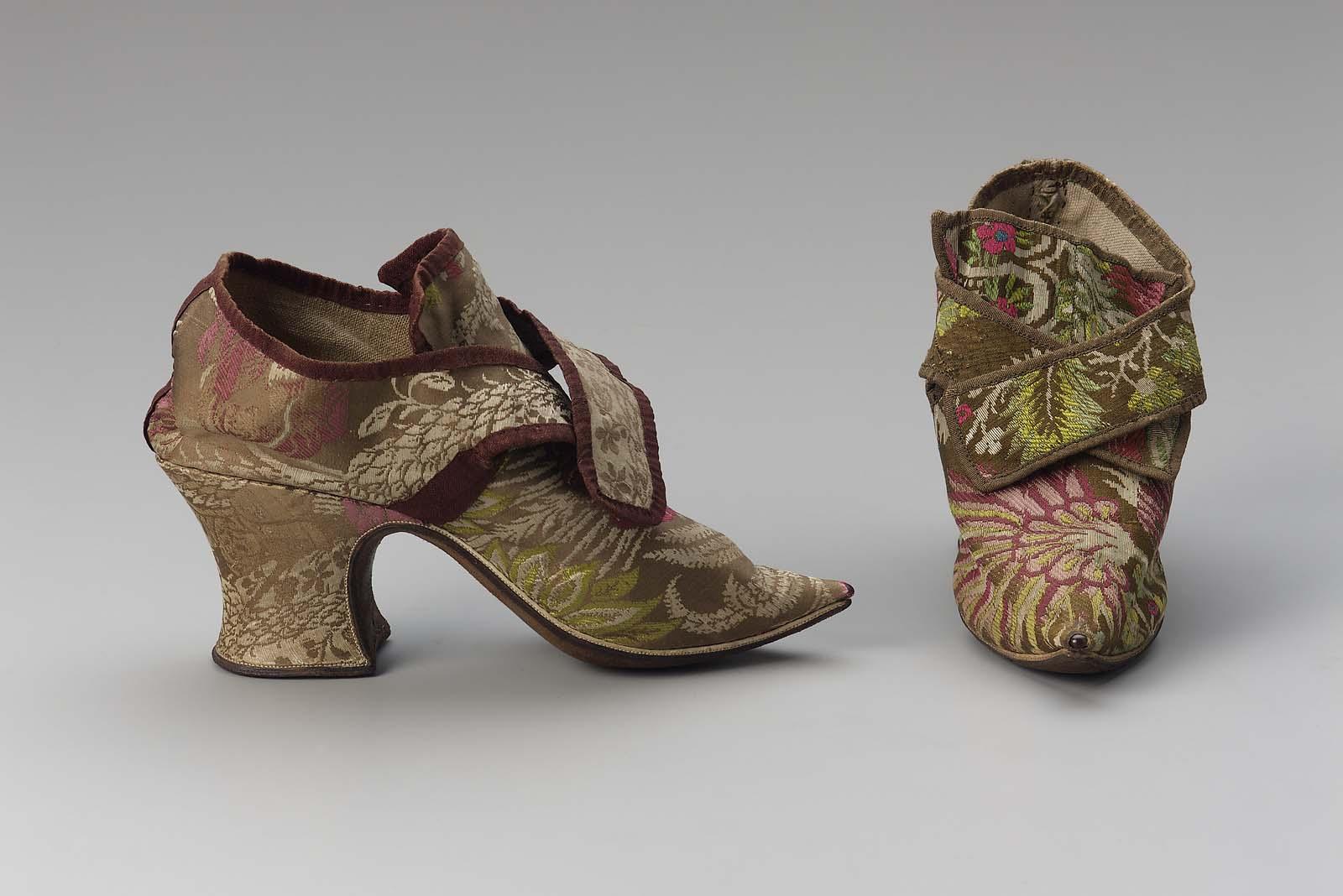
Pair of women’s shoes with matching clogs, England, early 1730S, MFA Boston, 44.497A-B

This restyled Anglaise features pinks from salmon all the way past lilac pink into purple:

Dress (robe a la anglaise) about 1735, restyled 1763, Silk; brocaded plain weave 1990.513a-b, MFA Boston

And we’ll finish up with a pair of pretty, pretty princesses, one in silver-blue and one in pink:
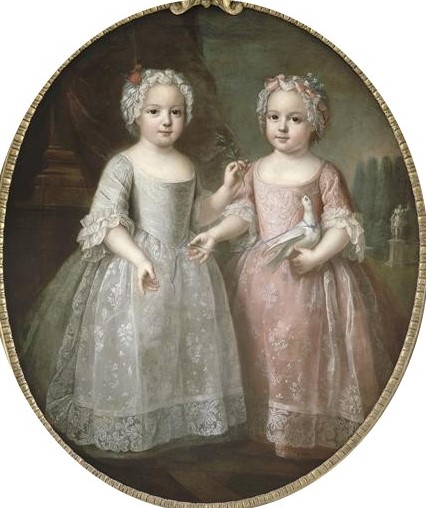
Attributed to Pierre Gobert, Louise-Élisabeth of France and her little sister Henriette of France (ca 1737)

Attributed to Pierre Gobert, Louise-Élisabeth of France and her little sister Henriette of France (ca 1737)

And a pair of pretty princess worthy shoes with silver gilt trim and rosy pink blossoms:
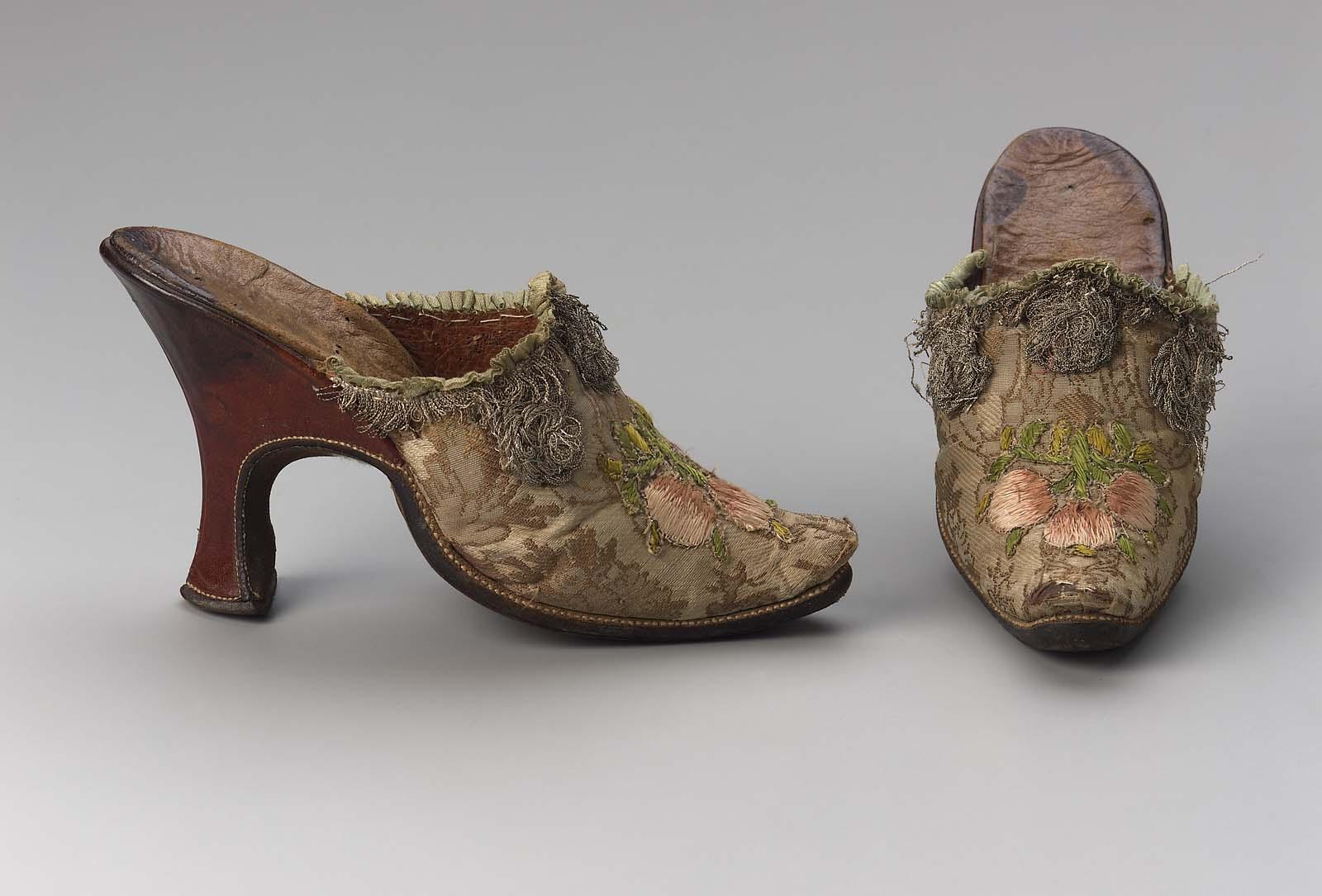
Pair of women's mules, 1730s, MFA Boston, 43.1718A-B

Pair of women’s mules, 1730s, MFA Boston, 43.1718A-B
Scroop Patterns Minette Bust Gusset Tutorial

Tutorial: how to add bust gussets to the Minette Stays

The curved front seam and adjustable lacing of the Minette Stays mean they already fit an wide range of cup sizes without major changes to the pattern.  We tested them on A to H cups!  However, if you want to refine the fit of the stays even more, and change the shape so they have really defined bust cups you can add bust gussets.

Minette Stays by Scroop Patterns

Here’s how to do it!

We’ll use an imaginary lady as the measurement model for this tutorial.  Let’s call her Guenevera.

How to add bust gussets to the Minette Stays.

You’ll need four measurements:

  • Full bust
  • Under bust
  • Bust point to bust point
  • Bust point (nipple) to underbust length

These measurements should be taken while wearing a supportive, but not padded, bra.

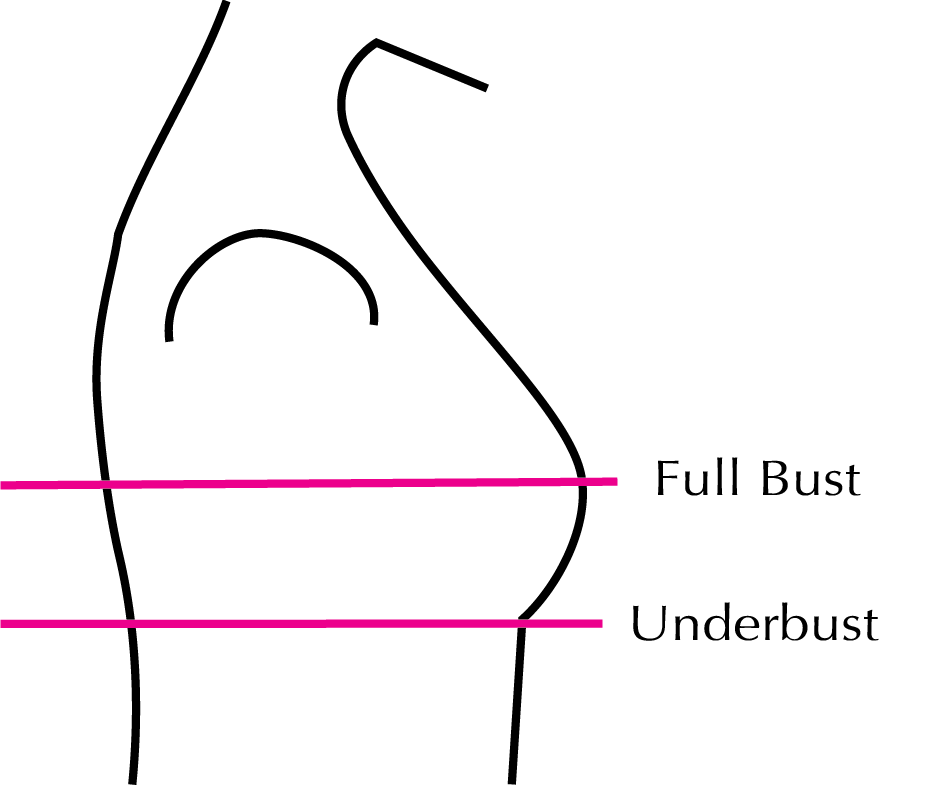
Find your full bust and underbust measurements:

Take your full bust measure by wrapping a tape around your back and the fullest part of your bust.  The tape should be parallel to the floor.  Take a measure that is just tight enough to sit firmly around you without denting in to your bust.

Guenevera’s full bust is 43”/109cm

Take your underbust measurement by wrapping your measuring tape around your ribcage just under your bust, keeping it parallel with the floor.

Guenevera’s under bust is 32”/82cm

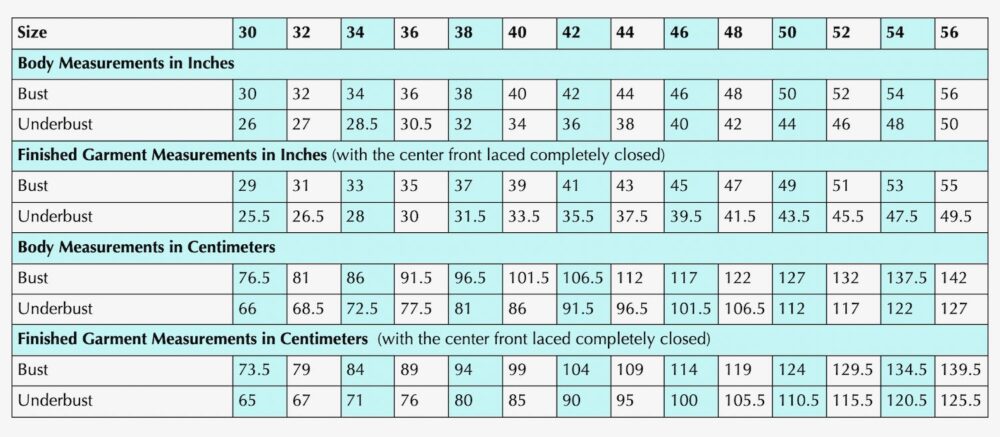
Now, let’s compare those two measures to the Minette Stays measurements chart:

Scroop Minette Stays Measurements Chart

You want the underbust of the Minette Stays to fit snuggly, so choose your size based on your underbust measurement.

Guenevera will be making a Size 38, because she has a 32”/81cm underbust.

Now, subtract the full bust measurement of the Minette Stays size that matches your underbust from your full bust measurement.

For Guenevera:

43 – 38 = 5”  OR
109 – 96.5 = 12.5cm

This measurement tells you how much you need to add to the pattern, and thus how big your bust gussets will be.

Each bust gusset will be 1/4” of the total measure + seam allowances wide, because there are 4 bust gussets.

Guenevera’s gussets will each be 1.25”/3.12cm wide at the top.

Keep your number in mind as we move to the next steps.

Find the width between your bust points/apexes:

Your bust point/apex is the sharpest point of your bust bulge (yes, that’s the technical patternmaking term for it!): usually this means your nipple.  We need to mark it on the pattern, so you’re going to measure across your chest from point to point:

Guenevera measures 10”/25cm from bust point to bust point.

This measurement will tell you how far in from the center of the pattern to place your bust gussets.

Guenevera’s gussets will point towards a point 5”/12.5cm (half of her bp to bp measure) in from the center front.

Find the length from your bust point to your underbust:

Measure down from a bust apex to your underbust line, curving the tape measure over the fullness of your bust as you measure.

Guenevera measures 4”/10cm from bust point to underbust.

This length will be how long your bust gussets are + 3/8”/1cm for View B.

Guenevera is making View A, so her  bust gussets will be 1.25”/3.12cm wide and 4”/10cm long.

Marking the lines where you’ll be inserting bust gussets on your Minette Stays:

Work with Piece A/B in the pattern size that matches your underbust measure.

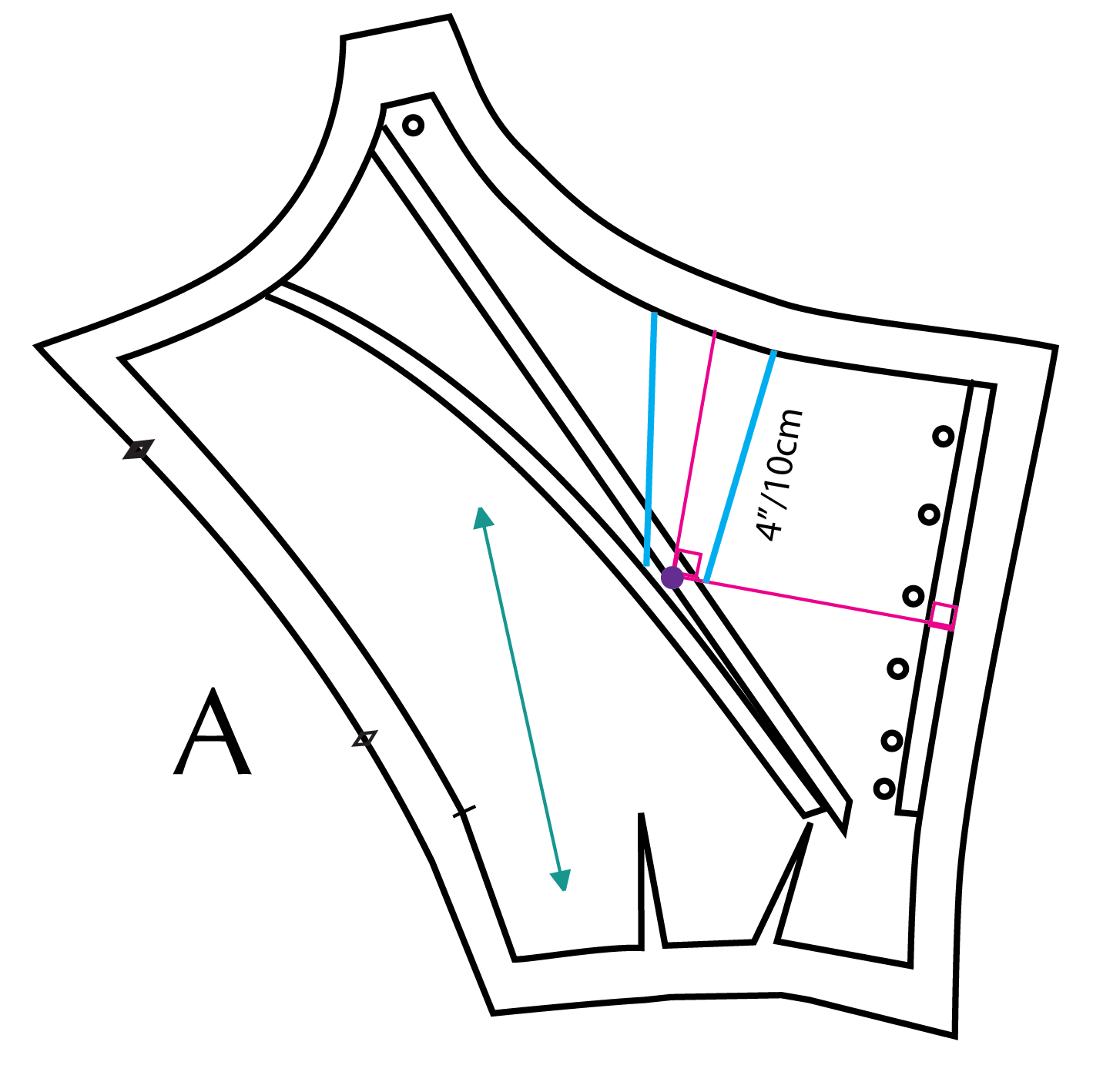
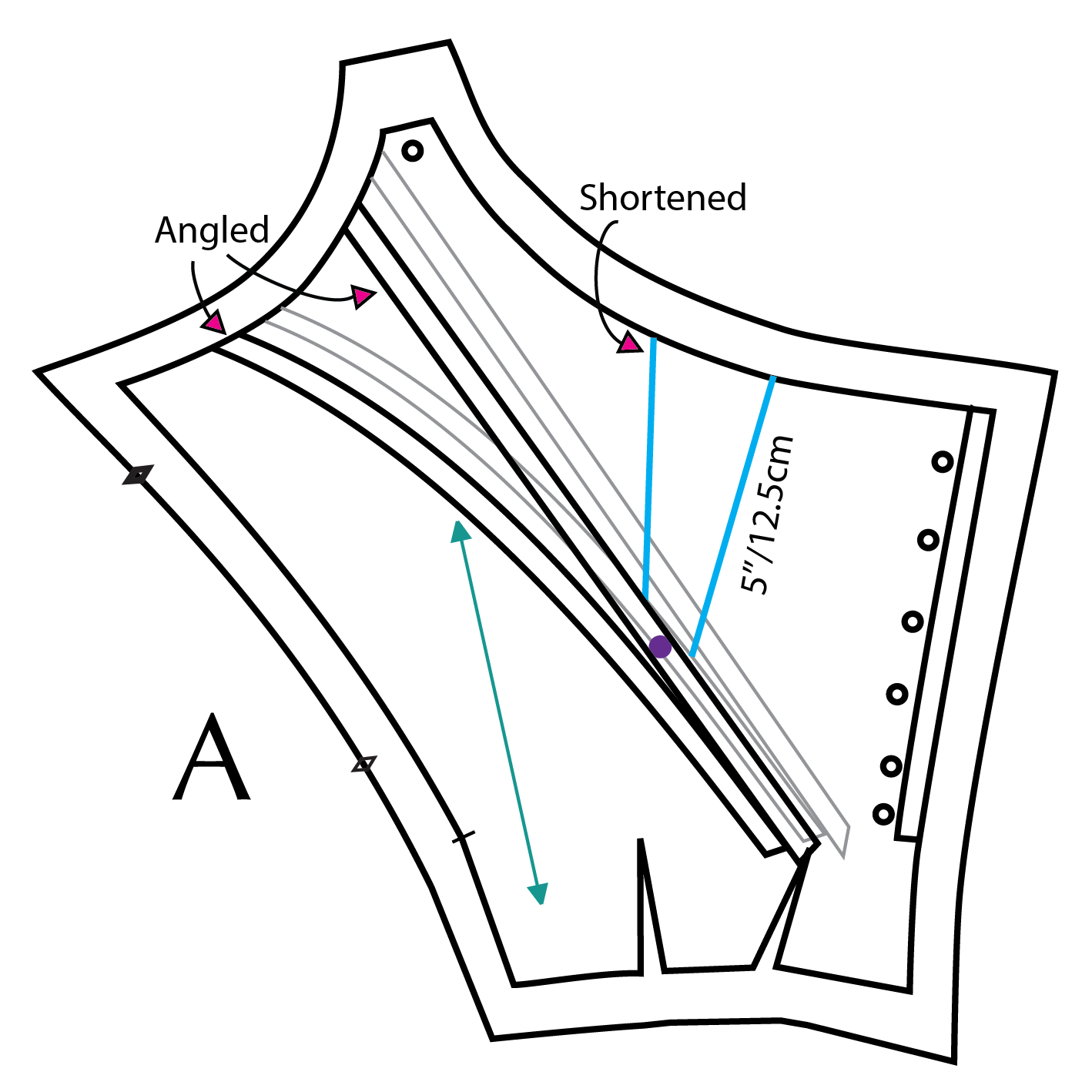
Starting a gusset length down from the top corner, draw a line out from the center front line at a right angle 1/2 the distance from bust point to bust point (5”//12.5cm for Guenevera) and draw a line

Starting 1/2 the bust point to bust point draw a line down from the neckline seam allowance line the length of your gusset (4”/10cm for Guenevera).

Mark the point where these lines intersect at a right angle (in purple below)

Scroop Patterns Minette Stays Gusset Tutorial

Measure out (horizontally) from the intersection point 1/2”/1.2cm on either side and make two marks.

Measure out from the top of the gusset length line 5/8”/1.5cm on either side and make two marks.

Connect these marks with two lines that angle in towards the intersection point slightly.  These lines (shown in blue below) will be your gusset insertion lines.

Scroop Patterns Minette Stays Gusset Tutorial

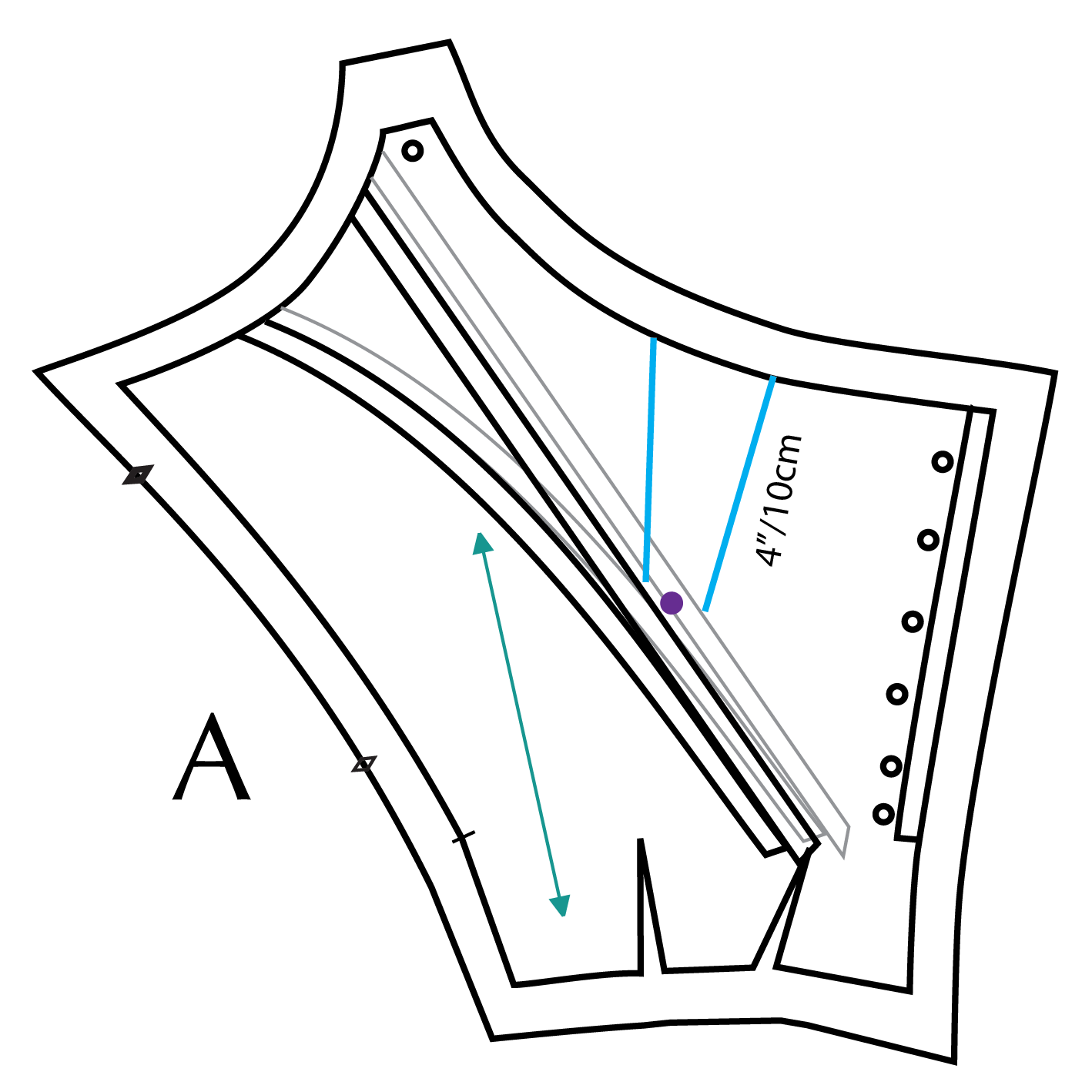
You’ll notice in the image above that the gusset line further away from the center front crosses a bone.  If it’s only a little bit you can simply shift the bones towards the side as shown below.  The original bone placement is in grey, and the new in black:

Scroop Patterns Minette Stays Gusset Tutorial

If the lines cross the bones quite a lot (shown here is an example with a 5” long gusset) you can move the bones, angle they downwards, and also shorten the gusset line that is further from the center front.

Scroop Patterns Minette Stays Gusset Tutorial


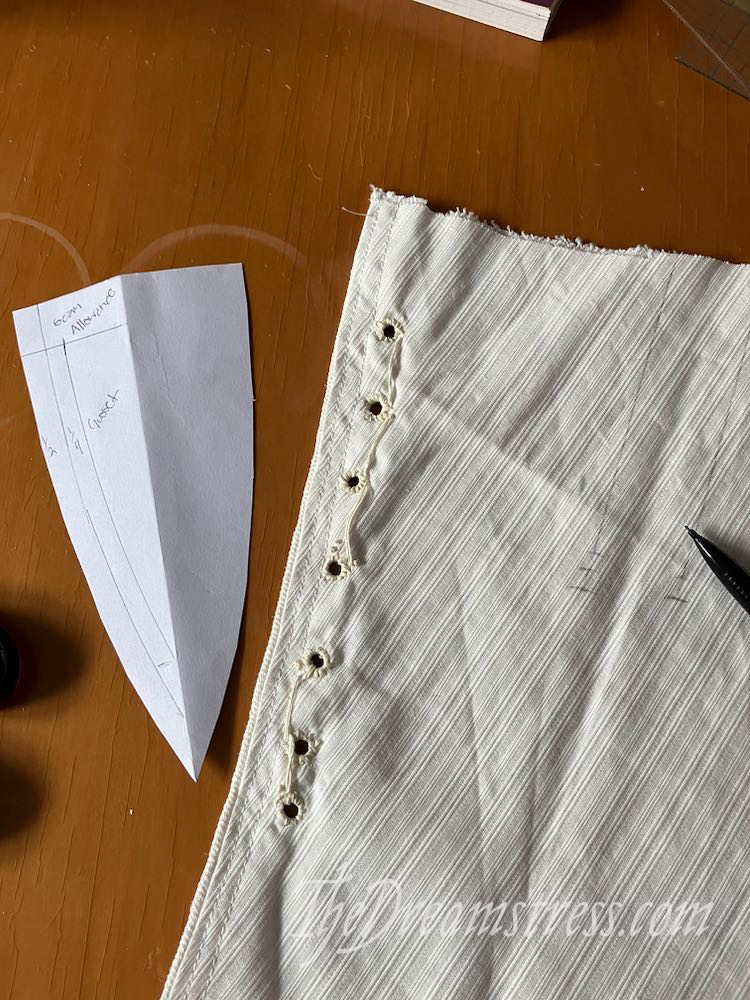
Your physical pattern will end up looking something line this:

Minette Bust Gusset Tutorial scrooppatterns

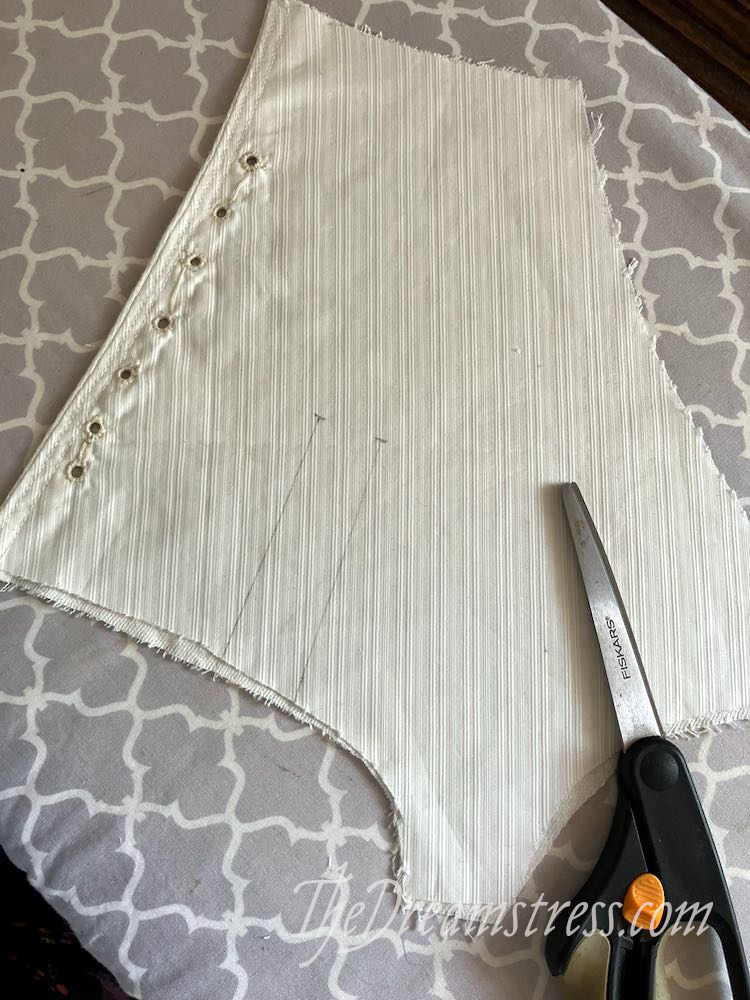
To transfer the marks to my cut fabric pattern I slash down the two vertical lines, fold the paper away, and mark the fabric.

Minette Bust Gusset Tutorial scrooppatterns

OK!  That’s the gusset lines marked.  Now we can…

Make a bust gusset pattern piece:

Make sure you have your gusset measurement ready. Guenevera’s bust gussets will be 1.25”/3.12cm wide and 4”/10cm long.

Fold a piece of paper at least as wide as 1/2 your bust gusset + 1”/2.5cm.

Mark a horizontal top line.  Measure down from that line a seam allowance (5/8”/1.5cm) and make a second horizontal line.   This is the top of your gusset.

Measure out on this line 1/2 your gusset width and make a mark (5/8”/1.5cm for Guenevera)

Measure down the fold your gusset length and make a mark (4”/10cm for Guenevera)

Minette Bust Gusset Tutorial scrooppatterns

Use a French curve to connect the two lines.

Add a 1/2” seam allowance.  I have also marked the 1/4” line below, as that is how big the gusset will look on the final garment:

Minette Bust Gusset Tutorial scrooppatterns

Cut out your gusset pattern piece:

Minette Bust Gusset Tutorial scrooppatterns

Now cut four of these in your outer fabric, and four in your lining fabric.

Wrong sides facing, sew each pair of outer and lining together with a 1/4” seam allowance to make four gussets.

Minette Bust Gusset Tutorial scrooppatterns

Inserting gussets into the Minette Stays

Assemble the front piece (A or B) of the Minette Stays.  Sew the center front bones and eyelets.  Do not sew the angled boning channels.  Mark the gusset insertion lines.

Minette Bust Gusset Tutorial scrooppatterns

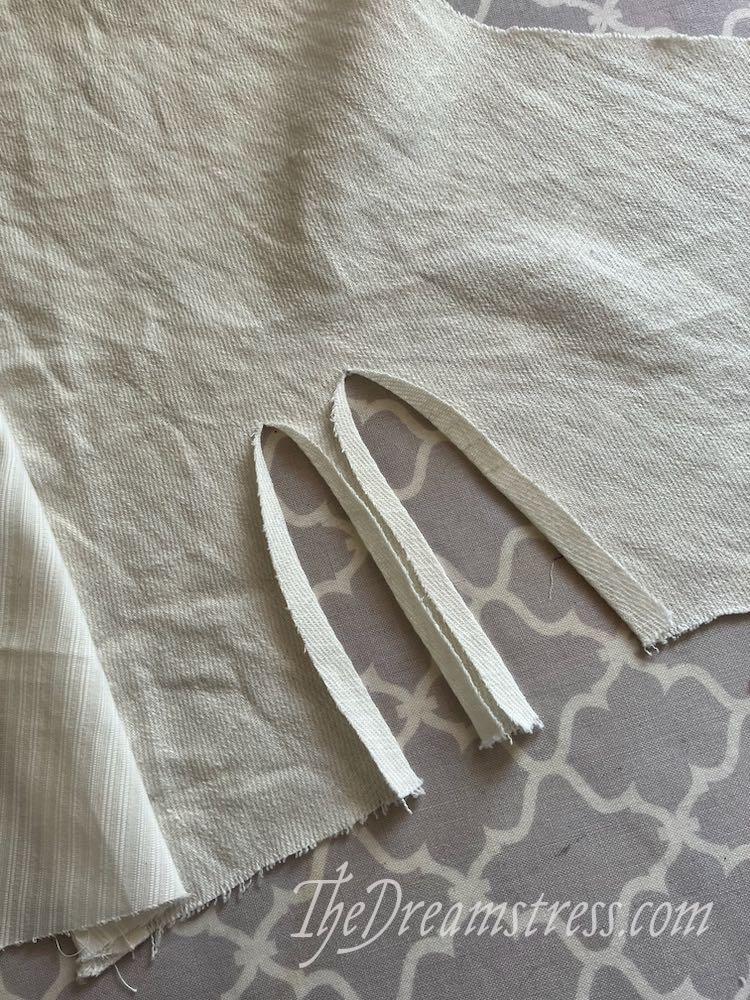
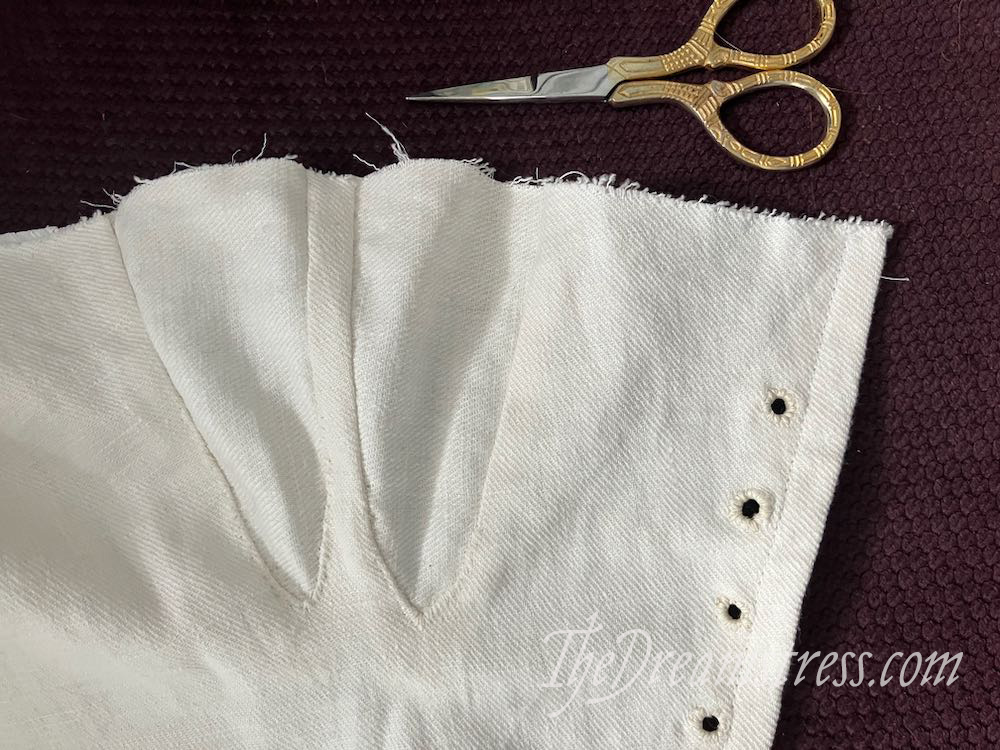
Carefully cut the bust insertion lines through both layers of fabric:


Working with the outer layer only, fold and press in the seam allowances of the gusset lines 1/4” tapering to nothing at the point of the gusset.

Scroop Patterns Minette Bust Gusset Tutorial - 19

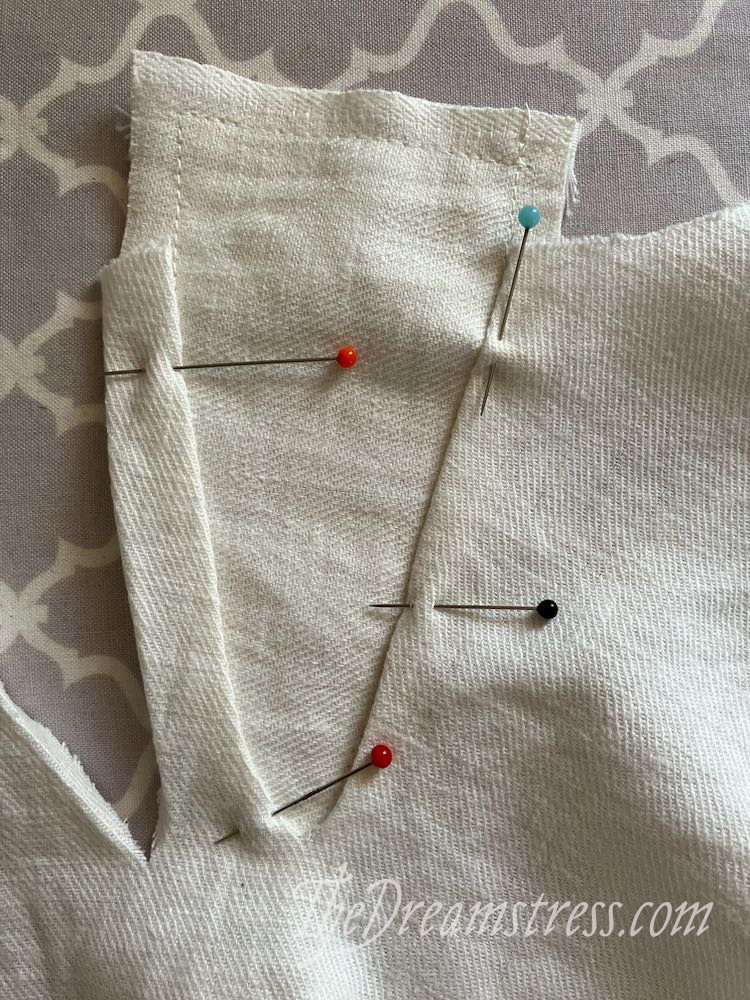
Pin a gusset behind an insertion line, matching the fold of the insertion slit to the stitching 1/4” from the outer edge of the gusset:

Scroop Patterns Minette Bust Gusset Tutorial

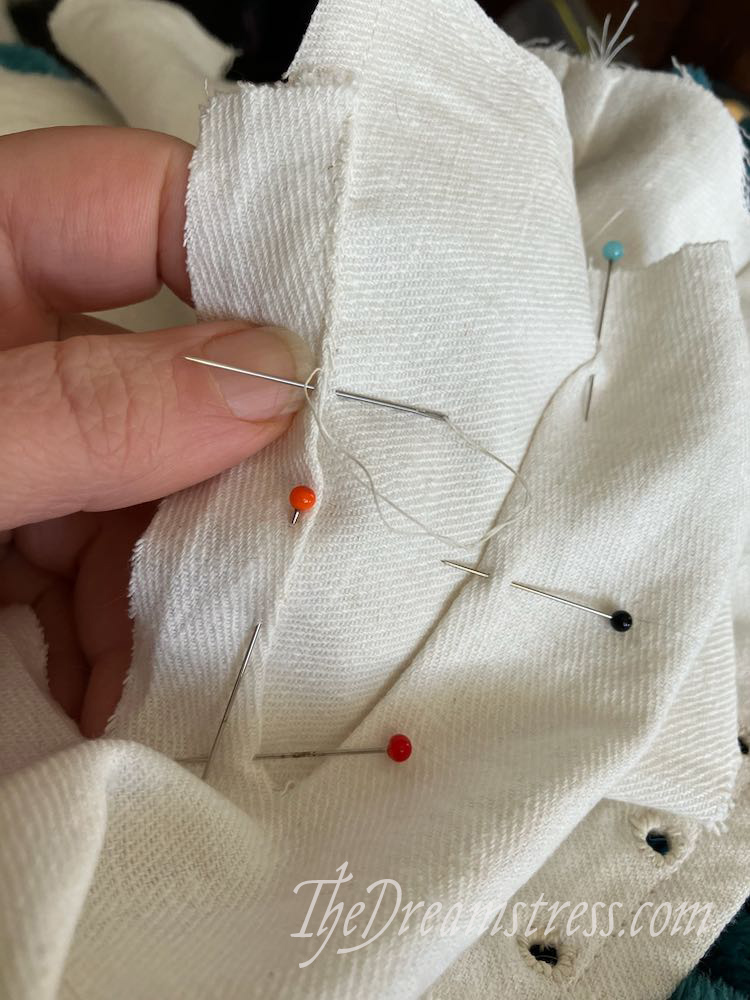
Sew the gusset in place with small whip stitches, working the stitches more tightly as you go around the point of the gusset.

Scroop Patterns Minette Bust Gusset Tutorial

If your fabric is prone to fraying you may need to reinforce the point with even tighter whipstitches, or with buttonhole stitches.

Insert the other gusset in the same way:

Scroop Patterns Minette Bust Gusset Tutorial

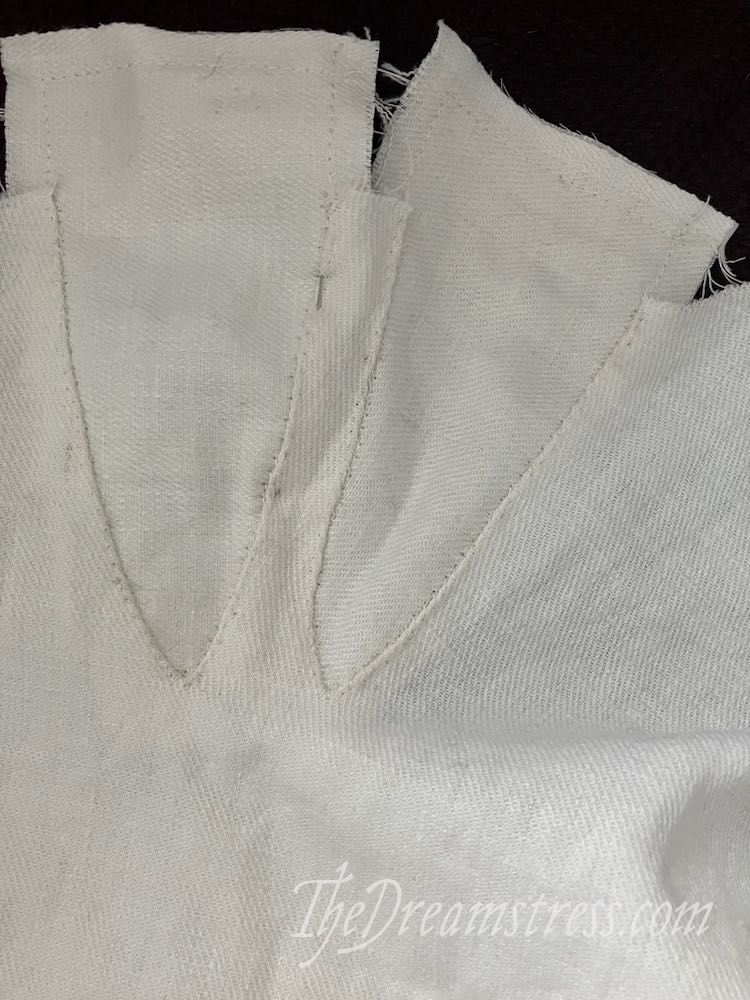
Turn the stays over, and press under the seam allowances of the lining insertion slits 1/4”, just as you did for the outer.

Lay the folded-under slit over the gusset so it just covers the stitching from doing the outer, and sew it in with whipstitches just as you did the outer.

Scroop Patterns Minette Bust Gusset Tutorial

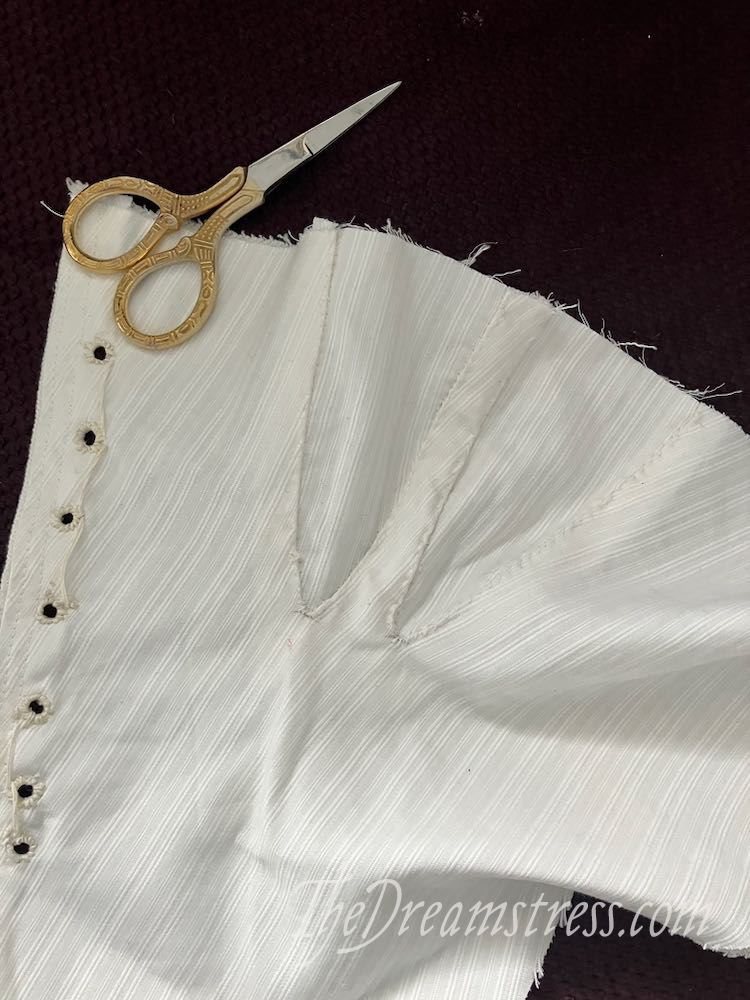
Trim off any overhanging seam allowances when the gussets are fully sewn in:

Scroop Patterns Minette Bust Gusset Tutorial

Scroop Patterns Minette Bust Gusset Tutorial

And that’s your gussets inserted!  You can now proceed to follow the rest of the pattern instructions to complete the Minette Stays.

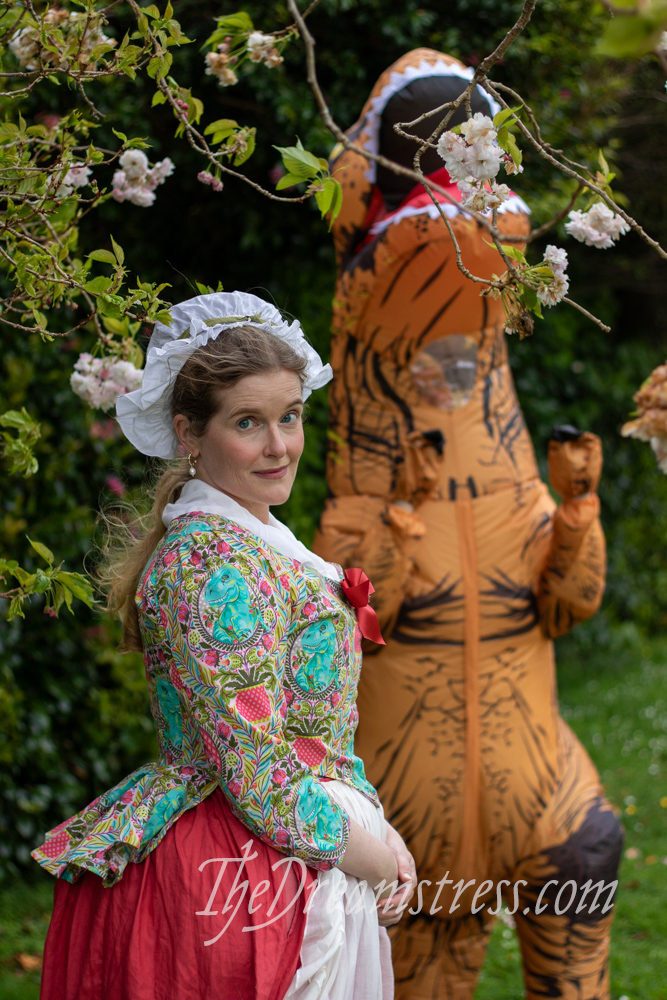
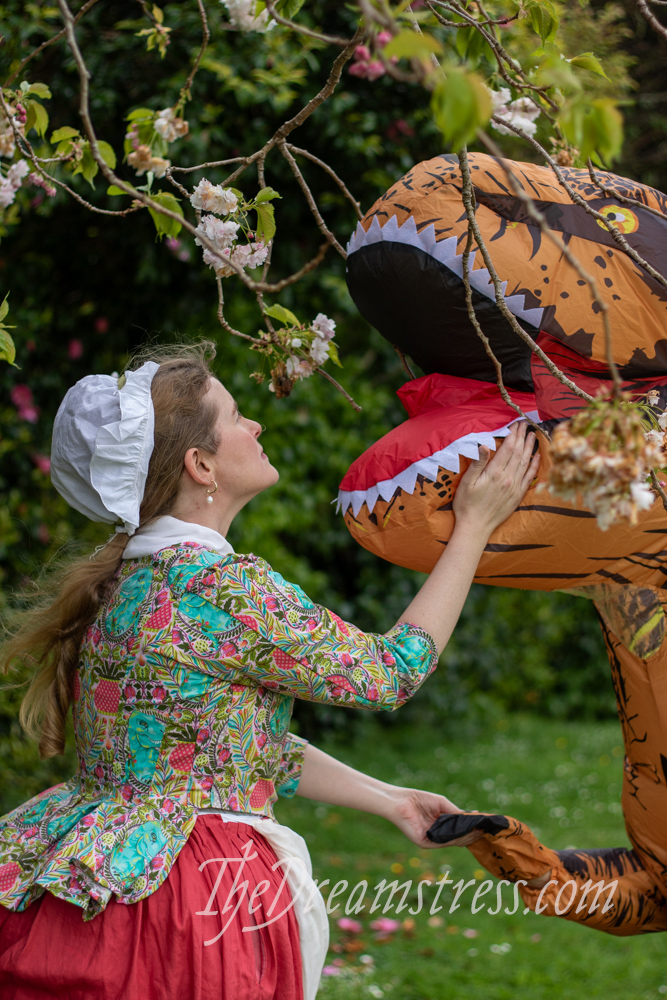
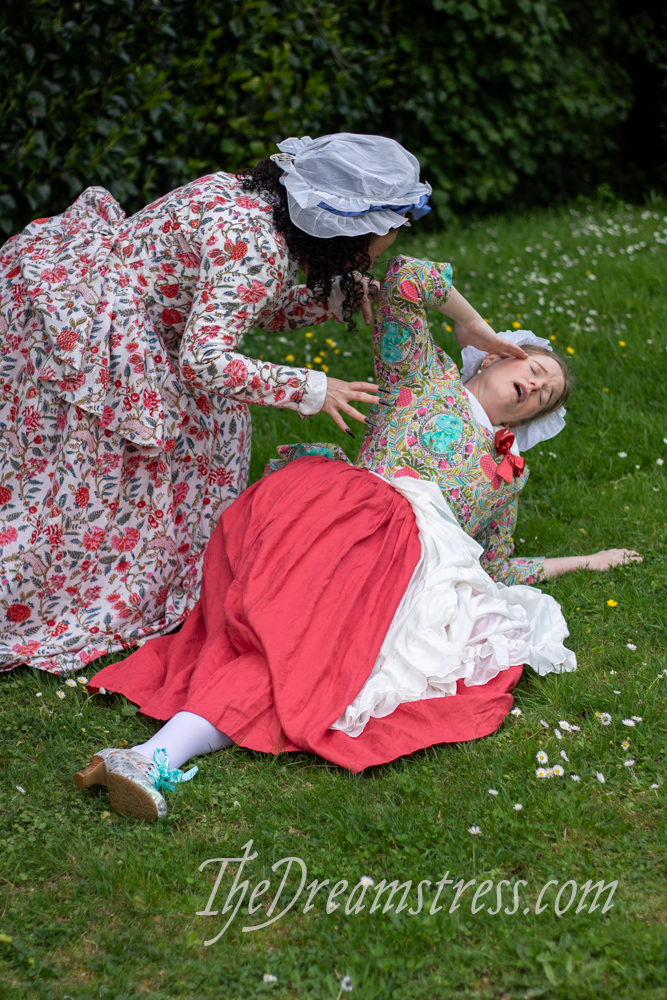
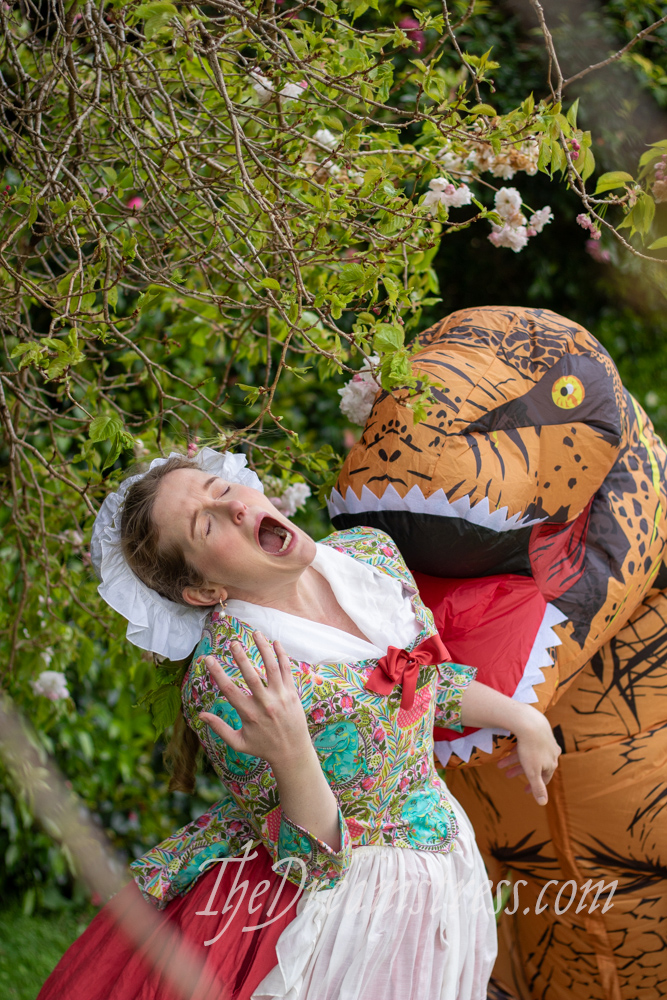
18th century but with dinosaurs thedreamstress.com

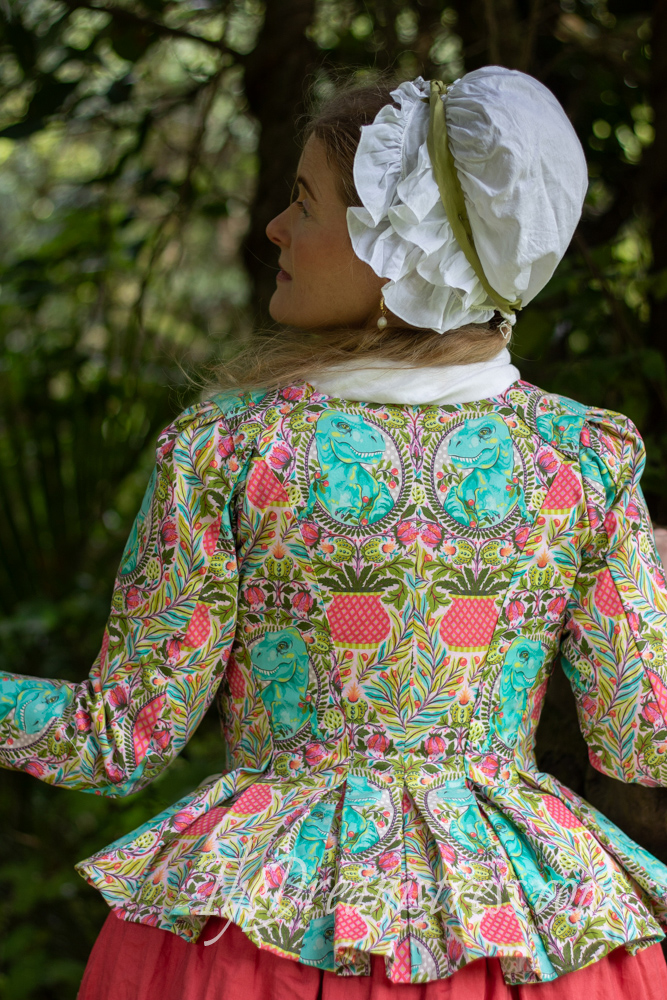
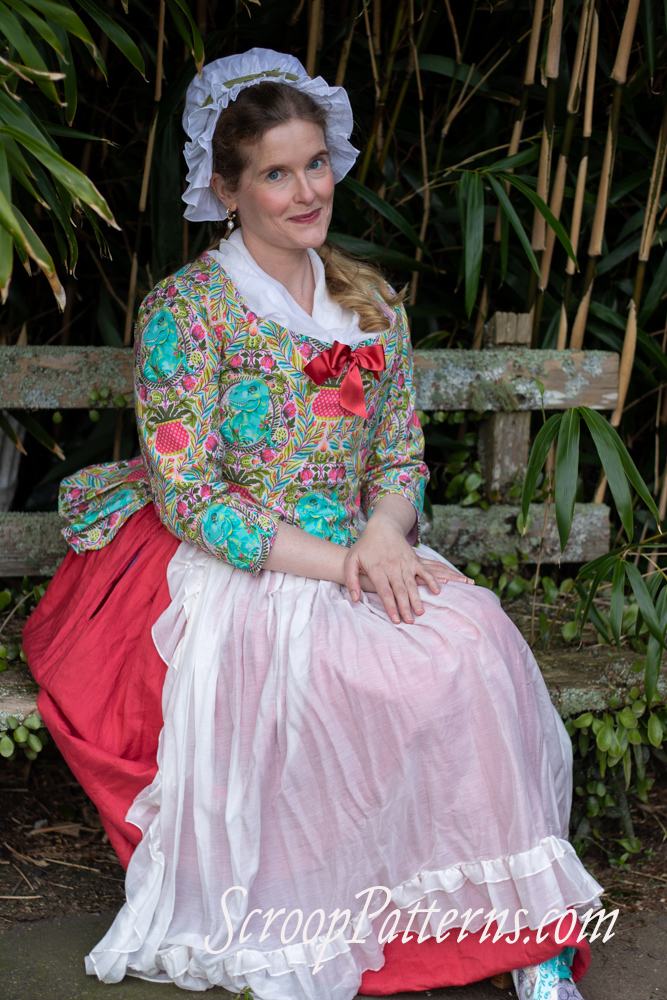
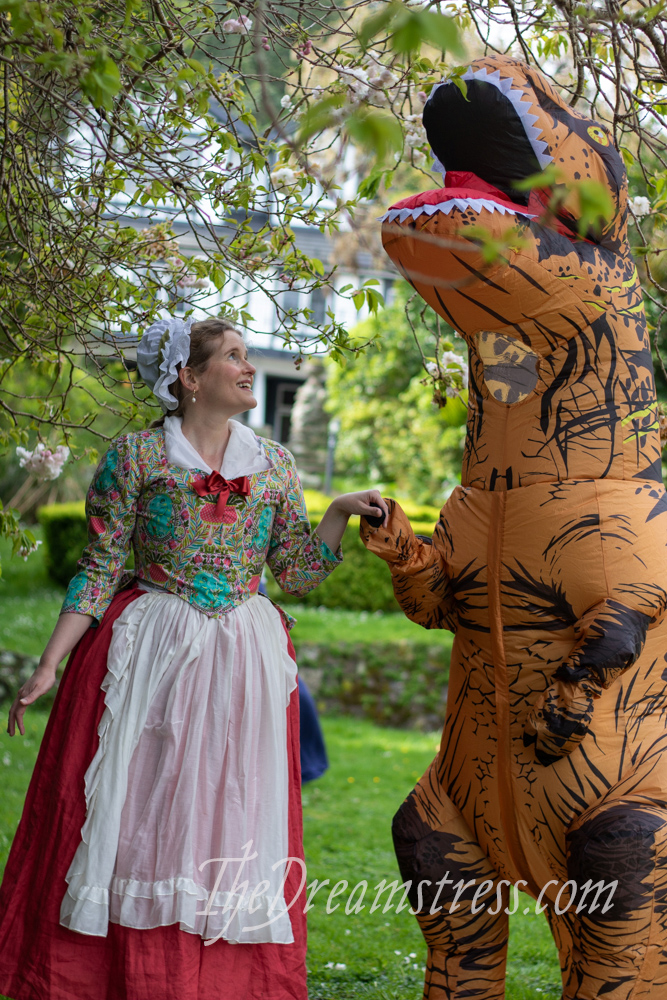
The T-Rex Amalia Jacket

You all loved Hayley’s T-Rex Amalia Jacket, so here are more photos of it. 💛

18th century but with dinosaurs thedreamstress.com

18th century but with dinosaurs thedreamstress.com

18th century but with dinosaurs thedreamstress.com

18th century but with dinosaurs thedreamstress.com

18th century but with dinosaurs thedreamstress.com

Hayley is an expert quilter and makes some clothes, but this was her first foray into historical costuming.  I asked if she wanted to come to HSER 2025, told her the theme was ’18th century, but with dinosaurs’ and within 20 minutes she was sending me a link to this fabric and asking if she could make an Amalia Jacket out of it.

In less than 3 months she sewed up a shift, Augusta Stays, and this jacket!

And then she went on to test all the Scroop 17th century patterns…

And she’s ahead of all the rest of us in making her wardrobe for HSER 2026.

18th century but with dinosaurs thedreamstress.com

I think we can safely say she’s been well and truly bitten by the historical costuming bug!

18th century but with dinosaurs thedreamstress.com