Climate change worsens wildfires Globally and Human land-Use Changes Reduces them

Superfact 126: Climate change worsens wildfires in North America, especially in the western U.S. and Canada, as well as in southern and western Europe, the Arctic and Siberia, Australia, and parts of South America and central Africa. That is because these areas face longer dry spells and rising temperatures due to climate change. However, changes in human land-use, such as farming expansion, and landscape fragmentation in Northern Africa and south Asia have caused the total burned area to decline.

Esther’s writing prompt: August 19th : Fire

Click here or here  to join in.
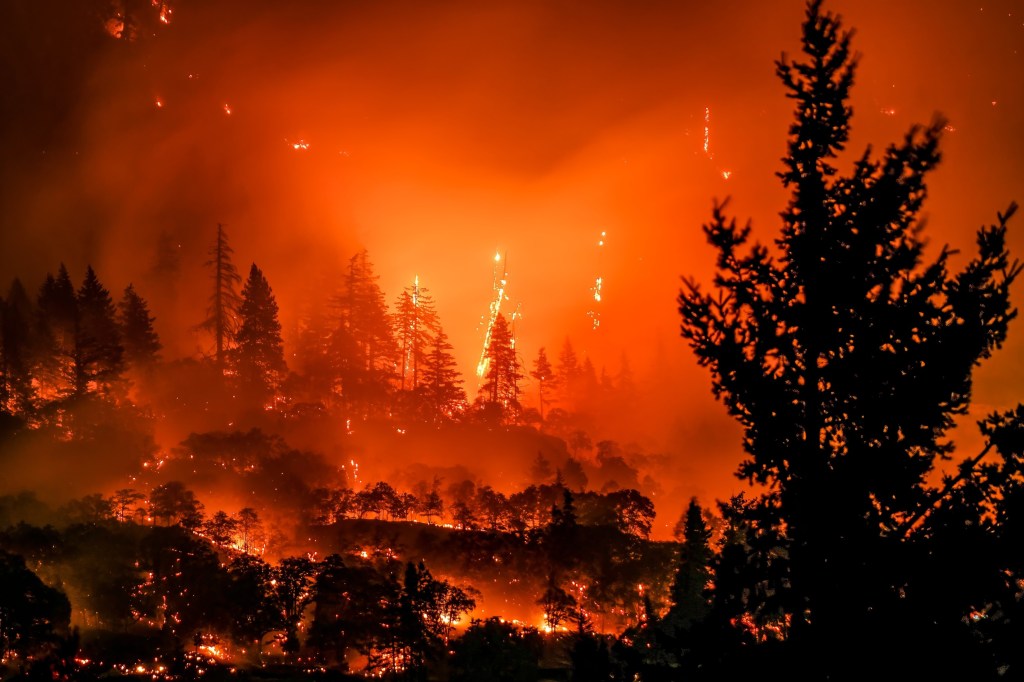
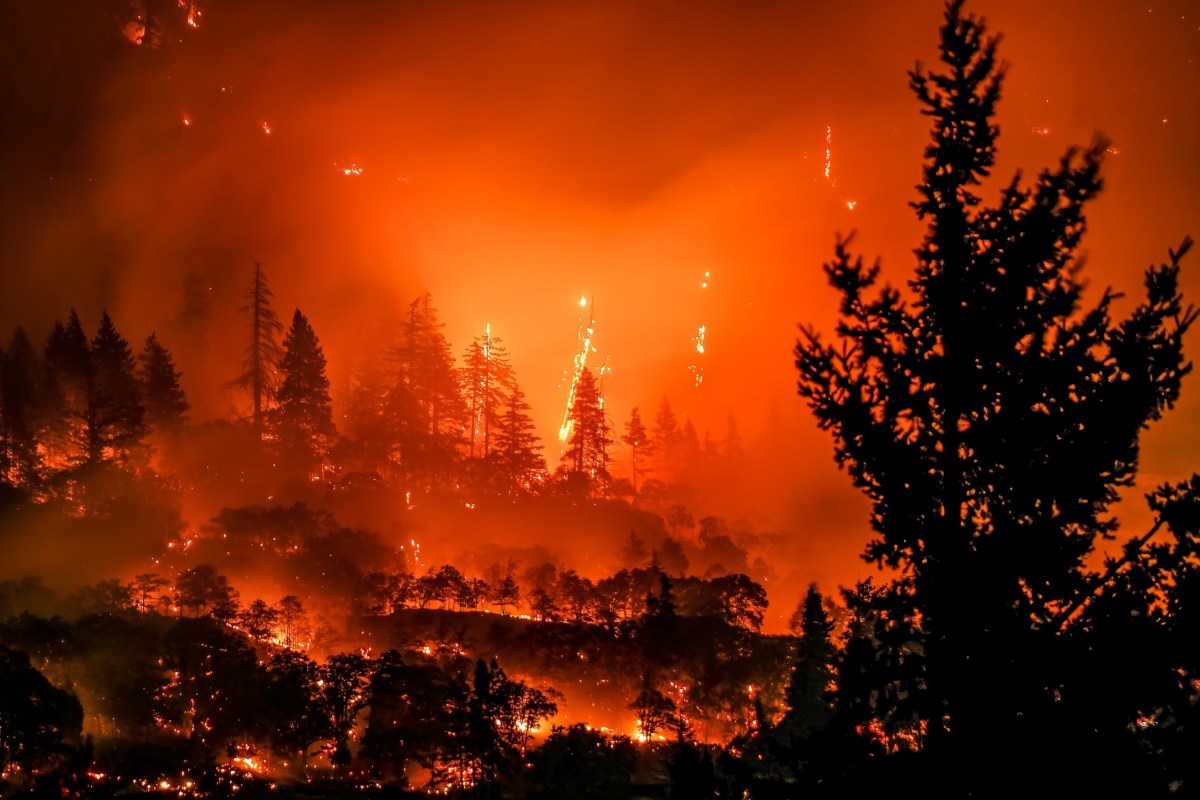
Forest burning wildly. The entire picture is just intense fire. | Climate change worsens wildfires Globally and Human land-Use Changes Reduces them
Underwood, WAUSA – July 2, 2023: Tunnel 5 Fire in Columbia River Gorge Shutterstock asset id: 2327439537 by Christian Roberts-Olsen

Human-caused global warming is causing longer dry spells and rising temperatures in many areas. This results in larger and more intense wildfires despite improved forest management. This has globally expanded the area burned by 16% (2003 to 2019)

As mentioned, climate change worsened wildfires in North America, especially in the western U.S. and Canada, as well as in southern and western Europe, the Arctic and Siberia, Australia, and parts of South America and central Africa. However, changes in population distribution, land use, forest fragmentation and the conversion of land for urban development and agriculture in particularly south Asia and North Africa have suppressed wildfires, driving down global burned area. The net effect is estimated to be a reduction of the burned area by 5%. You can read more here, or here, or here, or here.
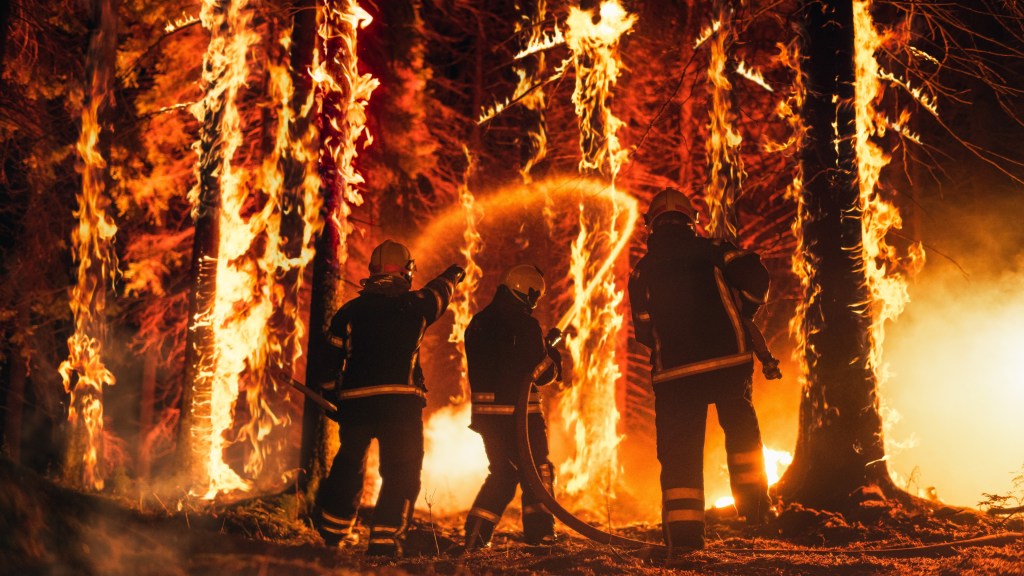
The photo shows tree trunks on fire and professional firefighters extinguishing a large, high-priority part of a forest fire.
Highly skilled hotshot firemen crew working in a challenging remote area with flames reaching the treetops. Shutter stock asset id: 2258645599 by Gorodenkoff

This is an important fact that is also paradoxical. On the one hand climate change / global warming is worsening wildfires. On the other hand, the size of the total area burned by wildfires has declined because of the change of human land use. Those who knew that wildfires are getting worse due to climate change are likely surprised to hear that total area burned by wildfires has declined. Those who use the fact that the total area burned by wildfires has declined to deny that global warming is worsening wildfires might be surprised to learn that they are wrong.

Some Clarification on Wildfires

  • Wildfires are not started by climate change or poor forest management. They are started by lighting, falling powerlines, campfires that are not properly put out, and sometimes by arson. That doesn’t mean that climate change and poor forest management does not increase the risk and extent of wildfires.
  • Research organizations such as NOAA recognize that wildfire is a natural part of the western US ecosystem. However, climate change is significantly exacerbating the problem by creating conditions more conducive to intense and widespread wildfires.
  • Suppression of fire in certain ecosystems may in fact increase the likelihood that a wildfire will occur.
  • There are wildfires started intentionally to prevent future wildfires.
  • In the past, forests evolved with frequent, low-intensity fires that helped clear out underbrush. They can have ecological benefits. Therefore, the number of wildfires may not have increased over the last 100 years.
  • Local conditions and forest management have evolved through time complicating the wildfire statistics around the world.
  • In the past reporting was not always consistent.

Climate change worsens wildfires in the US

Climate change, including increased heat, extended drought, and a thirsty atmosphere, has been a key driver in increasing the risk and extent of wildfires in the United States, particularly the western United States during the last two decades. The number of Wildfire acres burned in the United States has significantly increased even though the number of wildfires has not. Another important factor is forest management.
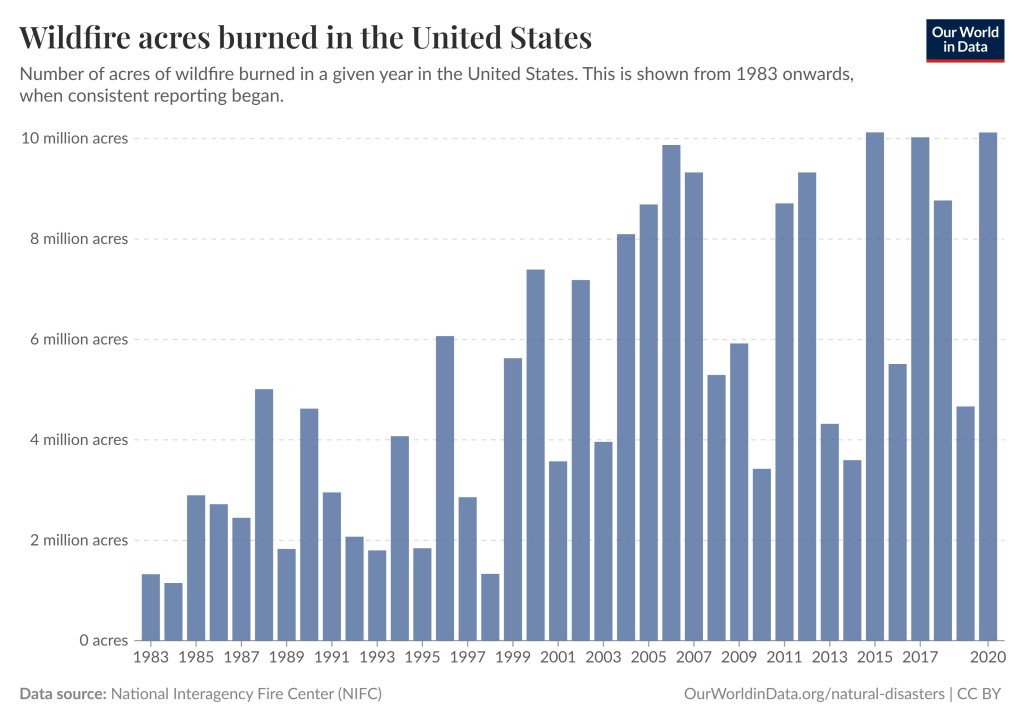
The graph consists of blue bars corresponding to a year starting in 1983 with the last bar being 2020. The bars show the number of million acres burned per year in the US. In 1983 and 1984 the bars show between 1 and 2 million acres burned. The following three years more than 2 million acres were burned. From 2015 to 2020 the number of acres burned annually is between 5 and 10 million acres. | Climate change worsens wildfires Globally and Human land-Use Changes Reduces them
Wildfire acres burned in the United States. Number of acres of wildfire burned in a given year in the United States. This is shown from 1983 onwards, when consistent reporting began. Data source : National Interagency Fire Center (NIFC). Presented by OurWorldinData/natural disasters.

You can read more about the increased wildfires in the United States in this superfactful post.

Other super facts related to global warming

My Other Responses to Esther’s Prompts


To see the other Super Facts click here

Smorgasbord Blog Magazine Share Superfact 56 – The Bermuda Triangle the Big Non-Mystery

Imagine my delight when I saw the post above. Sally is sharing my super fact 56:

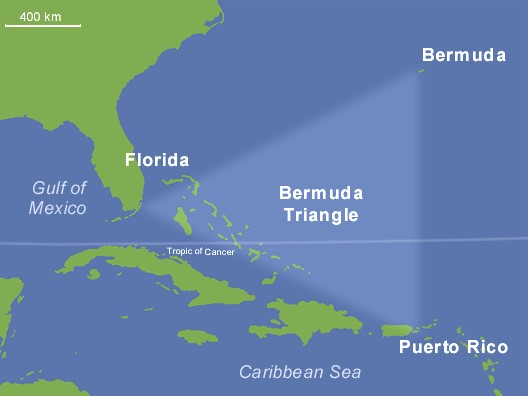
Super fact 56 : The Bermuda Triangle mystery is a myth. There is not a higher risk of disappearances in the Bermuda Triangle. To be specific, disappearances do not occur in the so-called Bermuda Triangle, or Devils Triangle, with any higher frequency than in other comparable regions of the ocean. The “mystery” of the Bermuda Triangle is largely a manufactured one, perpetuated by sensationalized accounts that often misrepresent the facts and downplay the role of natural hazards like storms. 

In addition, she is promoting my Leonberger dog book for which D.L. Finn wrote a great review. Thank you so much Sally and D.L. Finn. Please click the link and see the Smorgasbord blog magazine post.

The Bermuda triangle has one corner in Bermuda, one in Puerto Rico and one around Miami, Florida. |  The Bermuda Triangle the Big Non-Mystery
The Bermuda Triangle: It is approximately defined as a triangle Florida, Bermuda, and Puerto Rico. There is no exact definition. Alphaiosderivative work: -Majestic-, Public domain, via Wikimedia Commons.

What is Climate Capitalism

The goal of this blog is to create a list of what I call super facts. Super facts are important and true facts that nevertheless are surprising to a lot of people, mind-blowing, or misunderstood or disputed among non-experts. They are special facts that we all can learn something important from.

However, I also make posts that are not super facts but feature other interesting information, such as this book review and book recommendation. The book is:

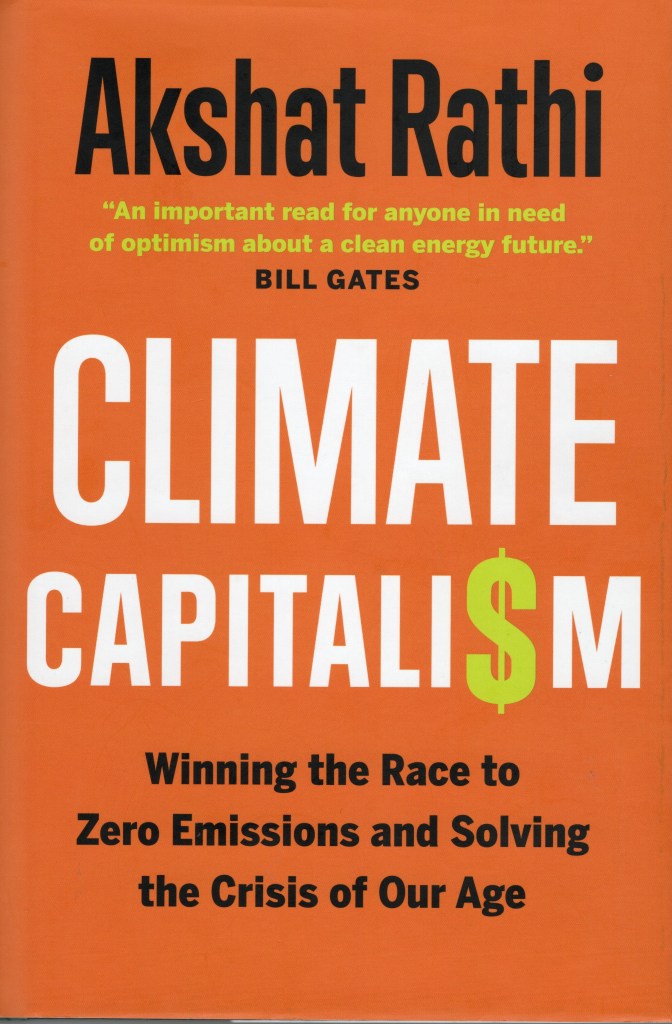
Climate Capitalism: Winning the Race to Zero Emissions and Solving the Crisis of Our Age by Akshat Rathi

I should say that I am part of a book club and we recently read two books “This Changes Everything: Capitalism vs. The Climate by Naomi Klein” as well as “Climate Capitalism: Winning the Race to Zero Emissions and Solving the Crisis of Our Age by Akshat Rathi”. They were supposed to be contrasts.

Naomi Klein’s book was anti-capitalism and Akshat Rathi’s book was pro-capitalism, or rather pro-climate-capitalism, meaning a type of capitalism that takes into consideration that polluting the atmosphere for everyone should not be without any type of cost to the polluter. I liked Akshat Rathi’s book, but I had a hard time with Naomi Klein’s book because I found it to be very ideological, filled with strong opinions I could not agree with, a lot of misinformation, and it was very pessimistic and negative. I gave it two stars and wrote a detailed review on Amazon as to why. However, I am not publishing that review here. You can read my Amazon review for Naomi Klein’s book This Changes Everything by clicking here.

The book I am reviewing here is Climate Capitalism: Winning the Race to Zero Emissions and Solving the Crisis of Our Age by Akshat Rathi.

Below I am listing the four versions of this book. I bought the hardback version.

  • Hardback –  Publisher : Greystone Books (March 12, 2024), ISBN-10 : 1778401856, ISBN-13 : 978-1778401855, 272 pages, item weight : 1.05 pounds, dimensions : 6 x 0.9 x 9 inches. It costs $13.84 on US Amazon. Click here to order it from Amazon.com.
  • Paperback –  Publisher : John Murray (June 20, 2024), ISBN-10 : 1529329949, ISBN-13 : 978-1529329940, 272 pages, item weight : 6.8 ounces, dimensions : 5.04 x 1.1 x 7.72 inches. It costs $ 12.69 on US Amazon. Click here to order it from Amazon.com.
  • Kindle –  Publisher : Greystone Books (March 12, 2024), ASIN : B0CHH9KQ23, 253 pages, it costs $13.15 on US Amazon. Click here to order it from Amazon.com.
  • Audiobook – Publisher : Tantor Media (April 16, 2024), ASIN : B0CZYVNYDC, Listening length : 7 hours and 50 minutes. $0.00 with membership. Click here to order it from Amazon.com.
The front cover of Climate Capitalism: Winning the Race to Zero Emissions and Solving the Crisis of Our Age by Akshat Rathi
The front cover of Climate Capitalism: Winning the Race to Zero Emissions and Solving the Crisis of Our Age by Akshat Rathi. Click on the image to go to the Amazon page for the hardback version of the book.

Amazon’s Description of the Book

“An important read for anyone in need of optimism about our ability to build a clean energy future.”—BILL GATES

“Illuminating, incisive, and deeply reported.”—DAVID WALLACE-WELLS, New York Times-bestselling author of The Uninhabitable Earth

Our age will be defined by the climate emergency. Contrary to the doomist narrative that’s taken hold about the climate emergency, the world has already begun deploying the solutions needed to deal with it. On a journey across five continents, Climate Capitalism tracks the unlikely heroes driving the fight against climate change. From the Chinese bureaucrat who did more to make electric cars a reality than Elon Musk, to the Danish students who helped to build the world’s longest-operating wind turbine, or the American oil executive building the technology that can reverse climate damages, we meet the people working to scale technologies that are finally able to bend the emissions curve.

Through stories that bring people, policy and technology together, Akshat Rathi reveals how the green economy is not only possible, but profitable. This inspiring blend of business, science, and history provides the framework for ensuring that future generations can live in prosperity and that the wheels of progress don’t falter.

This is my five star review for the book Climate Capitalism

Climate Capitalism

Blaming capitalism for climate change is simplistic. Capitalism and the “free market” work within a framework of laws. If there were no laws and everyone could just steal and kill each other, you would have miserable anarchy not a free market. However, the market could be framed by different kinds of laws and regulation. In other words, it can come in different flavors.

The book talks about “economic externalities”. A negative externality is when economic activity harms society. An example is pollution and climate change. Is the free market really “free” or “functional” if people are harmed by the economic activity of others? However, you can correct climate change related market failures, for example, by putting a price on carbon. Innovation and technological developments have been crucial in taking us in the right direction toward solving the climate change problem, and so have markets of scale, competition in the market, good policy and the right type of regulated capitalism. This book argues for what the author calls climate capitalism.

The book features a lot of enlightening and inspirational stories about innovators and business leaders who have accomplished amazing feats that are bringing us closer to solving the climate crisis. Wan Gang, a Chinese inventor, business leader, and official who got the Chinese Electric Vehicle revolution going, like Elon Musk did in the West. Sinha, the Indian entrepreneur and the success of solar power. Birol, the Turkish politicians fighting for clean energy and thereby addressing the two biggest challenges of the century: climate change and access to energy for all.

He tells us about Bill Gates efforts to use business and philanthropy to address climate change. He discusses the promise (and disappointments) of carbon capture and storage. The amazing success of a Danish fossil fuel company evolving into a renewable energy company. He tells us about Capitalists buying and selling shares in a smart way to direct the actions of companies, and he explains why plain divestment strategies does not do much to hurt companies fundamental business. There is also a chapter on campaigners and activists. The author states that democracy can be the biggest way to rein in the excesses of capitalism.

He also tells us about fossil fuel companies that behaved very badly. The oil industry knew about the link between fossil fuel burning and global warming as far back as 1959 but chose to hide it and spread misinformation about climate change. In 1989 the fossil fuel industry formed the Global Climate Coalition, GCC, only a few months after the UN had established the Intergovernmental Panel on Climate Change (IPCC).

The five leading oil companies in the GCC, ExxonMobil, BP, Chevron, Shell, and ConocoPhillips publicly spent at least 3.6 billion dollars on advertising and 2 billion dollars on government lobbying (in reality a lot more). Even though all oil companies have since accepted the overwhelming science of climate change and the role fossil fuels play in it, many haven’t quite accepted the changes that will be needed to truly tackle the problem. And the misinformation they spread still lives on.

In summary, the book contains a lot of interesting information that is both frustrating and hopeful. A lot of things have gone wrong, and a lot of things are going wrong, but we are beginning to turn things around. The recent astonishing worldwide success of renewable energy and EVs and the fact that a lot of countries, especially developed countries, have succeeded in significantly lowering their emissions while growing their economies, is a sign of that. The book is also captivating and easy to read, and it is well organized. Akshat Rathi is clearly a great author. I highly recommend this interesting, optimistic and fun read.

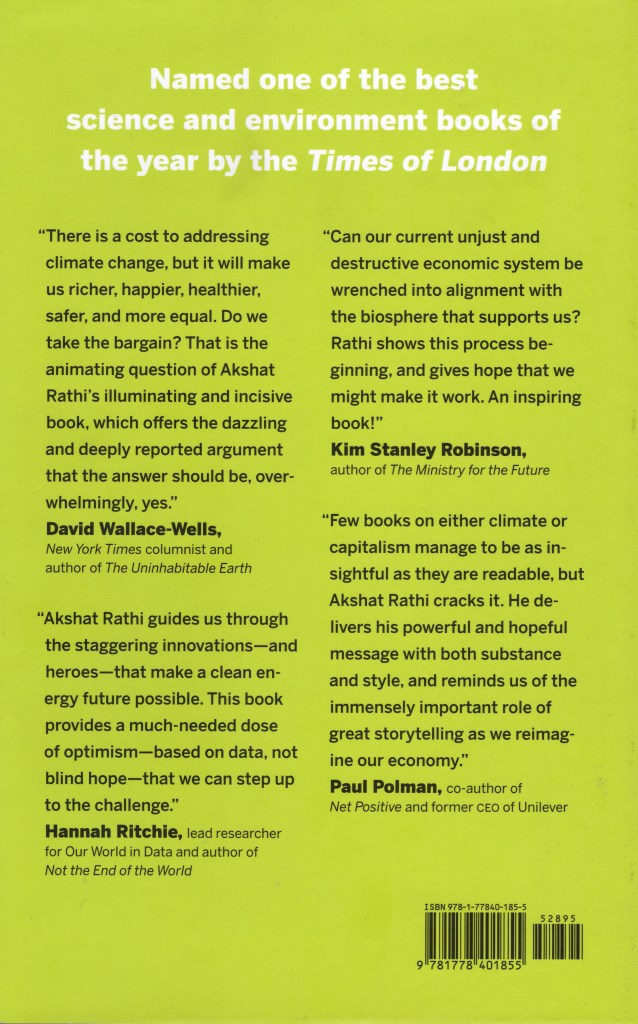
Praise For Climate Capitalism: Winning the Race to Zero Emissions and Solving the Crisis of Our Age by Akshat Rathi
The back cover of Climate Capitalism: Winning the Race to Zero Emissions and Solving the Crisis of Our Age by Akshat Rathi. Click on the image to go to the Amazon page for the paperback version of the book.


To see the Super Facts click here

Volcanoes emit a tiny fraction of carbon compared to humans

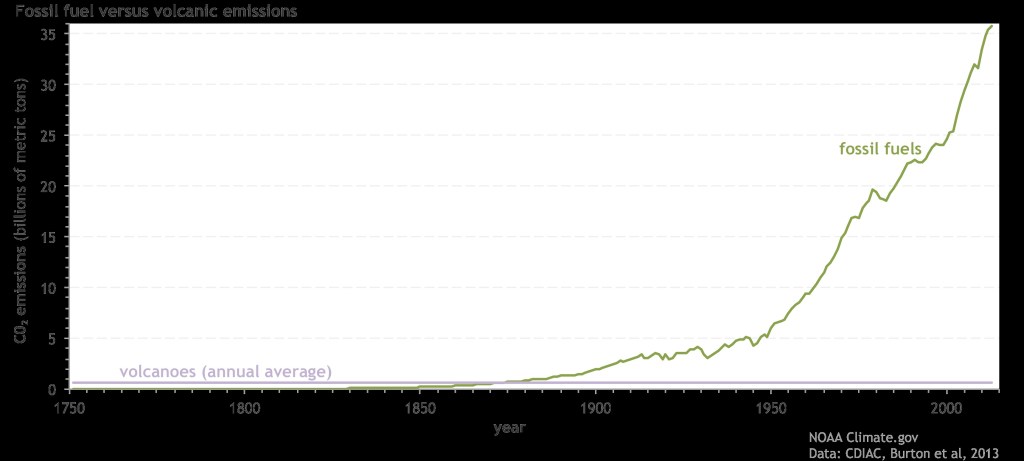
Superfact 125: Volcanoes emit about 0.2 to 0.6 billion metric tons of carbon dioxide per year globally. Our burning of fossil fuels and industrial activities release more than 35 billion metric tons annually. Human emissions are roughly 60 to 100 times greater than all global volcanic output combined. Thus, volcanoes are not the cause of the current rapid global warming.

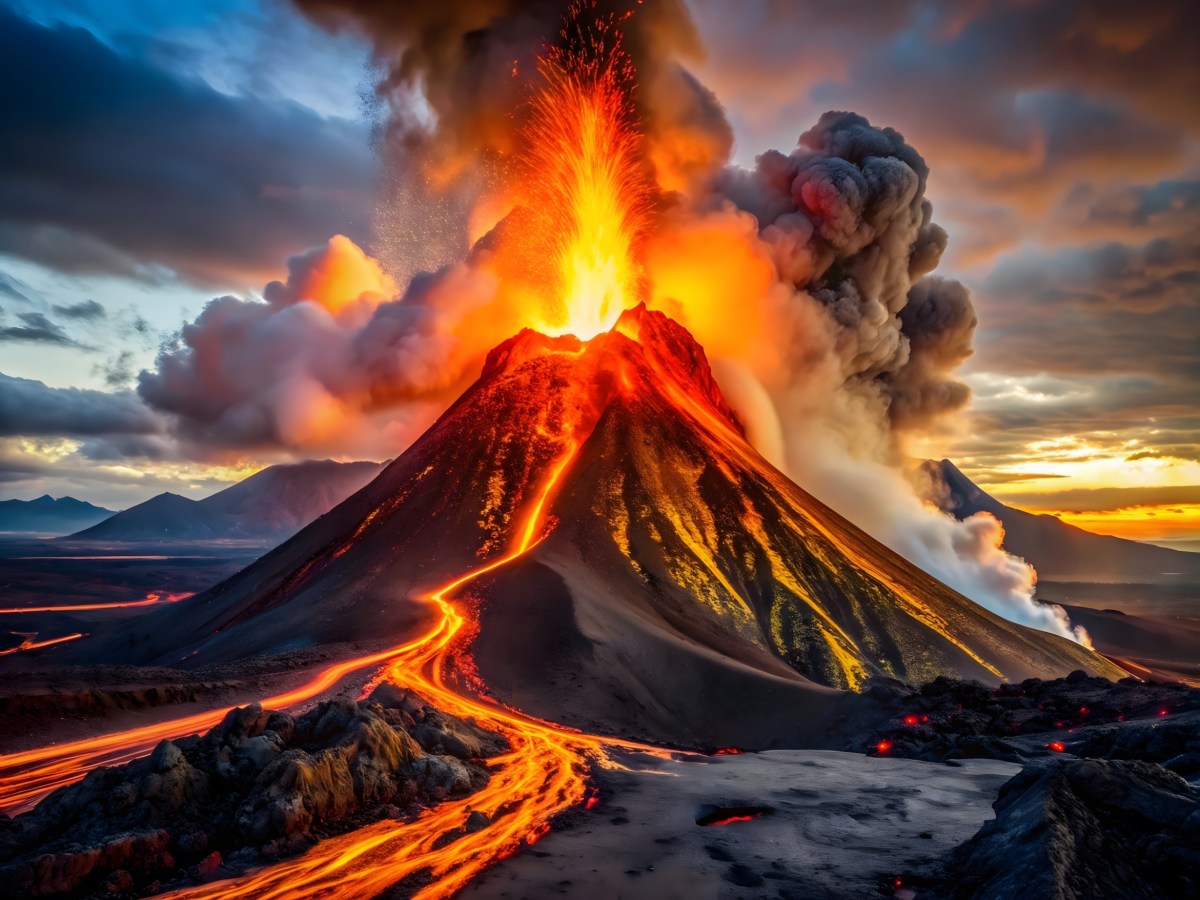
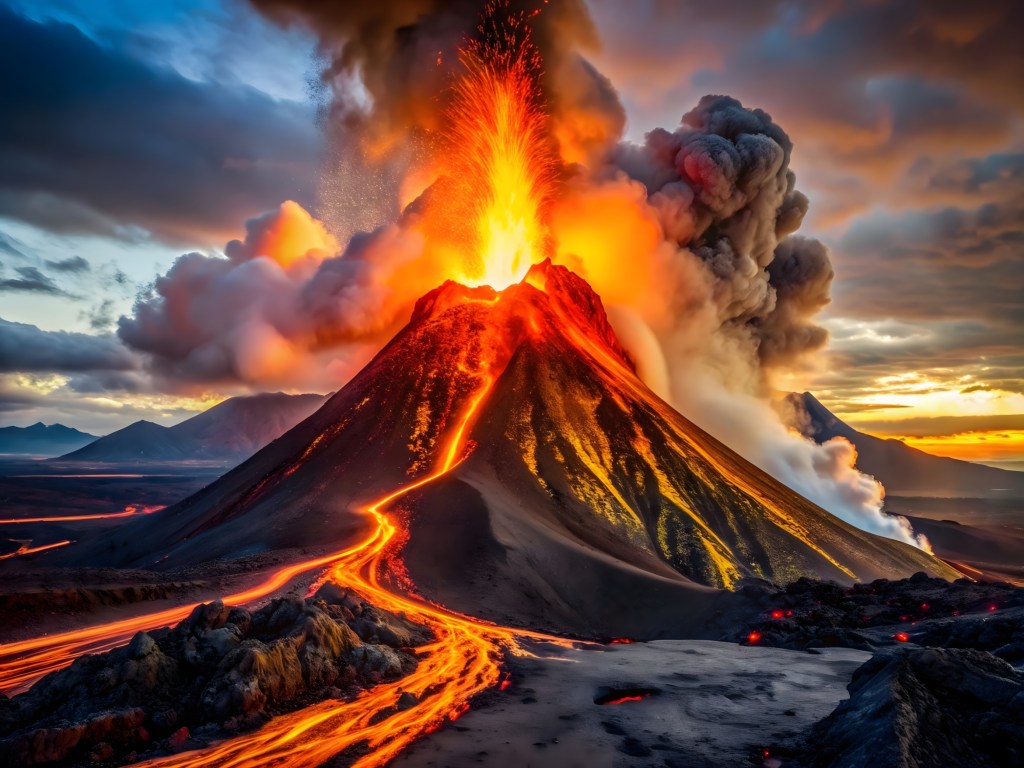
A black and orange colorful illustration of an erupting volcano. | Volcanoes emit a tiny fraction of carbon compared to humans
Volcano – An active volcano that erupts lava. Stock Illustration ID: 2497156167 by MERT1995

Have you ever seen claims on social media such as “a single volcanic eruption release as much CO2 as all of humanity has to date? Or 100 times as much? Or 10,000 times as much? As Snopes explains this is of course nonsense. I’ve seen this kind of claim many times and I’ve seen in the comment sections that a lot of people fall for them. That makes me wonder about people’s critical thinking skills as well as Facebook’s alleged fact checking.

As the super-fact above states, volcanoes emit about 0.2 to 0.6 billion metric tons of carbon dioxide per year globally. Our burning of fossil fuels and industrial activities release more than 35 billion to 38 metric tons annually. Thus, volcanoes emit only a small fraction of CO2 compared to what we do burning fossil fuels. Which also means that volcanoes are not the cause of the current rapid global warming. You can read more about this here, or here, or here, or here.

The graph shows human emissions exceeding that of volcanoes around 1870 and then rising rapidly.
Human carbon missions (green line) vs. emissions from volcanic eruptions (purple line). Data from the Carbon Dioxide Information Analysis Center (CDIAC) at the DOE’s Oak Ridge National Laboratory and Burton et al., 2013.

The graph above compares human carbon emissions (green line) with carbon emissions from volcanic eruptions (purple line). Human carbon emissions (the burning of fossil fuels and cement production) correspond to 35 billion metric tons annually while volcanic emissions are less than one ton annually. The graph is based on data from the Carbon Dioxide Information Analysis Center (CDIAC) at the DOE’s Oak Ridge National Laboratory and Burton et al., 2013.

Since so many people so quickly believe the disinformation, this fact should be surprising to a lot of people, and it is kind of important. Therefore, I consider it a super fact.

How do Volcanoes Affect Climate?

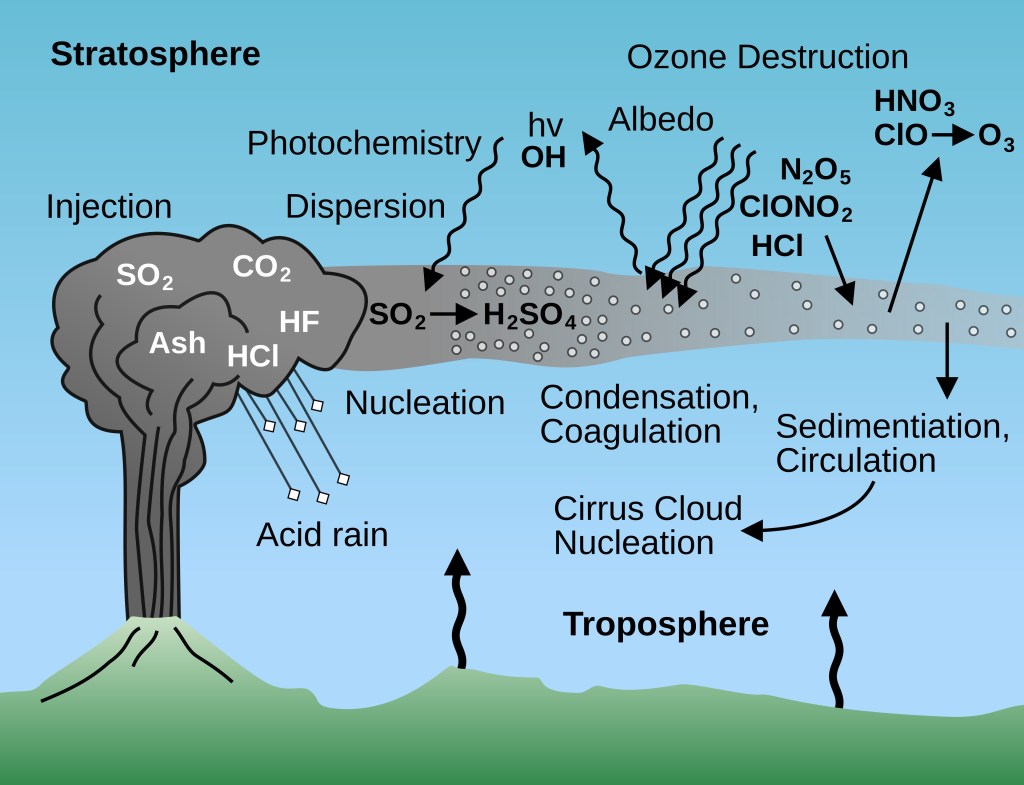
The emissions from volcanoes and their effect on climate are complicated. A large volcanic eruption can result in a lot of carbon emissions during a short period of time, but that typically does add up to being substantial in comparison to our annual anthropogenic carbon emissions. However, volcanic emissions include other gases that are not greenhouse gases, particularly Sulphur dioxide, which acts like an aerosol reflecting sunlight. This results in a more noticeable effect, but it is not a warming effect, but a cooling effect.

Long story short, when a volcano has a massive explosion, it shoots sulfur dioxide gas high up into the stratosphere, it mixes with water to make tiny liquid drops that reflect sunlight away from Earth. This causes global temperatures to drop for one to three years. In addition, to some global cooling volcanic eruptions can deplete Earth’s Ozone layer. However, as mentioned the amount of carbon dioxide released from volcanic eruptions is negligible compared to our emissions from burning fossil fuels.

The schematic shows a volcano and how different gases, such as CO2, SO2, HCL, HF, water vapor, etc., affect the atmosphere. | Volcanoes emit a tiny fraction of carbon compared to humans
Schematic of volcanic eruption. cflm, Public domain, via Wikimedia Commons. Schematic taken from this page.

How did Volcanoes Affect Climate in the past?

It has been proposed that intense volcanic release of carbon dioxide in the deep geologic past did cause global warming back then, and possibly some mass extinctions. This is a topic of scientific debate. However, whether these eruptions caused global warming or not, their intensity and the circumstances under which they happened were much different from today.

Unlike the single eruptions that cool the Earth with ash and sulfur today, these rare ancient eruptions were giant outpourings that lasted hundreds of thousands of years, or millions of years, and overwhelmed the planet’s natural carbon cleanup systems. Instead of coming from a single mountain peak, the magma poured out of giant cracks, or fissures, in the earth.

The Permian-Triassic extinction or the Paleocene-Eocene Thermal Maximum (PETM) 56 million years ago is thought to possibly have been such an event. It could also have been that volcanic eruptions caused the sudden release of methane hydrates from ocean sediments.

Ten erupting volcanoes and in between them are cracks pouring out lava and lava flowing in the valleys. | Volcanoes emit a tiny fraction of carbon compared to humans
Luckily, we don’t have this problem today. We are not 250 million years ago. I made this picture with the help of ChatGPT.

A Couple of Videos and Links

The video below is a short one-minute overview of the causes behind global warming.


The video below from NASA is a bit longer, 13 minutes, but it gives a more detailed overview. Click here to see the page from where this is coming from.


Conclusion

This is my third post in the series about natural causes of climate change that we know are not the cause of the current rapid global warming / climate change (I use both words interchangeably). The fact that no known natural cause for climate change can explain the current rapid global warming is just one small piece of the evidence. However, it is a piece that people tend to get stuck on a lot. You often hear claims such as “climate has always changed”. “I think it is a natural cause”.

Unlike the sun and orbital cycles carbon emissions from erupting volcanoes would warm the lower atmosphere while cooling the upper atmosphere, just like our burning of fossil fuels does, and the warming would distribute in time and geography in a similar way. However, we know that the carbon emissions from volcanoes are relatively tiny compared to the emissions from the burning of fossil fuels.

In addition, isotope studies show that the origin of the greenhouse gases added to the atmosphere are from burning fossil fuels. This is referred to as the isotopic footprint. These two reasons are how we know that it cannot be volcanoes that are causing the current rapid warming. Here is an additional long list of answers to common questions and objections to human caused global warming.

Other super facts related to global warming


To see the other Super Facts click here

The Sun is not the Cause of the current Global Warming

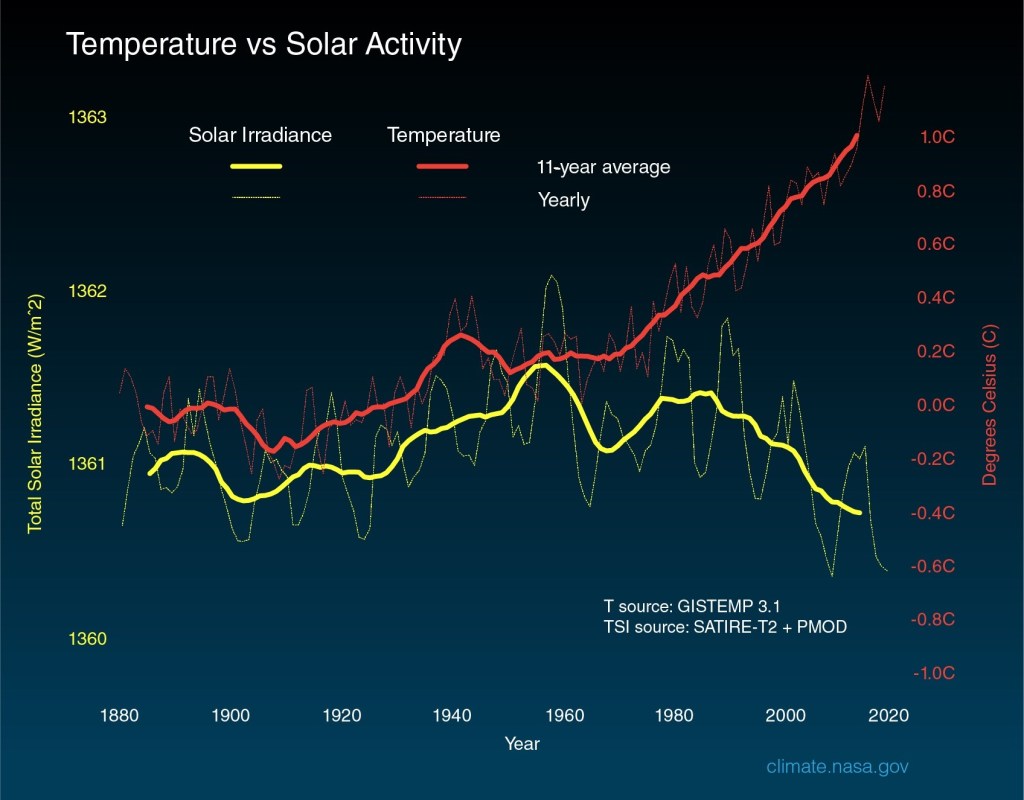
Superfact 124: The Sun is not the cause of current global warming. According to data from NASA, solar energy output has shown no net increase since the late 1970s. In addition, the amount of solar energy Earth receives has followed the Sun’s natural 11-year cycle of small ups and downs with no net increase. Over the same period, global temperature has risen significantly. The current warming is driven by human-made greenhouse gases, not changes in the Sun.

A thin yellow line graph (on black background) shows the sun’s irradiance fluctuating every 11 year. However, it does not go up overall, but it rather goes down even though the red line graph showing temperature rises sharply. | The Sun is not the Cause of the current Global Warming
Solar irradiance (yellow) plotted with temperature (red) since 1880. NASA, Public domain, via Wikimedia Commons.

The graph above compares global surface temperature changes (red line) and the Sun’s energy received by Earth (yellow line) in watts (units of energy) per square meter since 1880. The lighter/thinner lines show the yearly levels while the heavier/thicker lines show the 11-year average trends. Eleven-year averages are used to reduce the year-to-year natural noise in the data, making the underlying trends more obvious. You can read more about why the Sun is not the Cause of the current Global Warming, here or here or here.

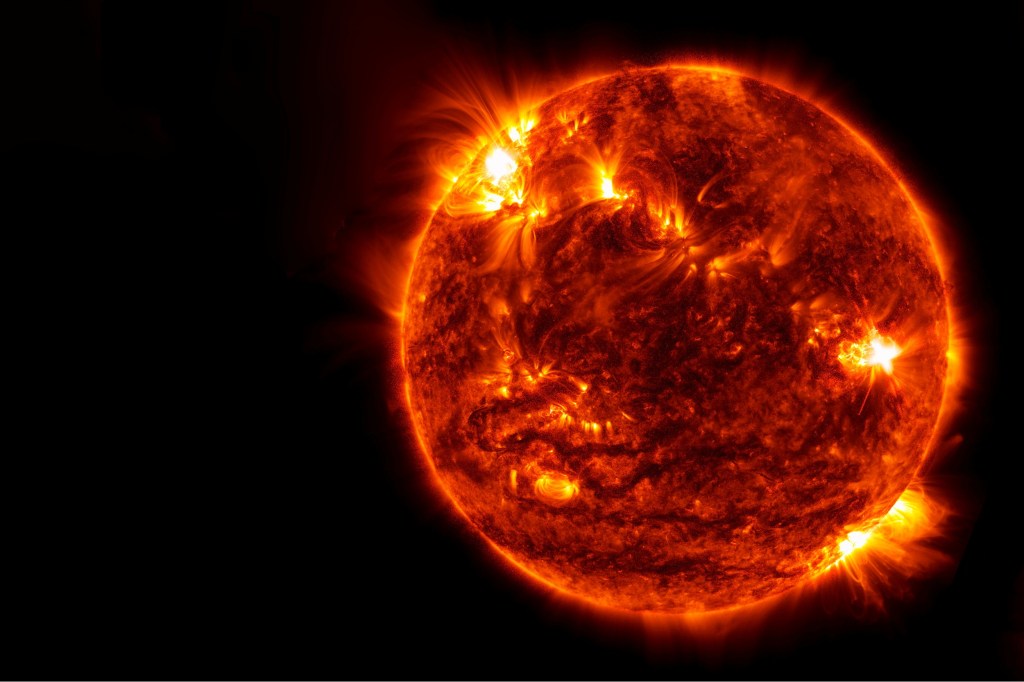
The sun from space on a dark background. High quality photo.
Elements of this image furnished by NASA. Shutterstock asset id: 2454170413 by Artsiom P

The evidence that the current rapid global warming is chiefly caused by our burning of fossil fuels is extensive and for all practical purposes conclusive. Explaining why no known natural cause for climate change can explain the current warming is just one small piece of the evidence. However, it is one item that people tend to get stuck on. You often hear claims such as “climate has always changed”, “I think it is a natural cause, like the sun”, or “have you ever heard of orbital cycles?”.

Well, as one would expect, the scientists and the experts on past climate, and the scientific organizations around the world, have very carefully investigated whether natural causes could be behind the current rapid warming and we have known for many decades that the answer is no. It is not orbital cycles, it is not the sun, it is not volcanoes, etc. My first post in the series regarding why no known natural cause of climate change can explain the current warming was “Orbital Cycles are not the Cause of the current Global Warming”. This post is about why it can’t be Sun.

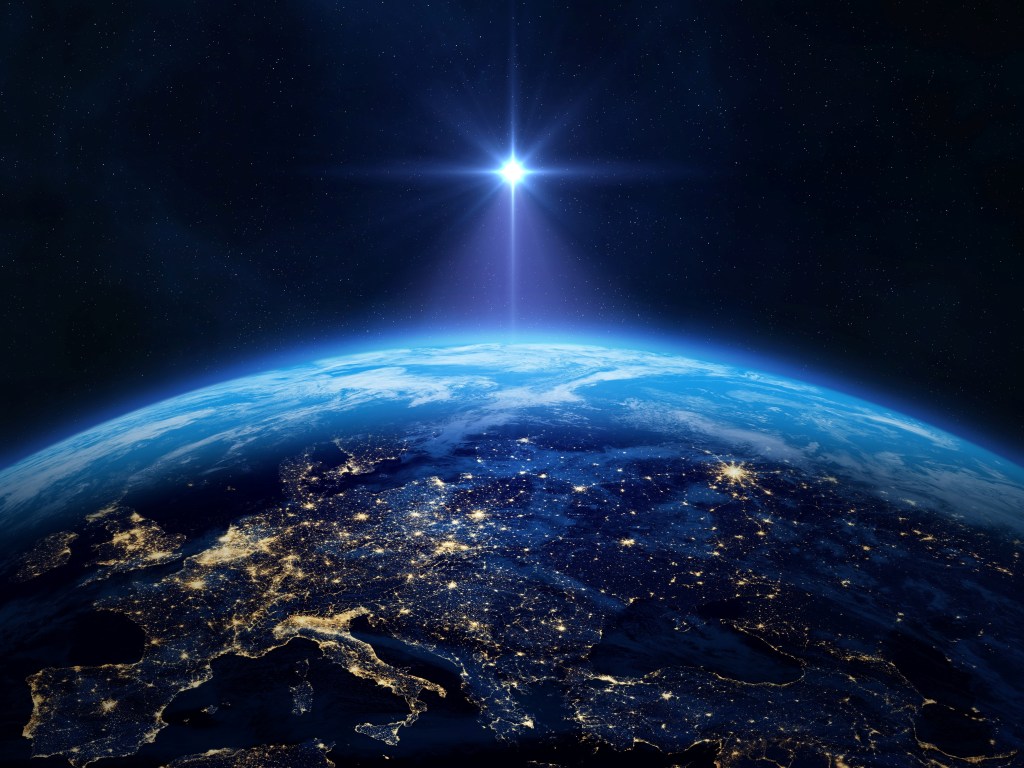
The picture shows a bright shining down on planet Earth lighting up the planet a bit. The light from the sun is intense. | The Sun is not the Cause of the current Global Warming
Sun shining down on Earth. Shutterstock asset id: 2709145593 by buradaki

One reason we know that it can’t be orbital cycles causing the current rapid global warming is that orbital cycles operate over tens of thousands of years or hundreds of thousands of years. That is not true for the sun, which has much faster fluctuations. However, it is true for both orbital cycles and the sun that they are not increasing the heat Earth receives. In fact, the effects of Orbital Cycles are slowly cooling Earth, not warming it, and the sun’s energy output has not shown any net increase.

In addition, if the current global warming was the sun or orbital cycles then the upper atmosphere would be warming just like the lower atmosphere, but the upper atmosphere is not warming, it is cooling. That’s an effect that is similar to a blanket holding heat in, which would happen if greenhouse gases were warming the Earth. Add to that the fact that the distribution of temperature increases in time and space matches the way greenhouse gases warm the Earth but does not match the way the sun or orbital cycles would warm the Earth.

A bright white sun is setting over Earth
Sunset from the International Space Station by NASA

I am considering this a super fact because a lot of people have been fooled by disinformation to believe that natural causes are the likely explanation. About 15-20 years ago, I was bamboozled by the disinformation myself. Since this is an important topic and this fact is likely surprising or even challenging to many people, it is a super fact in my opinion.

Understanding a topic and understanding the evidence makes all the difference. Something I had to relearn. That is also why climate scientists are near unanimous around the world over that climate change / global warming is both real and caused by us.

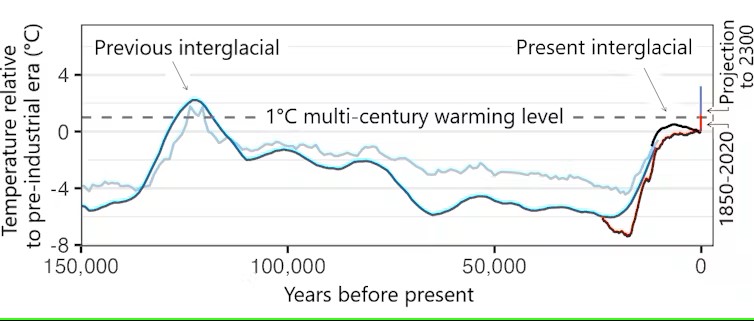
Past Climate the last 150,000 Years

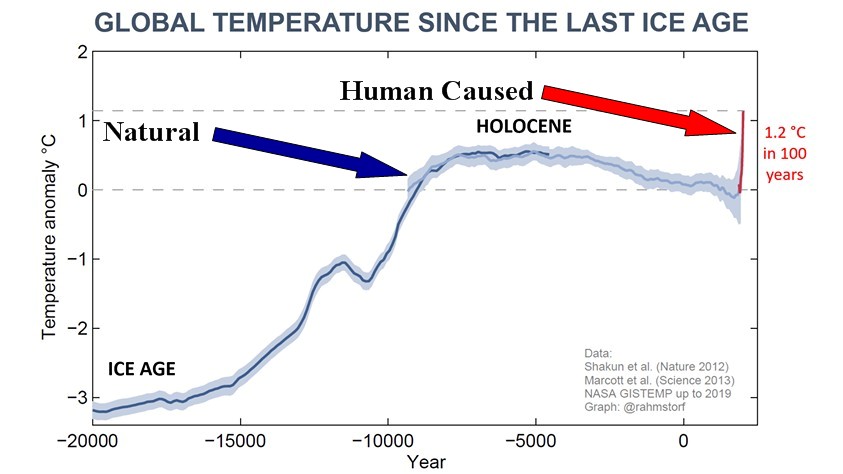
The graph shows the temperature since the last ice age. There is a maximum temperature about 6,000 years ago, then a cooling and then a sharp uptick in temperature.
This graph shows global temperature going back twenty thousand years. Notice the relatively stable temperature during the last 10,000 years, coinciding with the development of human civilization. Also notice the maximum temperature around 6,000 years ago. It is referred to as the Holocene climatic optimum. Finally, notice the sudden sharp increase in temperature at the end. It is depicted in red and is not natural.
The graph shows wild swings over the last 150,000 years and then a very sharp uptick at the end. | The Sun is not the Cause of the current Global Warming
Temperature record for the last 150,000 years. Again, notice the sharp uptick towards the end. This picture is taken from this article.

A Couple of Videos and Links

The video below is a short one-minute overview of the causes behind global warming.


The video below from NASA is a bit longer, 13 minutes, but it gives a more detailed overview. Click here to see the page from where this is coming from.


You can read some more about why it isn’t sun that is causing the current global warming here, and here, or here.

Conclusion

We know that the Sun is not responsible for the current rapid global warming because the Sun’s energy output has shown no net increase since the late 1970s. In addition, the amount of solar energy Earth receives has followed the Sun’s natural 11-year cycle of small ups and downs with no net increase.

We know that Sun is not responsible for the current rapid global warming because if it was the Sun the upper atmosphere would not be cooling and the temperature increases would be distributed differently across Earth and distributed differently with respect to time.

Other super facts related to global warming


To see the other Super Facts click here

  • Privacy