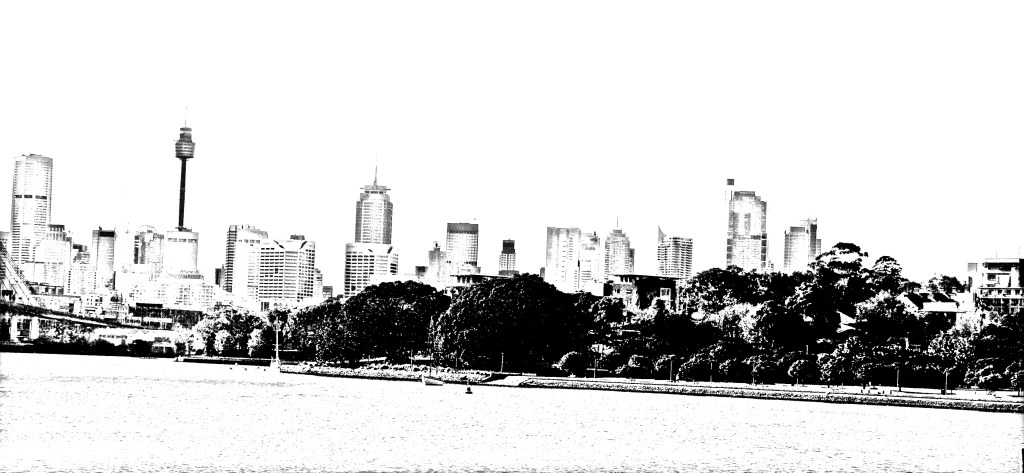
Selma In The City

Writer. Teacher, Misfit. Sydney, Australia

  • This quote from Janet Frame’s “An Angel At My Table” inspires me a lot. Writing a novel is a multi-faceted experience. Putting pen to paper is the very least of it. There’s a lot of legwork that takes place in your mind. You’re creating a story and characters that exist in your imagination and trying to make them as real as they are to you, for other people. That is a massive undertaking. It does require walking through the streets of your imagination.

    The novel I am currently writing is going surprisingly well, and I say surprisingly because it was on the backburner for so long that I almost came to believe I would be incapable of writing it as too much time had passed. But the subject matter is still relevant, the themes are timely and the characters have come to life in a way I would never have expected. I know I will finish this novel now and no matter what happens after that I know that in the writing process I have honoured that deeply buried part of myself that contained long held hopes and dreams. And that is something I am glad about because I want to live the rest of my life with no regrets.

    If you have a novel or other creative project percolating that you can’t let go of, I have three pieces of advice.

    1. Explore all those aspects of imagination that Janet Frame talks about. Make notes, take photos, research, plan, practise your writing. And read, read a lot. Read what other people have imagined.

    2. Write a bit every day, even if it’s only 200 words. Some days I write 200 words, other days I write 2,000. Sometimes I write 5,000. It all depends on the day. It is very rewarding to  maintain a level of focus and see a creative work come to life. A flow develops and it’s hard to explain what I mean by that but it’s almost like you are on a boat going down a river and you don’t know where you’re going but the boat does. That flow is like the novel letting you know it wants you to write it.

    3. Be yourself. Be authentic. I know this is mentioned a lot in writing courses and in books on writing – you also hear it a lot in TED talks – but I think it bears repeating. your individual, authentic self is what is telling the story. That is your voice and is what makes you unique as a writer. Tell it from your heart. Be true to who you are as a writer. Write what you want to write.

    I continue to put in shifts in the factory in my mind. The work is ongoing but increasingly fruitful. The machinery is much more well-oiled than it initially was. And in the end I will have done what for so long I have wanted to do. And I will be at peace with that.

  • I always thought I’d have to go much farther than where I’m at to get away from the sins of the past. My sins and the sins of others. I’d have to start a new life completely, an unrendering, to fully escape them. When I cut the ropes that tied me to the daily grind I didn’t think it was my actual vita nova, I thought that would be a more glorious undertaking. accompanied by a fanfare of sorts. My days were suddenly quiet, unobtrusive, full of peaceful cups of tea, writing,, long, restorative walks and reading in the afternoon light. I was prepared for that, I hoped for that, but I wasn’t prepared for the noise that erupted in my head, throwing punches like a fight in the street

    I read in a self help book once that you can’t create in survival mode, which I agree with and have experienced, but I also have experienced that you can’t think in survival mode, not your day-to-day going from point A to point B kind of thinking, but your profound intellectualising of existence kind of thinking. You are too busy getting from point A to point B every single day (and back again) to think that deeply.

    I am a fan of deep thinking. I think it is important, it allows us to refine things previously unpracticed, to steady our path, so that we can speak with authority on our own lives. My thinking for almost twenty years had been hindered most of the time, a film on the surface of a more intensive pool of thought. I didn’t realise it then but most of those twenty years were spent in survival mode.

    I remember once seeing a little piece of sandstone down on the breakwater by the bay. It had broken off the sea wall sitting there for ages in the sun and the wind, frequently bombarded by rain and spray from the ocean. I stood on it one day and it completely disintegrated, dried out and hollow. I felt like that piece of sandstone in the last days of my marriage, internally eroded, waiting to crumble.

    When my marriage ended I worked in a way I thought was fearless, trying to convince myself I was ecstatic to be free. Working 50 plus hours a week for myself and my son, fighting off the marauders at the gates. But I was terrified – of debt, of loss, of grief, of more pain. So I focused on working, not thinking.

    When I stopped working the thinking came. “Do you remember?” it asked. “Do you remember that in the presence of love, there was indifference?” “Do you remember that in the presence of beauty there was anguish?” “Do you remember that in the presence of togetherness you existed in secret?”

    And I began to remember.

    Who would have thought that a possibly reckless decision to leave a good job and write a book would allow me to see and understand the sins of the past?

    And my greatest sin? Allowing myself to be lost.

    Sometimes the least sensible act can be the most significant. The step you need to take. The only way to welcome the dark, and in the morning, let it go.

  • Twelve years ago I told you to leave. And you did. I watched you get in a cab at nightfall with one suitcase and head off into the darkness. I was angry, disappointed, despairing but I still wanted you to look out the window of the cab as if searching, as if regretting the loss of your old life. But you didn’t look back. The lack of a backward glance has framed my view of that day, has made me think all those years spent were just a ploy, a system, set-up, planned, to use me.

    I see people, older men usually, down at the bay with fishing rods propped on stands, white buckets full of bait and seawater, sitting precariously on fold-up chairs, staring out to sea. I walk away, far, right to the end of the promontory, the sound of the lapping on the breakwater soft as a silk scarf flipping in the breeze, and then come back. The men are still sitting there, gazing north, lines uncast. One of them packs everything up, chair and rod under one arm, white bucket in another, and leaves. He doesn’t look back at the shimmering water, doesn’t even raise the slightest of eyebrows at leaving behind what he had chosen to do; he didn’t even cast a line. As he walks up the hill I notice he still doesn’t look back, unconcerned that all of the effort he put into getting his gear ready amounted to nothing. In the end all he did was gaze out at the water, line uncast.

    The fishermen made me think of my neighbour when I was a teenager living at home. I liked a boy who I worked at the local supermarket with. We used to walk home together after our shifts – he lived in the next street. I didn’t realise that my neighbour Lorna, was walking behind us one day, observing us chatting and laughing and as he walked to his street and I walked to mine she caught up with me. “He looked back,” she said. “He likes you. If they like you they always look back when they leave.”

    “What does it mean if they don’t look back? ” I asked. “They’re just thinking there’s plenty more fish in the sea for another day,” said Lorna. Maybe that’s why the fisherman seemed unconcerned about not even casting his line, maybe he was thinking ‘there’s plenty more fish in the sea for another day.’

    I worked like a madwoman for 12 years to erase the traces of what you did. I’m a survivor, so I’m told. Now that I’ve stopped working I’ve realised how enervating surviving is, what a liminal space it thrusts you into. When I was surviving I didn’t have time to sit and reflect, thinking of the things I couldn’t back then. Or shouldn’t.

    It’s been hard to think of them now. It has filled me with grief. Not grief for you. Only for me. A type of grief that is irreversible, it makes sure you live your life with no illusions. I want to sit again with you on the couch in the sunroom. The couch that leaned to the left because it came with the wrong-sized screws, the legs always threatening to buckle, but inexplicably holding firm. You were always honest with me in that room. I don’t know why, maybe it was because the room was so unadorned with its faded, old, rickety couch that even you realised it wasn’t the place for lying. I want to ask you in that room why you did what you did. I want to ask you why you got into that cab that night with your one suitcase and didn’t look back. But even if I could, I wouldn’t ask because I already know the answer – “There’s plenty more fish in the sea for another day.”


  • I read somewhere once that when swimming upstream salmon can suddenly and erratically change direction. This can be due to obstacles like rocks, aligning their bodies with the current, avoiding predators and even rapid changes in water temperature. To the casual observer the apparent sudden and erratic change of direction can seem perplexing, but to the salmon, who can see what’s going on in the water, changing direction seems perfectly reasonable, if not necessary for survival. When I quit my job a few months back it was because I was suddenly a salmon. I couldn’t continue swimming upstream with all of the crap in the water, people standing on the riverbanks with nets and fishing lines, or large birds like hawks tracking my course, my every move, ready to strike.

    “ENOUGH!” I cried in my big-lipped salmon voice. “I’m changing direction.”

    So I did.

    Our grasp of what we want in life can sometimes be ambiguous, excuse-ridden, imaginings rather than doings. It’s easy to fall into that place where we convince ourselves that due to practicalities or fear or both it is not the right time to reach for what we want, for our dreams. And time just keeps ticking on by.

    So in my sudden salmon mindset, sick of swimming, fed up with external factors driving my decisions, realising I was a salmon staring down the barrel of old age where I could no longer keep up with the current, I shifted direction and swam a different way.

    I’ve written all my life – plays, poems,songs, short stories, long stories, novels. Some have been published, most haven’t. I have six finished novels sitting on my desktop waiting to be revised and edited. I wrote this blog in its original iteration for ten years. I am no stranger to stringing a sentence together, but I am a stranger to getting a novel to the stage where I feel it is fit for publication. I don’t want to be that stranger anymore.

    So here I am writing and editing my main novel every day, living on my savings. At first I was slightly panicked, doing endless budgeting, fretting over when the money would run out, giving in to the fear of uncertainty. The anxiety pitted in my stomach like a fist.I told myself that I was making a mistake, that it wasn’t going to work, that I was too old to be so reckless, that no one would want to read my novel anyway. But that was how I thought in my old life when I was a younger salmon swimming upstream, battling everything around me, always talking myself out of things. In my new life as an older salmon I’ve found myself in a sun-drenched lake. There are tributaries that take me to larger bodies of water should I wish to wander but I prefer to stay in the lake where the current is mild and the insects and larvae plentiful. So I swim in the lake, chilled, barely remembering the old life and its old fears, going with the flow of possibility where a creative life is not a stranger.