This was long overdue: The BBC Halts Doctor Who Indefinitely After Woke Storylines Turn Into Toxic Disaster And Ratings Nightmare. I stopped watching Doctor Who after season 10, and these ratings probably give you some indication as to why.

When I say I stopped watching the series, I mean that I stopped watching for enjoyment; I was no longer looking forward to each season or following the episodes upon their release. I eventually caught up on them for review purposes, and it was punishment to wade through. Seasons 11-13 (Jodie Whitaker’s Doctor) were thoroughly awful and seasons 14 and 15 (Ncuti Gatwa’s Doctor, not ranked in the above chart) got even worse though with a handful of decent exceptions. The show needs a long hiatus — perhaps as long as the 16-year gap of 1989-2005 — to regroup and come back with something fresh.
So to celebrate what is hopefully the end of the “New Doctor Who” era, I present my updated ranking that covers the fifteen seasons that ran from 2005-2025. (I ranked the best of the classic stories here.) These are my favorite 50 stories out of the 172 total, and as you might guess, there’s not a single story from the Chibnall era (Whitaker’s Doctor) that makes my cut. That’s not a reflection on Whitaker, but on Chibnall who killed the series. Russell Davies did his best to breathe life back into it, and while he failed miserably overall, there are at least a handful of stories from seasons 14 and 15 that find a home on this list.
 1. Heaven Sent. 5+ jelly babies. The lackluster season 9 at least produced this masterpiece. The Doctor finds himself alone in a torture castle which has apparently claimed many victims, but it turns out all the skulls are his own. He’s trapped in his own playground of torment, enduring agony literally a billion times over, each time reborn in the grief he last knew (his best friend Clara dying). That’s as close a realization of eternal hell I’ve ever seen depicted on screen, especially since he always reaches a point where he can remember all the previous times he was killed at the Veil’s hands. Some of the Veil scenes still give me a heart attack on later viewings. In the otherwise lackluster ninth season, Heaven Sent redeems it, and it’s also a beautiful postmortem character piece, showing how deeply the Doctor has internalized Clara, to the extent that she “speaks from the grave” to him, which allows him to keep him going instead of giving up like anyone else would in an awful situation like this.
 2. The Impossible Planet/The Satan Pit. 5+ jelly babies. A no-holds-barred epic that comes in the middle of the season, trailing a fantastic werewolf story, a wonderful return of Sarah Jane Smith, a dark fairy-tale, and an amazing reboot of the Cybermen in a parallel Earth. The devil outdid them all in the deepest space and death trap, stealing shamelessly from Alien, The Abyss, and Robots of Death, yet never feeling like a cheat. The dread and claustrophobia don’t let up, with Rose and crew battling Ood on the sanctuary base above, and the Doctor freefalling blindly into Satan’s Pit below. We haven’t seen the Doctor show down a godlike adversary since he went against Sutekh in Pyramids of Mars and the ancient evil in The Curse of Fenric, and this double bill ranks right alongside them. When I finally caught my breath at the end, I remember thinking, “Okay, it’s official: we’re in a new golden age of Doctor Who.”
 3. Human Nature/Family of Blood. 5+ jelly babies. Some consider this the best story, even over Blink, and you can easily make a case for it. Drama doesn’t go deeper than making a Time Lord human, taking away his TARDIS, and erasing all memories of his true identity. And it’s really a story that only Paul Cornell could pull off so that it plays like something adapted out of high-brow literature. The Doctor makes the sacrifice of becoming human out of kindness (preferring evasion over a grim sentence he’s forced to carry out on the aliens in the end), but ends up bringing horror and death to an innocent village. David Tennant gets to show off new acting skills, as he’s a completely new character, emotionally vulnerable, and devoid of the flippant sarcasm that defines his role as the Doctor. When the jig is finally up and he refuses to change back into a Time Lord, having fallen in love with a fellow schoolteacher, he delivers a performance so painful that we almost don’t want the Doctor back anymore than he does.
 4. A Christmas Carol. 5+ jelly babies. I never wanted to see holiday specials after the stream of Davies-fiascoes, convinced that The Christmas Invasion was a one-off exception. Not only did Moffat prove me wrong, he produced a stunning masterpiece. A Christmas Carol is almost as good as the Dickens classic itself. The sets and lighting with purplish-black hues set a perfect tone, haunting yet mystical, and Michael Gambon as the tormented Scrooge character is one of the best guest performances of the new series. The Doctor’s unethically manipulations in trying to save his soul remind of the seventh Doctor: there’s no reason he couldn’t have gone back in time to prevent the Starliner from taking off in the first place instead of jumping through hoops to rewrite a man’s life on the slim hope that he’ll change his mind. He seems to derive fulfilment out of using people as pawns, rewriting their lives — as the Scrooge character rightly charges — “to suit himself”. The tragedy is foreordained: Abigail must die, and her final sky-ride marks a perfect closing.
 5. Silence in the Library/Forest of the Dead. 5 jelly babies. As a librarian I adore this one; hell, I dream of planet-sized libraries. The menace is bloody chilling: shadows that kill on contact and strip flesh to the bone, hard to distinguish from the garden variety, and as hard to evade as the weeping angels from Blink. And of course this is where the Doctor first meets River Song, though for her it’s their last meeting, and she dies with appropriate tragedy. True, she awakens in the matrix to continue in some sort of metaphysical existence, but at least her demise is permanent on the physical side of things, which is more than can be said for the deaths in The Empty Child/The Doctor Dances. Even if the epilogue waxes schmaltzy, this is Moffat at his best — the best two-part story he has written, with the first half being a nail-biting horror piece, the second taking us inside the disturbing matrix where Donna is married and has kids and no memory of anything else.
 6. Dalek. 5 jelly babies. This is the story that convinced me of the potentials of the new series. When I’m crying over a Dalek, something unprecedented is going on, and what’s brilliant is the way this episode inverts the legendary Genesis of the Daleks with just as much economy in the span of 45 minutes. The tortured Dalek draws not an ounce of sympathy from the Doctor, who has to be stopped by Rose from blasting it to atoms — the exact opposite of Sarah who once urged genocide against his pacifism — all climaxing in a weird “E.T.” moment as the creature forms a strange bond with her. If anyone had described the plot to me in advance, I would have dismissed it as a sentimental betrayal of what Doctor Who is about, but Dalek is transcendent, and the second best Dalek story (after Genesis) in the entire history of the show.
 7. Blink. 5 jelly babies. The legendary fan favorite, loved even by those who aren’t fans of the show. The weeping angels are the best aliens of the new era and the most frightening. Most remarkable is the status this story has achieved despite, or perhaps because of, being Doctor-lite. It’s a home run when the Doctor can be sidelined for the better, and of course Sally Sparrow is a fantastic character, possibly the best guest performance of the entire series. Moffat is at his best playing with time paradoxes in Blink, the highlight being the DVD Easter Egg scene, as the Doctor uses a copy of the transcript Lawrence is writing to have a conversation across time, which in fact generates the script. And it takes pure genius to cap it all off with a final scene that has absolutely nothing to do with the story, yet everything, designed to make kids afraid of statues.
 8. The Girl in the Fireplace. 5 jelly babies. This creep show and romantic tragedy captures the innocence of The Chronicles of Narnia and horror of Pan’s Labyrinth to produce something rather unique in Doctor Who, something I wish we’d see more often. Moffat must have had me in mind when writing the spaceship powered by human body parts — especially the beating heart in the interior smelling like cooking meat — and the demented robots who believe that a certain woman’s are needed just because the ship is named after her. Madame de Pompadour herself is brilliantly scripted, making it easy to accept that she could fall in love with The Doctor she has only known for fleeting moments throughout her life, since he arrives out of nowhere like a mythical protector in times of need. When he comes the final time to find her dead and gone, and her letter waiting, it hits me every time. This is pure magic, pure storytelling.
 9. Amy’s Choice. 5 jelly babies. By far the weirdest story of the new series, an actual nightmare that evokes David Lynch. It finds the Doctor, Amy, and Rory flicking back and forth between two scenarios, one of which they are told is a dream they are sharing, the other reality. To die in the dream will cause them to wake up in reality for good, and to die in reality will cause them to really die; so they must choose wisely. The choice, however, Amy’s choice, ultimately boils down to a choice between the Doctor and Rory, and I love the twist that the frozen TARDIS circling a cold star is as much a dream as the idyllic countryside where feeble grandmas are getting whacked by crowbars and thrown off the roofs of houses. The perversity is grand, but at heart the story is ingeniously introspective, a welcome rarity in Doctor Who, and a true work of art.
 10. Father’s Day. 5 jelly babies. Paul Cornell proved at once that tear-jerkers can work outside the cloying sentimentality of Russell Davies. The plot is simple, the resolution predictable, but only in way the tragedy often is; the drama is brilliant, the acting Oscar-worthy. Rose persuades the Doctor to take her back in time to when her father was killed by a motorist, and despite being forbidden to alter the past, she saves him anyway, ushering in nothing less than Armageddon. Everywhere on earth people are suddenly assaulted by Reapers, winged parasites that act like antibodies, destroying everything in wounded time until the paradox is gone. The Doctor nearly disowns and abandons Rose, and it’s one of Eccleston’s harshest and finest moments. But in the end the Doctor and Rose are closer than before despite (no: because of) their falling out, after the painful lesson that triumph costs.
 11. The Eleventh Hour. 5 jelly babies. Yes, it follows the tired invasion-of-earth format, but does it so goddamn well it turns out a classic. The high point is the tempus-fugit with seven-year old Amelia Pond, who is established as the “girl who waited”. As in The Girl in the Fireplace, the Doctor establishes a close connection with a young girl, leaves suddenly thinking he’ll be “right back”, but returns many years later to a grown woman who believes she had imagined him as a child. On the face of it, The Eleventh Hour is an invasion story in which the Doctor saves the entire planet in the space of twenty minutes, and by (of all things) using a laptop to spread a global virus. But it’s an incredibly fun ride with brilliantly established characters, and it gets better literally every time I watch it. The ending is pure magic, as we see the new TARDIS interior through the eyes of Amy Pond, and are left just as awed.
 12. Midnight. 5 jelly babies. The best thing Russell Davies ever wrote is by his own admission a low-budget afterthought, asking what would happen if Voyage of the Damned were turned on its head. If the garishly bombastic Christmas special was about feel-good togetherness and people bringing out the best in each other when united against an outside threat, Midnight is about the beast inside everyone bringing out the worst. With the claustrophobic intensity of United 93 and rapid dialogue-fire of Twelve Angry Men, the story succeeds by undercutting the Doctor’s hero qualities as he’s left at the mercy of an hysterical mob. Opposite Voyage, where his is melodramatic speech about a being a Time Lord makes the ship’s passengers obey him without question, now it’s precisely his arrogant superiority that shoots him in the ass. The tension and yelling reach a crescendo as the passengers try to kill him and he’s unable to save the day. That’s something unique in the Tennant years.
 13. The Doctor’s Wife. 5 jelly babies. Getting Neil Gaiman to write for Doctor Who was a coup, and true to expectations he delivered a whopper. This story takes the living essence of the TARDIS, pours it into a human being, gives it voice, and explores its (her) relationship with the Doctor. Idris is a spellbinding character, constantly speaking out of tense as she lives moments of the Doctor’s life in non-linear fashion, and insisting on an equal playing field by insisting that it was she in fact who stole him and not the other way around. In a perfectly geeky way, the TARDIS gives the Doctor what no other “woman” can (not even River Song), constant adventure, which he gives her back in turn. When Idris finally has to die and they both start breaking down, I was doing the same. And those aren’t even the best parts, which go to Amy and Rory trapped inside the darkened TARDIS robbed of its soul, and tormented by a voice out of hell.
 14. Last Christmas. 5 jelly babies. The other top-notch holiday special, after A Christmas Carol. It’s a terrifying story, though you’d never predict it from the first fifteen minutes. Santa Claus in Doctor Who seems like jumping the shark. So of course this had better be a dream, and the trope works, because as in Inception, the nightmares impact reality in deadly earnest. You can die in these dreams, age monstrously, or never wake up. The dream crabs are the scariest aliens seen since the weeping angels, and in this case you should look away from them and blink, and stop thinking about them altogether. They are the facehuggers of Alien, “Inceptionized” to weaponize dreams against people as the crabs feed on the host’s brain. When everyone’s subconscious fights back, it comes in the form of Santa Claus, and the juxtaposition of a fairy-tale figure with lethal horrors tumbles into a work of emotional artistry.
 15. 73 Yards. 5 jelly babies. The best story of the Gatwa era is all but devoid of Gatwa. The Doctor disappears in the blink of an eye, leaving Ruby stranded at the top of a cliff in Wales, where she becomes stalked by an old woman who always remains at a constant distance of 73 yards. Anyone who approaches this woman suddenly freaks out and runs away from Ruby screaming in terror, and never wants anything to do with Ruby again, including her family. The Doctor never reappears, the TARDIS remains inaccessible, leaving Ruby in this weird timeline that forces her to live out a life of her worst fear: utter abandonment. 73 Yards is a terrifying tale of isolation, and atmospherically it’s right up there with stories like Heaven Sent, Amy’s Choice and Listen. It’s the singular miracle of the RTD2 era, and I was really moved by it.
 16. The Rise of the Cybermen/Age of Steel. 5 jelly babies. This one is vastly underrated. It’s about as strong as Father’s Day to which it serves as a sort of sequel. Not only is it the best Cybermen story of all time (though let’s face it, they were never used very well in the classic period), it’s before that a parallel-Earth story, like the Pertwee classic Inferno, in which all bets are off as we get to see familiar faces die (Jackie), others beat hasty retreats when confronted with “relatives” they never knew (Pete), and then a major character from our world choose exile when he finally realizes his girlfriend will always choose the Doctor over him (Mickey). Much as I loathed Mickey up to this point, I had to admit this story justified his existence, and his farewell to Rose was really moving. As for the Cybermen, the Davros-type genius who creates them is a ranting megalomaniac and alone worth the price of admission.
 17. The Time of Angels/Flesh and Stone. 5 jelly babies. This two-parter is to Blink as Aliens is to Alien: bigger, longer, more. The weeping angels are back in droves, faced off by an army of priestly soldiers who aren’t nearly as equipped as they think. Like Ripley, the Doctor understands the menace better than anyone, though not always quite enough, and the angels have some alarming new tricks, like breaking peoples’ heads open in order to reanimate their consciousness. In terms of suspense, I hadn’t been kept on the edge of my seat so much since the Ood closed in on the space crew back in The Impossible Planet/The Satan Pit; and as in that story the body count is high. Amy almost dies, and when she says, “I’m scared, Doctor,” our hero returns callously, “Of course you’re scared, you’re dying, shut up.” Amusingly, when all is said and done, she wants to jump in the sack and fuck his brains out in one of the best epilogues of the new series.
 18. Fires of Pompeii. 5 jelly babies. The most ambitious historical of the new series achieves greatness with everything — drama, horror, tragedy, time paradoxes, and not a minute of screen time wasted. It tackles the dilemma of whether or not history should be altered to save lives, and the Doctor’s struggle to pull the lever recalls Tom Baker’s agony over whether or not to change history by committing genocide on the Daleks. The Sibylline Sisterhood is another throw-back to the Hinchcliffe era (The Brain of Morbius), and half of the fourth-season’s special effects budget seems to have gone into creating the Pyrovile (stone-magma creatures resembling Balrogs) which the priestesses are hideously transforming into. That the Doctor is the one to blow up Vesuvius and murder thousands is genius, and if you aren’t weeping with Donna at the end you’re made of stone yourself.
 19. Vincent and the Doctor. 5 jelly babies. By portraying Van Gogh as a tormented genius who sees things others are blind to, this story is able to explore artistic insight on both literal and metaphysical levels. It represents the final year of Van Gogh’s life, recreating various sites painted by the artist, the paintings themselves in arresting color, and his disturbing fits of manic depression. The theme of vision permeates almost every frame, and on the literal level this plays out in the attack of the Krafayis, an invisible giant bird-reptile that Vincent fends off entertainingly with long wooden poles and armchairs, while the Doctor gets slammed against walls by its tail. On the deeper level, Van Gogh sees things in nature’s midst and people’s souls. And of course, the ending hits hard: the Doctor brings Vincent to a museum in the present, where the artist breaks down in front of his paintings that are now famous.
 20. School Reunion. 4 ½ jelly babies. The return of Sarah Jane Smith is a precious episode. Three decades after The Hand of Fear, she’s furious that the Doctor never came back for her and becomes jealous over Rose. Sarah is more than just a returning companion to please old fans; she’s used very effectively to put Rose’s relationship to the Doctor into perspective, and to call into the question the way he eventually discards his companions. K-9 is back too. Around the fun nostalgia revolves a plot involving batlike aliens who have taken over a school and are turning children into geniuses to help them solve an equation that unlocks complete control of time and space. A powerful concept like this really deserved more attention than serving as a backdrop to the return of old friends, but this is still a terrific story. The Doctor gets in a particularly compelling moment when he considers using the paradigm to save Gallifrey, and Sarah reminds him that pain and loss are essential in the course of evolution.
 21. Turn Left. 4 ½ jelly babies. This one could have placed in my top-15 if not for being weighed down by the baggage of Davies’ previous lemons, especially The Runaway Bride and Partners in Crime, and also the gaping plot hole that if the Doctor died at the start of season three, the world would have retroactively ended in 79 AD since he doesn’t go back to Pompeii and stop the Pyrovile. For the most part Davies manages to pull off a compelling time-warp scenario in which Donna replays her life without ever meeting the Doctor, with catastrophic results for the world. There’s great drama here: the Italian family being taken off to a “labor camp”, and Donna’s life as a refugee. The return of Rose is handled surprisingly well (since she doesn’t meet the Doctor, thus remaining true to the series-two finale), and Catherine Tate puts in a hell of a performance as she sacrifices herself to turn left and get the world back on track.
 22. 42. 4 ½ jelly babies. Yes, this is a complete rip-off of The Impossible Planet/Satan Pit, but I’m a sucker for spaceship-in-distress stories where sweating crew members fight hopeless odds, race against time, and get picked off one by one. Here the Doctor and his companion appear on a ship which is going to crash into a sun in 42 minutes. Like last time, they get cut off from the TARDIS almost as soon as they step out of it (thus preventing a convenient rescue and escape), and just as before, we get possessed crew members (this time by an angry sun), suffocating claustrophobia, and the Doctor going EVA. Because the drama unfolds in real time (Doctor Who episodes are 45 minutes long), and punctuated by a nerve-racking countdown, it keeps your blood racing. 42 may be derivative but I’ve no complaints about it at all.
 23. Flatline. 4 ½ jelly babies. This is what Fear Her aspired to be. It rapes the TARDIS by shrinking its outer dimensions and leaving the Doctor trapped inside. This leaves Clara to assume the his role (which she does explicitly: Rose’s such role in Fear Her was implied) and save the day. The story serves as a meta-commentary on what it means to be the Doctor and make difficult decisions. As he says at the end, smothering the wind in Clara’s sails: “You were an excellent Doctor, Clara, and goodness had nothing to do with it.” The two-dimensional aliens are downright terrorizing, even when they manifest in jittering 3D, for being so outside our frame of reference. They kill people (and there are serious body counts here) by reducing them to obscene “pictures” on a wall — a diagram of a nervous system here, a network of skin cells there.
 24. Listen. 4 ½ jelly babies. Only Steven Moffat would take this question seriously: why does every kid dream at night of something hiding under the bed? Because something is really there. He has come up with some of the best monsters in the new series. When you look at the Weeping Angels, they freeze into statues; when you stop looking at the Silence, you forget they exist. Listen offers a new menace with camouflage — creatures evolved to be perfectly hidden, so that sentient beings are never truly alone. But we don’t find out if these creatures really exist. My take is that they don’t, and that this story is really about the Doctor’s mental breakdown. But it’s incredibly atmospheric and scary, with scenes evoking Utopia (the end of the universe), and Midnight (creatures unseen). Some call Listen a masterpiece, and it’s damn near close, but I think the fact that the monsters aren’t real reduces its stature somewhat, which is why it’s outside my top 20.
 25. Extremis. 4 ½ jelly babies. For each of Peter Capaldi’s seasons Steven Moffat wrote a risky story that paid dividends. In season eight it was Listen (about the Doctor’s mental breakdown). In season nine it was Heaven Sent (about the Doctor’s billion-year solitude in a clockwork prison). In season ten he took the biggest risk of all with Extremis, which is about the Doctor who doesn’t even exist, as he’s outsmarting alien invaders. As in Heaven Sent, the story is built around a whopping twist: we’ve been watching an iteration of the Doctor, rather than the definitive version of the Doctor himself, and what “the Doctor” does when he’s confronted with a nearly unsolvable problem. An alien menace has been running simulations of Earth in order to simulate their invasion, and the Doctor (who we learn in the end is a virtual-reality Doctor) is only helping the enemy while trying to thwart him. Inside the matrix, a document hidden in the Vatican is supposed to reveal the secret to defeat this alien menace; all it does is make smart and intelligent people kill themselves. The reason is because their deaths aren’t suicides, but “escapes”, as they delete themselves from the matrix so they cannot provide the enemy with any more useful intelligence. As the Doctor says in his moment of revelation: “It’s like Super Mario figuring out what’s going on and deleting himself from the game.” I love Extremis to pieces, and there is something seriously subversive in the idea of the Vatican discovering that evil forces have complete control over the world, and that this revelation drives intelligent men of faith to commit suicide.
 26. Utopia. 4 ½ jelly babies. For purposes of this list, I consider the season-three finale to be three separate stories, because they stand on their own and rate very differently. Utopia is a work of excellence. Sound of Drums is decent. Last of the Time Lords is garbage. They comprise a trilogy because the same villain is involved, but the setting and plots are radically different. Utopia is the gem — a dark and compelling look at a dying humanity trillions of years in the future, and its desperate quest to seek out a mythic utopian planet. The plot then turns into a race against time as the professor spearheading this mission turns out to be the Master, who shockingly — even for the Master — murders his assistant and hijacks the Doctor’s TARDIS. Derek Jacobi is the best Master incarnation (after the decaying creature of Tom Baker’s era), and it’s a shame he so quickly regenerated into the clown played by John Simm. Jacobi is positively terrifying in the role.
 27. Bad Wolf/Parting of the Ways. 4 ½ jelly babies. The season-one finale is a smasher. It involves people trapped in reality television where everything is a game and losers get vaporized. When the Doctor, Rose, and Captain Jack play for their lives they discover the outfit is a front for an impending Dalek invasion of earth. There are awesome sights here — zillions of levitating and flying Daleks, chanting horrible mantras in defense of the Dalek God, “Worship him!”, “Do not interrupt!” — but also some whacking plot holes. Most obvious being when the Daleks invade the station, which they no longer need, to stop the Doctor. Since they are melting entire continents on Earth, they could do the same to the station. But that wouldn’t allow the Doctor to face the moral dilemma demanded by Davies’ script: use the delta wave and kill the Daleks, but also every form of life on Earth; or let the Daleks live so that they can kill every form of life on Earth, which is exactly what they’re already in the process of doing by melting continents. Aside from blunders like this, the story is fantastic.
 28. Army of Ghosts/Doomsday. 4 ½ jelly babies. The season-two finale is as good as the above and the ultimate wet dream: the two most popular Who villains invading earth, and then fighting each other to see who’s best. It’s a rare example of fanwank that works (unlike The Stolen Earth/Journey’s End). The appearance of the Daleks caught me way off-guard, and it’s one of the best cliffhangers of the show’s history. And I love the Cult of Skaro: four elite Daleks with actual names, designed to think as the enemy thinks. A great moment is when the Cyberleader proposes an alliance with the Cult, is refused, and demands: “You would destroy five million Cybermen with four Daleks?” To which the response, of course, is that they would destroy five million Cybermen with but a single Dalek, for “this is not a war, this is pest control”. The only let-down is that the skills of these special Daleks are never put to use, and so the Cult is a somewhat wasted opportunity. As for Rose’s departure, it’s off-the-scales tear-jerking; I have never, but never, cried so hard watching anything except for The Grey Havens scene in Lord of the Rings.
 29. The Pandorica Opens/The Big Bang. 4 ½ jelly babies. The season-five finale is another piece of excellence, and shows Moffat giving his predecessor the finger whilst feigning homage. The subtext essentially is, if you’re going to raise the stakes to the heights of The Stolen Earth/Journey’s End, Mr. Davies, this is how you do it. The crack in Amy’s bedroom wall proves to be the most successful seasonal story arc in the new series, and while resets are involved, they’re not cheap. They come at a fair price, and there’s emotional payoff. The Doctor’s farewell to Amy as he prepares to sacrifice himself — “You don’t need your imaginary friend anymore” — got me choked up. Also, the reset carries the unexpected surprise of giving back people we never knew existed, notably Amy’s parents, which accounts for the emptiness of Amy’s many-roomed house and why she never talked about a family. The Pandorica Opens is admittedly a stage-setter, but The Big Bang is a mighty payoff.
 30. World Enough and Time/The Doctor Falls. 4 ½ jelly babies. Moffat scored with double-bill finales in his first season and last when he was at the helm, and the only thing that keeps this one under The Pandorica Opens/The Big Bang is the Water Girl miracle at the end. Aside from that cheap outrage, this exit point is extremely good, and the best Cybermen story since Rise of the Cybermen/Age of Steel. It’s also the best Master story since Utopia, before Derek Jacobi turned into the comic book villain of John Simm. Here, for the first time ever, Simm is allowed to play the Master with restraint, and the climax with him and Missy (his future self) is a jaw-dropper. The Cybermen were actually scary for a change, and the idea of a spaceship in which time passes faster as you descend levels works brilliantly for the plot.
 31. The Girl Who Waited. 4 ½ jelly babies. This story wields sentimentality like old-Amy does her sword, but the emotions on display ring true, and it’s impossible not to be moved during the scenes between her and Rory. It’s completely defined by its title: Amy’s tragedy from The Eleventh Hour is repeated, but with far worse results, the simple press of a wrong button costing her half her life. The beauty to this episode is that it does so much with so little; there are no guest characters, just the three regulars; the Two Streams Facility is minimalist as sets get in Doctor Who, but eye-candy just the same with its blinding whiteness and lush topiaries. At heart, the story exposes the Doctor’s destructive nature as Amy faithfully waits on him and evolves into a bitter isolated warrior, whom Rory must find the will to kill.
 32. Dark Water. 4 ½ jelly babies. There are two two double-bill finales whose first halves are excellent, and must be considered apart from the second. The first is Heaven Sent, the very best episode of the series. The second is Dark Water, a subdued horror piece filled with all sorts of upsetting ideas — like dead people feeling the pain of their corpses’ cremations, and the dead being coldly alone in a Sheol-like limbo. The alternate-reality sequence of Clara standing on the edge of a Mount Doom look-alike, threatening the Doctor, and finally throwing all of his TARDIS keys into the lava is their best dramatic scene in all of seasons eight and nine. The story’s second half, Death in Heaven, takes too many problematic turns with the Cybermen. The Brigadier-Cyberman is rubbish, and Danny’s love overcoming his cyber-impulses is so awful it nearly ruins the story. But Dark Water is truly excellent.
 33. The Unquiet Dead. 4 ½ jelly babies. This was the first gothic historical of the new series, and it channeled the Hinchcliffe era with brilliant sets, solid scares, and first-rate guest performances. Charles Dickens is played as a skeptic who becomes more open-minded about ghostly matters on account of his dealings with the Doctor. Though of course, the corpses stalking Cardiff aren’t really undead, but animated by gaseous aliens from another dimension, as they want to reclaim every corpse on earth for bodily existence. The best part is that the Doctor actually aids them in their morbid goal out of pity (after all, human corpses are just corpses), not realizing the aliens’ real goal goal to dominate planet earth once they acquire physical existence. The Doctor is astonishingly incompetent in this story, and it’s up to Dickens and a house maid to save the day.
 34. Tooth and Claw. 4 ½ jelly babies. I would have never guessed Russell Davies was capable of writing a gothic historical, let alone one of the best gothic historicals. And I’d always wanted to see a werewolf story in Doctor Who. You can’t do better for setting than the Scottish highlands. Queen Victoria is as colorful as Charles Dickens, and the ninja monks are a big bonus. The monks’ agenda is to get the Queen bitten so they can rule the British empire through her, though it’s never quite clear whether they’re worshiping the werewolf or using it for their own ends. The ending is priceless, when the Queen rewards the Doctor with a knighthood, and then promptly banishes him, “not amused” by his heathen nature.
 35. Mummy on the Orient Express. 4 ½ jelly babies. Set on a plush space-train that recreates the Orient Express, one of the most gorgeous set pieces ever in Doctor Who, and fitting for a “farewell” episode: Clara can no longer deal with the Doctor after the way he treated her in Kill the Moon, and so this train-ride is supposed to be their last hurrah. Peter Capaldi channels both Tom and Colin Baker brilliantly, with brusque humor, jelly-baby offerings, and an astonishing callousness that demands innocent people die willingly while feeding him information in their last minute of life. Despite all this, Clara realizes she can’t let go of the Doctor after all. This story fossilizes the vastly improved chemistry between Clara and the Doctor, which is so unlike her previous hollow relationship with Matt Smith. The mummy is a magnified terror out of the Hinchcliffe era.
 36. The God Complex. 4 ½ jelly babies. This swan song for Amy — or the pseudo-swan song — trails her most harrowing experience in The Girl Who Waited, and finally crushes her childlike faith in the Doctor. It does this in a tense story about a beast who feeds off corrupted belief in a haunted hotel, where each room contains the worst fears of one individual. Amy faces hers and is liberated, and her farewell at the end is as beautiful and simple like Sarah’s in The Hand of Fear. In its own way it’s as powerful as her real departure in The Angels Take Manhattan. Like Sarah’s in the ’70s, it delivers so much in simple gestures and looks that speak volumes. There’s a real feel in the closing scene that the Doctor and Amy have have become best friends and find it enormously painful to part company. I give it a slight edge over the next one.
 37. The Angels Take Manhattan. 4 jelly babies. Amy’s actual departure is a tragedy. It’s basically Blink 3, and like Alien 3 noirish to the core, with a prison environment and ghastly premise: the weeping angels are using Manhattan as a human farm, sending victims back in time over and over again to feed their existence. A lot of it frankly doesn’t make much sense. The Statue of Liberty incarnation scared the shit out of me at first, but it’s conceptually stupid. But the graveyard epilogue nails it just right, and is a tear-jerker like Doomsday: as Rose was stranded in another dimension against her will, Amy chooses to be stranded in the past against the Doctor’s. This is the alternate ending for Amy Pond, as I see it, to The God Complex, and it would have been the proper season-six finale, instead of the River Song thread which Moffat never had a real plan with.
 38. Oxygen. 4 jelly babies. A standout from season ten. The Doctor and Billy answer a distress call, and find that most people on board the space station are undead zombies lumbering around in spacesuits. The space suits have killed them on behalf of a faceless corporation that exploits workers by charging them for the air they breathe — and then cutting off their supply when they can no longer pay. It calls to mind the anti-capitalist government classics The Sun Makers and The Happiness Patrol. It’s by far the most tense episode in the otherwise stale season ten (aside from Extremis), and when Bill’s space suit malfunctions, the Doctor makes a moving sacrifice, giving her his helmet and ending blind from exposure to vacuum.
 39. Lux. 4 jelly babies. Most of the Gatwa stories are trash, except for the Doctor-lite episodes (that Gatwa is largely absent from) and a few like Lux, where the Doctor actually feels like the Doctor again, and Russell Davies proves he hasn’t entirely lost his mojo. Here the Doctor and Belinda arrive in 1952 Miami (two black people in the segregation era) to investigate an abandoned cinema. Movie-goers have vanished in this cinema, because an animated entity has trapped them inside a cartoon film reality. It’s a bold premise and it’s loads of fun watching the Doctor and Belinda becoming cartoons and trying to figure out how to escape Lux’s traps – like acquiring physical dimensions by showing emotional dimensions — and the meta-commentary about fandom is a plus, as when the Doctor and Belinda find themselves in a room of Doctor Who fans. Davies was clearly trying to revivify some of the magic of Love and Monsters (immediately below) and it worked very well.
 40. Love and Monsters. 4 jelly babies. It took many years for me to get closure on this Doctor-lite story, and in hindsight I marvel at that. It’s a divisive episode for understandable reasons, but rewarding when taken on its awkward merits. Around the slapstick comedy run strong themes – loneliness, despair, broken relationships, and fan worship. It’s an incredibly bleak tale, ending in the nasty demise of the entire LINDA team at the hands of the Absorbaloff, not to mention the tragic story behind Elton’s visions of the Doctor. These are geeks who need the mystery and the magic of the Doctor to fulfill their lives, which dooms them to misery (and it turns out the worse fate of death). The cartoonish monster and silly tone complement this rather than clash with it (as I used to think), given the theme of Doctor Who fandom that Davies is so clearly poking fun at as he explores serious themes.
 41. Lucky Day. 4 jelly babies. This Doctor-lite story, on the other hand, won me over completely on first viewing. Maybe because season fifteen sucked overall in the way that season two was so excellent, and so Lucky Day didn’t have to try too hard to impress… but no, this story is genuinely good no matter what rotten episodes you compare it to. The first half focuses on Ruby, who left the Doctor in season fourteen, and now suffers traumas and PTSD problems. It’s a compelling look at what happens to a companion left behind in a way that hasn’t been done before. Then midway it shifts gears dramatically to become a biting satire — on social media, internet echo chambers, and the spread of misinformation. Ruby’s boyfriend turns out to be a piece of shit who wants to bring down UNIT, and he crusades against the military with online slander that earns him fame and the complete disgust of the viewer, especially given how convincing he was pretending to care for Ruby in the first half.
 42. Planet of the Ood. 4 jelly babies. It’s not often the Doctor gets political and crushes oppression, but it happens from time to time, especially on alien planets in the future, and Planet of the Ood is in fact the best “revolution” story after the Tom Baker classics Sun Makers (taxation) and E-Space trilogy (servitude and slavery). It’s great seeing the Doctor bring management to its knees when provoked, and in this case he clearly feels guilty for having let so many Ood die in his battle against Satan in season two. But what really sets this story above average is the musical climax, which is simply transcendent, and defines the story in a way never seen on the show. I get chills during the last five minutes of this episode, and not from the ice planet.
 43. Journey to the Center of the TARDIS. 4 jelly babies. Season seven is awful, especially the second half, but this story is a delight if you take it at face value and enjoy the eye candy. I always wanted to see a story that explored the TARDIS’s interior, and of course the Tom Baker story The Invasion of Time botched that effort as badly as an effort can be botched. Here the TARDIS’s rooms are done justice, and the story succeeds on that strength alone. Granted the plot is by-the-numbers, and it ends on a reset (a new day rewrites the disastrous day experienced at the start), but none of that matters. This is the rare episode that doesn’t need to be scrutinized. The rewarding set pieces are what matter.
 44. The Christmas Invasion. 4 jelly babies. The first and only good Christmas special written by Russell Davies turns out to be a great introduction to the Tenth Doctor. The substandard invasion-of-earth baggage works for rather than against it, even the ludicrous killer-Christmas trees. The dramatic tension builds well in the first half due to the Doctor being out of commission as he recovers from regenerating, and when he finally emerges from those TARDIS doors, we want to clap like kids. He gets in a good sword fight with the alien-king before banishing his race from earth, and the best scene is his hand getting chopped off then immediately regenerating. And the “Song for Ten” at the end is perfect.
 45. Dot and Bubble. 4 jelly babies. Black Mirror is my favorite TV series, so how can I not adore Dot and Bubble? Here we have people so buried in their social media bubbles that they literally can’t see what’s physically around them, not even when people are being devoured by monsters, whether on the streets or in work office spaces. They need an automated voice to steer them as they walk from one place to another. The Doctor and Ruby manage to liberate a young narcissist, who slowly learns to step out of her bubble, but like other members of this society she’s a rather terrible person (a posh white supremacist), and in the end she can only show contempt for the Doctor instead of the gratitude he deserves. This is so Black Mirror and full of deliciously biting satire in every frame.
 46. Into the Dalek. 4 jelly babies. As in the season-one classic, a captive Dalek provides a mirror to the Doctor’s own hatred. But this is no lazy repeat. The conceit is something I’ve wanted to see done right since The Invisible Enemy blew it: the Doctor and his companion shrunk down to microscopic size and injected into a brain to root out infection. Here they must navigate inside a “good” Dalek that is hell-bent on exterminating the rest of its kind. As the Twelfth Doctor’s first “real” story (following the post-regeneration premiere), it announces the Sixth’s influence without apology. This Doctor makes no pretense of valuing human life when sacrificing it is necessary; he doesn’t even try to save Ross when the Dalek antibodies come for him — he even gives him a moment’s false hope. The action is intense and the Daleks are menacing in a way not seen since season two.
 47. Boom. 4 jelly babies. A bottle episode set on a war-torn planet, where the Doctor can’t move because he’s standing on a landmine. Tom Baker fans will recall Genesis of the Daleks, in which Harry Sullivan got the Doctor out of a similar situation by wedging rocks under the mine. No such luck this time: the Doctor is trapped and unable to move for the episode’s duration, which leaves the suspense to be delivered through cracking, angry dialogue. The Doctor is pissed about religious-based wars, and there’s a great “Thoughts and Prayers” swipe at corporate powers devoid of empathy. Best of all, the Doctor actually feels like The Doctor of seasons past: a force to be reckoned with — though, true to to the Fifteenth’s form, he doesn’t save the day: the dead father of the girl saves the day, when his AI persona takes down the Ambulances. Like the Ninth Doctor, the Fifteenth saves the day in about only 30% of his stories, and that’s one of the few things I like about Eccleston’s and Gatwa’s Doctors: their remarkable ineffectuality.
 48. The Shakespeare Code. 4 jelly babies. Some of the overused campy humor keeps this story from reaching the heights of historicals like The Unquiet Dead and Tooth and Claw, but it’s still a great story. The mystery of Shakespeare’s lost play is finally solved, where William is being harassed by a trio of witches who use the power of words to unlock space-time boundaries. They need a wordsmith to open a gate for their kind to invade earth, and Love’s Labour’s Won becomes the medium for that goal. As always, there’s science behind the superstition: voodoo dolls are DNA replicators; spells are incanted the same way mathematical computations are intoned in the Tom Baker classic Logopolis. The Doctor cites quotes that Shakespeare hasn’t come up with yet; Shakespeare hits on Martha with racist “compliments”. The climax is both hilarious and genius as Shakespeare defeats the witches by using their own weapon against them — pure verse, which burns them like holy water and closes the gate forever.
 49. The Caretaker. 4 jelly babies. The Caretaker may be a filler story like The Lodger, but if you have a nasty sense of humor like me, you’ll probably get loads of mileage from it. The alien threat is a throw-away, because it’s not the point of the episode, only an excuse to get the Doctor meddling in the affairs of Clara’s school. More than an alien hunter, he’s a stalker in this episode, meaning that he stalks Clara out of overprotective paternal feelings (that he hardly understands) and acts like a shit all the way through. This is the episode where the Doctor and Clara’s relationship begins to feel real, as he acts all assholery, and she lashes right back. What can I say, this is my kind of Doctor.
 50. Waters of Mars. 4 jelly babies. The “special year” between seasons four and five was the year of stinkers Davies was rolling out before Moffat took charge. Except for Waters of Mars, which is a ripper that works on two levels, the first completely successfully, the second not as much. The straightforward level is a base-under-siege in the classic sense, as crew members on Mars are being infected by water that turns them into lethal zombies. The other level attempts to explore the Doctor’s dark side as he violates the laws of time. The problem is that his crime doesn’t seem particularly reprehensible, because there’s no convincing reason why the deaths of this particular crew on Mars are so unalterable as “fixed points” in time. If Adelaide’s death is supposed to inspire more outer-space missions, that inspiration could just as easily come from some result in a new timeline where she lives. But this story is suspenseful and scary enough that the weakness is almost invisible.
I should address two particular stories that didn’t make my cut and which are unduly praised by many.
The Empty Child/The Doctor Dances. Moffat’s supposed masterpiece is, to me, severely overrated. There’s so much about it that irks me, first being the “everyone lives” trope. Yes, the happy ending was copied in Silence of the Library/Forest of the Dead, but at least that was only in the matrix, so River Song and her friends still really died. In this story it’s a cheat that trivializes the horror. Worse is Captain Jack, who is really a Russell Davies character through and through, even if Moffat wrote him, and whose interactions with the Doctor and Rose clash with the story’s dark tone. And finally are the horror-features themselves: kid-zombies crying “mummy” over and over again. They’re more irritating than scary. The only great thing that can be said for this story is the inspired setting of the London Blitz. I honestly don’t get the high esteem for it. I’d give it a middle-of-the-road 3 jelly babies.
The Well. Billing this story as a sequel to Midnight did it no favors, because aside from the setting, Midnight this isn’t. Midnight was Davies’ masterpiece, a brilliant exploration of what ordinary people turn into when they’re isolated in danger (a la “Lord of the Flies”), and it was unrelentingly terrifying. The characters were well fleshed out. The Well is about trained soldiers not always behaving as if they’ve been professionally trained, and the terrors are more traditional. It’s the same difference between the masterpiece Alien and the overrated Aliens. I’d give The Well only 3 jelly babies; it’s enjoyable enough but very overrated.

 I’m reading a campaign module for Traveller called Singularity. It’s a boxed set of sourcebooks unlike I’ve ever seen designed for a single campaign, and others who have read it are saying that the campaign would take at least 4-6 years of frequent sessions to get through. I don’t have that kind of time on my hands, but I don’t regret the money I shelled out. I can tell already this is one of the best RPG adventure modules of all time.


 2. 73 Yards. Season 14, Episode 4. Give him this one too. From the manure pile of the last two seasons, he managed to crank out the second best story he ever wrote — and also the second-best Doctor-lite episode of the series (second to only Moffat’s Blink). Right at the start the Doctor vanishes abruptly, leaving Ruby stranded at the top of a cliff in Wales, where she becomes stalked by an old woman who always remains at a constant distance of 73 yards. Anyone who approaches this hag suddenly freaks out and runs away screaming in terror, and never wants anything to do with Ruby again, including her family. The Doctor never reappears and the TARDIS remains inaccessible; Ruby stays trapped in this weird timeline that forces her to live out a life of her worst fear: utter abandonment. The story is a terrifying tale of isolation, and atmospherically it’s right up there with stories like Heaven Sent, Amy’s Choice and Listen. It’s the singular miracle of the Gatwa era, and I was really moved by it.


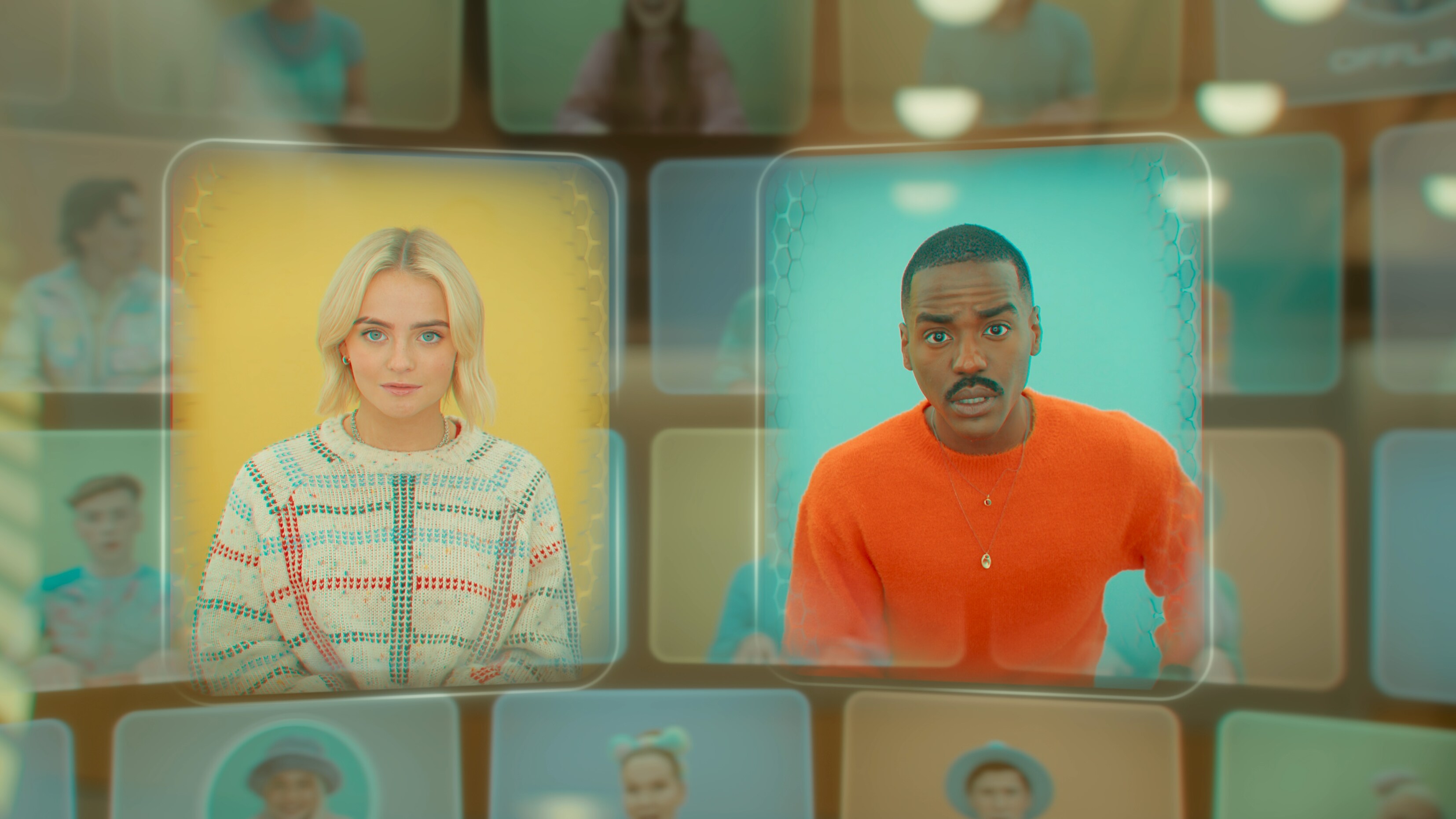
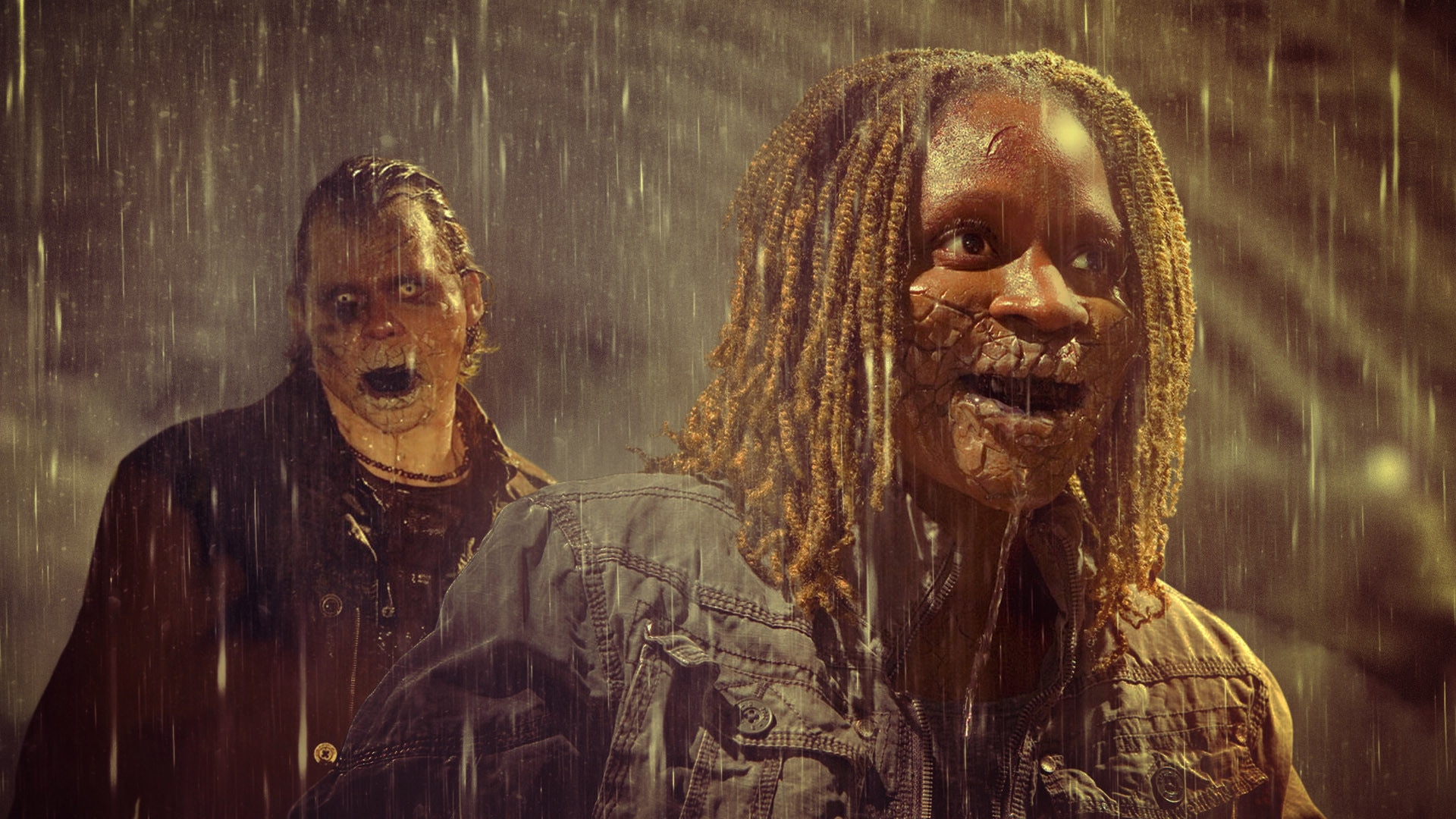
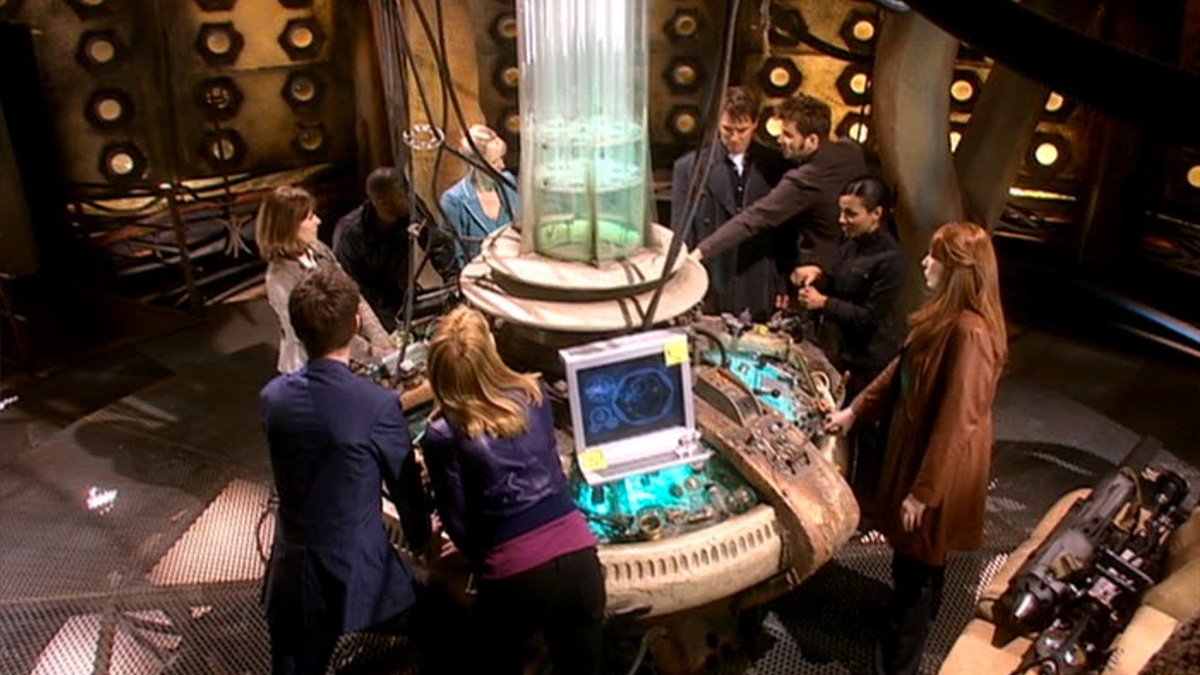
 2. The End of Time. Post-season 4 special. I don’t even like thinking about this one. David Tennant did such a great job as Doctor Who and deserved better than a terrible swan song that not only brings back a comic-book Master, but also resurrects the Time Lords in a cheap plot, while making sure to plumb the worst aspects of kitchen-sink opera with Donna and her family. Payoffs are abysmal and the trappings are as bad as they get in a Davies script, from a medical fix-it machine, to silly cactus-people, to the Master flying with his bare hands, to a climax which can barely be called that — just the three leads talking to each other in a ballroom. Things get even worse in the long and saccharine denouement, as the Doctor revisits all his previous companions before he regenerates, and while Davies is obviously trying to honor Tennant, the result is oppressively self-indulgent. It’s a horrible end to his era, but everything I unfortunately expected.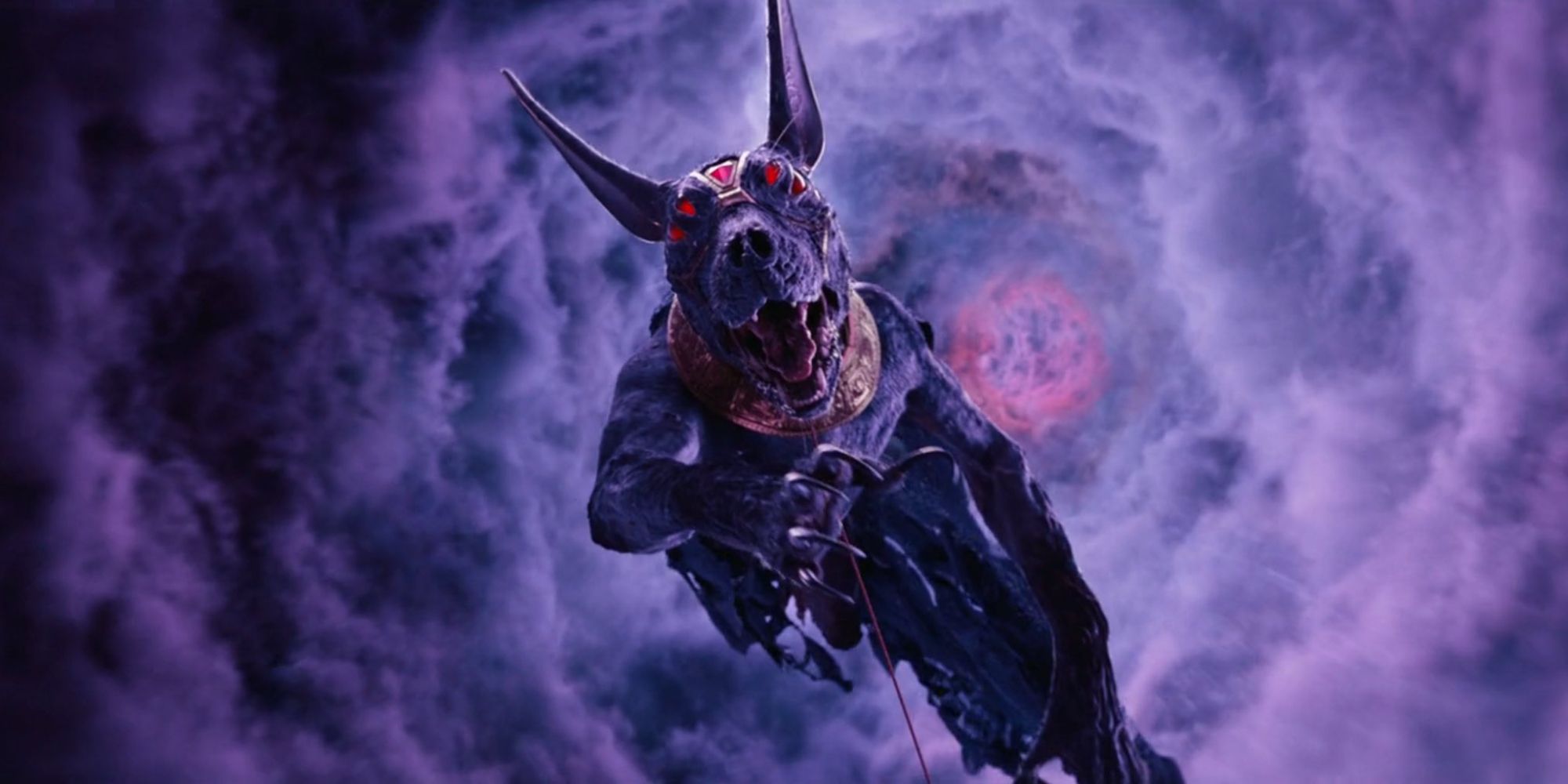


_1-05_World_War_III_14.jpg)


 The Busybody