If you’re looking for realistic, empowering ways to make the world a better place—without waiting on politicians or big corporations—this is for you.
Building a Better World in Your Backyard by Paul Wheaton and Shawn Klassen-Koop isn’t your typical “green living” book. It skips the guilt and finger-pointing and goes straight into practical, often free, solutions you can try right now. Want to cut your energy use by 90%? Grow more food at home? Stop sending nasty chemicals down the drain? This book has dozens of ideas, all tested and doable—even on a tight budget.
And now, the book has its very own website! You can learn more, grab a copy, and find out why so many folks say this book gave them real hope: greenlivingbook.com
If you check it out, we’d love your feedback too—just drop us a note:
Looking for a thoughtful and unique gift? Our permaculture playing cards are the perfect choice for birthdays, holidays, or any special occasion. Share the joy of sustainable gardening with friends and family while inspiring them to embrace eco-friendly practices.
Our beautifully designed deck of permaculture playing cards combines the fun of traditional card games with the wisdom of sustainable gardening. Each card features valuable tips, techniques, and principles that can help any gardener, from beginner to expert, thrive.
More than just a game, these cards are a valuable resource. They offer insights into permaculture design, companion planting, and eco-friendly gardening methods. With our cards, you can learn and play, all while cultivating a deeper connection with nature.
When you gift our permaculture playing cards, you’re not just giving a gift; you’re joining a community. Together, we can create a greener future, one card at a time.
I am pleased as pie (and you know how much I like pie, especially huckleberry pie) to report that my 12th Kickstarter was an astounding success! It broke all sorts of records: fully funded in less than an hour; highest 1st day, best last day, highest daily average, and highest total of all my other Kickstarters! My team and I were humbled and grateful for all the backers that made this incredible feat possible.
The funds raised went towards the production of a video course – The Garden Master Course with Helen Atthowe, Alan Booker and me (!) as the instructors. It feels great to think that this will go out into the world and further ‘infect minds with permaculture’. This course will allow more people to access the knowledge of decades of experience at a low cost and from the comforts of their own homes.
The record breaking Kickstarter speaks to the fact that a Master Gardener Program has long been sought after as the paramount credential among horticulturists. But more and more, people are eschewing the use of pesticides and herbicides that are emphasized in most Master Gardener Programs. Thus, the Garden Master Course was created. It goes above and beyond – teaching not only the fundamentals of a master gardener program, but also incorporating Fukuoka-style practices that have been improving upon over the last few decades.
The Garden Master Course is a 35-hour video-based online course that offers comprehensive information on gardening. It is considered to provide more up-to-date information than most in-person, university-funded master gardener programs. It goes “beyond-organic”! To find out more, check out our spiffy new master gardener program.
Now, I am in the midst of promoting my 13th Kickstarter…’cause – you know, I love to try impossible things, like world domination – and beating my 12th Kickstarter is a challenge I can’t resist. Check out our progress here https://www.kickstarter.com/projects/paulwheaton/low-tech
Posted inUncategorized|Comments Off on A master gardener program that goes beyond organic…
My friend, Raven Ranson (author of Homegrown Linen: transforming flaxseed into fibre), recently wrote a book Clean with Cleaners You Can Eat. It goes beyond DIY cleaning recipes, to a beautiful new way of cleaning. It’s a way of cleaning that cuts your carbon footprint, and the toxic, cancer-causing gick in your life. Her book is now free for a while on permies.com. Here is the forward I wrote for her book:
A few years ago I watched a fascinating documentary about a family having their conventional household cleaners removed and replaced with “organic” equivalents. I told the people on the screen to go even further, but they ignored me – as people in documentaries do. There were several profound things that the documentary showed, despite them not following my advice. The entire family became noticeably healthier. But the thing that stuck in my memory the most was something that the documentary didn’t mention: the mom, who did most of the cleaning, appeared to gain about 30 IQ points.
The documentary happened in a way that you would expect. As they were taking the conventional products away, the family was quite frustrated: “how can we possibly be clean without these products?” If nothing else, it has taken years of trial and error to develop the brand loyalty.
I suspect that if Raven was the producer of the movie, the reaction would have featured ten times more panic! After all, the people in that house were merely replacing their conventional products with less toxic equivalents. So the box of conventional detergent was replaced with detergent labeled as better for the environment. To those nice people, this was a bit beyond their comfort zone – a bit too radical. If that household were to be converted to what is outlined in this book, those people may have taken up knives and other stabby things to express their opinion about “that is NOT going to happen in this house!”
The contents of this book might best be embraced by people that have already made the switch that was forced upon that family. People that have been using the “eco” detergent for a few years may have already had a thought of “what is in this that makes it ‘eco’? If I studied, would I find something even better?”
Raven has a difficult task. She is an advocate for the power and chemistry of water. Her bleach is sunlight and her favorite all purpose cleaner is a handful of bits of knowledge.
There it is – to clean with a bit of knowledge instead of a bottle of toxins with a massive marketing campaign. Maybe a little experience. And top it off with having a cleaner home in half the time and one tenth of the expense. Because there was no marketing. Of course, most people won’t believe it if there was no marketing. And that’s the biggest challenge of all. What a delicious book. So simple. So easy. So much cleaner than a house that stinks of cleaners. Fresh air, sunshine and water are the core. A bit of lemon juice, vinegar and baking soda used sparingly…Truly clean.
Click above to get your own ebook of “Clean with Cleaners You Can Eat”
If you like this sort of thing, check out my Building a Better World in Your Backyard book, which is all about living a more luxuriant life, all while cutting your expenses, reducing your carbon footprint, and removing toxic gick from your life.
When many people think of eco-friendly power, they think of solar or wind. I think of wood heat.
Wood is renewable and burning wood for heat has a lower carbon footprint than electric heat or natural gas heat. And a rocket mass heater has one tenth the carbon footprint of a conventional wood stove. You can heat and cook at home with wood in an efficient and luxuriant manner that is good for the environment. And get delicious pizza out of the deal. Mmm, pizza.
Rocket mass heaters have a more efficient burn because they burn at a higher temperature, turn the smoke into fuel, and charge the mass around them. This leaves your home nice and toasty for a day or more after you heated up your rocket mass heater.
Marvel in my amazing graphic skills as I explain:
Ernie and Erica Wisner go into far more detail about the fire science involved in rocket mass heaters in the first DVD in the Wood Burning Stoves 2.0 DVDs. Those DVDs not only cover fire science, but also the making of pocket rockets, the explosive properties of steam, and our most efficient rocket mass heater design of the time.
But wait, there’s more! Rocket mass heaters are versatile for lots of situations: a cozy place to sleep in a tipi, a place to warm your butt around the campfire without smoke in your face, stoves to cook on, efficient ways to heat your home, a source for hot water, and even an oven for pie. Mmm, pie. All of those are covered in my Better Wood Heat DVDs.
But let’s go back to that pie. We further improved our pie-making abilities with our rocket oven DVDs. You can make your own wood-fired pizza or delicious pie with a rocket oven. Making a rocket oven isn’t as easy as pie, but it’s pretty close with Tyler Morrison’s instructions.
Warm pie. Warm butts. Clean affordable heat. What’s more luxuriant than that?
Posted inUncategorized|Comments Off on Eco-Friendly, Luxuriant Wood Power
Much like Carmen Sandiego, Paul can be found all over the place!
When I was first learning about permaculture, I got really frustrated with how little free knowledge about permaculture techniques there were. It all seemed scattered on various websites, and no one seemed to be answering the questions or giving the foundational knowledge in one easy-to-find place. And then I found permies and Paul Wheaton’s Youtube channel and richsoil.com. I was hooked! I watched every youtube video and read every article, and joined the forums at permies.com.
But, those aren’t the only places to find Paul Wheaton! Over time, I’ve found a bunch more, so I thought I’d share them here!
Hot diggity! I just finished my 9th kickstarter, and what a whirlwind! In the span of 2 months we went from thinking about making a Truly Passive Greenhouse Movie, to finishing the kickstarter.
You can find out even more about the Truly Passive Greenhouse Movie over on Kickstarter. Bascially, though, it takes Mike Oehler’s Underground Greenhouse even further, making it even more passive. It won’t need ventilation or heating…or cooling. Never too hot, and never too cold. Spiffy! And, it solves the problem of how to recycle grey water in cold climates without the water all freezing.
We’ve already had two building meetings, and readying building materials. It’s going to be built by Allerton Abbey here at Wheaton Labs.
gathering timbers for the greenhouse
If you’re interested in joining in the building, come join my Permaculture Bootcamp!
It’s awesome to see this actually happening! Huge thanks to all the kickstarter supporters for making this possible!
Posted inUncategorized|Comments Off on Truly Passive Greenhouse
In the last post, I talked about Base Camp at Wheaton Labs. Today, we’ll take a hike over to the Labs and talk a little bit about what’s going on there!
The Labs
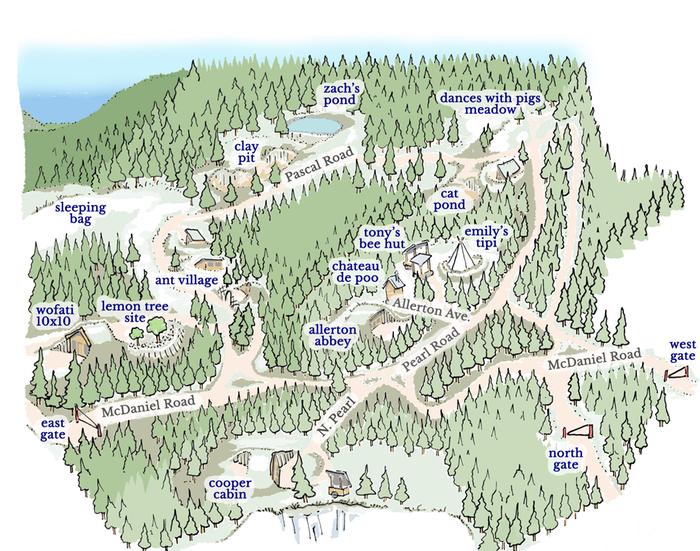
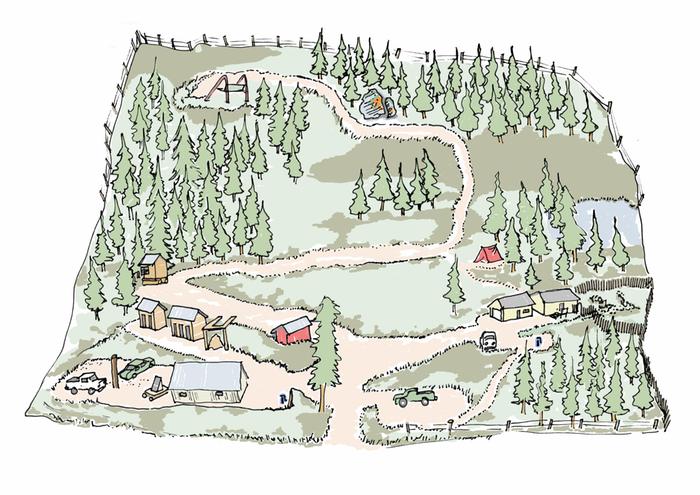
Davin Hoyt drew this awesome map of Base Camp. If you click the image, you can see a connected picture of both Base Camp and Wheaton Labs!
Everyone at Ant Village get their own acre to turn into their own permaculture paradise. They can rent it per year via Shallow Roots, or for a lifetime with Deep Roots, or they can earn both shallow or deep roots through Permaculture Bootcamp.
There’s even more than just Ant Village up at the Labs, though! This makes sense since the Labs is over 300 acres in size!
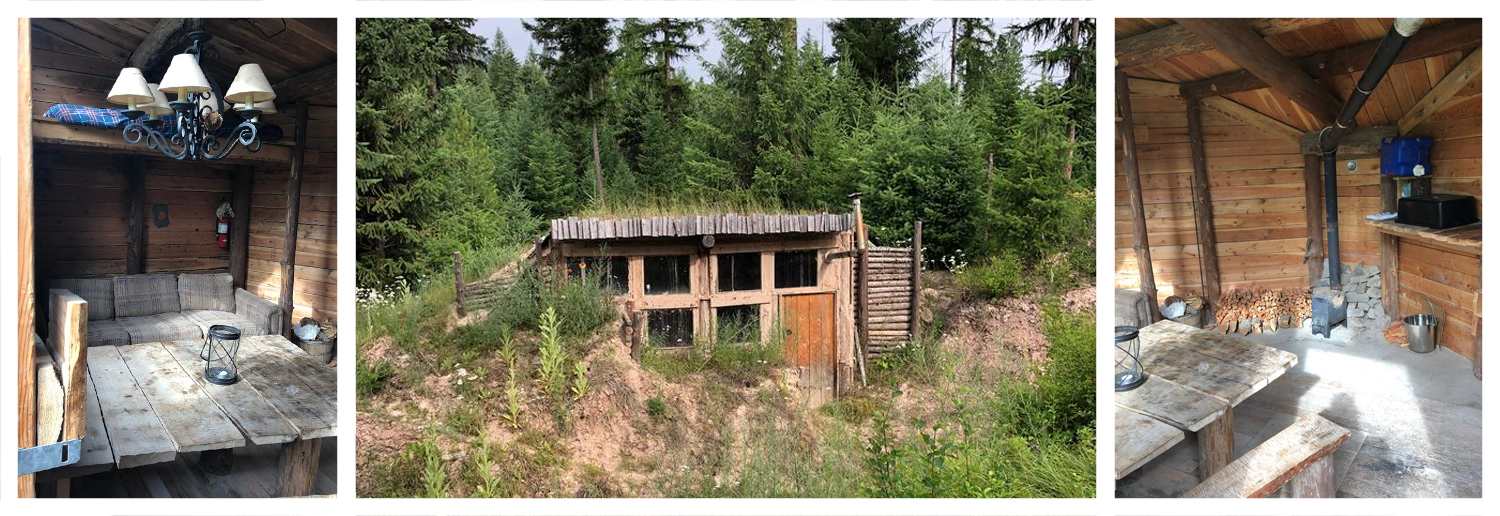
Woodland. A wofati should be near a woods, which would not just be a source of much of the materials, but also a home to the building.
Mike Oehler. 80% of Paul Wheaton’s design is based off of the work of Mike Oehler.
Freaky-cheap. While a wofati could be made from expensive materials, it can also be made with very affordable and scavanged materials. Mike Oehler‘s house only cost him $50 to build!
Annualized Thermal Inertia. The earth-sheltered nature of the building means it is not only cooler in the summer, but also warmer in the winter. It stores the heat of the summer for the winter, and vice-a-versa.
You can see all sorts of planning and progress pictures and updates of Allerton Abbey in this thread. You can even take a tour with Jennifer Richardson in the video down below:
Allerton Abbey is also going to be the same site as the firs wofati greenhouse! The wofati takes all that is excellent about Oehler’s Earth Sheltered Solar Greenhouse book, and improves upon it even further.
The wofati greenhouse will allow people to not only extend their growing season, but also help recycle grey water in an area where it would otherwise just freeze to ice during the winter. This is because the solar exposure, earth-sheltering, and passive airflow create a greenhouse that is not too hot in the summer, nor too cold in the winter:
Lemon Tree
Paul is a huge fan of a Sepp Holzer–you might even call him Sepp’s disciple, as he studied under Sepp Holzer in austria. In fact, Paul even presented and answered questions at on of Sepp Holzer’s conferences!
Sepp Holzer does amazing things to extend not just the growing season, but also to make it so plants that normally could not survive (let alone fruit) in his planting zone, can thrive there. One of Paul’s goals is to do just this with the power of earth works, and grow a lemon tree in Montana
If I run across a more recent picture of the lemon tree site, I’ll update this page to have it!
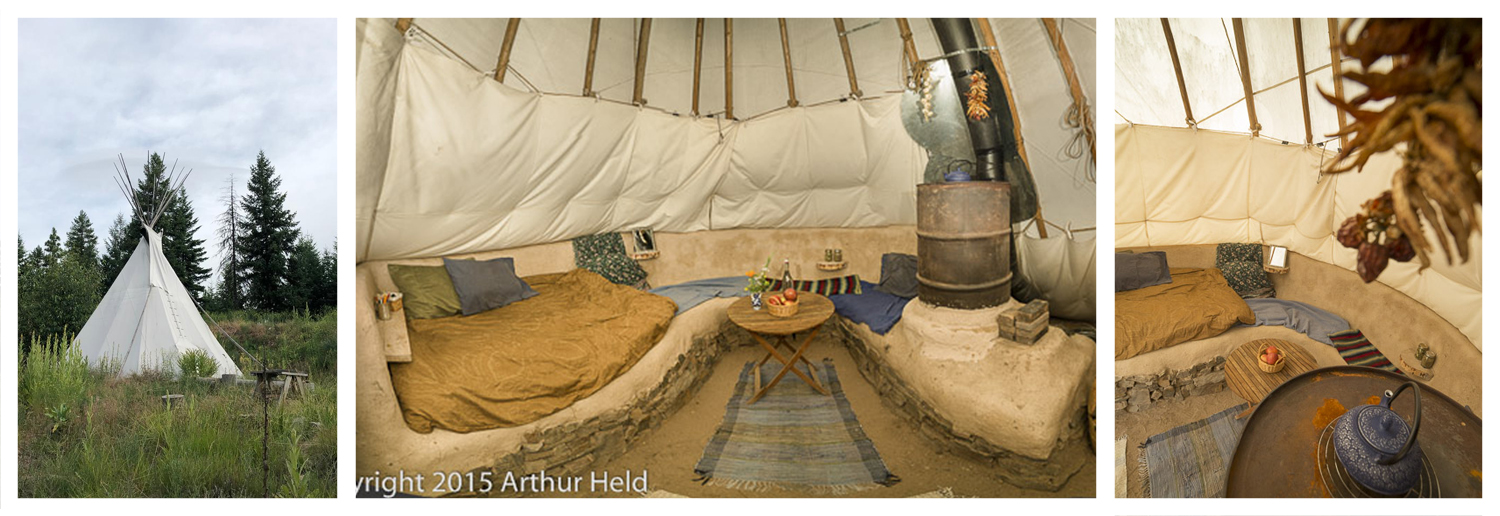
The Tipi
One of the most unique structures–at least to me!–is the rocket mass heated tipi. Like the lemon tree, the tipi resides in a sun scoop that makes for a lovely growing area, well as a much warmer microclimate for the tipi. But, the real heating source for the tipi is the rocket mass heater built within it!
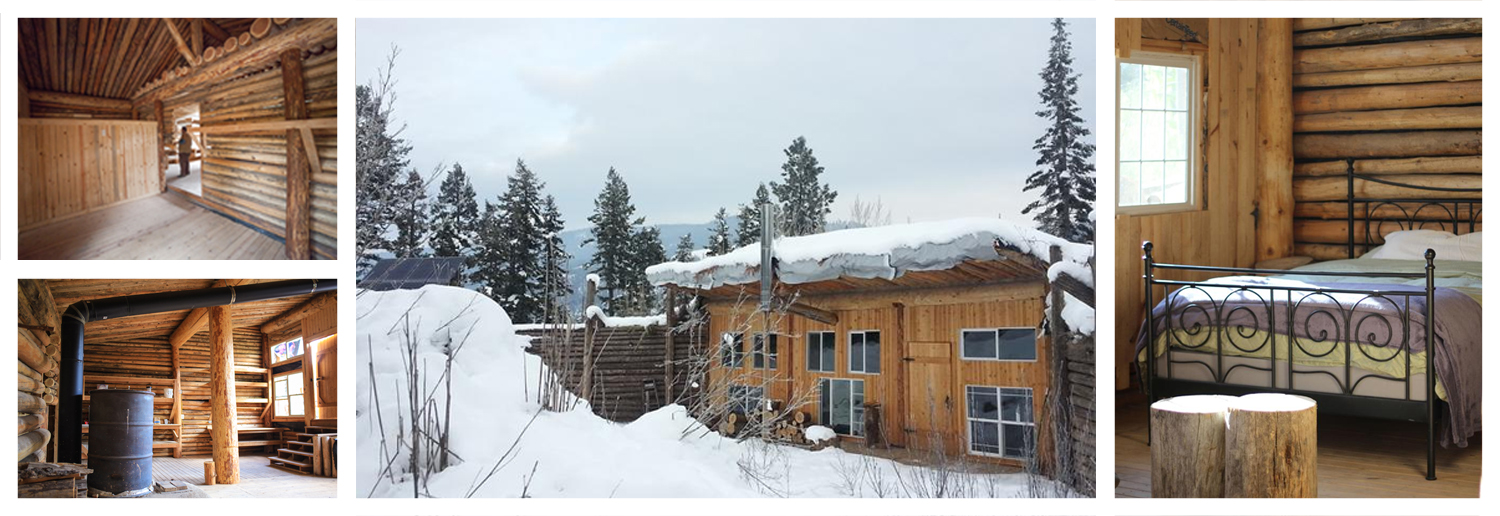
The Labs are also home to the second wofati cooper cabin, as well as an Oehler home. You can find out more about both structures here, and see a whole bunch more information about Cooper Cabinhere!
I hope you enjoyed my little tour of the Labs, and hopefully now you won’t feel quite as lost when wondering where all these awesome things are! And, if you missed the tour of Base Camp, you can find it here!
Posted inUncategorized|Comments Off on The Labs at Wheaton Labs
When I first heard about Wheaton Labs, I was really confused. Where’s the Ant Village? What is Fisher Price house? Where does Paul Wheaton live there? What’s the Lab and Base Camp? What do people even DO there? What makes it so special?
I think I’ve finally figured it out! I learned a lot of this on the Summary of Wheaton Labs, but there’s a lot more I’ve picked up over time. I’m going to try to congeal all I know, and hopefully this will help answer your questions, too!
Paul Wheaton lives at Base Camp, and some of the Boots live there too, and some might stay up at their plots at The Labs, in the section of the Labs called “Ant Village.”
What are these “Boots?” Boots are people who are part of the Permaculture Bootcamp at Wheaton Labs. They learn permaculture and homesteading through hard work, and some chose to work for their own plot at the Ant Village at The Labs, and some do work trades for events. And some just come to learn a lot and take part in some epic projects!
Base Camp
Davin Hoyt drew this awesome map of Base Camp. If you click the image, you can see a connected picture of both Base Camp and Wheaton Labs!
If you’re coming to Wheaton Labs for an event like the the Permaculture Design Course, or Permaculture Technnology Jamboree, or SKIP: SKills to Inherity Property, you’ll likely be spending a lot of time at Base Camp. You can find the library, shop, audiorium, Fisher Price House, and willow feeders there at Base Camp! Base camp is on-grid, ROCKY, has wifi, and Paul lives in the “Fisher Price House.”
Justin Rhodes visited and made this great video featuring the Rocket Mass Heaters and Willow Feeders at Base Camp:
Here’s a great video Paul made about how to make hugelkultur beds:
The Berm Shed is also at Base Camp, right next to Fisher Price House! Berms are a bit different than hugelkultur garden beds–berms are just giant mounds of soil! So the berm shed is an earth-sheltered shed! There’s a bunch of other berms at base camp, too. Here’s Paul Wheaton explaining the basics of berms:
More Structures at Base Camp
There’s a few other notable structures at Base Camp, like the rocket-heated Shower Shack, Willow Feeders, auditorium, and library. There’s also two cute little tiny house/ micro-cabins.
The Love Shack is an even cuter and cozier micro cabin, though it still managed a double/twin bunk bed, and it’s kept nice and warm with the “Minnie Mouse” rocket mass heater. It even has a small solar panel for charging phones or a light!
….Wow! This blog is already pretty long! I’ll talk about The Lab in my next post!
This year we had grand plans for all sorts of amazing events at Wheaton Labs.
— SKIP: SKills to Inherit Property An event all about learning basic homesteading and permaculture skills by creating and doing awesome stuff. And then you’re able to SKIP the rat race and get straight to homesteading.
— Permaculture Technology Jamboree This was going to take the previous Appropriate Technology Course and make it far more awesome, with 12 instructors and 10 different tracks that people could switch between. It was to be full of permaculture innovation and learning.
— Permaculture Design Course Alan Booker was going to be back, doing his usual amazing job of teaching permaculture design for those that really wanted to go above and beyond the a normal PDC and get a lot more science and engineering meat in the class.
And then the pandemic happened. Bummer! And while we’re planning on having these events next year (check the links above for more info!), we know not everyone is wishing to go to large gatherings, for all the reasons. But, we have an option for them, too!
All 177 hours of our 2017 Permaculture Design Course and Appropriate Technology Course are available here! You can watch at your own pace, take notes, re-watch, come back years later and watch it again, whatever!
If you’re trying to find a productive way to spend your time and learn a lot, our online Permaculture Design Course could be just the ticket.
And, if you want even more, head over to the forums at permies.com, where we talk about permaculture and homesteading all the time.
Posted inUncategorized|Comments Off on Permaculture Events and Online PDC!


![[Thumbnail for Clean-with-cleaners-you-can-eat-by-raven-ranson-copy.jpg]](https://permies.com/t/107215/a/117123/thumb-Clean-with-cleaners-you-can-eat-by-raven-ranson-copy.jpg)












 practical permaculture by paul wheaton
You must be logged in to post a comment.