I first learnt of Trump’s Religious Liberty Commission, which delivered its draft report on June 26, from a post in Hemant Mehta’s Friendly Atheist, where he describes it as a clown show and as “a blueprint to end church-state separation.” Mehta is far too optimistic. The commission’s report is much more than that. The final report, we are promised, “will equip all Americans with the knowledge and support needed to defend their Constitutional rights.” The draft shows us what these words really mean. It contains recommendations that would greatly aid the Administration in its campaigns against independence of thought, suppress discussion of Palestinian rights, encourage proselytizing in the workplace, and grant protected status to conspiracy theories put forward in the name of religion.
There’s worse.
The very first recommendation reads
Instruct the Department of Justice to issue guidance clarifying the proper understanding of the Establishment Clause and separation of church and state.
There is so much wrong with this, that one hardly knows where to start. The Department of Justice is part of the Administration, and has no business issuing guidance on the “proper understanding” of any part of the Constitution, let alone the complex subject of church-state relations. The fact that the Commissioners, who include in their number influential scholars, prelates, and opinion shapers, were willing to put their name to this recommendation shows, more clearly than any other single recent event, that the United States as a Constitutional Republic is all but dead.
The strategy involved is obviously far beyond the mental capacity of the man who sits in the Oval Office, but fully in accord with the thinking of his entourage, and in particular of Russell Vought, whose 2022 article, Renewing American’s Purpose referred to the United States as “post-constitutional,” complained as an example about the role of career officials (remember that this includes all the scientists) in the Centers for Disease Control, and demanded that governmental activities be brought under strict centralized supervision.
The specific recommendations are very much as would be expected, given the choice of Commissioners, and lay out the plan to hold the MAGA coalition together in the approaching post-Trump era.
I will start by discussing the backgrounds of the individual Commissioners, and what this tells us about the purpose of the exercise (the one Commissioner who did not behave as expected was thrown off). With this background, I will briefly comment on some of the specific recommendations, and what they would imply. The Commission made a total of 12 recommendations, which I discuss briefly, and list in full at the end of this piece.
The Chair of the Commission is Dan Patrick, Lieutenant Governor of Texas, whose views include support for legislation requiring display of the Ten Commandments in Texas schools, and preventing those schools from requiring that students read writings by prominent civil rights figures, such as Susan B. Anthony, Cesar Chavez, and Martin Luther King Jr, in social studies classes. He also supports the inclusion of creationism in the school curriculum, and is a member of a church committed to the 2000 Faith and Message of the Southern Baptist Convention, which states that “Man is the special creation of God, made in His own image. He created them male and female as the crowning work of His creation. The gift of gender is thus part of the goodness of God’s creation.” and “We should speak on behalf of the unborn and contend for the sanctity of all human life from conception to natural death.”
Ben Carson, Vice-Chair, is an extremely accomplished surgeon. He was HUD Secretary during Trump’s first term, and appointed National Advisor for Nutrition, Health, and Housing in September 2025. He maintains that accepting evolution is incompatible with God and with morality, and is encouraged by Lucifer. He is the founder of the American Cornerstone Institute, a right-wing think tank that describes America as built on faith. When I visited the site on July 5, it featured an article in favor of Voter ID, and a video of Carson interviewing Dr Oz about “the MAHA campaign to heal America.” CNN describes Carson as having had an extensive relationship with Mannatech, which claims that its natural healing products can cure multiple diseases, and was successfully sued for this by Greg Abbott, then Attorney-General and now Governor of Texas. In a 2024 book, Carson favors a nation-wide ban on abortion and also cuts to federal assistance for single mothers.
Cardinal Nolan recording message for the 2020 Republican Convention. Statue of Liberty suitably out of focus. Via netny.tv
Two Commissioners are Catholic prelates; Robert Barron, Catholic Bishop of Winona–Rochester, and Timothy M. Dolan, Cardinal Archbishop of New York (now retired). Robert Barron’s Word on Fire website carries an article in which he explicitly rejects the distinction between private morality and public policy, comparing someone who regards abortion as wrong but not a matter for legislation to the absurdity of someone who thought slavery was wrong, but opposed its legal abolition. Timothy Nolan delivered the first benediction at President Trump’s 2017 inauguration, and the opening prayer at the 2020 Republican convention. He opposed the requirement that employers (and later insurers), cover birth control, as violation of conscience. On Fox News, he described Charlie Kirk as a modern day St Paul.
The Commission includes three other religious leaders. Of these, two (Franklin Graham and Paula White) will be well-known to readers, and are, more than any other individuals, directly responsible for the MAGAfication of Evangelical Christianity in the US. Paula White features prominently in the well-known photoshoots of Trump being prayed over, has been in contact with Trump since 2002, described him as raised up by God, and his Supreme Court appointments as “scaring the literal hell out of demonic spirits”, and called on angels to come from Africa and South America to undo the result of the 2020 Presidential Election (they failed to show up).
Paula White leading charismatic pastors in prayer in the White House, via Baptist News article by my friend Rodney Kennedy, giving deeper insight into their relationship
The remaining religious leader, Meir Soloveichik, is a Modern Orthodox Rabbi , with a PhD in religion from Princeton. He gave the opening invocation at the 2012 Republican Convention, and in 2024 was appointed by Mitch McConnell to the United States Commission on International Religious Freedom. He is Professor of Judaic Studies and Director of the Straus Center for Torah and Western Thought at Yeshiva University. His many articles include “The Real Israel Lobby: It’s the American people,” The Weekly Standard (February 2013), which tells us that love for Israel is founded “on the conviction that Israel is indeed an island of liberty in a region that is an ocean of hostility to America and the American idea. As such, Israel’s endurance represents a triumph of the American vision — a vision that was, in part, inspired by the Bible, the book bequeathed to the world by Ancient Israel.”
Ryan T. Anderson has worked for the Heritage Foundation, and is now president of the Ethics and Public Policy Center, (EPPC) which describes itself as “D.C.’s premier institute working to apply the riches of the Jewish and Christian traditions to contemporary questions of law, culture, and politics, in pursuit of America’s continued civic and cultural renewal.” He is co-author of the EPPC’s deeply flawed attack on the safety of mifepristone, published without peer-review, and co-author of What is Marriage, which argues against same-sex marriage on the grounds that the defining feature of marriage is reproduction.
Kelly Shackelford is head of First Liberty Institute, which is an adviser to Project 2025, and litigates First Amendment issues from a right-wing perspective. Among its achievements are persuading the Supreme Court in Kennedy v. Bremerton School District to allow the school football coach, Joseph Kennedy, to continue publicly praying in the field immediately after matches. This decision marked the abandonment of the Lemon test for what activities would violate the Establishment Clause of the US constitution, the clause that prohibits government from sponsoring a religion. This test had played important part in cases such as Kitzmiller v Dover Area School Board, and according to Judge Jones, who decided that case, its abandonment will increasingly blur the distinction between government and religion.
Allyson Ho is a highly esteemed appellate lawyer, who clerked for Sandra Day O’Connor. She is now best known for representing companies, and has argued before the Supreme Court on their behalf. We may well be hearing more about her. She has done pro bono work for First Liberty Institute, on which see above.
Phil McGraw (“Doctor Phil”) rose to prominence through his appearances on Oprah Winfrey’s show, and subsequently his own, using her Harpo Studios, which attracted millions of viewers. I remember him from that period as advocating “tough love,” a dangerous concept. He has worked with lawyers (this is how he met Oprah) on trial rehearsals, and founded the telehealth company Doctor on Demand, which offers online consultations. His more unusual ventures include launching, in 2003, a brand of weight-loss supplements that was suspended in 2004 and led to subsequent litigation because of misleading advertising. He endorsed Donald Trump at his 2024 Madison Square Garden rally, and broadcast video footage of himself embedded with ICE officers in Chicago in January 2025. In November 2024, over a year into Israel’s actions in Gaza, he described his support for Israel as “goodversus evil,” and described professors and students opposing Israeli actions as “absolutely supporting terrorist organizations.
Eric Metaxas has a degree in English from Yale. He is a successful right-wing commentator and talk-show host, where I have come across him helping Stephen Meyer promote the pseudoscience of Intelligent Design. He is a firm supporter of Donald Trump, and his many children’s books include Donald Builds the Wall and Donald Drains the Swamp. He maintained that the 2020 Presidential election was stolen, that Trump would be inaugurated, and that those responsible would go to jail. He told Trump on his show that God was with him in the fight to overthrow the election result, and told Charlie Kirk that this was a battle worth dying for. In March 2021, he told people not to get the Covid vaccine, in a tweet that was subsequently deleted. He passed on the false claim that the vaccines contained fetal tissue, and argued that “Americans need to understand that if the government, or everybody, is telling you you have to do something, we don’t have dissent, no dissent, you need to understand that’s not the American way, folks. And if only to be a rebel, you need to say, ‘I’m not going to do that.’”
Carrie Prejean Miss California 2009, Flickr via Wikipedia
Caroline Michelle Prejean Boller is in some ways the most interesting appointee to the Commission, not least for having been thrown off it by the Chair. After having trained as a special needs teacher, she became Miss California 2009, and attracted attention by vocal opposition to same-sex marriage, which is perhaps one reason why she was appointed. She was a member of Trump’s Campaign Advisory Board in 2020, and appeared on Fox News. In August 2021, she opposed masking in schools on the grounds that the Covid pandemic was over (it wasn’t; the third wave was moving towards its peak), and equated drag shows with grooming. She had been raised as an Evangelical Christian, but was received into the Catholic Church on Easter Vigil 2025, just two weeks before her appointment to the Commission. She was removed in February 2026, on the grounds of having hijacked a Commission hearing on anti-Semitism, after insisting that criticism of Israel does not constitute anti-Semitism and that Catholics as a group are not Zionists, and asking witnesses complaining of anti-Semitism if they were willing to condemn what Israel was doing in Gaza. After her removal, the Muslim adviser to the Commission resigned, expressing regret for having granted it any legitimacy.
Some things about this list are immediately obvious. Of the original thirteen members (now twelve), five are religious leaders by profession, which might influence their perspective. Four of these five have taken part in Republican or Trump-promoting events, while the fifth (Robert Barron), anticipating Trump by some days, responded on June 29 to the recent primary victories of left-leaning Democrats by raising the specter of Communism and its attacks on religion. (Notice that the in the link I give here is to a seemingly approving article in The Signal, a right-wing publication founded by the Heritage Foundation, and controlled by it until 2024.) At least eleven of the thirteen are involved with the Republican Party, have taken part in Republican activities, or have declared their support for Trump.
There are a number of other strategically chosen concerns. Unconditional support for Israel is linked to the claim that criticism of Israel is anti-Semitism and amounts to support of terrorism. The charge of anti-Semitism has played a major role in Trump’s attack on the Universities, while equating criticism with approval of terrorism paves the way for very wide restrictions on expression. (The UK gives us a shocking example of this, with the legally dubious proscribing of Palestine Action as a terrorist organization, followed by the prosecution as terrorism supporters of people holding up placards in protest.) Of all the specific recommendations, the one regarding anti-Semitism is the most frightening, since it not only enables criticism of Israel to be treated as suppression of religious freedom, but instructs the provision of “civic education” by the Administration.
The Rev. Sue Parfitt, 84, being arrested outside London Metropolitan Police HQ for proclaiming her support for Palestine Action Photograph: Jordan Pettitt/PA, via Guardian
We have the claim, one of Soloveichik’s repeated themes, that the US was founded on biblical principles. This can be used to justify any intrusion of the Bible into governmental sphere, as well as adding weight to the doctrine of an unbreakable US-Israel alliance, thus making criticism of Irael appear unpatriotic.
More surprisingly, we have lots of support for fringe medicine, or direct attacks on the medical establishment. So we have both Carson and McGraw involved with mis-sold supplements. McGraw in his 2024 book We’ve Got Issues: How You Can Stand Strong for America’s Soul and Sanity maintains that medical science was weakened by its response to Covid [Disclosure; that’s just a detail I noticed while browsing Amazon’s free sample; I have not bought the book], whereas in fact a stupendous feat of rapid vaccine development saved millions of lives, and Carson’s American Cornerstone Foundation supports (February 27 video) Dr Oz’s MAHA anti-science. Carson himself took the herbal supplement oleandrin when suffering from Covid. Paula White used the pandemic to solicit donations for her ministry, which she referred to as a hospital, citing Psalm 91 with its promise of protection from pestilence. I have already mentioned Anderson’s baseless attack on the safety of mifepristone, obviously motivated by his views on abortion, Metaxas’ advice against vaccination, and Carrie Prejean’s opposition to masking.
There is opposition to same-sex marriage. This is a deliberate running together of two separate functions of marriage. First, a three-way contract between the parties and Government, since there is a public interest in the existence of stable partnerships, particularly but not exclusively when children are involved. Secondly, as a sacrament. This is a matter for the Churches, some but not all of which refuse to solemnify same-sex marriage. And they are within their rights to do so, much as the Catholic Church is within its rights when refusing to solemnify the marriage of divorcees, although in both cases we can debate the wisdom of their decision.
There is a further agenda here; strengthening the position of officials who refuse to register same-sex marriage, and by implication all employees refusing to do their jobs on the basis of a personal religious objection. This is behind many of the recommendations listed below, especially (10) and (11), which are particularly fatuous given the wide-ranging vaccinations that every member of the US Armed Forces will have received on enlistment.
Consider also the commissioners’ beliefs about elections, and promotion of the claim that the 2020 Presidential election outcome was illegitimate. Patrick offered a reward for notifications of fraud in the 2020 election, and encouraged Trump in his refusal to concede. Relatedly, Carson on the American Cornerstone Institute website has recently claimed that Voter ID is popular, mentioning large numbers of illegal immigrants and the possibility of fraud; in context, that is denying in advance. Franklin Graham said, regarding Trump’s 2016 victory, that “God showed up,” and compared the Republican senators who voted for Trump’s impeachment after the 2021 assault on the Capitol to Judas Iscariot betraying Jesus. I have already mentioned Eric Metaxas’ and Paula White’s reactions to 2020.
Four Commissioners endorse creationism. As already mentioned, Patrick and Carson are creationists, as is Graham, with Carson regarding evolution science as diabolical. Paula White’s views on the subject, as on many traditional theological concerns, remains obscure. Metaxas accepts an ancient Earth, but believes in Intelligent Design and frequently has its supporters on his show. The subject is particularly relevant in the context of the Commission, since if its recommendations are acted on, and in view of what I have already said about the demise of the Lemon test, it is only a matter before some school board or individual teacher insists that their religious beliefs entitle them to teach creationism in the science class.
Much more could be said about the specific recommendations, which I list below. For brevity, I will merely point out the gross intrusion (Recommendations 2 and 7) of official propaganda into schools and the workplace, the provision (Recommendation 4) of a hot line for students to inform on their teachers, the assertion (Recommendation 5) of the right of the Administration to distinguish between proper and improper judicial reasoning, and the repeal (Recommendation 9) of the Johnson Amendment, agreed by Congress in 1954 without dissent, that prohibits religious organizations from explicitly endorsing candidates in elections (remember that the charitable status of such organizations renders donations to them tax-deductible; so repeal of this amendment would provide a Federal subsidy for partisan political activity).
And plenty more besides. Just look.
The full recommendations are as follows:
1) Instruct the Department of Justice to issue guidance clarifying the proper understanding of the Establishment Clause and separation of church and state.
2) The Department of Justice, Department of Health and Human Services, and Equal Employment Opportunity Commission shall issue “Know Your Rights” Posters for students, parents, public school teachers and administrators, religious leaders, religious institutions, healthcare workers, and military servicemembers.
3) Any public official who alleges a person under their supervision has improperly engaged in religious expression must provide a written explanation of the alleged violation to the person accused within 30 days of any action and explain that charge based upon a specific constitutional provision or provision of law.
4) Instruct the Department of Justice, Department of Health and Human Services, and Equal Employment Opportunity Commission, to create religious liberty violation reporting hotlines/online portals for students, parents, teachers, healthcare workers, and others to obtain support in the face of religious liberty violations and promote public awareness of existing reporting channels.
5) Nominate and confirm federal judges with the courage to decide religious liberty cases on the merits where warranted, rather than engage in improper judicial avoidance.
6) Ask the Department of Justice to create a religious liberty task force to track and prioritize litigation protecting religious liberty.
7) Combat anti-Semitism through enforcement of civil rights laws, litigation of credible allegations of anti-Semitic discrimination and violence, and civic education.
8) Protect religious Americans from government-led litigation targeting their free exercise.
9) Repeal the Johnson Amendment.
10) Order the Department of War to streamline and improve the religious accommodation process.
11) Continue efforts to restore the retirement or re-enlistment eligibility for service members who lost employment, health insurance, pensions, and other benefits because of their religious beliefs about the COVID-19 vaccine.
12) Honor the courage of religious liberty heroes through creating a Presidential Medal of Religious Liberty and First Freedom Hero Awards to recognize Americans who stand up for religious freedom and play an indispensable role in protecting citizens’ Constitutional rights.
Wikipedia is good on this: https://en.wikipedia.org/wiki/2026_United_Kingdom_local_elections . Reform got 26% of the vote, with Labour, Lib Dems, Conservatives, and Greens all within the range 16% – 18%. Not significant differences, but for what it’s worth, the highest of those was for the Greens.
I watched a little bit of BBC News reporting. Absolutely nothing about the Greens, but a great deal about Keir Starmer’s personal unpopularity.
The “strength” of Reform is a trick of perspective. They only look strong because of the successive collapse of the Lib Dems in 2015 (thank you, Nick Clegg, but now recovering), the Conservatives in 2024 (thank you Boris Johnson), and now Labour (thank you, Starmer), which has incredibly managed to lose almost exactly half utss support within two years.
The general election figures were Labour 34%, Conservatives 24%, Reform 14%, Lib Dems, 12%. So the real story is the collapse of Labour, the upsurge of Reform, the Greens, and to a significant extent the recovery by Lib Dems.
Is it too early for the two pro-EU parties to be discussing strategic focusing in 2029?
I discussed tactical voting in the 2024 general election here. My analysis stood up well to events, but much has changed since then. The most notable differences are the ability of Labour to half its support within 20 months of taking office, and the rise of Reform and the Greens to fill the vacuum left by the successive collapse of the major parties.
The May 7 election in Scotland takes place under the following rules:
For constituency member, first past the post
For additional regional members, a system meant to give approximate overall proportional representation.
Here are my non-expert suggestions for how to use your vote, remembering also the possibility that there may be one or more parties whose representation you wish to minimise.
For constituency member, is your most preferred candidate a credible contender? If so, vote for them. If not, vote for your preference among the candidates who are credible contenders.
For regional members, it gets more complicated, because votes at this stage for each party are effectively diluted, to the extent that they have been successful in the constituency elections. Thus it may make sense to vote for your second or even third choice for regional member, if there is one party whose representation you wish to minimise.
As the 2024 UK general election showed, historical party strength is now a very poor guide. There are also regional variations, and you should see what polling data are available for your region.
Polling graph for Scotland Constituency vote 2026 via Wikipedia. Intentions for the Regional vote are not significantly different.
I have not been able to find data for Stirling as such, but CoPilot suggests Mid-Scotland and Fife as surrogate. SNP will do so well in the constituency contests that it is unlikely to gain additional seats at the regional level. Co-Pilot’s model showed that Reform is likely to win at least one regional seat, with a possible second seat decided at the final stage of distribution, and very close competition between Reform, Labour, and Green. Thus if your top priority is to support Scottish independence, your regional vote should be Green. If your top priority is to oppose it, your choice is between Reform and Labour. If Scottish independence is not your most significant issue, you have three very different parties competing for your vote.
As I indicated, one major division within Scottish politics is that between the Independence parties (SNP, Green) and the rest. At the risk of losing friends, I will confess that I do not see this as of great importance. I sympathise with the desire for independence, but will take it more seriously when I come across a good plan for an independent Scotland’s currency, and in any case the question is academic since, understandably, Westminster will not recognise the outcome of any referendum within a dozen years of the previous one. Like many people, I feel that all the traditional parties have lost my respect, as for various reasons have the Scottish Greens (the UK-wide Green Party may be a different matter – we shall see). I do however have one overriding concern, and that is to minimise the influence of Reform. They are unlikely to become a dominant force in Holyrood, but on current trends are well placed to take control of Westminster. And their policies include nativist xenophobia, opposition to closer links between the UK and Europe, cutting taxation (and what else to pay for that? Oh, of course, benefits!), and replacing the NHS by an insurance-based scheme, which as US experience shows leads to doubling the costs, with poorer outcomes even for the wealthy. And, of course, Farage is part of Trump’s inner circle. Make of that whst you ill.
Matthew 27:5 And throwing down the pieces of silver into the temple, he departed, and he went and hanged himself.
But Acts 1:18 Now this man acquired a field with the reward of his wickedness, and falling headlong he burst open in the middle and all his bowels gushed out.
How can these both be true?
No problem, says Answers in Genesis. Since the Bible contains nothing inaccurate, both of these must be the case, and therefore they must represent two perspectives on the same event. But bear in mind that the bowels are held firmly in place by the abdominal muscles and skin. So what must have happened is this; first of all he went and hanged himself, but after a while the rope snapped, flesh goes off quickly in the hot Mediterranean sun, and his rotten corpse exploded.
That’s exactly what they say. I am not making any of this up.
So what’s my point? My point is that the Answers in Genesis style of literalism is absurd, offesnsive, and in its own way deeply irreverent.
As the American and Israeli war with Iran unfolds, some American Christians are speaking of the conflict in biblical terms, mapping end-time prophecies on to current events in the Middle East.
In a sermon on March 1, 2026, for example, John Hagee, founder of Christians United for Israel, described the war as part of a divine plan. “Prophetically, we’re right on cue,” he said. Later, he prayed that “God Almighty is brought onto the battlefield and the enemies of Zion and the enemies of the United States can be destroyed before our eyes. Let God arise and let his enemies be scattered.”
Meanwhile, Christian singer and activist Sean Feucht referred to “the end-time open doors of what (God) is going to do in Iran when this regime is prayerfully removed.”
This type of apocalyptic thought has roots in the 19th century, when many American preachers turned toward more literal readings of the Bible. Those readings also emphasized the Bible’s account of God promising the “Holy Land” to Abraham and his descendants. But Christian Zionism’s influence on politics has grown over the past half-century, as I write about in my book “Zeal for Zion.” Today, that mindset seems to be moving into the halls of the American government and the military.
End of an age
“Dispensationalism” is a Protestant idea that human history is divided into different ages, or dispensations, that each unfold God’s plan for the world. Churches that embrace it, which tend to be evangelical, believe that the current dispensation is coming to an end. But that time can be ushered in only by great suffering, a period known as “Jacob’s tribulations.” Israel is the place where they believe these tribulations will begin, and where they will culminate in Jesus’ Second Coming.
In the U.S., the most powerful manifestation of dispensationalist and apocalyptic thought is Christian Zionism. The term refers to many Christians’ strong support for Israel, rooted in the biblical account of God’s covenant with the Hebrew people.
Even before Israel was established, conservative evangelicals have long been enamored of the idea of a Jewish return to Zion. In the 1940s, Protestant emphasis on these biblical narratives influenced American public opinion and helped make the case for a Jewish state.
But in the first two decades of Israel’s history, from 1948-68, fundamentalist Christians had few direct allies among either Israeli or American Jews. Neither evinced much interest in working with conservative Christians, some of whom were involved in missionary work. Why would Jewish groups ally themselves with Christians seeking to convert them?
Turning point
The outcomes of Israel’s 1967 war with a coalition of Arab states changed that situation. From Syria, Israel conquered and occupied the Golan Heights; and from Jordan, East Jerusalem and the West Bank of the Jordan. From Egypt, Israel won the Sinai Peninsula, from which it eventually withdrew, and the Gaza Strip.
As Israeli journalist Gershom Gorenberg noted, “The Six Day War did more than create a new political and military map in the Middle East. It also changed the mythic map, in a piece of the world where myths have always bent reality.”
In some evangelicals’ view, Israel’s victories in the Arab-Israeli wars were the triumph of divinely ordained good over evil. For them, God’s plan in history, revealed to humanity in the Bible, was now unfolding in the Holy Land. Many conservative Christians view the Jewish return to Israel as a prelude to the Second Coming.
This theology had appeared before the 1967 war. But afterward, it placed its hope on the fulfillment of a quite specific scenario: that the government of the Jewish state would rebuild the ancient Temple in Jerusalem and thus set the stage for the end of days. With the return of Jesus, the historic mission of the Jewish people would be fulfilled. Many Jews would perish, and the remnants would become the vanguard of believers in Jesus.
This scenario, once promoted by small groups within some Protestant denominations, had by the 1990s become widely diffused in popular culture. The “Left Behind” series, apocalyptic novels inspired by the biblical Book of Revelation, sold over 80 million copies.
Tim LaHaye, co-author of the ‘Left Behind’ series, signs books in a Christian book store in Spartanburg, S.C., in 2004. David Howells/Corbis via Getty Images
After the attacks of Sept. 11, 2001, hostility toward Islam also fueled Christian conservatives’ support for Israel. Televangelist Pat Robertson, for example, said Islam was “violent at its core.”
Around the same time, in a significant political shift, many American Jewish organizations welcomed Christian Zionists’ support. As Israel’s treatment of Palestinians attracted more criticism, the Israeli government and some Jewish groups in the U.S. began to rethink their relationship to conservative Christians.
In 2002, the Anti-Defamation League, an advocacy group that has historically promoted liberal and civil rights causes, took out an ad in major American newspapers. In that ad it reprinted a statement by Ralph Reed, former head of the Christian Coalition, which was founded by televangelist Pat Robertson.
Since the strikes on Iran began on Feb. 28, 2026, the Military Religious Freedom Foundation, a watchdog group, reported over 200 complaints about commanders telling troops across branches of the U.S. armed forces that the current war with Iran was part of a divine plan, invoking biblical ideas about the “end times.”
“Anytime Israel or the U.S. is involved in the Middle East, we get this stuff about Christian nationalists who’ve taken over our government, and certainly our U.S. military,” Air Force veteran Mikey Weinstein, the foundation’s president, told The Guardian.
“I believe it is a special place because God made it special,” Huckabee told conservative Christian activist Charlie Kirk, who was assassinated in September 2025. “I believe the Scripture, Genesis 12: Those who bless Israel will be blessed, those who curse Israel will be cursed. I want to be on the blessing side, not the curse side.”
Fact not theory; over 160 years on from Darwin’s watershed publication; evidence not belief. Words matter.
A Harris poll once asked Americans “Do you believe in Darwin’s theory of evolution?” Others more eminent have commented on the answers; I would like to comment on the question.
To readers who understandably regard creationism as a slain dragon, and wonder why I am still discussing it, I would point out its enormous ongoing influence in the US, and its strong representation in the Republican power structure.At least three of Trump’s cabinet ministers (Pete Hegseth, Scott Turner at HUD, and Doug Collins at the VA) are creationists, as are Speaker Mike Johnson, Mike Huckabee, ambassador to Israel, and Russell Vought who at the Office of Management and Budget has enormous day-to-day influence. To these we might add Vice President Vance, and Health [sic] Secretary RF Kennedy Jr., who are not themselves creationists, but share their disdain for scientific evidence.
Darwin, of course, did not use the word “evolution” in the first edition of his book, or in the joint publication with Alfred Russel Wallace which first made his thinking public, but let that pass. As for the rest, it would be difficult to cram a larger number of serious errors into so small a space. Errors of presentation, of logic, and of scientific and historical fact, all of which play into the hands of our Creationist opponents.
Start with the obvious, the word “theory.” In common language a theory always involves speculation. In academic discourse, it means a coherent set of ideas that explain the facts. Calling something a theory in this sense tells you nothing at all about how certain it is. A theory can be wrong (phlogiston theory), known to be approximate from the outset (ideal gas theory), very close to the truth but since improved on (Newton’s theory of planetary motions), or as certain as human knowledge ever can be (number theory in mathematics). Of course you can explain all this, but you should not put yourself in such a vulnerable position in the first place. It wastes time in debate, or in the classroom. It puts you on the defensive, and thus, paradoxically, confers legitimacy on the attack. Moreover, it allows the focus to shift from what we know about the world to the words we use to talk about it. This takes us away from science to the domain of the philosophers, lawyers, and expositors of Scripture who are fighting on behalf of Creationism.
And so it distracts from what you should be talking about, namely the facts. Evolution, whether we mean changes in the genetic make-up of populations over time, or the common descent of living things on earth, is a fact. It is supported by, and explains, innumerable more specific facts concerning the fossil record, molecular phylogeny (the same kind of evidence that is used every day in DNA paternity tests), the frozen-in historical accidents of organs that have lost or changed their function, the distribution of species throughout space and time, embryological development, and much more besides. Creationism cannot explain these facts, except by appeal to the whims of the Creator.
Next “Darwin’s.” Darwin did indeed have a theory, as independently had Wallace, which was that different species had arisen gradually by natural selection operating on variation. This he supported by meticulous observation, but the range of evidence available to him was far more limited than what we have today. He lamented the poverty of the then known fossil record, laments that Creationists echo to this day as if nothing had changed. He knew nothing about mutations or even about the existence of specific genes, and so he had no idea how new variants could arise and spread. His assumption of gradualism is in contrast to later ideas such as punctuated equilibrium, and we now know that much if not indeed most variation arises through neutral drift. Thus not only do we know far more facts about evolution than Darwin could have dreamt of, but our theories, too, incorporate numerous additional concepts.
Finally, worst of all, “believe in.” Believing always carries with it the feeling that disbelief is an option. Some members of the jury believe the witness, others don’t. Some people believe that Nigel Farage is a future UK Prime Minister, but no one would say they “believe” that (at the time of writing at least!) Keir Starmer is the current incumbent, because no sane person doubts it. I don’t “believe in” atoms, or gravity, or quantum mechanics, because I regard them as established beyond dispute, although our notions about them will no doubt continue to change as we learn more. And exactly the same is true of evolution.
Does it matter? Yes, it matters enormously. Creationists often maintain that evolution and Creation are both beliefs, whose respective advocates differ, not about observable facts, but about how those facts are to be interpreted. They obsess about Darwin, referring to evolution as “Darwinism,” and to those who accept this reality as “Darwinists.” The aim here is to bypass over 150 years of experimental and intellectual discoveries, to bog us down in the day disputes of the late 19th century, or even (“Darwin’s doubt,” see here and here) to enlist Darwin himself as an unwitting ally. And they contrast evolution, as “only” a theory, with facts or even with scientific laws, in order to claim that it is far from certain and that different views deserve a hearing.
Most people have not thought long and hard about evolution. And in the US at least, much of what they have heard about it will have come from its theologically motivated opponents. These opponents, whether through “statements of faith” that make obscurantism a virtue, or through “academic freedom bills” that disguise telling lies to children as open intellectual debate, use carefully crafted words to stake spurious claims to the moral high ground.
We should not, ourselves, be using words that help them do this.
This book has an ambitious and praiseworthy agenda, to discuss a wide range of specifically human characteristics, in the context of the selection pressures operating on our ancestors once the forests of East Africa were replaced by savanna. The more open terrain favoured bipedalism, and bipedalism led on to a cascade of further changes. These, we are told, included loss of fur, bulbous breasts, female orgasm, monogamy, large penis size, cooperation, and exclusive homosexuality. Anatomical side-effects of bipedalism gave us hands capable of fine movements, which in turn favoured the development of large brains, and hence prolonged infancy and the development of cooperative social structures. This evolution took place under circumstances very different from those under which almost all of us live today, and we need to understand the constraints imposed by our evolutionary pathway if we are to understand ourselves as we are now. The book is well produced, and fully illustrated with drawings and diagrams.
The approach is laudably multidisciplinary. As the author puts it, his aim is
“To facilitate an understanding of the origin of human traits, I draw upon evidence and inferences from fossils, genomics, phylogenetics, coalescence theory, analyses of calcium isotopes, and the anatomy and physiology of our ancestors and other animals.”
Cruzan follows the account of humans having emerged in East Africa, with more than one out-of-Africa migration, but anatomically modern humans outside Africa having most of their genetic material from a group that left there around 70,000 years ago. As a narrative device, he follows a fictional woman (Launua) from childhood to her eventual death, pointing out the specific challenges she is presented with, and the evolved abilities with which she overcomes them. Much of the argument is controversial, but this is not necessarily a bad thing, and the style makes the material accessible to a wide audience. I would warn the reader, however, that there are questions about his heavy use of selection at the clan level, and the assumption that the individual clans would have been highly inbred. There is some evidence that by 34,000 years ago, admittedly halfway between the time under discussion in the present, anatomically modern humans had formed networks that avoided inbreeding. More details (paywall) here.
There are, unfortunately, drawbacks. There seems to be uncertainty about the target audience; is he writing for readers with some background in biology, or for a more general audience? This is apparent in the writing itself, and at times in the level of background knowledge assumed. For example, calcium isotope evidence is mentioned as evidence of prolonged nursing, but instead of an explanation of how this interesting effect arises, we are referred to a journal article that the general reader will find incomprehensible.
There are also some specific shortcomings, mainly in the introductory sections, which I discuss at the end of this review.
The book’s main argument begins with an explanation of mutation, especially in the functionless part of the genome, as a molecular clock. The ensuing discussion of molecular phylogenies very usefully emphasises that surviving species all have their tips on the same level, showing them at the same distance from their common ancestor, although extinct species are not. This pre-empts the common error of thinking that we are in some sense more evolved than other contemporary apes.
This brings us to the central narrative, the way in which change in one feature paves the way for change in others. Thus the loss of a tail in apes is plausibly explained as a consequence of larger body mass. (In the spirit of the book, I would have liked to see mention of apes’ ability to raise their arms above their heads, enabling hand-grasping as a replacement.)
A crucial development is bipedalism, related to the replacement of forest by more open savanna. Forward movement of the big toe in humans, compared with other apes, facilitates walking and then running. Some of the genes involved in the development of the foot also affect the hand, so that this change causesd the thumb to move forward as well. An opposable thumb then allows for finely adjustable movements, setting the stage for improved toolmaking, and hence for selection for intelligence.
An erect posture would reduce exposure to the sun, and avoid the hottest layer of air, closest to the ground. Thermoregulation will become important moving out of the forest onto the open ground, and the replacement of fur with our very fine body hairs enables us to sweat. Cooling depends on water’s high latent heat (not specific heat!) of evaporation, and thin skin then allows blood to flow to the cooled body surface. Thermoregulation also enables prolonged physical activity, making it possible to hunt down game.
We are given a good explanation of inclusive fitness, which is central to the overall argument. Fitness here is simply the ability to transmit one’s genetic material, and this is accomplished, not only by having offspring, but by improving the survival chances of relatives, who share some of their genetic material with you. Thus where there is inbreeding, selection will favour altruistic behaviour and clans who show this trait. Genome analysis shows that between 800,000 and 1 million years ago, our ancestral population went through a narrow bottleneck, as a result of severe drought connected with glaciation, being reduced at one stage to not many more than a thousand individuals. This the book advances as an explanation of behaviours favouring group survival, including, as discussed below, homosexuality. Contrast modern urban conditions, where the person you help is unlikely to be a close relative, reducing the genetic advantages of altruism.
However, I suspect that here and throughout, the author attaches too much importance to genetic determinism. There is a large literature on the evolution of altruism in humans, and we must also consider, for example, how game theory shows the advantages of provisional reciprocal altruism, even in the absence of genetic overlap.
The book also gives an interesting discussion of menopause. This may just be a byproduct of longevity, which now is presumably much more common than under evolutionary conditions. Humans ovulate monthly, which is quite often, and so will run out of eggs.1 Nonetheless, postmenopausal women would from the outset have been increasing their own and the clan’s fitness through their work, and transmitted experience.
His appeal to inherited evolutionary constraints seems to me most questionable when he applies it to the details of human sexual behaviour. He explains homosexuality in terms of maximising total fitness by caring for relatives in inbred clans, describes the incidence of identifying as lesbian or gay as “between 3 and 16%, and this is very consistent for populations around the world,” and also applies this explanation to transitioning. I would not describe a fivefold variation as “very consistent,” would point out that transitioning as we see it in the 21st-century involves procedures that have only recently become available, and would suggest that each individual’s sexual behaviour is strongly influenced both by cultural norms, and by accidents of upbringing. However, this is a difficult area, and the author’s appeal for inclusion and acceptance need not rest on such arguments.
(While I was writing this review, a study (details here) appeared, showing fitness advantages to homosexual behaviour in a wide variety of primate species, especially under stressful conditions, but as a stage towards dominance or alliance-forming, and eventual access to more females. Another recent article says that human homosexuality has a complex polygenic architecture, which to my mind makes the author’s argument less paradoxical than I had first thought.)
To sum up, big brains and prolonged infancy mean that children require more care, which increases the contribution of cooperation to fitness and
“Consequently, monogamy, corporation, and the inclusion of homosexual individuals as helpers were favored to ensure the survival of the young and the entire clan.”
The author is not happy with the conventional explanation of the large size of breasts in women as driven by sexual preference, because there is no uniform push towards maximum size, and detailed preferences vary between individual males (and I would add, seem to depend on culture and even fashion; this might be an interesting research topic). The breast is also badly engineered, in that it gets in the way of the child’s breathing. Moreover, breasts, being fatty tissue, are energetically expensive. This, for Cruzan, is the whole point. He regards the fat layer in the female breast, and also in the female buttocks, as a mother-specific energy storage, insuring her against running out of available nutrition while giving suck. So once again, we have an indirect effect of large heads, continuing brain growth after birth, and hence a long period of dependency.
Next we learn about the importance of sexual selection, the role of female preferences, and the resultant development of display among males of many species. The female commits more resources, and more time, to the consequences of successful impregnation, so there is pressure on her to select only partners of high total selective fitness. But among humans the same applies to males, who also invest heavily in their offspring. This indirectly brings us back to breasts and buttocks. The large paternal investment in human offspring would push towards being attracted to partners with good breeding and parenting potential.
Why do men have such long penises when erect? Obviously, to deposit sperm near the cervix. So we should rethink the question; why do women have such long vaginas? Again, Cruzan attributes this to the mechanics of carrying a large-headed child to birth. The human penis is also unusually thick, compared with other great apes, and sperm production more generous than in gorillas, suggesting that not too far back in our evolutionary history females would couple with multiple males, leading to sperm competition and selection for the ability to remove a rival’s sperm. (This seems to run counter to the argument that our evolution favoured monogamy.)
There is some discussion of the difference between women, who ovulate monthly, but do not signal special times of sexual preparedness, and chimpanzees, where the females can come into heat at any time, and, when they do so, display pink genital swelling, advertising their availability. I was surprised that Cruzan does not mention one obvious reason for women not clearly signalling their time of maximum fertility. We are smart enough to have worked out that sex causes pregnancies, want sex a lot more often than we want babies, so that during our evolution effective “safe period” signaling would have depressed the birthrate, much as contraception is doing now.
Male nipples echo the construction of the female nipple, but have no function and are presumably a byproduct of development. However, the clitoris is an elaborate organ, with an even higher density of nerve endings than the penis, and expanding when aroused. In bonobos, the clitoris is exposed, and clitoral stimulation is an important part of female-to-female social interaction. In humans, when all goes well, it has great importance in cementing pair bonding and the stable monogamous relationships favoured in a species with large heads and long childhoods.
Among the anatomically modern humans emerging from Africa, we have a second bottleneck of 1000 individuals some 70,000 years ago. Hence the much greater genome variability in African populations, among whom further subgroups can be identified. This dispersal however did lead to contact and interbreeding with other kinds of human, such as Denisovan and Neanderthal. The dispersal was complete only within the last 3,000 years, with long-distance seagoing and the populating of the Polynesian islands and Madagascar. Interbreeding with Neanderthals would have speeded the development of light skins, more advantageous at high latitudes. European “pale skin, freckles, light-coloured hair, large bushy beards, and generally more body hair” have Neanderthal origin. (I would mention here interbreeding with Denisovans, conferring adaptations for life of the high Tibetan Plateau.)
We are given an account of contact, with some interchange of people, between Launua’s tribe, migrating out of north-east Africa because of deteriorating conditions, and what the reader will recognise as Neanderthals, pale skinned, who show them how to find shellfish, and give them jewellery made from the shells. Sounds idyllic but not entirely convincing.
Next comes a recap of what we know about the evolution of different varieties of human, and then explanation of how successive dilutions have left the anatomically modern humans that migrated out of Africa with around 3% Neanderthal DNA.
What happened to all the different species of human? We don’t know, but they would most probably have simply been outnumbered and assimilated. (Neanderthals, having developed in Eurasia, will have been under the greatest pressure during glacial maxima.) The diminutive hominins of Flores in Indonesia may be an example of island dwarfism.
In the final chapter, the tribe has found a good home in a river valley, and (probably telescoping history, but no matter) learned how to make food from pulverised seeds, Launua has noticed that where seeds have been spilled new plants will grow, and others follow her example.
We conclude with a well-diagrammed summary of the main argument, linking the open, hot, dry, and dusty conditions of the Savannah to bipedalism, sweating, thin skin, and loss of body hair. Bipedalism indirectly, by way of opposable thumbs, leads to manual dexterity, enabling toolmaking, while cooked food makes powerful jaw muscles unnecessary. So we have the conditions for increased brain size, which in turn leads on to prolonged infancy and cooperative social structure as well as to anatomical changes. There is a brief acknowledgement that the flipside of ingroup altruism is outgroup xenophobia, and speculation about future developments, as modern medicine enables people to survive and reproduce despite genetic disadvantages. Evolution will have done little to prepare us for a healthy old age, because during our evolution we rarely lived beyond 40.
The specific shortcomings that I noticed do not affect the book’s main argument, but having had the temerity to review I think I should point them out. I did not like the introductory discussion of what he refers to as “the scientific method,” with a link to the Oxford Dictionary. It is quite wrong to draw any inferences about how the world is, or how we should set about understanding it, by appeal to definitions. A better expression might be “the scientific attitude,” or “the nature of science,” the latter being a term actually used by educators in connection with exploration-based, rather than fact-based, curricula.
The author cites 20th-century flood geology as a theory that fails because it does not give any new useful insight into the data. This misses the point. As a scientific theory, it is blatantly absurd, invoking completely implausible processes and neglecting (literally) mountains of evidence. However, the overriding motivation has nothing to do with science, although the claim to be scientific is invoked as a way of making Young Earth creationism seem intellectually respectable. Any discussion of flood geology should also have mentioned the foundational text for the late 20th century revival of such creationism, Whitcomb and Morris’ The Genesis Flood, which by 2011 had sold over 300,000 copies, and given rise to Creation Ministries International, the Institute for Creation Research, and Answers in Genesis, owners of the Kentucky Creation Museum and Ark Encounter. This matters, given the enormous influence of creationism in Trump’s America, and its close connections in the US with Culture Wars and Christian Nationalist politics.
He tells us that “Darwin’s use of the term ‘evolution’ instead of the popular ‘transmutation’ of the day was a well-considered choice.” Wrong. Darwin made no such choice. He used the word “transmutation,” just once, in the first edition of Origin, but did not use the word “evolution” although there is a dramatic use of “evolved” at the close. He also used “transmutation” but not “evolution” in his 1837 Notebook B, where he first records his ideas of species change. He did use “evolution” repeatedly in later editions of Origin, in The Descent of Man (1871), and in his Autobiography, but the term had by then been popularised by others.
In this context, I am glad to see Chambers mentioned, as relevant to what ideas were in the air, but I’m surprised by the absence of any reference to Wallace.
Finally, one surprising misattribution. Citing a third-party, the author includes Stephen J Gould among those who regarded the clitoris as vestigial. On the contrary, Gould gives full credit to its importance, describing it as “the same organ” as the penis, from which it is differentiated during development, and comments scathingly on those who downplay its significance.
However, these matters are peripheral to the main argument of the book, and will, I hope, be remedied in a later edition.
Righting America, a blog run by my friend Bill Trollinger at the University of Dayton, is “a scholarly conversation about topics discussed in [his book with Susan Trollinger] Righting America at the Creation Museum, including creationism, evangelicalism, fundamentalism, the culture wars, the Christian Right, and so forth.”
MacArthur “does not think that the evidence for ice-cap melting is scientific, and that other factors are at play: ‘This is all political [and] financial agendas, class warfare, class envy . . . driven by the socialist mentality, even some of the feminist mentality.’ . . . As MacArthur puts it, citing Revelation and the integrity of scripture: ‘God intended us to use this planet, to fill this planet for the benefit of man. Never was it intended to be a permanent planet. It is a disposable planet. Christians ought to know that.’ And that is a statement that would leave anybody who cares about this world speechless.”
“Not surprisingly perhaps, the structure of [Russell Vought’s argument in behalf of Christian Nationalism] is identical to the arguments used by creationists . . . An uncritical acceptance of Scripture with no attention to historical context, unstated reinterpretation of that Scripture to further an agenda, selecting and misconstruing quotations, claiming a monopoly of Christian thought for his own wealth-friendly version, and finally and most dangerously, grouping together wildly disparate opinions, to make it seem as if our choice is restricted to two alternative worldviews, only one of which is sanctioned by God.”
I am proud to find myself in the company of the other articles selected, available through the top link.
It has not even been a full calendar year, but the damage reports keep rolling in. With so much going on, it is easy to lose track. So Katherine Wu at The Atlantic has taken the time to remind us of the scope and magnitude of the losses of 2025. While this isn’t a laundry list (the Silencing Science tracker kind of does that, if that is what you are looking for), it does take a bit of a step back to consider the magnitude of what has happened. Among the casualties are numerous collaborations, a retreat from ambitious research, interruption or destruction of long-term datasets, and damage to the pipeline of future scientists. Much of this damage is irretrievable. And so fighting to prevent even more damage, such as proposed elimination of the NCAR center in Boulder, is needed to try and keep as much alive through this time as possible.
December 20 was the 20th anniversary of the day on which Judge John Jones III handed down his decisive ruling, in the case of Kitzmiller v. Dover Area School District, that Intelligent Design was a version of creationism, which is religion and not science, and as such violated the Establishment Clause of the US Constitution and could not be taught within the publicly funded school system. Given changes in the US legal landscape, we need to ask whether this ruling is still secure. And given everything else that is happening in the US at the moment, we may wonder whether this even matters. Here I lay out why I think that the ruling is not necessarily secure, review what is at stake, and argue that it matters very much indeed.
What we now call Christian Nationalism has its roots in Ronald Reagan’s 1980 presidential campaign, when creationists such as Tim LaHaye fused together political conservatism, the newly adopted abortion issue, literalist Bible-based religion, and the rejection of evolution science as Humanist, un-American, and as we would now say Woke. We can see the influence of these ideas today in Trump’s administration, where at least three cabinet ministers (Pete Hegseth, Scott Turner at HUD, and Doug Collins at the VA) are creationists, as are Speaker Mike Johnson, Mike Huckabee, ambassador to Israel, and Russell Vought who at the Office of Management and Budget has enormous day-to-day influence. To these we might add Vice President Vance, and Health [sic] Secretary RF Kennedy Jr. These are not creationists, but share their disdain for the scientific and academic establishments; Vance rose to stardom by telling the US Religious Right that “the Professors are the enemy,” while Kennedy’s onslaught on established science is all too well-known. Thus creationism is closely coupled to the rest of the Regime’s war on reality.
As for the claim, pervasive in the creationist literature, that evolution acceptance involves religion denial, I should mention here that Judge Jones himself is a committed Lutheran, and has offered himself as an example of the compatibility of Christian belief and evolution acceptance, while Ken Miller, a crucial witness at the trial and indefatigable campaigner against creationism, is a devout Catholic, author of Finding Darwin’s God, and co-author of a widely used high school textbook, Miller and Levine Biology.
In 2004, creationists on the board of the Dover Area School District in Pennsylvania attracted press attention by objecting to the adoption of Miller and Levine, on the grounds that it was “laced with Darwinism,” to the exclusion of creationism. This led to correspondence with the Discovery Institute and with the Thomas More Law Center, who told them about the alternative textbook (alternative as in alternative facts) Of Pandas and People, which the Center were eager to promote in order to introduce Intelligent Design into the public school system.1
According to its website, the mission of the Thomas More Law Center is to
Preserve America’s Judeo-Christian heritage; Defend the religious freedom of Christians; Restore time-honored moral and family values; Protect the sanctity of human life; Promote a strong national defense and a free and sovereign United States of America. The Law Center accomplishes its mission through litigation, education, and related activities.
This places it firmly within the Christian Nationalist movement, as I described it earlier. As for Intelligent Design, it is the view that nature in general, and the appearance of new groups of living things in particular, is controlled by an unspecified designer (or Designer). This view is clearly incompatible with evolution science. To quote Pandas,
Most significantly, all design proponents hold that the major groups of organisms had their own origins.
The identity of this designer is not specified, although the Discovery Institute, which is a major promoter of Intelligent Design, seems more recently to be abandoning the pretence that the designer is anything other than God.
The board accepted copies of Pandas for the school, and also ordered the biology teachers to read to their classes a statement declaring among other things that
Because Darwin’s Theory is a theory, it is still being tested as new evidence is discovered. The Theory is not a fact. Gaps in the Theory exist for which there is no evidence. A theory is defined as a well-tested explanation that unifies a broad range of observations.
Intelligent design is an explanation of the origin of life that differs from Darwin’s view. The reference book Of Pandas and People, is available for students to see if they would like to explore this view in an effort to gain an understanding of what intelligent design actually involves.
Very courageously, teachers refused to present such nonsense to their classes, since that would violate their professional ethic, and the statement was then read out by the school superintendent.
A group of outraged parents, among them Tammy Kitzmiller, promptly took the School District to court, invoking the Establishment Clause, and their cause was embraced by the American Civil Liberties Union and the National Center for Science Education, who assembled a formidable coalition of expert witnesses. The ensuing trial has been the subject of several books, and a PBS documentary, Judgement Day, still available on YouTube, in which some of the participants play themselves. There is also a moving compilation here of short statements by some of those involved.
Of Pandas and People had its own interesting evolutionary history. The academic editor, Charles Thaxton, was an Old Earth creationist, who had testified in Kansas State hearings to his rejection of common descent, while the co-authors, Dean Kenyon and Percival Davis,2 were Young Earth creationists. The original title was Biology and Creation, and its target was the creationist market that appeared to be opening up when, in 1981, the State of Louisiana passed a law saying that if evolutionary science is to be taught, creation science should be taught as well. This law was challenged by a group of parents, teachers, and ministers, on First Amendment grounds, with support from numerous scientists including 77 Nobel Prize winners, and in the 1987 case Edwards v. Aguillard, the Supreme Court upheld their challenge 7-2. In doing so they invoked the Lemon test, which requires a secular purpose for government activity, and opposes government activity which advances (or indeed impedes) religion.
Nothing daunted, the authors simply changed the original title to Of Pandas and People, and partly rewrote the text, replacing “creation science” and “creationism” with “intelligent design”. During the discovery phase of the Kitzmiller trial, the plaintiffs obtained copies of the intermediate drafts, one even containing the expression “cdesign proponentsists”. The Missing Link!
It is also noteworthy that the Pandas (1989) was the first book to refer repeatedly to “intelligent design,” predating the work of Phillip Johnson and the Discovery Institute in the 1990s. Thaxton and Kenyon are currently listed as Fellows of the Discovery Institute’s Center for Science and Culture, which exists to promote Intelligent Design, while simultaneously maintaining that this is a different thing from creationism.
The Discovery Institute has repeatedly defended Pandas, and several Discovery Institute Fellows, including Stephen Meyer and William Dembski, provided expert witness statements in preparation for the Kitzmiller trial although, with the honourable exception of Michael Behe, they withdrew without giving evidence after a complicated dispute with the Thomas More Law Center.
Judge Jones now has understandable concerns about the direction of the US legal system itself. In his 2005 judgement, he also used the Lemon test, but this is no longer in effect. As he noted in 2022,
While applying the Lemon test is hardly perfect, I found it to be a sound and logical way to evaluate the case that came before me.
As a result of the recent Kennedy decision [which permitted prayer by a high school coach after games], federal judges are now directed to utilize a history-based approach in place of the more structured Lemon test when deciding cases. I would respectfully submit, as one who used the Lemon test and found it to be soundly crafted, that this new approach will lead to increasingly disparate decisions by lower court judges that will be based on ad hoc analysis and excessively subjective findings.
The result will necessarily be that the line of separation between church and state will become increasingly blurred. I am quite sure that this is precisely what the majority intended, but I would submit that we are about to enter an era where, like it or not, we will see the Supreme Court allow much more religion in the public square. Not an earthquake to be sure, but at least an aftershock of major proportions.
Remember that the 1987 case Edwards v. Aguillard had also been decided on the basis of the Lemon test
Abeka textbook, via Mila Oliveira/AL.com
Very recently, Judge Jones has told us that the case was so clear that he would rule the same today. I note however that other judges might feel differently, and that the case was made much easier to decide by what he had referred to as the School District board’s “breathtaking inanity” (the existing board members were soundly defeated in an election that took place while the judgement was being written). Moreover, the increasing use by Republican-dominated States, which is where creationism tends to be strongest, of school vouchers which parents can use at their discretion, could provide a pathway whereby public money, and pupils who would otherwise be publicly educated, are funnelled towards private schools not bound by the Establishment Clause. In Alabama, this is already leading to the use in these schools of textbooks from Bob Jones University and Abeka, whose offerings explicitly describe evolution as scientifically incorrect, satanically inspired, and motivated by the wish to justify immorality. Unsurprisingly, the Abeka texts also play down the evils of slavery, and explain the rise of the Ku Klux Klan as an understandable reaction to the incompetence of State governments dominated by freedmen.
A further Abeka abstract
I had forgotten how bad Pandas actually is. Its title is a reference to the fact that the term “panda” is applied to two very different animals, the giant panda which is a bear, and the red panda, which is more closely related to raccoons. Although they are only distantly related, both these species have separately evolved a false thumb, a striking example of convergent evolution. All this has been known for over a century, with recent confirmation by DNA phylogenies, but for some strange reason the book chooses to present this as evidence of the inadequacy of evolution science, in favour of Intelligent Design.
The book is obsessed with Darwin (died 1882), whose name appears in some shape or form 262 times in its 144 pages, repeatedly describes current evolution science as Darwinian (a little bit like describing current atomic theory as Daltonian), and completely misrepresents recent scientific findings to make them appear contrary to evolutionary thinking, when in fact the very opposite is true.
This obsession with Darwin runs throughout the entire creationist literature. It has the rhetorical effect of trivialising the work of thousands of other scientists, facilitating the reiteration of objections that were valid in 1859 but long since resolved, and enabling mined quotes from Darwin to be presented as criticisms of present-day evolution science.
Arguments such as those in the book have attracted more attention from philosophers than they deserve. Around the time of the trial, I had a long email correspondence with the noted philosopher, Alvin Plantinga, towards the end of which he said that Behe, Dembski, and Thaxton, advocates of three different versions of Intelligent Design, had produced arguments that required an answer. In reply, I said that I totally agreed with him; the answer was, in each case, that they were wrong. Prof Plantinga did not reply.
For many reasons, I think it is important to put forward a sampling of the book’s many errors, which I do here in an Appendix. The Discovery Institute (see e.g. here and here) continues to maintain that Kitzmiller was wrongly decided, and to promote Pandason its website.
I thank Glenn Branch, Wesley Elsberry, Joe Felsenstein, John Harshman, Kim Johnson, Nick Matzke, and Larry Moran, for helpful comments and personal reminiscences. However, the responsibility for any errors and omissions is entirely my own
Appendix: The book starts off by exploiting the confusion, universal in the creationist literature, between the admittedly unresolved problem of the origin of life, and the validity of the evidence for evolution. This is just like questioning our enormous body of knowledge about how languages evolve, because the origin of language itself remains obscure. There is the predictable heavy focus on the limitations of the Urey-Miller experiment, which demonstrates how easily the building blocks of life can arise (but admittedly nothing more), with the unfounded objection that molecular oxygen was present on Earth from the earliest times (it wasn’t).
We have the question-begging analogy between the DNA code, and the use of symbolic codes (language) in communication, although it was clear by the late 1960s that around 90% of the human genome lacks function. Overall probabilities of changes involving more than one gene are miscalculated by pretending that all the changes have to happen at once, and there is no awareness of the new opportunities offered by gene duplication (which by 1970 had been the subject of an entire text), or of how one change alters the fitness landscape to permit others.
The book concedes the reality of formation of new species, but compares it to the limited degree of change accomplished by animal breeders, and asserts that it can only occur “within the existing higher level blueprint of the organism’s whole genome.” This is obviously a preparation for the theory of variation within “created kinds,” developed in the 1940s by the Young Earth creationist Frank Lewis Marsh to explain how all the animals could have fitted into Noah’s Ark. The chapter on The Fossil Record predictably focuses on gaps, and claims that
the various taxa are not connected to one another. There is no gradual series of fossils leading from fish to amphibians, or from reptiles to birds… Fish have all the characteristics of today’s fish from the earliest known fish fossils, reptiles and the record have all the characteristics of present-day reptiles, and so on.
To be fair, the spectacular discoveries of Tiktaalik, and of the sequence leading from a hoofed mammal to whales, still lay in the future, but even in its own time, and indeed long before, the claims in this passage had been soundly refuted. The intermediate position of Archaeopteryx between reptiles and modern birds was recognized by 1870, although it remains unclear whether Archaeopteryx is on the direct line leading to modern birds, or merely a close cousin.
After quote-mining Darwin, the book does indeed discuss Archaeopteryx, pointing out that it has modern style feathers, but “eight [unspecified] reptilian features,” incompatible in some unstated way with “current Darwinian [sic] theory.” So after lamenting the absence of intermediate fossils, the book immediately rejects the most noted and venerable example, on the grounds that its properties are intermediate.
Next is the evidence from the fossil record for punctuated equilibrium, misrepresented in order to lay the groundwork for claims of separate creation, with the assertion that the search for natural causes of the formation of new taxa, and the appeal to Intelligent Design as ad hoc explanation, make comparable use of philosophical assumptions. Sure enough, in a later chapter the dotted lines by which the book at this point represents the formation of new taxa is simply removed, on the grounds that the actual birth of the new taxon was not observed, and replaced by de novo appearance. Thus the branching tree of life is replaced by a series of parallel lines, with utter disregard for all the evidence for common ancestry.
A chapter on homology refers to the “body plan” shared more or less completely by all mammals, without mentioning that this is most easily explained by common descent. It also blurs the crucial distinction between homology and analogy, by invoking such superficial similarities as that between the European wolf and the marsupial Tasmanian wolf. Worse. we are told that the existence of analogies is an argument against evolution by natural processes, because
This amounts to the astonishing claim that are random, undirected process of mutation and natural selection somehow hit upon identical features several times in widely separated organisms.
Here we have one of the central fallacies of creationist reasoning. Mutation may be random, but natural selection is the very opposite, pushing change in the direction of increased fitness. And similar challenges are likely to evoke similar evolutionary responses, as we see.
We also have here what might politely be referred to as extreme selection bias, since on detailed examination, analogous features are anything but “identical.” The streamlined shape of a whale, as the book points out, is analogous to the streamlined shape of a shark, but the analogy is so superficial that whales swim by moving their tails up and down, while sharks swim by moving them from side to side.
Worst of all are the two chapters on Biochemical Similarities. These use the then newly available comparisons of amino acid sequences in the protein cytochrome-c in different organisms to construct what would be, if true, a fatal argument against the evolutionary account. Here the authors say, in detailed discussion (p. 140), that
In this and countless other comparisons, it has proved impossible to arrange protein sequences in a macro evolutionary sequence corresponding to the expected transitions from fish to amphibian to reptile to mammal. There is no hint of intermediate in these data. All are virtually every distant from the dogfish. This is truly amazing, because amphibia are usually considered intermediate between fish and mammals.
This is what they were referring to in their earlier claim (p. 40) that
Major advances in molecular biology have given us new quantifiable data on the similarities and differences in living things. We must never give the impression that our present scientific knowledge has provided all the answers, but we can say that the data have not served to support a picture of the organic world consistent with Darwinian evolution. [Emphasis added]
Indeed, if it really were true that sequence data really had “not served to support” the evolutionary narrative, that would have been a fatal objection. So what’s wrong with this argument?
It is based on a fundamental confusion between ancestral and existing species. The authors are committing what I have referred to as the Frozen Frog Fallacy, which makes the naïve common-sense assumption that since amphibians are older than reptiles, present-day amphibians will have been less affected at the molecular level by the passage of time. But time does not stand still, and amphibians, just as much as reptiles, have been evolving since the time that amphibians and reptiles parted company.
Left: differences in cytochrome-c, as reported by Pandas. Note that for any chosen pair, the number of differences should relate to the time since last common ancestor, as found.
Consider what has happened since dogfish and mammals last shared a common ancestor. First we have the split between cartilaginous fish and bony fish, some 460 million years ago (times given by Timetree, as an average of published estimates). 430 million years ago, amphibians emerged from bony fish, and gave rise in turn to reptiles, 350 million years ago, while the split between reptiles and mammals (actually, “reptile” is not a well-defined biological term, but that does not matter here) occurred some 30 million years later. But if you compare a dogfish with a tuna, or a frog, or a turtle, or a pig, Timetree will in each case give you the same evolutionary distance of 460 million years, because that is how long ago the entire evolutionary line that gave rise to present-day bony fish, amphibians, reptiles, pigs, and you and me split from the line that gave rise to dogfish and other sharks.
Forgive me for labouring this point, but such errors are central to the book’s entire argument. Contrary to their claims, the data overwhelmingly support a picture of the organic world completely consistent with what they insist on calling “Darwinian” evolution, and difficult to explain in any other way. What they do not support is the authors’ flawed reasoning, understandable in first-year undergraduates, but inexcusable in textbook writers.
Footnotes
1 Specifically the 2nd edition, 1993, henceforth Pandas, which is the version that I discuss here.
2 Barbara Rorrest and Paul R. Gross, Creationism’s Trojan Horse: The Wedge of Intelligent Design, Oxford University Press, 2004. page 275


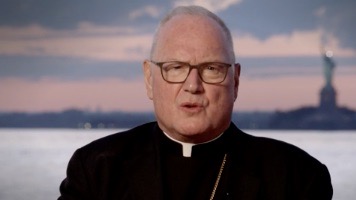
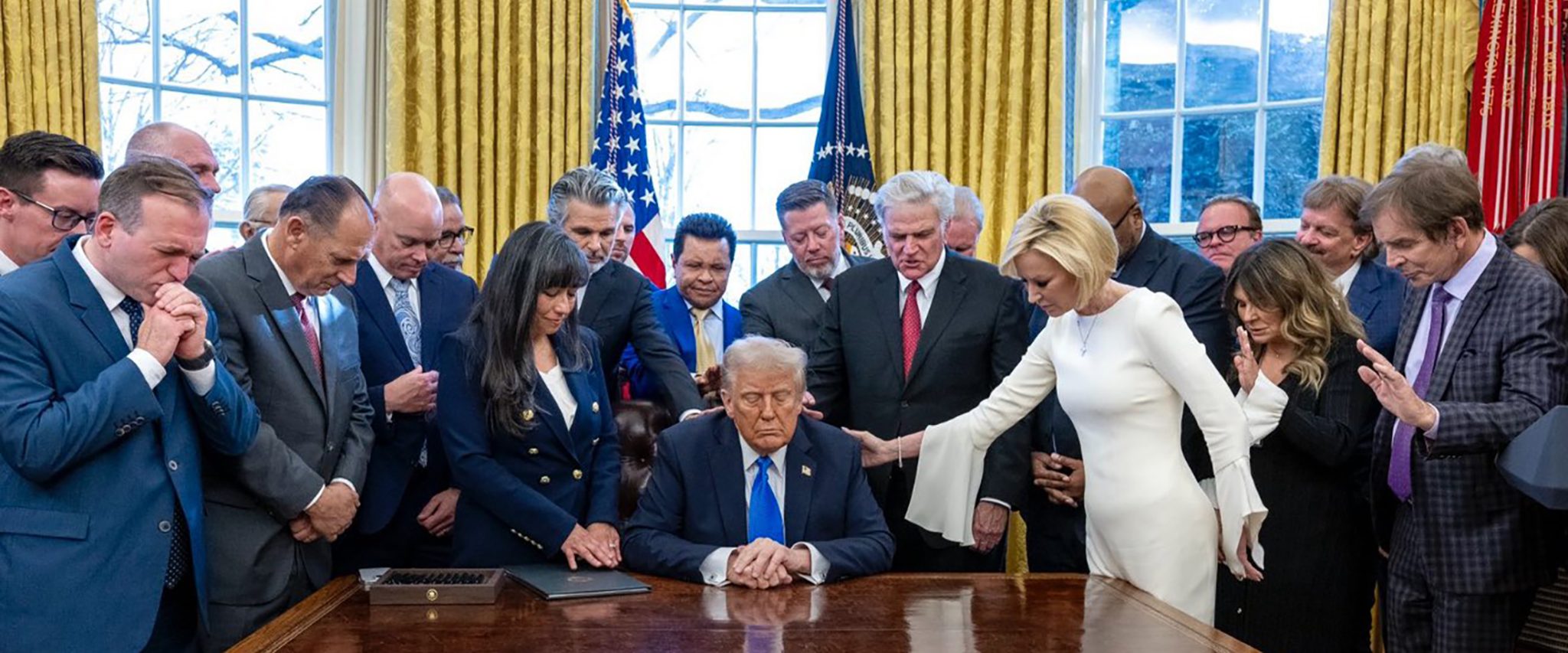
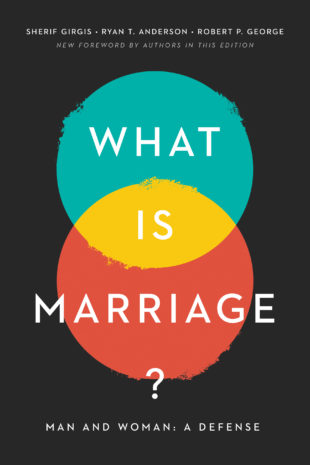


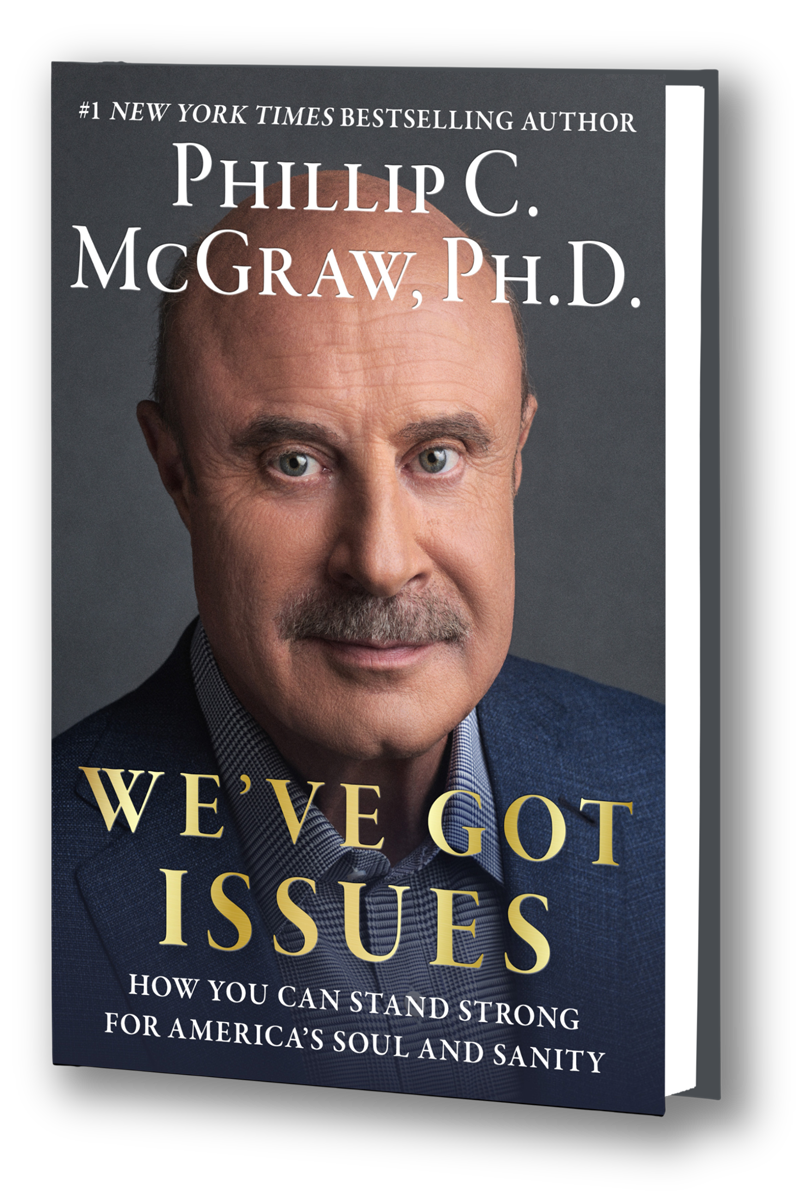


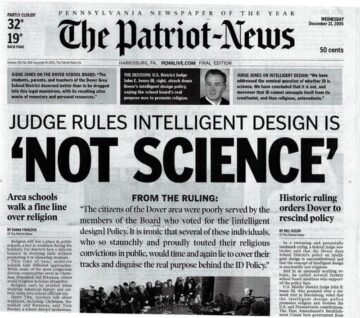

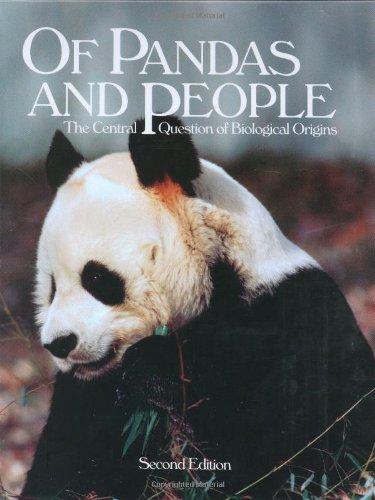

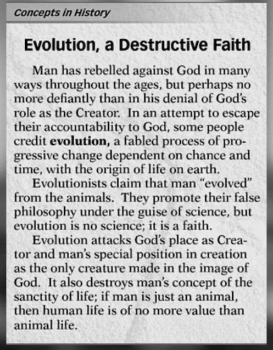
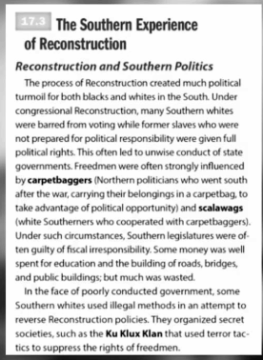
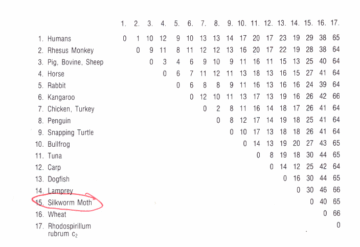
 Primate's Progress
