Sept. 9 Los Angeles event: Inventing the Page

Y’all! I’m delighted that September 9 I’ll be in Los Angeles for what promises to be a terrific evening in discussion with two authors whose work I love, Tess Gerritsen and Jordan Harper, moderated by the fantastic writer Gary Phillips. If you’re in Southern California, check it out. I’d love to see you!

Details:

Los Angeles: The Southern California chapter of Mystery Writers of America and Sisters in Crime Los Angeles present Inventing the Page, another in their ongoing series of programs of writers on writing.

Bestselling crime fiction writers Tess Gerritsen, Jordan Harper, and Meg Gardiner will talk with moderator Gary Phillips about their craft and technique; their inspirations for their writing; and how they handle the tricky business of spilling blood on the page.

The Southern California chapter of Mystery Writers of America and Sisters of Crime Los Angeles will host this thrilling quartet on Wednesday, September 9, 2026, at 7 pm, at the Skirball Cultural Center, 2701 N. Sepulveda Blvd., Los Angeles, CA, in the Magnin Auditorium.

***

Tess Gerritsen, internationally bestselling author, brings the authority of a former physician and the pulse-pounding imagination of a master storyteller to the thriller genre. A New York Times bestselling author whose books have sold more than 40 million copies worldwide and inspired the hit TNT series Rizzoli & Isles, Gerritsen is celebrated as the “medical suspense queen” and remains one of crime fiction’s most electrifying voices.

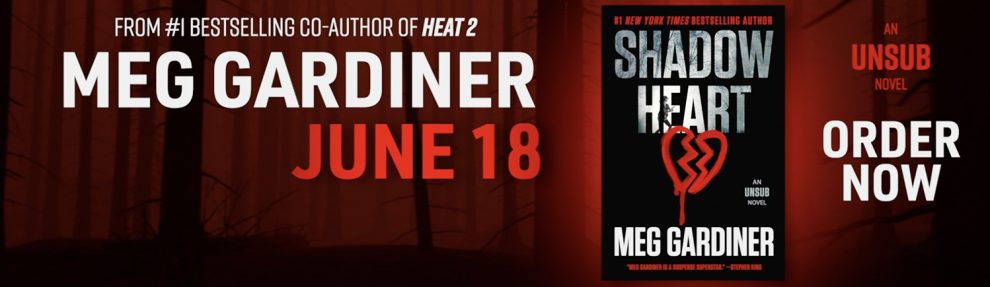
Meg Gardiner is the #1 New York Times bestselling author of sixteen novels, an Edgar Award winner, and one of today’s most acclaimed thriller writers. Her gripping, internationally published books include the award-winning UNSUB series and Heat 2, co-authored with Michael Mann, which debuted at #1 on the New York Times bestseller list.

Jordan Harper is an Edgar Award-winning author and Hollywood television writer born and raised in Missouri. Now based in Los Angeles, he is best known for his gritty, hardboiled crime novels, including Everybody KnowsLove and Other Wounds, and the Edgar Award-winning She Rides Shotgun.

Gary Phillips (Moderator) is an acclaimed American author, comic book writer, and television producer raised in South Central Los Angeles. Best known for his classic crime novel Violent Spring and his story-editing work on the hit television series Snowfall, Phillips brings a sharp, hard-boiled perspective to mysteries, pulp fiction, and graphic novels rooted in Los Angeles. His latest novel, The Haul, was named a Best Summer Read by the Los Angeles Times.

The authors’ latest books will be available for purchase and signing following the event.

INVENTING THE PAGE: A quartet of bestselling mystery and thriller authors talk craft, inspiration and the all-too-often bloody business of writing and selling books.

Wednesday, September 9, 2026 at 7 pm, at the Magnin Auditorium, Skirball Cultural Center, 2701 N. Sepulveda Blvd., Los Angeles, CA 90049. 

Ticket price, $35

Parking is Free.

Sponsored by the Southern California Chapter of Mystery Writers of America and Sisters in Crime Los Angeles.  

For more information and media details, contact: Nancy Cole Silverman 

Nancy@NancyColeSilverman.com

For advanced ticket sales, click the link: INVENTING THE PAGE.

The blog at 20: I Guess I’m Not a Celebrity

Today’s flashback post still makes me laugh. It comes from the days when I lived in England. Humility, y’all.

I Guess I’m Not a Celebrity

(Originally posted January 15, 2008)

“I’ve had conversations with people who were holding books of mine and had them not know who I was. This is amusing, to be sure, but it’s not celebrity.”

— John Scalzi, responding to a man who won’t buy his books because he wants “celebrities who are humble enough to keep their political views to themselves, and after visiting your website, it seems you do not fall into this category.”

cl_handbag.jpg

I can do Scalzi one better.

Before China Lake was published, my writers’ group got me to pose for a photo with an advance copy of the book, supposedly so they could send the image to a member who’d moved to Kyiv. In fact, they had banded together to give me one of the coolest gifts ever, a handbag that features a photo of me holding my first published novel. I don’t use it every day (it’s too preciousssss) but one afternoon I had it slung over my arm while running errands. A woman stopped me and asked where I’d bought it. She wanted to get a personalized bag for herself. She examined it closely. Then she did a double take and pointed at the photo.

“Wait. I think the woman who wrote that book lives around here.”

I know, I said.

She kept staring at it. “I’ve heard about her. She’s an American.”

Yeah.

“She lives around here and she got a book published. That’s her. I’m sure of it.”

I held the bag up next to my face.

“Her name’s… oh, what is it?” She squinted at the photo. “Meg Gardiner, that’s it. Have you heard of her?”

I had, I admitted.

I always figured I wasn’t a celebrity, because I’ve never had my photo taken by either paparazzi or a police mug-shot photographer. And now I feel affirmed, knowing that John Scalzi is in the same boat. Plus, on the upside, I’ve actually used the handbag as photo ID at the bank.

(And read Scalzi’s whole entertaining post, not least for Joe Hill’s remark in the comments that “At the risk of stating the obvious, it’s blitheringly idiotic to criticize a writer for expressing his ideas, political or otherwise.”)

The blog at 20: 2,000 Words a Day, Rewrite, and The Rewrite Chronicles

Here are some more of my favorite posts from the past 20 years, to help celebrate this week’s 20th anniversary of Lying for a Living. These three flowed over the course of a few days and trace the process of finishing and reworking a novel.

2,000 Words a Day

(Originally posted August 1, 2007)

At my writers’ group yesterday, one of the members remarked that fiction is escapist.

Not all fiction, I said.

She looked at me indulgently, the way she would at a particularly confused puppy. It’s escapist in a meta-sense, she explained, because fiction is by definition not the real world.

I didn’t respond because (a) she’d generously spent the previous ten minutes correcting my understanding of what happens when a Bell JetRanger helicopter inhales a flock of birds, and (b) I’m currently writing 2,000 words a day so that I can deliver my new manuscript in two weeks. My response would have been manic, uncontrollable barking.

Not the real world? Fiction is my entire world right now.

Rewrite

(Originally posted August 29, 2007)

A few weeks ago I talked about writing 2,000 words a day to meet the deadline for delivering my new manuscript. I’m happy to say that I made it. For this I thank my family, my tenth-grade typing teacher Mr. Teague, the Foo Fighters, the Chili Peppers, and the coffee growers of Colombia.

After sending the manuscript to my editors I lurched away from the desk, fought my way through the accumulated cereal bowls, Snickers wrappers and electric bills, and stumbled blinking into the summer afternoon. Then I shrieked something about the burning yellow orb in the sky and stumbled back inside. Then, if what the police my husband says is true, I put on my writing tiara and drove away with the stereo blasting DOA. “I’m finished, I’m getting you off my chest…”

In the five-stage writing cycle (excitement, delusions of grandeur, panic, compulsive eating, acceptance) this is known as the False Ending. Because now I get to rewrite the book.

Yee haw.

No, seriously. This is my favorite part of the process. I hate writing rough drafts. But once I get to THE END, I love the prospect of turning a messy first go-round into a polished final version of the book. So expect more mania from me until the end of September.

And to my husband: if you want to take the kids and get out of the country, you need to call the Disneyland Hotel this week. If you want the pets to go with you, better call today.

The Rewrite Chronicles

(Originally posted September 5, 2007)

Last week I talked about finishing the first draft of my new novel and starting the rewrite. Matt commented:

I would be very interested in reading more about your rewriting process.

Because I never expect something for nothing, here’s what I’ll do in return: I’ll go straight to Amazon and order every one of your books (even though I was planning on doing it anyway), take them on my October vacation to Italy (even though I was planning on doing it anyway) and take pictures of said novels anywhere you’d like in Venice, Florence and Rome. (If they are REALLY good posts, I’ll do whatever I can to get a shot of the Pope reading “China Lake.”)

Matt, you’re on.

Here are a few basics. I’ll write more later, but start with these.

  1. Step away. Give the manuscript time to cool off so you can return to it with some degree of dispassion.
  2. Tackle the big issues first. Don’t simply go through the manuscript from page one. Analyze your protagonist, antagonist, and their conflict. All strong enough? Look at plot twists, then minor characters, then page-level concerns. If you take the big things first, some of the small problems might disappear on their own.
  3. Listen to your editor. Fume at her suggestions, roll your eyes, rage into the mirror about the audacity of anyone – anyone! – ever challenging your brilliance. Then reread her suggestions, and realize she’s already got that dispassion about the manuscript that you’re trying to achieve, and that all her suggestions will, in fact, strengthen the book. If you don’t have an editor, listen to your writing teacher, or writing group, or discerning friend. It’s wise to let somebody else read the manuscript before you submit it for publication.
  4. Be ruthless. Painful though it is, you must be willing, as Faulkner said, to “Kill your darlings.”
  5. Sit your butt back down in front of the manuscript and get going.

Now get to arranging that photo shoot with il papa.

The blog at 20: Verb Names

To celebrate this blog’s 20th anniversary, this week I’m reposting some of my favorite entries. This one from December 12, 2006, sparked a whole series of posts, dozens and dozens of wonderful responses, and a contest whose winner (Susan Daly) became a character in The Dirty Secrets Club. This remains one of the most popular series of posts on the blog, to my delight.

Feel free to add some choice new offerings in the comments.

Verb Names

Since we’re heading into the festive season, and since I’m slowly emerging from my fever fog, let’s celebrate with a silly word game.

Think of a name that doubles as a verb.

That’s it, basically. The verb name can be a full name, nickname, or homophone; the verb can be present tense, past tense, slang, a gerund, whatever. As long as the name can plausibly be used as a verb in a sentence, and at least one other person has heard the name, it counts. Names that work when pronounced with thick regional accents may be acceptable if they make us laugh.

I’ll start with a few easy ones:

1. Bob

2. Rob

3. Will

4. Sue

5. Mary

Just so you know, I have 220 more. I’ll post some of them over the holidays.

And no, I’m not obsessive-compulsive. I just have a friend named Snart, who knows I’m a grammar geek and helpless to resist semantic revelry. Blame, or credit, her for this game.

The blog at 20: Fictophobia

In honor of this blog’s 20th anniversary, this week I’m reposting some of my favorite entries. Today’s was first posted January 21, 2007.

Fictophobia: baby, don’t fear the reader

Call me naive. It wasn’t until my first novel was published that I discovered some people are fictophobes. They disdain fiction. Granted, I knew that some folks hate romance novels, or loathe science fiction, just as I know that my husband would jam knitting needles into his ears before he’d listen to Snoop Dog. I understood this as a matter of taste and personality. And yes, I made up the word “fictophobia”, just now. The point is, I’ve been taken aback at the number of people who refuse point-blank to read novels.

I found this out when signing books at Methven’s, my local bookshop. A customer picked up China Lake, read the blurb on the jacket, and set it down. “Oh, it’s fiction. I can’t read that.”

I realized what she meant, but still said, “How awful. Is there anything they can do to help you?”

She screwed her face into a frown and wandered away. Eccentrics, I thought.

Turns out she was much less eccentric than I imagined. Since then I’ve had family and friends tell me they only read self-help books, or military history, or legal journals. Hold up a novel and they shy back like Nosferatu from a sunbeam. They don’t read fiction, no, never. The innuendo is in their tone: they’re accomplished people who can’t afford to waste their valuable time. If they read, it will be to improve themselves. They seek instruction, betterment, increased productivity.

They’re so far removed from the world of fiction that they know almost nothing about it. Excuse me, someone asked me recently, but who is Stephen King?

Wanna talk horror? That’s horror.

Blame my upbringing. I grew up around English professors. I thought all homes heaved with literature – that every room had books in it, including the garage. Hell, my dad’s old Datsun could have doubled for the library bookmobile.

But I’ve heard from enough fictophobes that I’ve come to think people misunderstand what fiction means. So I was delighted to run across this quotation today:

“[The novel] is an exercise of make-believe that, like yoga or a religious festival, breaks down barriers of space and time and extends our sympathies, so that we are able to empathise with other lives and sorrows. It teaches compassion, the ability to ‘feel with’ others. And, like mythology, an important novel is transformative … If it is written and read with serious attention, a novel, like a myth or any great work of art, can become an initiation that helps us to make a painful rite of passage from one phase of life, one state of mind, to another. A novel, like a myth, teaches us to see the world differently; it shows us how to look into our own hearts and to see our world from a perspective that goes beyond our own self-interest. If professional religious leaders cannot instruct us in mythical lore, our artists and creative writers can perhaps step into this priestly role and bring fresh insight to our lost and damaged world,” – Karen Armstrong, “A Short History of Myth.” 

I wouldn’t dare call myself an artist or a mythmaker. But as a storyteller, I say: thanks for that. I couldn’t have come close to explaining it so well.

20 years of Lying for a Living

Today marks the 20th anniversary of the blog. I wrote my first post July 27, 2006: It’s Alive.

“I like to read about things that are real.”

My friend looked away as he said that to me. He felt embarrassed because my new novel was sitting untouched on his desk. He felt compelled to explain why he hadn’t opened it. He doesn’t read fiction, not unless it’s jammed down his throat.

I didn’t object. Number one, he had bought the book, with actual cash. Two, he was cooking dinner for me and my family. Three, I don’t jam things down people’s throats except on the page, and then generally only if the character deserves it. But my friend was wrong.

Love, death, anger, greed, envy, and crazy people running amok in California. That’s what’s in my books. What’s not real?

Yes, I know it’s all my own invention. But there’s something real in storytelling, which is why, despite the name of this blog, I don’t consider fiction a lie. It’s true, and it’s alive. And that’s one of the things I’ll be talking about here.

My editor at Hodder & Stoughton, Sue Fletcher, had to convince me to fire up a blog. In 2006, social media as we now know it didn’t exist. To create a Facebook profile you needed a .edu email address. Smartphones were years in the future. But Sue nudged me to jump into blogging, and it was absolutely the right decision.

Y’all, I’ve been talking here for twenty years.

It’s been great. I’ve written whatever I wanted, laughed my head off at your comments, made friends, and tried to convey my love of books and writing. To all of you who have sustained me by reading, commenting, meeting me in real life: thank you.

To celebrate 20 years of Lying for a Living, this week I’ll be reposting some of my favorite entries. I hope you’ll enjoy them.

By the way, just yesterday I heard from the friend who sparked this blog’s first post. Our decades of friendship involve family, kids, cub scouts, garage bands, graduations, weddings, London, New York, and the Rockies. And yesterday he had a question for me about… nonfiction.

Meg on the I Don’t Understand… podcast

I had a blast speaking to Sam Fickman for the ‘I Don’t Understand…” podcast. Our conversation was fun, and he put together an entertaining video version of the pod. Check it out! The episode is “I Don’t Understand… Books / with Meg Gardiner.”

Bonus: the music that closes the podcast is “Strange Ceilings” by The Love Ways. My son Mark’s band!

Coming up: Santa Barbara Literary Festival

I’m going to be at the inaugural Santa Barbara Literary Festival the first weekend in May, and I am stoked. Hometown! Writing! Workshop! Panel! So many things I love. If you’re in Southern California or the Central Coast, check it out. I’d love to see you.

Santa Barbara Literary Festival
May 2-3, 2026
Santa Barbara, California

My schedule for Sunday, May 3:

Workshop: Beginnings, Middles, and Endings
12:30 — 1:30 P.M.
Canary Hotel

Crimetime: CrimeTime Ace Atkins, Meg Gardiner, Faith Phillips, Wendy Walker, Tod Goldberg
1:30 — 2:30 P.M.
Alhecama Theater

I’ll be at ThrillerFest 2026

I’ll be taking part in ThrillerFest XXI this May in Manhattan. If you’re there, say hi and come to this blockbuster panel I’m on

I hope to see some of you in New York City in May!

The End of The World as We Know It is an Audie Award finalist!

Wow! I’m excited to share that The End of the World As We Know It: New Tales of Stephen King’s The Stand is a 2026 Audie Award Finalist in the Short Stories/Collections Category.

I’m thrilled for the authors, for editors Christopher Golden and Brian Keane, and for narrators Sean Patrick Hopkins and Adenrele Ojo. And I’m grateful to Simon & Shuster audio for putting together this terrific audiobook version of the anthology.

Grinning from ear to ear.

Wicked Words podcast — catch my discussion with Kate Winkler Dawson

I was delighted to join host Kate Winkler Dawson on the Wicked Words podcast to discuss UNSUB and the real life cases that sparked the novel — the Zodiac, and the Golden State Killer. Check out what I had to say:

Wicked Words with Meg Gardiner

2026 classes I’m teaching for Outliers Writing University

Once again, this year I’ll be teaching some cool (I think) online classes for Outliers Writing University. Check them out, and hit the link below to register!

Outliers Writing University — online classes
All classes live on Zoom, 7-9 PM Eastern
Register: www.outlierswritinguniversity.com/classes

January 20:
The Hero’s—and Heroine’s—Journey. Thrillers are modern, but story is ancient. Understanding deeply rooted story forms will help you create memorable characters and tell stories that inspire.
January 20

March 3:
The Combat Landing: How to start your story in the thick of the action, without shooting yourself in the foot. Every story has a beginning, middle, and end. Knowing where to start your story, how to build from an enticing opening, through escalating challenges, to a powerhouse climax, will help you construct gripping, memorable thrillers. 

March 17:
Suspense Versus Tension: What’s the difference, and how can you use both to keep readers turning pages? Suspense arises from curiosity and apprehension; tension makes readers bite their nails. Meg Gardiner will talk about ways to imbue your stories with both. 

June 2:
Twists and Turns: what’s the difference, and how can you build both into your plot? Readers love unexpected plot twists. But plot turns that arise from the characters’ conflicts are equally riveting. Here’s how to do both.

Farewell, 2025. Come on in, 2026

Hey! We made it to another December!

As ever, 2025 brought highs and lows, excitement and challenges, lots of love, and gratitude to be part of the world of books.

What a thrill that Shadowheart was nominated for the ITW Thriller Awards as Best Series Novel. Thrillerfest, where the awards were given out, was a blast, and I enthusiastically applauded David Baldacci when his novel To Die For was named the winner. Being nominated truly is an honor, especially in such select company. 

It was with whoops of excitement that I learned that The End of the World as We Know It: New Tales of Stephen King’s The Stand was #3 on the New York Times best seller list. I have been in love with The Stand since I first read it in college. Being invited to contribute a short story to this anthology was an honor and beyond exciting. “Bright Light City” is something I’m extremely proud of. I’m glad that it has resonated strongly with readers.

As I look toward the next year, I wish you peace, joy, and a million fantastic books. Here’s to a great 2026!

A great day at the Imanoli Creative Writers Conference

What a terrific day at the Imanoli Creative Writers Conference, held at the stellar Chickasaw Cultural Center in Sulphur, Oklahoma. The conference was lively and perfectly organized by the Chickasaw Press. It was great to get to know the other attendees and presenters. Thank you to everyone who came, and thank you to The Chickasaw Nation!