
NEW
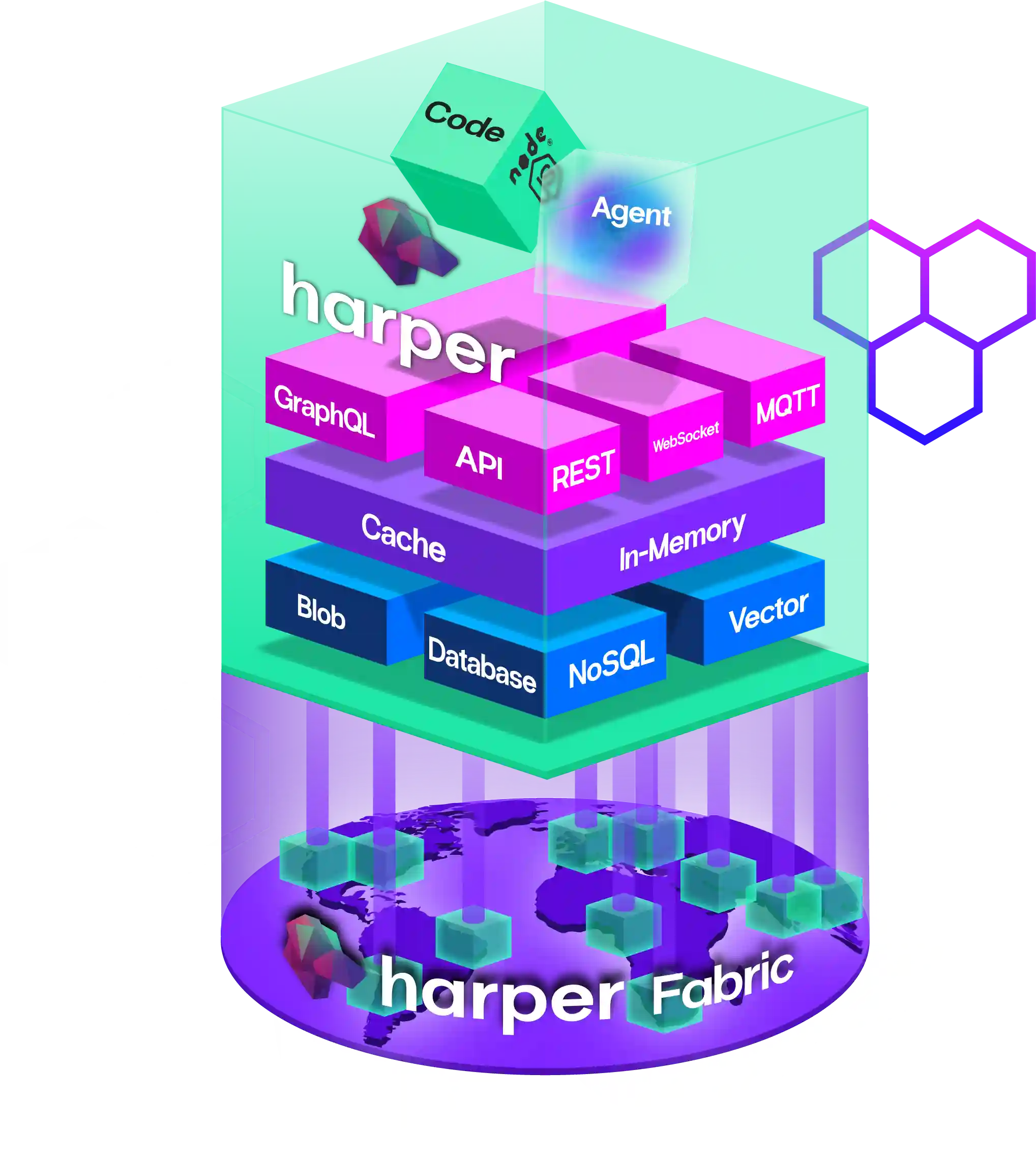
Build with AI in Fabric


.png)






.png)





.png)

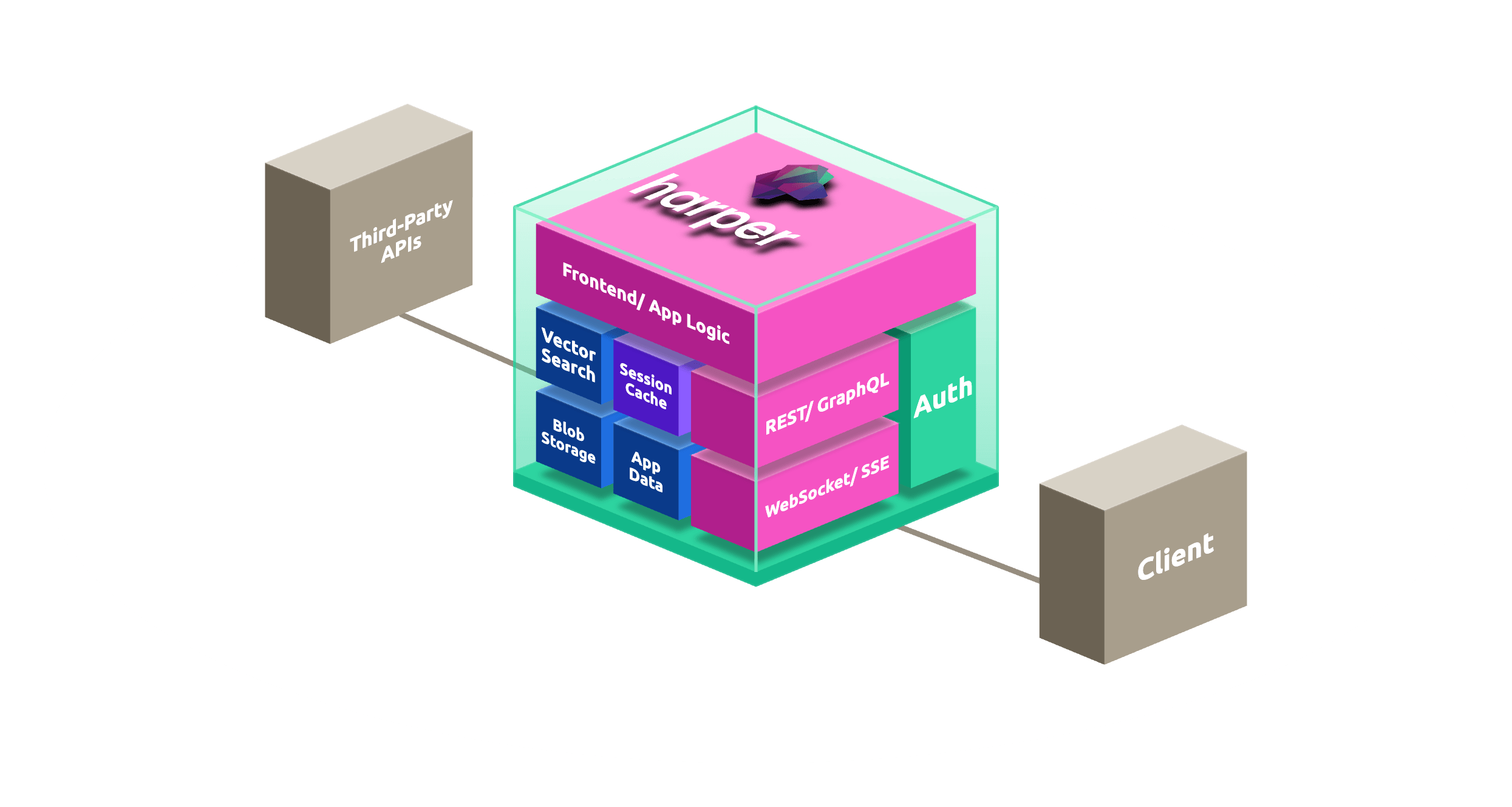
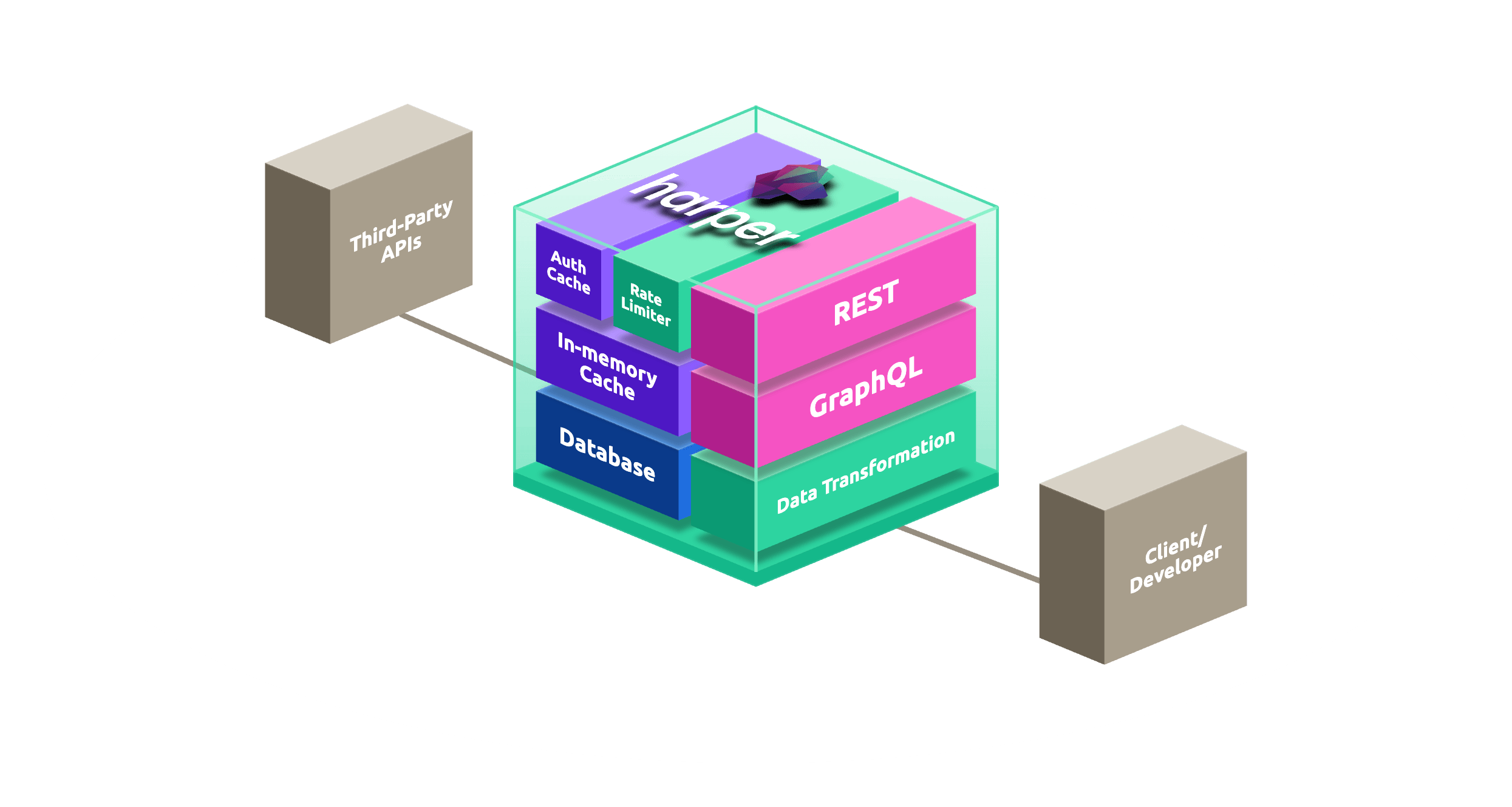
// schema.graphql

type Dog @table @export {
  id:        ID       @primaryKey
  name:      String
  breed:     String   @indexed
  age:       Int
  status:    String    # available | adopted | fostered
  bio:       String
  tricks:    [String]
  embedding: [Float]  @indexed(type: "HNSW", distance: "cosine")
  photo:     Blob
  owner:     Owner    @relationship(from: "ownerId")
  ownerId:   ID       @indexed
}

type Owner @table @export {
  id:    ID     @primaryKey
  name:  String
  phone: String
  city:  String
}

// You immediately get:
GET     /Dog/{id}
POST    /Dog/
PUT     /Dog/{id}
PATCH   /Dog/{id}
DELETE  /Dog/{id}
GET     /Dog/?breed=Labrador&sort(-age)

GET     /Owner/{id}
POST    /Owner/
...

// No migrations. No REST framework. No code generation step.
// 1st Let's start by adding data. Add as much as you want.

POST /Owner/
Content-Type: application/json
{
  "name": "John Smith",
  "phone": "123-456-7890",
  "city": "Denver"
}

POST /Dog/
Content-Type: application/json
{
  "name": "Rex",
  "breed": "Labrador",
  "age": 5,
  "status": "available",
  "bio": "Loves fetch and long walks",
  "tricks": ["sit", "shake", "fetch"],
  "ownerId": "<copy id from `POST /Owner/`>"
}

// 2nd Now let's filter, sort, and traverse relationships in the address bar with URL queries

// Senior dogs available for adoption
GET /Dog/?age=gt=7&status=available&sort(-age)&limit(10)

// Breed is "Retriever", status is available OR fostered
GET /Dog/?breed=Retriever&(status=available|status=fostered)

// Join through the owner relationship
GET /Dog/?owner.city=Austin&select(name,breed,owner{name,phone})


// fetch — same filters, works anywhere JS runs
const res = await fetch(
  '/Dog/?breed=Retriever&status=available&select(name,breed,age)',
  { headers: { Authorization: 'Basic ' + btoa('user:pass') } }
);
const dogs = await res.json();


// GraphQL — enable with one line in config.yaml, query /graphql
{
  Dog(status: "available") {
    name
    breed
    age
    owner {
      name
      phone
    }
  }
}
// resources.js
import { tables } from 'harperdb';
const { Dog } = tables;

export class AdoptableDog extends Dog {
  // Enrich every GET with computed fields
  async get(query) {
    const dog = await super.get(query);
    return {
      ...dog,
      humanAge:  15 + dog.age * 5,
      isGoodBoy: true,  // always
    };
  }

  // Validate and set defaults on every POST
  async post(target, data) {
    if (!data.name) throw new Error('Every dog deserves a name');
    data.tricks = data.tricks ?? [];
    data.status = 'available';
    return super.post(target, data);
  }
}

// Three files. That's still the whole backend.
// schema.graphql — cached for 1 hour
type BreedImage @table(expiration: 3600) @export {
  id: ID @primaryKey
  image: String
}


// resources.js — point it at the dog.ceo API
import { Resource, tables } from 'harperdb';

class DogCeoAPI extends Resource {
  async get() {
    const breed = this.getId();
    const res = await fetch(
      `https://dog.ceo/api/breed/${breed}/images/random`
    );
    const data = await res.json();
    return { breed, image: data.message };
  }
}

tables.BreedImage.sourcedFrom(DogCeoAPI);


// Cache miss fetches from dog.ceo API
GET /BreedInfo/labrador
// Cache hits return in <1ms
GET -H 'If-None-Match: "<Etag>"' /BreedInfo/labrador
// 3 Examples of Real-Time In Action
// OPTION 1 | Server Sent Events (SSE), no library needed
const events = new EventSource('/Dog/<id>/');

events.onmessage = (e) => {
  const data = JSON.parse(e.data);
  const dog = data.value;
  console.log(`${dog.name} is now: ${dog.status}`);
  // → "Rex is now: adopted"
};


// OPTION 2 | WebSocket with custom actions via resources.js
import { tables } from 'harperdb';

export class LiveDog extends Resource {
  async *connect(target, incomingMessages) {
    const subscription = await tables.Dog.subscribe(target);

    if (!incomingMessages) {
      return subscription;  // SSE mode
    }

    for await (let msg of incomingMessages) {
      if (msg.action === 'wag') yield { tail: 'wagging' };
    }
  }
}


// OPTION 3 | config.yaml — enable MQTT for IoT collar tracking
mqtt:
  network:
    port: 1883
  webSocket: true
requireAuthentication: trueembedding field in your schema already has an HNSW index. Store vectors alongside your data and query them with the same REST API, no separate vector database.// Already declared in schema.graphql (Tab 1:Schema):
// embedding: [Float] @indexed(type: "HNSW", distance: "cosine")
// Store a dog profile with its bio embedding
await fetch('/Dog/<id>', {
method: 'POST',
body: JSON.stringify({
name: 'Biscuit',
breed: 'Golden Retriever',
bio: 'Loves fetch, belly rubs, and long walks',
embedding: await getEmbedding('Loves fetch, belly rubs, and long walks'),
status: 'available',
}),
});
// Find the 5 most similar dogs to a query
import { tables } from 'harperdb';
const results = tables.Dog.search({
select: ['name', 'breed', 'bio', '$distance'],
sort: {
attribute: 'embedding',
target: await getEmbedding('friendly dog who loves walks'),
},
limit: 5,
});
// → dogs ranked by cosine similarity to the query vector photo field in your schema is a native Blob. Upload and serve binary files from the same endpoint as your data, no S3 bucket, no file service.// Already declared in schema.graphql (Tab 1:Schema):
// photo: Blob
// Upload and retrieve a dog photo
// Upload
PUT /Dog/<id>/photo
Content-Type: image/jpeg
< ./rex-headshot.jpg
// Retrieve — streams back with correct Content-Type
GET /Dog/<id>/photo
// Upload from a browser form
const formData = new FormData();
formData.append('photo', fileInput.files[0]);
await fetch('/Dog/<id>/photo', {
method: 'PUT',
body: formData,
});// Develop locally
harper dev .
// Deploy local project to Fabric (push-based deploys)
cd my-app
harper deploy .
project=my-app \
target="https://your-app.fabric.harper.fast/" \
username="your-cluster-username" \
password="your-cluster-password" \
restart=rolling \
replicated=true
// Deploy GitHub project to Fabric (pull-based deploys)
harper deploy \
project=my-app \
package="https://github.com/User/my-app" \
target="https://your-app.fabric.harper.fast/" \
username="your-cluster-username" \
password="your-cluster-password" \
restart=rolling \
replicated=true
// Same API. Same schema. Same logic. Just… everywhere.
GET https://your-app.fabric.harper.fast/Dog/?breed=Labrador&status=available
// No Dockerfile. No cloud console wizards.
// All your files → one command → globally distributed. 



.png)


.png)


%20(1).png)
