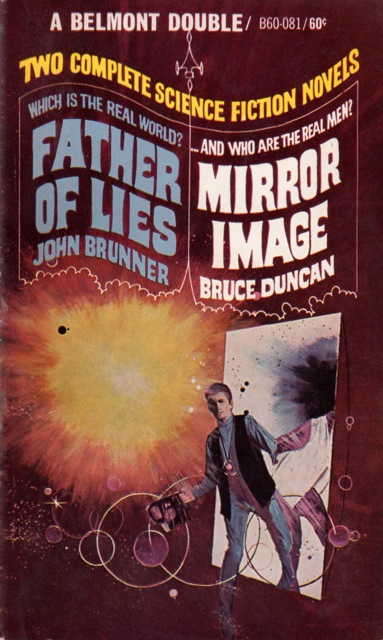
WEDNESDAY’S SHORT STORIES #283: FATHER OF LIES By John Brunner and MIRROR IMAGE By Bruce Duncan

One of my delights as a kid was reading ACE Doubles. I couldn’t wait until new ACE Doubles showed up on spinner racks each month!

But ACE was not the only publisher to offer Doubles. In the late 1960s, Belmont Books published a series of “Belmont Doubles” but with only one cover, not two like ACE Doubles. Sadly, the quality of those Belmont Doubles was inferior to the ACE Doubles…but I bought them anyway.

John Brunner is one of my favorite SF writers. He started out writing mediocre SF novels but with STAND ON ZANZIBAR and THE JAGGED ORBIT in the mid-to-late Sixties, Brunner became a top notch SF writer.

Clearly, “Father of Lies” was a story Brunner salvaged from his desk drawer and Belmont dutifully published it in 1968 with Bruce Duncan’s “Mirror Image.” “Father of Lies” was initially published in the British SF magazine, Science Fantasy #52, 1962.

“Father of Lies” begins with a dragon and then an ogre. The story concerns a different plane of Reality. Today we would refer to this as The Multiverse. “Father of Lies” has more in common with Brunner’s stories from the 1950s than his more mature work of the late 1960s. GRADE: C

I’ve never head off Bruce Duncan and his “Mirror Image” is poorly written and shows why Belmont Books was considered at the “low end” of the paperback publishing spectrum. A dead stripper, an android sailor, and a New York detective investigating the dead bodies of the real stripper and the real sailor basically goes nowhere. GRADE: F
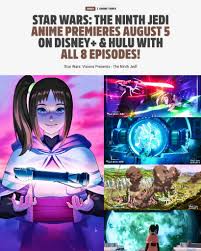
Star Wars: Visions Presents: The Ninth Jedi [Disney+]

This 8-episode Star Wars animated series features some exotic adventures, action, and fun characters. The Ninth Jedi is set in the distant Future when the Jedi and the Sith have “all but disappeared.” 

All that remains of the ancient Jedi Order is a handful of masterless Jedi, including Margrave Juro, Lah Kara, Homen, and Ethan, all intent on protecting the galaxy from the fearsome masked conquering general known only as Nawaam.

The first episode starts with a chase scene that sets up the plot for the rest of the story. The animation is wonderful and the characters are compelling. If you’re a Star Wars fan, you’ll really enjoy this new series. If you’re looking for Entertainment you’ll find it here. GRADE: Incomplete but trending towards a B+

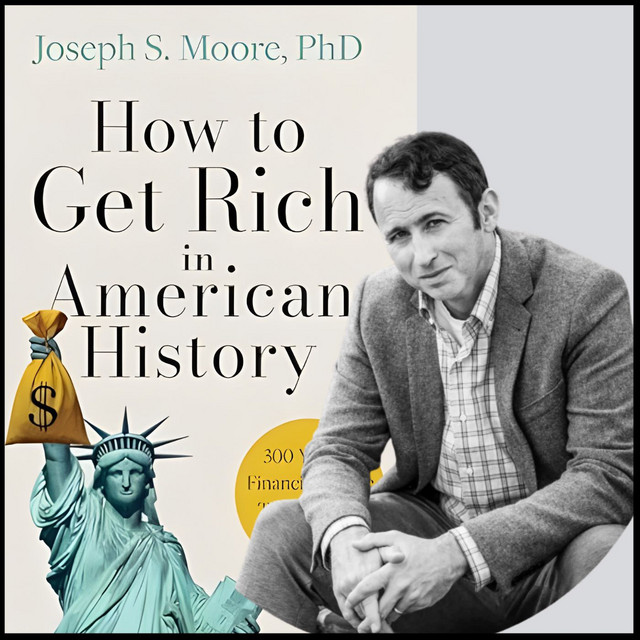
HOW TO GET RICH IN AMERICAN HISTORY: 300 YEARS OF FINANCIAL ADVICE THAT WORK (& DIDN’T) By Joseph S. Moore

Joseph S. Moore, a college professor and an enthusiastic investor, shares what he has learned from years of trying to get Rich. In essence, Moore believes this is a perfect time to get Rich. So many options! Step by step, Moore discusses your investment choices. Real Estate has been a popular option for years, but now with flooding and wild fires, maybe not a great choice.

In the Past, people were encouraged to get into debt. Mortgages, car payments, home equity loans were all popular ways of feeling Rich by pushing off payments into the Future. At one time–the 1950s and 1960s, owning a GM or Ford franchise and selling cars and trucks was a certain way to wealth. That’s when people used to buy a new vehicle every two or three years. Today, with cars and trucks costing $50,000+, that doesn’t seem to be a great way to get wealthy.

Moore points out timing is a key variable in getting Rich. Sure, if you bought Microsoft 40 years ago, you’d be Rich today. But look at all the people who lost their shirts owning stock in Enron.

The people investing in canals in the U.S. lost money, but the people who actually built the canals made lots of money. Moore presents plenty of stories of winners and losers throughout U.S. history with lessons to be learned in the ways of wealth.

I found How to Get Rich in American History a fun, entertaining, and educational book. Are you Rich yet? GRADE: B+

TABLE OF CONTENTS:

Introduction: Go Ahead! — 1
Part I: Your Money and American HistoryGetting Ahead is Easier Than Ever — 9
Fast Time, Slow Time — 11
Crypto Isn’t the Future, It’s the Past — 25
Financial Advice: Inflation’s Oops Baby — 34
Gurus are Selling Something, You Should Buy — 43
Your Net Worth is Wrong (So I Made Myself a Billionaire) — 53
Part II: Investing Then and Now— 61

The next big thing is a bad idea –63

;Compound interest and passive income are overrated — 73

Diversification won’t make you rich — 82

You can beat the market, you probably shouldn’t — 89

Women were always active investors — 103

Stocks used to be bad for the long run — 112

Part. II: Financial freedom the American way — 127

Financial independence isn’t what you think — 129

Real estate is a terrible way to make money — 140

House hacks and side hustles before Uber and Airbnb — 150

Yes, people retired before social security — 160

Immigrants make the best capitalists — 171

Scams: the Nigerian prince is actually from Spain — 180

Part IV: The Feds and the family— 191

Budgets are new, hating them isn’t — 193

Debt isn’t (necessarily) dumb — 202

The government was always involved — 213

Going broke is better than ever — 224

Marriage (and dual incomes) mattered… a lot — 235

Generational wealth doesn’t last long — 249

Part V: It’s getting better, much, much better — 261

People really did get ahead, and you can, too — 263

Conclusion: the real lessons of financial history — 277

Acknowledgements — 297
Notes — 299
Index — 331

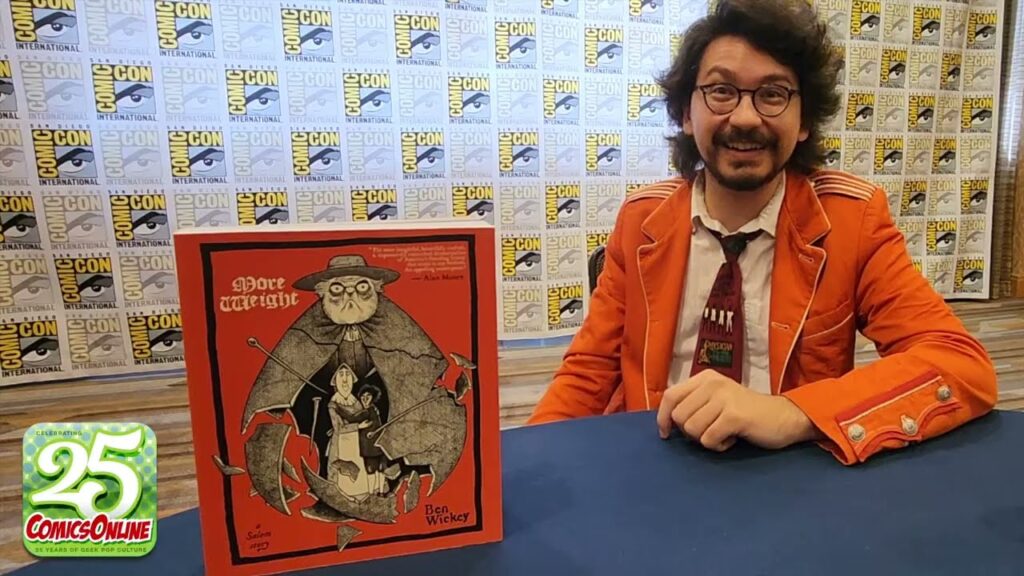
MORE WEIGHT: A SALEM STORY By Ben Wickey

Jerry House recommended this massive graphic novel (you can read Jerry’s terrific review here). More Weight: A Salem Story gets its title from the purported last words of Giles Corey. Corey, who was pressed to death in Salem, Massachusetts, in September 1692, refused to answer charges of witchcraft,. Corey was tortured to death in an attempt to convince him to admit his “sins.”

The illustrations in More Weight are moody and intense. Yes, at 543 pages, More Weight is a challenge for readers. Some might argue that the book is too long, too detailed. But Ben Wichey wanted to get to the bottom of Giles Corey story and to expose the Salem Witch Trials for what they were.

If you’re up for a long, arduous journey into human depravity and haunting atrocities in the Past, More Weight is your ticket! GRADE: A

TABLE OF CONTENTS:

Intro: the witch city

Saints & devils

Boon-companions

The first stone

The temptations of Giles Corey

A gospel woman

The invisible world

The arrest

The examination of Martha Corey

Soap-bubbles

Some sport

The boy

The wizard

Liberties

The examination of Giles Corey

A city upon a hill

Civil wars

Oyer & terminer

Blood to drink

Angels of light

By God & my country

The better life

More weight

Seven gables

Inheritors of eternity

Outro: more wonders of the invisible world.

TED LASSO, Season 4 [Apple TV+]

Diane and I enjoyed the previous three Season Ted Lasso series.  Ted Lasso (Jason Sudeikis), is an American college football coach who is hired to coach an English soccer team, A.F.C. Richmond. The owner (Hannah Waddingham) secretly hopes Ted Lasso’s inexperience will lead to the team’s failure. Instead, Lasso’s folksy, optimistic leadership proves unexpectedly successful and turns the team into a winner.

When Ted Lasso ended its Third Season in 2023, that was supposed to be the finale of the series. But, money always changes things and with the show’s popularity and critical acclaim we now have a 10 episode Season Four.

In Episode One, Ted Lasso is a cashier at a grocery store in Kansas City.  Rebecca Welton, the owner of AFC Richmond lands in her private jet and offers Ted the job of coaching her new women’s soccer team. Guess what he says to that!

Apple TV+ drops a new episode every Wednesday so Season Four will end on October 7. Diane and I love the cast of Ted Lasso so we’re happy this fine series is back for another round of fun and frivolity. GRADE: Incomplete but trending towards an A

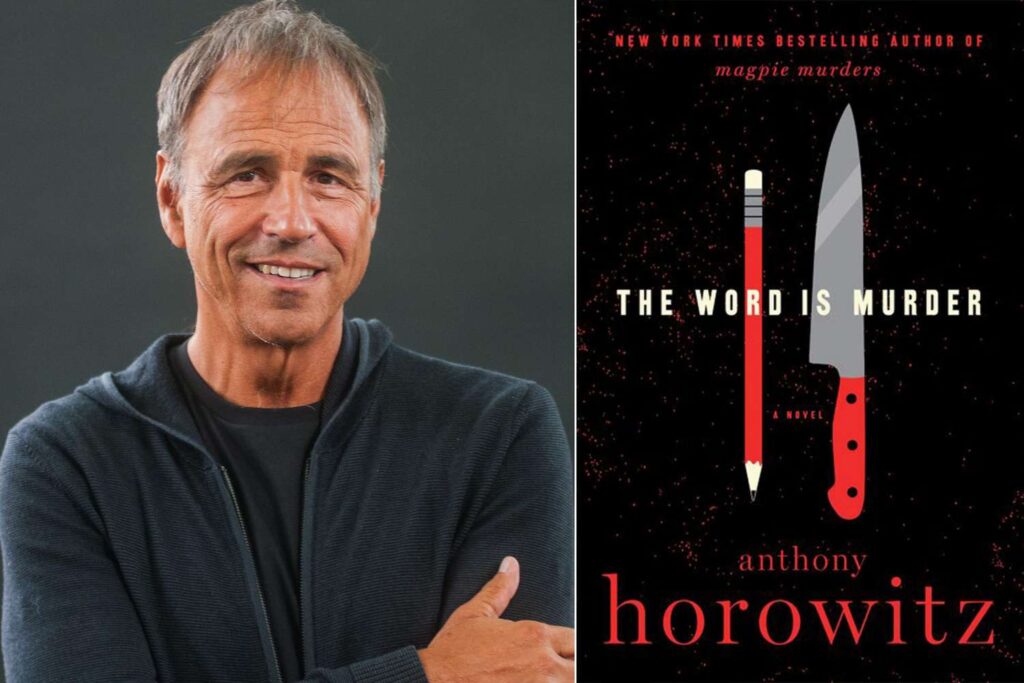
THE WORD IS MURDER By Anthony Horowitz

Anthony Horowitz has written over 50 books and 22 scripts for Foyle’s War. I’m a fan of Horowitz’s Young Adult spy novel series featuring teenager Alex Rider. I’ve had The Word is Murder on my shelves since 2017 and I finally got around to reading it.

Early in the book, Horowitz (who makes himself the narrator) mentions he just wrote a Sherlock Holmes pastiche, The House of Silk. This is a hint that the lead character in The Word is Murder–a crusty, cantankerous ex-police detective named Daniel Hawthorne–is really Sherlock Holmes in disguise. Hawthorne rubs everyone the wrong way, but he has Holmes-level observation skills and a canny sense of detection.

The Word is Murder starts out with a wealthy woman–Diana Cowper–who plans her own funeral in London and is found strangled in her home just six hours later. Acting as Watson to Hawthorne’s Holmes, Horowitz follows Hawthorne around the crime scenes with the intention to write up the murder as a True Crime book while Hawthorne pursues clues as a Police Consultant.

The Word is Murder is perfect Summer Reading. The plot is clever with plenty of twists. Horowitz and Hawthorne clash throughout the novel, but it takes both of them to solve this crime. I can’t wait to read the other mysteries in this series! GRADE: A

Hawthorne and Horowitz Mysteries:

The Word is Murder (2017)
The Sentence is Death (2018)
A Line to Kill (2021)
The Twist of a Knife (2022)
Close to Death (2024)
A Deadly Episode (2026)

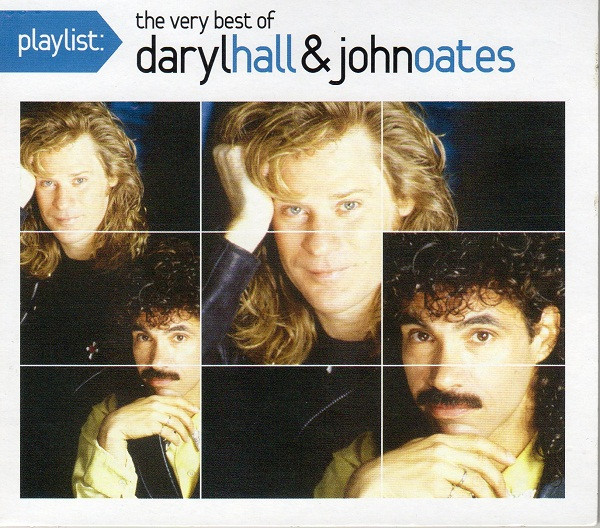
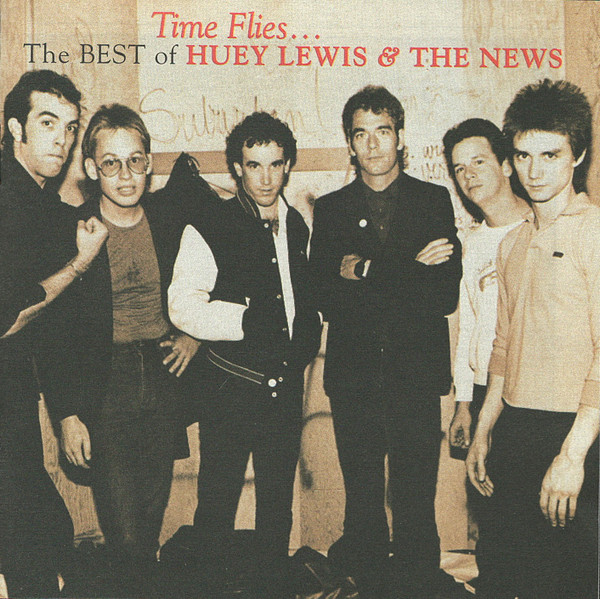
THE VERY BEST OF DARYL HALL & JOHN OATES and TIME FLIES: THE BEST OF HUEY LEWIS & THE NEWS

I was in the mood to listen to some of the dozens of GREATEST HITS CDs on my shelves. I picked two of the most successful groups of the 1980s: Hall & Oates and Huey Lewis and The News.

Hall & Oates sold 40 million records during the 1980s. However: “Despite generating what would amount to nearly $100 million across the decade, the duo famously saw much of their wealth disappear during this time due to high-flying lifestyles, lavish spending, and costly management and legal structures.” (Wikipedia)

During the Eighties, Hall & Oates had FIVE Number One hits:

“Rich Girl” (1977) – Their first single to top the chart.
“Kiss on My List” (1981) – A major pop-rock smash from the Voices album.
“Private Eyes” (1981) – The title-track chart-topper from 1981.
“I Can’t Go for That (No Can Do)” (1982) – A crossover R&B and pop phenomenon.
“Maneater” (1982) – Their longest-running number-one hit, staying at the top for four weeks.
“Out of Touch” (1984) – Their final career chart-topper, released from the album Big Bam Boom

Huey Lewis and The News were also making money during the Eighties with their touring and album sales. Their number-one singles were:

  • “The Power of Love” (1985)
  • “Stuck with You” (1986)
  • “Jacob’s Ladder” (1987) 

Additionally, the band achieved 12 top-ten hits on the Billboard Hot 100 during the 1980s and early 90s, with their album Sports (1983) reaching number one on the Billboard 200 albums chart. 

Are you a fan of Hall & Oates and/or Huey Lewis and The News? GRADE: B+ (for both)

TRACK LIST:

Sara Smile3:07
Rich Girl2:24
Back Together Again3:25
Don’t Change (45 Version)3:31
I Don’t Wanna Lose You (45 Version)3:38
Kiss On My List (45 Version)3:48
Private Eyes3:36
I Can’t Go For That (No Can Do) (45 Version)3:56
Your Imagination (45 Version)3:32
One On One (45 Version)3:55
Family Man3:26
Adult Education (45 Version)3:58
Out Of Touch (Video Mix)4:29
Everything Your Heart Desires (45 Version)4:21

TRACK LIST:

The Heart Of Rock & Roll5:05
Heart And Soul4:12
Doing It All For My Baby3:38
Do You Believe In Love3:29
Trouble In Paradise4:33
The Power Of Love3:55
If This Is It3:53
Bad Is Bad3:47
Workin’ For A Livin’2:40
It’s Alright3:04
Stuck With You4:27
I Want A New Drug4:45
100 Years From Now3:47
So Little Kindness4:15
‘Til The Day After3:28
When The Time Has Come4:27

WEDNESDAY’S SHORT STORIES #282: THE SPACE FORCE CHRONICLES By Fred Saberhagan

Jerry House mentioned The Space Force Chronicles (2914) that somehow escaped my notice. I have dozens of Fred Saberhagen’s books and have read a couple dozen of them. I first read Saberhagen’s Berserkers series in the 1960s. Then I moved on to Saberhagen’s fantasy novels and vampire novels. All recommended!

The first story in The Space Force Chronicles is Planeteer, a First Contact story Boris Brazil and his team have to contend with two warring groups on an Earth-type planet. Brazil and his team are attacked but their superior technology saves them. The solution Brazil and his team arrive at will grate on readers who support women’s rights (like me) but the challenges of solving ending a war–as Trump discovered–is never easy. GRADE: B

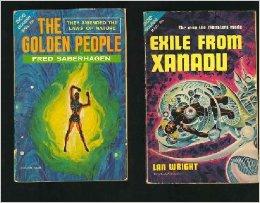
I read The Golden People back in 1964 when it was half of an ACE Double. Saberhagen revised and expanded it for BAEN Books in 1984. I own both editions but have not read the BAEN edition yet.

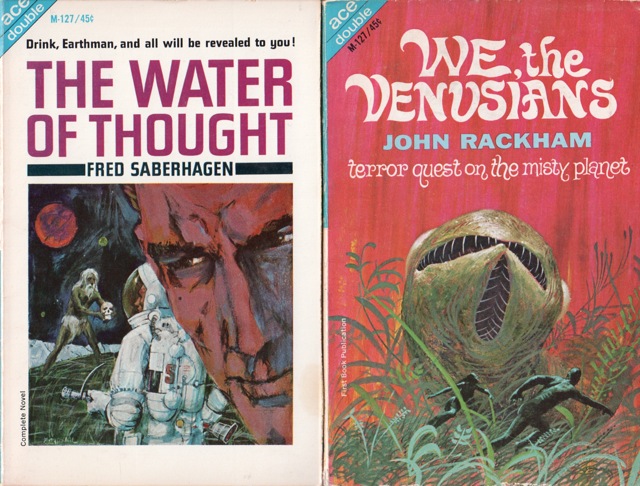
The same for The Water of Thought which I read in 1965, but have not read the 1981 edition. I’ll be reading The Golden People and The Water of Thought in The Space Force Chronicles later this week. If you like Fred Saberhagen’s work, The Space Force Chronicles is a must-buy!

TABLE OF CONTENTS:

Planeteer” (novelette) Galaxy April 1961 –1

  1. The Golden People (Ace Double 1964) / revised & expanded: (Baen September 1984) –71
  2. The Water of Thought (Ace Double 1965) / text restored and/or revised: (Pinnacle/Tor May 1981 : First Complete Edition. Illustrated by Janet Aulisio — 309

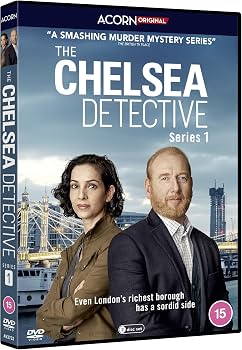
THE CHELSEA DETECTIVE, Season 1

Diane and I started watching The Chelsea Detective on our local PBS station. Then, for no apparent reason, our local PBS station stopped showing it. What to do?

I checked the North Tonawanda Public Library and sure enough, they had The Chelsea Detective on DVD. Now we’re watching the episodes where we left off.

Detective Inspector Max Arnold (played by Adrian Scarborough) is a dyslexic police detective working with DS Priya Shamsie (played by Sonita Henry). Together, Arnold and Shamsie solve difficult murder cases.

Arnold lives in a houseboat (just like Travis McGee) on the river because he’s separated from his wife, Astrid (Anamaria Marinca).

If you are in the mood for some intelligent and challenging mysteries, I recommend The Chelsea Detective. If your PBS station isn’t offering it, it’s available on AMAZON PRIME video…or your local Library. GRADE: B+

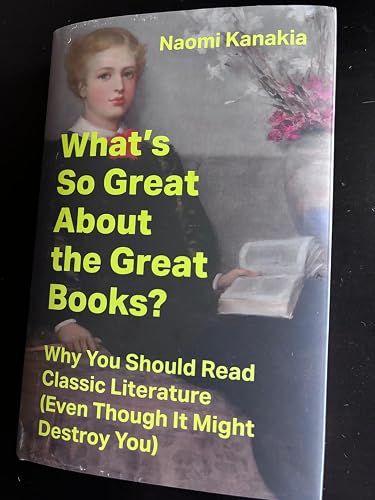
WHAT’S SO GREAT ABOUT THE GREAT BOOKS? WHY YOU SHOULD READ CLASSIC LITERATURE (EVEN THOUGH IT MIGHT DESTROY YOU) By Naomi Kanakia

“I started writing sci-fi stories during my senior year of high school and through college I’d been submitting them to journals and magazines. I still read mostly science fiction but my reading had expanded a bit : I left behind Heinlein and Lackey now. I liked Maureen McHugh, Kelly Link, Lucius Shepherd, Michael Swanwick, Navy Kress, John Brunner, and a whole host of other New Wave and humanist sci-fi writers. One of my favorites, Kelly Link, had attended a graduate program in creative writing, so I figured that I belonged in a writing program as well. In between drinking bouts, I applied to eleven programs.” (p. 28)

Naomi Kanakia was rejected by all 11 creative writing programs. Her solution: “I heard Michael Dirda, a Pulitzer Prize-winning Washington Post book critic, talk about how Fadiman’s Lifetime Reading Plan had taught him how to read the classics. So I went to Barnes and Noble, bought the book’s latest edition, wrote out a list of all 268 works that it mentioned, and started to read.” (p. 29)

What’s So Great About the Great Books (2026) is Naomi Kanakia’s reading journey through Great Books. Her journey starts out in shaky fashion: “When I began college, really the moment I began, I commenced a vigorous self-study program of alcoholic drinking, and I can’t recall ever fully reading an assigned text. I chose classes with large enrollment sizes and a lecture format, and I rarely went to class unless there was a midterm or a final. I enjoyed college quite a bit, particularly the quarter where I dropped LSD every weekend.” (p. 53)

Off to a dubious start, Naomi Kanakia stumbles in a course called INTRODUCTION TO HUMANITIES. “My course syllabus contained Plato’s Republic, Nietzsche’s Ecce Homo, and Dostoyevsky’s Brothers Karamazov, among others–I didn’t read any of thes books, because I was too busy drinking…” (p. 54)

Not a promising college experience so far. But wait, there’s more! “I identified as gay and was sporadically hooking up with men from the internet, but it wasn’t totally satisfying to me, and that activity eventually tailed off.” (p. 206) Not surprisingly, Naomi Kanakia started going to therapy and started taking anti-depressants.

I bring up Naomi Kanakia’s troubles because What’s So Great About the Great Books shows how Great Books helps her get her Life together so she could become a successful writer and blogger. Actually Great Books save her.

What’s So Great About the Great Books includes a list of 250 Great Books and Naomi Kanakia discusses many of the books that changed her Life. Yes, this is an unusual book with an important message. Do you like Great Books? GRADE: A

TABLE OF CONTENTS:

Why should I read the Great Books?

pp. 1-14

What do you mean by “The Great Books”?

pp. 15-27

Have people always read the Great Books?

pp. 28-36

Isn’t it true that the Great Books are too difficult to read on your own?

pp. 37-60

Where did your list of Great Books come from?

pp. 61-78

Aren’t the Great Books kinda problematic?

pp. 79-102

Why not read other books that are equally beautiful but have better politics?

pp. 103-115

Does it matter what we read? Isn’t it more important to develop our thinking skills?

pp. 116-134

How do we know whether a book is “Great”?

pp. 135-151

Why do we need a list at all?

pp. 152-173

When we say, “The Great Books are worth reading,” do other people hear, “White men are inherently superior”?

pp. 174-181

Can’t reading the Great Books be psychologically damaging for marginalized people?

pp. 182-197

Weren’t some of the Great Books written by reprehensible people?

pp. 198-203

What if, at the end of the day, I simply prefer to read other books?

pp. 204-216

Acknowledgments

pp. 217-218

Appendix—How do I start reading the Great Books?

pp. 219-240

Notes

pp. 241-246

Works Cited

pp. 247-256

Index

pp. 257-262