A comprehensive Personal review by a 63rd Indiana officer of the Battle of Franklin

The following account is a unified, compilation provided by Addison Lee Ewing, Company C, 63rd Indiana; based on his original letters and diary.

The Unified Narrative of A.L. Ewing, 63rd Indiana — Battle of Franklin

I will never forget how the morning of November 30, 1864 opened before us—gray, cold, and mournful—as our worn-out column began straggling into Franklin. For hours we had been stumbling up the pike from Spring Hill, half asleep on our feet. Just after we passed the town, our wagon train was struck by Rebel cavalry. They set several of the wagons on fire before the guard could drive them off. My own valise was in one of those wagons, so I count myself lucky that the rest of our rear—scattered troops, artillery, and a long, choking line of wagons—was not entirely captured.

It had been a terrible night march. The narrow road was jammed solid with horses, guns, supply trains, and infantry. In the dark confusion I was separated from my company and pushed along helplessly with the crowd. When Franklin finally came into view, my strength gave out. I slipped into a fence corner and let myself drop. I did not much care what happened just then—I was that worn down.

But after a few minutes I heard firing behind us, the sound of our rear guard falling back toward town. That stirred me. I rose, found a few of my men, and before long the whole company turned up from various directions, each one having fought his way through that night’s bedlam. We drew rations, made coffee, and were moved into position along the inner line. Our works curved like a horseshoe from the Harpeth above town to the river below. As we had done many times before, we began throwing up temporary breastworks and settled down to wait.

Around midday we felt some ease, though my company was ordered out on picket duty. We dug shallow rifle pits and expected to spend the night there—if the Rebs allowed it.

Between three and four in the afternoon they showed themselves. First our cavalry fell back past us, then the gray ranks appeared through the woods—two full lines of battle, well-dressed and steady, skirmishers out front.

There was no time for debate. I shouted to my skirmish line:

“Fall back to the works!”

I turned to run in myself and realized, with no little alarm, that to reach our lines I would have to cross directly in front of two Union guns firing at an angle. There was no help for it. I chose my moment, made a leap between them just as both pieces fired, and thanked Providence that I wasn’t torn apart.

I reached my company, grabbed cartridge boxes, and began loading rifles for the men as fast as I could. Then the gray line came within range—and the whole crest of our works erupted. It was as if the earth itself had burst into flame. A sheet of fire leapt forward, taking down hundreds of the brave but misguided men who fought for an unworthy cause.

Very soon the field was nothing but smoke—so thick we could see almost nothing of the details, only shadows and flashes. The Rebels charged again. And again. And again. I counted near a dozen attacks, each one made with heroic determination, many of their banners planted right upon our works. But each time we threw them back with equal resolve.

Over our heads, Rebel and Union batteries carried on their own duel. Some shells shrieked close enough to make us duck, and more than once I thought one would take my head off.

By nightfall, the battlefield was a horror beyond telling. There were acres—literal acres—covered with the dead. A man could walk across the ground stepping from body to body without touching soil. The slaughter was terrible.

Between their final charge and our later withdrawal, the quiet was broken only by the cries of the wounded lying out there in the dark:

“Water… water…”

Their moans carried across the field. I could not help feeling sympathy for them, though they would gladly have done all the harm they could to us and to the Union.

At eleven o’clock we were ordered to withdraw. We crossed the Harpeth on the pontoon and railroad bridges. The Rebels discovered our retreat and came crowding down the streets of Franklin, but our guns opened on them and must have punished them severely. Once we were over, the bridges were burned. Then began our third straight night march, aimed toward Nashville.

We reached Brentwood the next morning and stopped for breakfast. The 175th Ohio—poor new fellows—was scattered along the pike, panic-stricken and disordered. By afternoon we moved up under the guns of Fort Negley and received our mail, which lifted our spirits more than any ration could.

Later we learned the cost inflicted on the Confederates:

  • General Adams killed in the ditch before our works
  • General Patrick Cleburne, the pride of their army, among the slain
  • Thousands dead and wounded
  • And nearly 3,000 prisoners and eighteen captured battle flags in our hands

No one who stood behind our works that night could doubt the desperation of the Southern assault. Their officers rode right into our very faces, urging their men forward with the utmost bravery. But the “blue coats,” as they call us, did not give an inch. Their determination was answered by ours—and they fell in heaps along our line.

I have fought in many engagements, but I cannot begin to give you a true idea of the fierceness of that charge, nor of the gallantry with which the boys in blue met it.

Our Heavenly Father spared me through that firestorm, though many better men than I fell on that awful field.

Of one thing I am certain:

There is no quicker or surer way for the Rebels to suffer in this war

than by charging our works—

for they are certain to be whipped each time they try it.
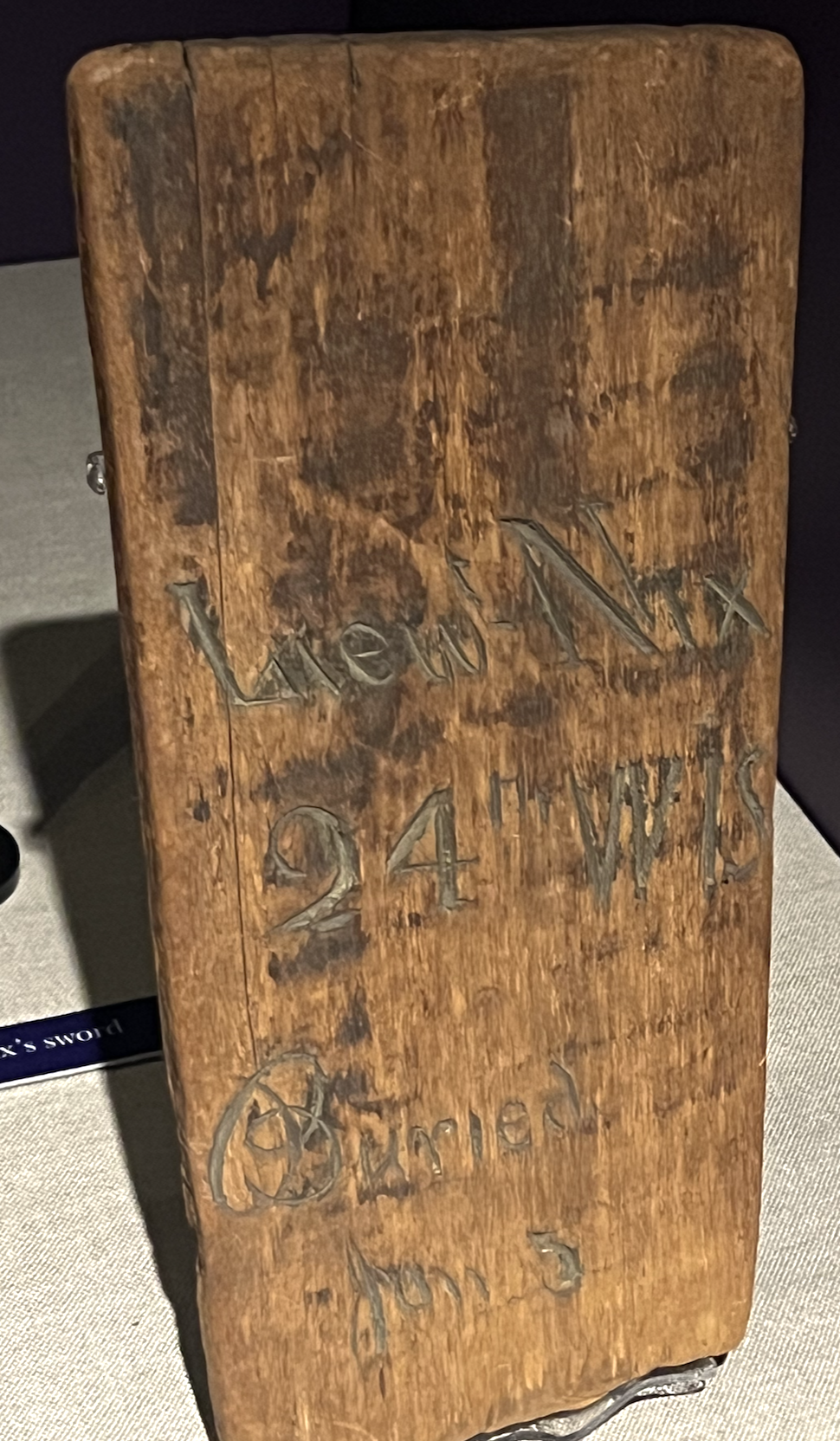
Original wooden board to honor Lieutenant Nix, 24th Wisconsin Infantry, Stones River Battlefield

January 14, 1863

Mrs. Lieutenant Nix,

It becomes my sad duty to inform you of the death of your husband and our much esteemed friend and comrade. He fell on the 31st of December while repelling an attack of Rebel forces and died like a true soldier doing his duty to his country.

He was shot through the body and was taken to our Hospital which was soon after, taken by the enemy, who held it until the evacuation of Murfreesboro.

He died on the 5th or 6th and was buried by Lieutenant Chase of our company with military honors.

I have his effects in my possession and shall forward them to you the first opportunity. I have his revolver, sword and money and other things belonging to him. You have lost your best friend of Earth, and we deeply feel with you in this sad bereavement, for we too have lost an Esteemed Friend and true soldier.

He did his duty up to the time he fell and was loved, and his true Qualities were appreciated by all that knew him. His name and his deeds will always be held in sacred remembers by me and the members under my command.

Yours Respectfully,

Captain A. Philbrook

Source: artifact and letter text on display in the Stones River Battlefield Museum

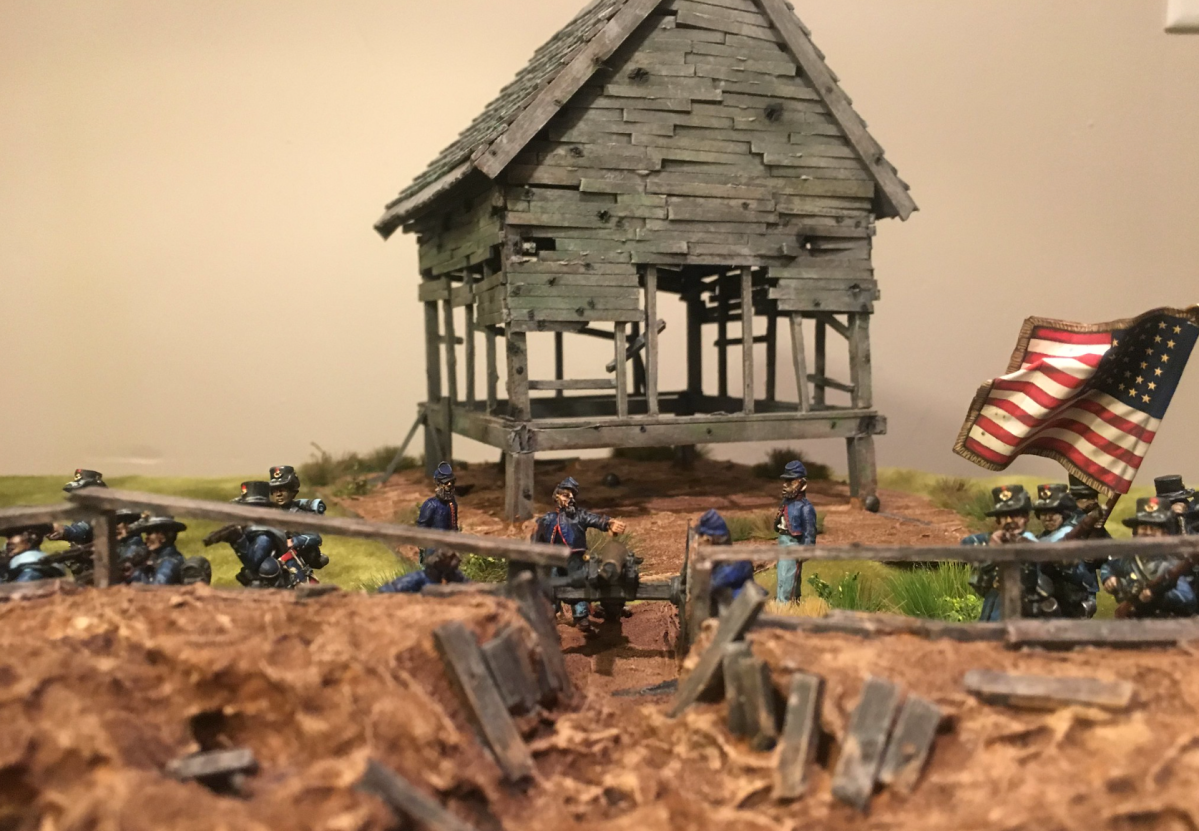
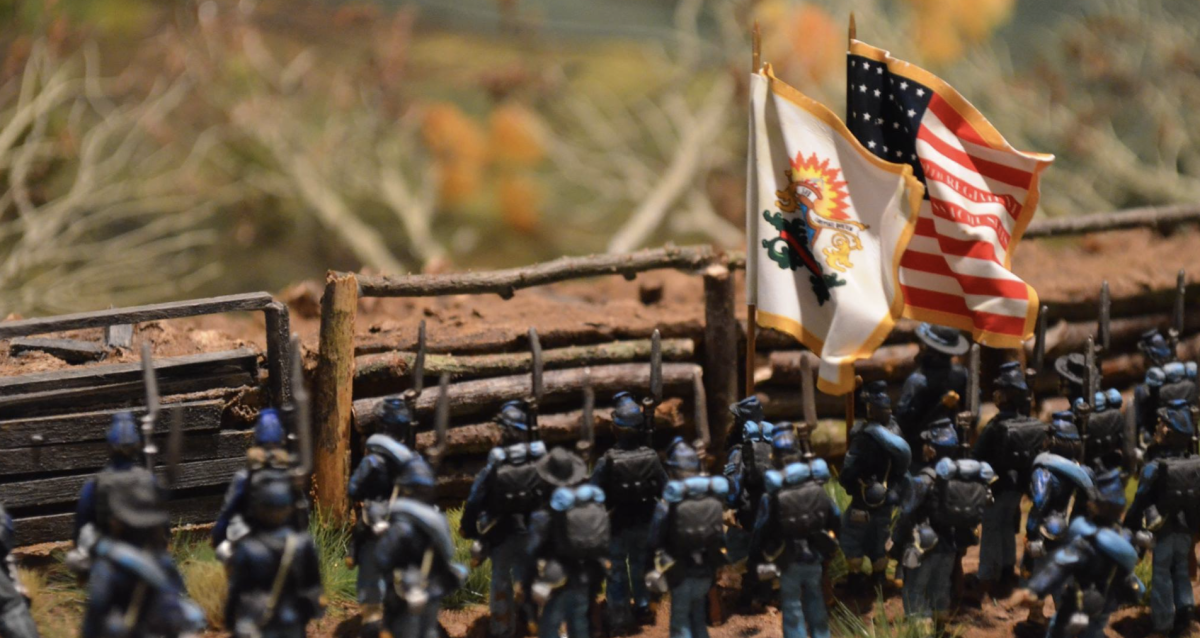
Diorama of the Battle of Franklin, the Federal Main line of Breastworks

These diorama shots of the Federal main line and breastworks at Franklin were created by Rob Rhodes. Make sure to scroll to the bottom to read the poem, Echoes of Sorrow.

Although the main Union line was restored, the Confederates around the gin refused to step down their attacks. They continued to throw themselves at the Federal works with a wild and almost reckless abandon. A Northern soldier recalled how they tried to “shove the headlogs over on our line…” Between the gin and the pike, where so many Federals units converged, the blue-clad soldiers stood five and six deep. Soldiers from Joseph Conrad’s command who had not fled to the rear also joined in to help. Since there was not enough room for all of them along the works, the men in the rear loaded muskets and handed them to the front. The men in front “did nothing but fire.” Once a rifle was fired it was handed back, and the process began anew. For the Confederates on the outside, the relentless fire was more than they could endure. Casualties were appalling. Wounded men gasped for air beneath the piles of dead. Because the Union troops at the front could lean up against the wall of the breastworks, they only had to expose a hand or arm when they fired. On the other hand, the Southern troops cowered in a ditch on the outside and faced an embankment that sloped down at a convex angle. Thus the Rebels had virtually no protection from the enemy fire. Moreover, if they tried to scale the works the men had to expose their bodies just to fire into the enemy trench, and that was possible only if they could get to the crest of the parapet. Many who attempted this were hit on the way up by bullets from beneath the headlogs or gashed by bayonets. Others could fight no more and chose instead to stay in the blood-soaked ditch where they prayed for the horror to pass.

Jacobson, Eric A.. For Cause and Country: A Study of the Affair at Spring Hill & the Battle of Franklin . O’More Publishing. Kindle Edition. 

I have estimated that between 1,000 and 1,200 Confederate casualties occurred in this two acre area, with somewhere near 200 Confederate’s outright killed.


This image has an empty alt attribute; its file name is img_1188.jpeg

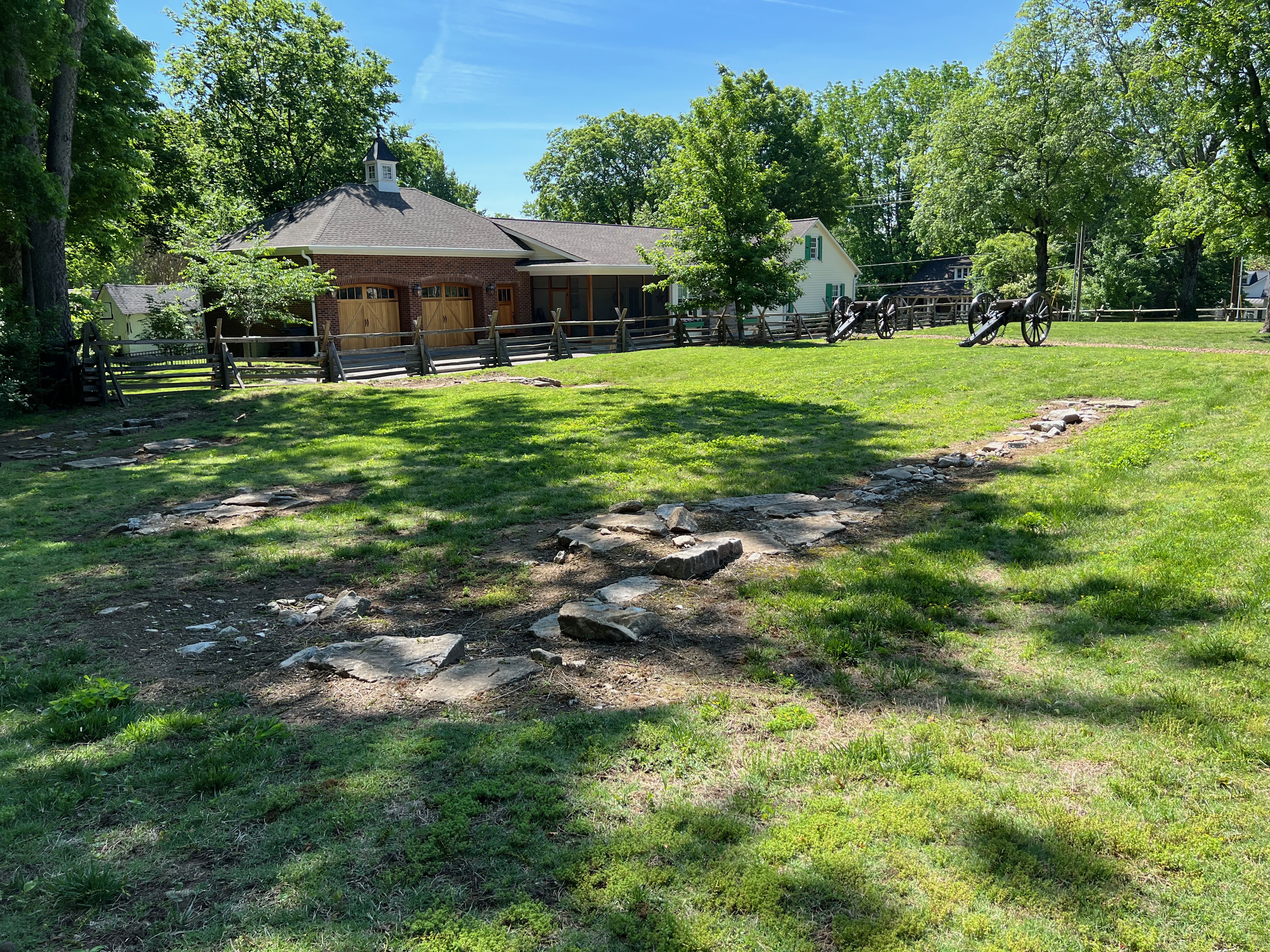
Modern-day location of the gin with extant foundation.

Echoes of Sorrow: The Tragedy of Franklin

In the realm of tragic strife, they stood,
The Union line restored, their spirit grim.
But Confederates, relentless, with wild abandon,
Threw themselves at the works, their hopes so dim.

A soldier, of Northern stock, recalled with pain,
How they sought to push the headlogs o’er.
Between the gin and pike, convergence of fate,
Blue-clad soldiers, five and six deep, they bore.

Joseph Conrad’s command, unwavering in despair,
Joined the fray, no thought of flight in their minds.
But space was scarce upon those battered walls,
So the rear loaded muskets, a duty that binds.

Muskets passed from hand to hand,
Frontline soldiers, their hearts ablaze,
Firing, firing, in endless repetition,
A symphony of destruction in the haze.

For the Confederates, besieged and lost,
The relentless fire a torturous toll.
Appalling casualties, gasping for breath,
Beneath piles of dead, their spirits dole.

Union troops, finding solace on the breastworks,
Leaning against the wall, exposing but a limb.
Their shots rained down upon the foe,
While the Southern troops, cowering, faced a grim.

In the ditch, they sought refuge, the embankment their bane,
No protection from the enemy’s wrath.
To scale the works, a perilous dance,
Exposing bodies to bullets’ deadly path.

Some, attempting the ascent, met their fate,
Beneath headlogs, bullets found their mark.
Bayonets clashed, leaving gashes and wounds,
Their dreams shattered, left in the dark.

Others, weary and drained, could fight no more,
Chose to stay in the blood-soaked ditch.
Prayers whispered amidst the horror’s roar,
Hoping for respite, an end to this wretched pitch.

In this tragic tableau of sorrow and despair,
Where lives were lost, and pain ran deep,
We remember the fallen, their sacrifice so dear,
And the haunting echoes of battles that forever seep.

Source: Kraig McNutt, Copyright 2023.

Photo gallery from recent visit to Manassas battlefield

The battlefield at Manassas holds immense historical significance as the site of two pivotal battles during the American Civil War: the First Battle of Bull Run (First Manassas) on July 21, 1861, and the Second Battle of Bull Run (Second Manassas) from August 28 to August 30, 1862. These engagements were instrumental in shaping the trajectory of the war and solidifying the perception that the conflict would be far lengthier and bloodier than initially anticipated.

The First Battle of Bull Run marked the first major land battle of the Civil War. It took place near the town of Manassas in Prince William County, Virginia. The Union Army, led by General Irvin McDowell, sought to launch an offensive against Confederate forces under the command of General P.G.T. Beauregard. The battle ended in a Confederate victory and shattered the Union’s illusions of a swift and easy triumph.

I’m testing whether or not my audience would like to see content related to other battlefields. I recently visited the Manassas battlefield (Bull Run) in Virginia.

The battlefield at Manassas holds immense historical significance as the site of two pivotal battles during the American Civil War: the First Battle of Bull Run (First Manassas) on July 21, 1861, and the Second Battle of Bull Run (Second Manassas) from August 28 to August 30, 1862. These engagements were instrumental in shaping the trajectory of the war and solidifying the perception that the conflict would be far lengthier and bloodier than initially anticipated.

The First Battle of Bull Run marked the first major land battle of the Civil War. It took place near the town of Manassas in Prince William County, Virginia. The Union Army, led by General Irvin McDowell, sought to launch an offensive against Confederate forces under the command of General P.G.T. Beauregard. The battle ended in a Confederate victory and shattered the Union’s illusions of a swift and easy triumph.

The defeat at First Bull Run exposed the Union Army’s lack of preparedness and revealed the brutal realities of war. The engagement’s impact was profound, as both sides recognized the need for increased military training and strategic planning. It also shattered the belief that the war would be over quickly, instead setting the stage for a prolonged and brutal conflict.

The Second Battle of Bull Run, fought a year later, further solidified the strategic importance of Manassas. Confederate General Robert E. Lee launched a major offensive against Union forces commanded by Major General John Pope. The battle resulted in a resounding Confederate victory, forcing the Union Army to retreat and marking a significant setback for Union efforts in the Eastern Theater.

The battles at Manassas demonstrated the importance of strategic positioning and the challenges of waging war on unfamiliar terrain. The rugged landscape, dense forests, and intricate road networks presented obstacles for both sides. The battles also highlighted the prowess and tactical brilliance of Confederate commanders, particularly General Lee, who emerged as a formidable military leader.

Furthermore, the battles at Manassas had a profound impact on public perception and morale. The Union defeat at First Bull Run shattered the Northern population’s belief in an easy victory, while the Confederate success further emboldened Southern resolve. The battles served as a stark reminder that the war would be arduous and required unwavering commitment from both sides.

Today, the battlefield at Manassas is preserved as Manassas National Battlefield Park, maintained by the National Park Service. It serves as a poignant reminder of the sacrifices made and the historical significance of the site. Visitors can explore the grounds, learn about the events that unfolded there, and gain a deeper understanding of the Civil War’s impact on American history.

Leave me a comment of you want to see more content from Civil War sites other than Franklin on this blog.

  • Privacy